
 Home cancer test
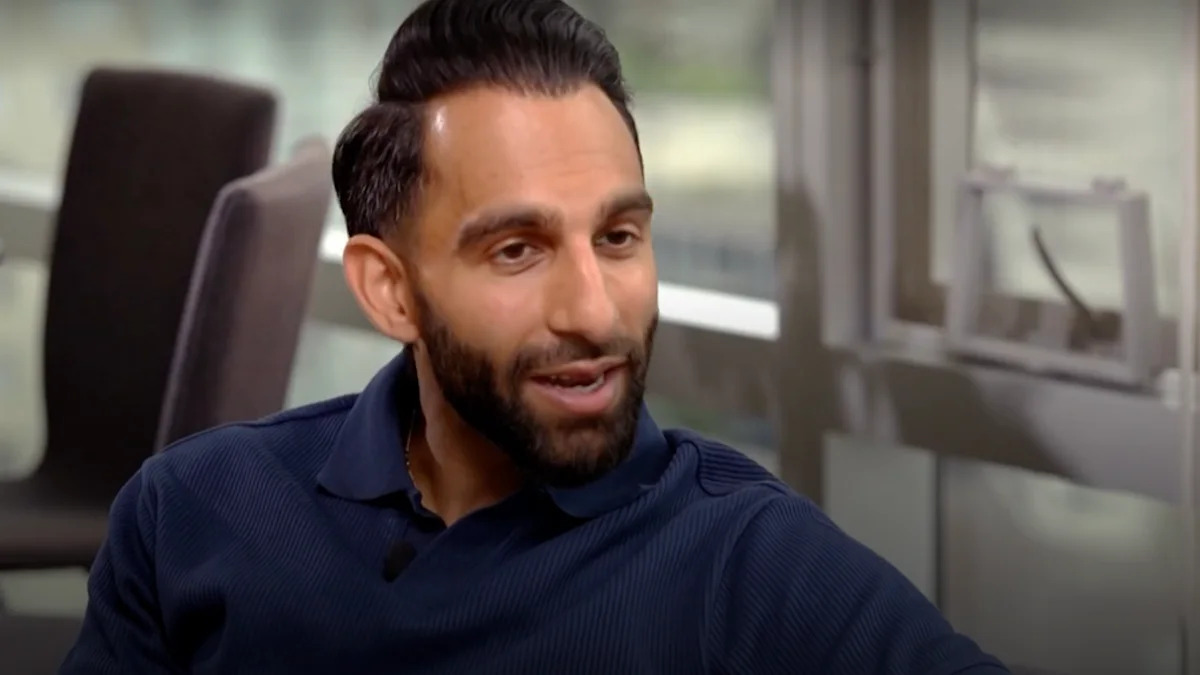
At 33, Zed Dhalla did what health experts tell us to do. Knowing his family medical history, he was proactive, and asked for help early. He wanted a colonoscopy.
The answer was no. He was too young.
Two years later, after symptoms started to surface, the Vancouver man was diagnosed with colon cancer. He was 35. To add to the challenges Dhalla faced with his own diagnosis, his mother passed away from ovarian cancer around the same time.
Dhalla has since turned his frustrating experience into an at-home screening test. His story also raises a question most people in their 30s never ask: if a serious diagnosis shows up decades early, can your finances absorb it?
Don’t Miss Why are younger Canadians being told they’re too young to screen?
Dhalla’s experience with accessing screening comes down to age cutoffs. “I asked for a colonoscopy and I asked for screening,” he told CTV News.
Screening rules are set by provincial governments. Ontario and Prince Edward Island have lowered their colorectal screening age to 45, but thresholds vary across the country.
The risk picture is also shifting. Dr. Anu Ghuman, Dhalla’s surgeon, says Canadians born in 1980 or later face 2x to 2.5x the risk of colorectal cancer before 50 that their parents faced at the same age.
Dhalla’s answer was to develop his own fecal immunochemical test (FIT), a kit that detects hidden blood in stool and can be completed at home. He says it reads much like a rapid Covid-19 test: one line is negative and two lines are positive.
Read More: How financially stable am I? You’re doing better than most if you check off just 1 of these 3 boxes
What does a cancer diagnosis actually cost Canadians?
Many Canadians assume our public health care system absorbs the cost of cancer. Hospital care, surgery and chemotherapy are covered, but there’s still other costs to consider.
The Canadian Cancer Society (CCS), a national charity that funds research and patient support, estimates the average person with cancer will face $32,778 in lifetime costs, after the government has covered their portion. That figure includes $16,018 in out-of-pocket expenses such as take-home drugs, travel and accommodation. It also includes $11,199 in time costs and $5,560 in indirect costs such as lost income.
For someone in their 30s, the timing is especially impactful. These are the years of mortgage payments, young kids and early RRSP and TFSA contributions. A diagnosis can interrupt all three at once.
How much income will government programs replace?
The federal safety net helps, but there are limits. Employment Insurance (EI) sickness benefits pay up to 26 weeks at 55% of your insurable earnings, capped at $729 a week.
For example, someone earning $90,000 a year makes about $1,730 a week. At 55%, they would qualify for about $952 a week, but the cap holds them to just $729. That replaces roughly 42% of their gross pay, and only for about six months.
The tax system offers some relief as well. The Canada Revenue Agency lets you claim the medical expense tax credit (METC) on eligible expenses above the lesser of $2,834 (for the 2025 tax year) or 3% of your net income. It’s non-refundable, so it reduces the tax you owe rather than putting cash in your pocket.
For many families, that can leave a gap that only workplace benefits, private insurance or savings can fill.
What to do now
Confirm and write down your family’s cancer history and bring it to your doctor, because a family history can be grounds to discuss earlier screening
Don’t wait for screening age if you have symptoms such as bleeding, bowel changes or fatigue, and see a doctor as soon as possible
Check workplace benefits for short-term and long-term disability coverage and how much of your salary each one replaces
Price critical illness insurance while you’re young and healthy, since it pays a lump sum on diagnosis but may exclude pre-existing conditions
Maintain an emergency fund that can cover the gap between EI and your actual expenses
Keep receipts for prescriptions, parking and travel to treatment so you can claim the METC
Dhalla couldn’t change his province’s screening rules, so he built a workaround. Most of us can’t invent a medical device, but we can do the financial equivalent. Know your risk, ask early and make sure your income has a backup before you need one.
What To Read Next
The most expensive financial mistakes are often the ones you don’t see coming. Join 19,000+ Canadians who get the money moves, risks and opportunities shaping their finances — delivered free each week. Subscribe now.
This article provides information only and should not be construed as advice. It is provided without warranty of any kind.