
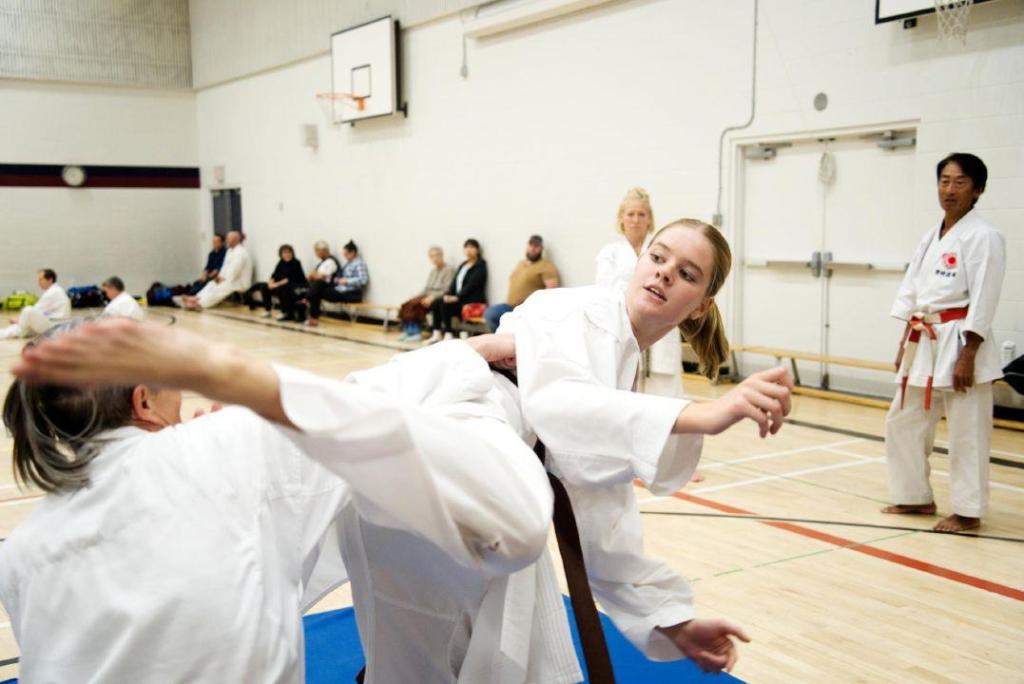
Okanagan karate dojo brings home haul of medals at international competition
Published 7:00 am Saturday, October 10, 2026
An Okanagan karate dojo is one of the best in the world, accumulating the most medals during the 2026 Soke Cup.
Taneda Karate Dojo sent a contingent of 42 competitors to Gold Coast, Australia in August to compete in the 2026 International Chito-Ryu Soke Cup. The Soke Cup is held once every three years and draws practitioners of the Chito-Ryu style of karate from all around the world.
The Okanagan dojo took home 45 medals during the competition, including 12 gold, 18 silver and 15 bronze.
“This was definitely one of our better results,” said Sensei Chris Taneda, who was honoured at the Soke Cup with his eighth degree black belt, making him the highest ranking person outside of Japan in the Chito-Ryu style.
Despite the incredible result, Taneda said none of his karatekas were able to “win” the actual Soke Cup. He explained that the Soke Cup is divided into different divisions based on differences like gender and age. The karatekas compete with others in their division in a number of different events such as kata (form) or kumite (sparring). The competitor with the best accumulation of medals in the different forms will take the Soke Cup for that division.
Still, some of Taneda Dojo’s competitors who spoke to Black Press Media were grateful for the experience, saying it allowed them to prove themselves on the biggest stage and to form tight bonds with their teammates.
“Just Australia in itself was great, not just the competition but the team-building that we did as well with our whole group,” said Logan Robinson, who competed in the junior division, earning one silver medal and three bronze medals.
Michelle Cowan, one of the coaches who has been training with Taneda since 1985, said the dojo’s performance was inspiring.
“It was so inspiring to see all of the hard work pay off… we were really an unstoppable team I thought,” she said.
Cowan, who also competed in the tournament alongside her husband and daughter, said she was most impressed that all the Taneda Dojo members were in good spirits and cheered each other on, even if they didn’t win a medal themselves.
Many members of the dojo spoke about the family-like atmosphere fostered within the team, and attributed that to much of their successes.
Robert Simikins, a karateka who competed in the masters division, got two golds and one silver at the tournament despite dealing with an injury. He said he was only able to accomplish the feat with the help of his teammates, who physically supported him throughout the trip.
“These guys would carry my stuff with me, grab my luggage, try to wheel me around in a wheelchair to the warmup area,” Simikins said.
“Without them, I couldn’t have done it. Without them I wouldn’t have gone.”
Taneda said karate and martial arts is a “good vehicle for people to find out lots about themselves” and in training, he instils a sense of camaraderie and discipline. For example, the sensei has every class member help wipe the floors, a task they all end up doing with a smile on their face.
Despite the team’s friendly nature with each other, Taneda said they are always looking for an “edge” to keep them sharper than their opponents. He highlighted some of the mental training he does, such as teaching his karatekas outsmart their opponents or some of the cardio and breathing training to create mental resilience.
With the results of the 2026 Soke Cup now behind them, Taneda said the team is already looking forward to the next event, which will take place in Japan in 2029.
Tania Reid, who nearly claimed the Soke Cup by coming in second place in her division, is one of those competitors eagerly awaiting the next competition.
Reid said she’s competed in seven Soke Cups now, and said the community is what keeps her going.
“Every competition, the family that it creates is just phenomenal,” Reid said.