

Listen to this article
Estimated 5 minutes
The audio version of this article is generated by AI-based technology. Mispronunciations can occur. We are working with our partners to continually review and improve the results.
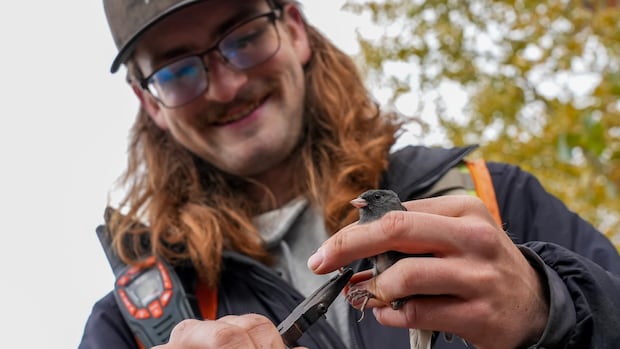
Standing near a network of nets strung in the boreal forest, Ethan Denton reaches into a cloth bag and gently pulls out a small, dark grey songbird called a dark-eyed junco.
Denton, a Calgary-based ornithologist spending his summer in Fort McMurray, Alta., uses pliers to wrap a light aluminum band containing an identification number around the junco’s slender right leg.
He records its gender and measurements before releasing the bird. Researchers across North America can record where they catch the bird, painting a picture of its migration patterns.
Ken Foster, one of the founders of the Wood Buffalo Wildlife Research Institute (WBWRI), stands nearby as Denton explains to volunteers what he’s doing.
The institute is currently the only non-profit organization of its kind based in Fort McMurray and one of its goals is to carry out long-term monitoring of birds in the oilsands region.
“We all sense birds are declining,” Foster said in a recent interview with CBC News. “Programs like this define which birds are declining [and] by how much and hopefully what we can do to help reverse it.”
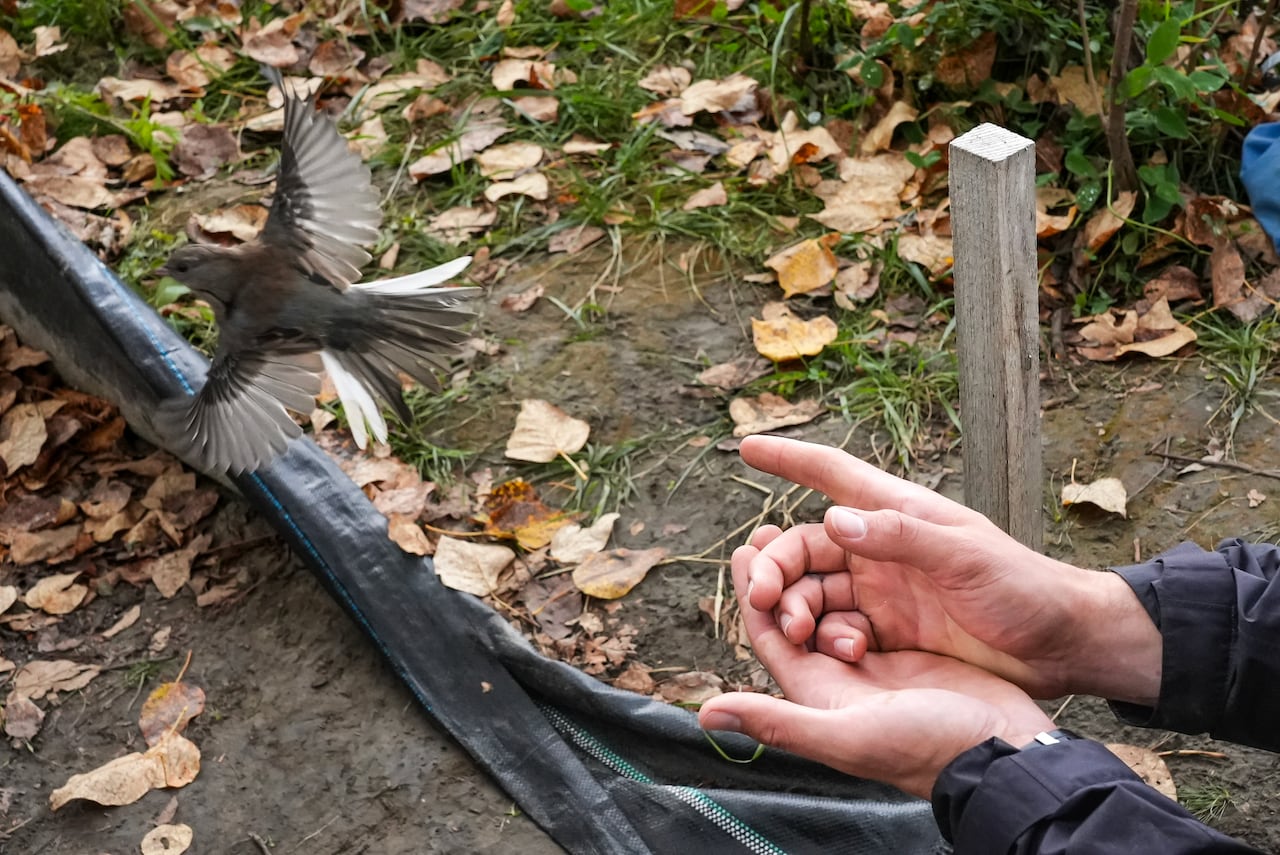
Toby MacKenzie releases a bird recently tagged with a bird band near Fort McMurray, Alta., on Sept. 29, 2026. (Vincent McDermott/CBC)
Studying birds in the oilsands region is not new. Organizations such as the joint provincial-federal Oil Sands Monitoring Program have carried out long-term research, as has the Alberta Biodiversity Monitoring Institute (ABMI). There have also been dozens of university-led projects.
Foster has done his own long-term research with his consulting company, Owl Moon Environmental Inc. (OMEI). But he hopes creating a non-profit in 2024, along with his wife Christine Godwin, to carry on that work will bring years of stability while introducing wildlife research to volunteers.
“This is citizen science for a non-profit agency,” said Foster. “We have volunteers that have come out routinely and are really excited about this.”
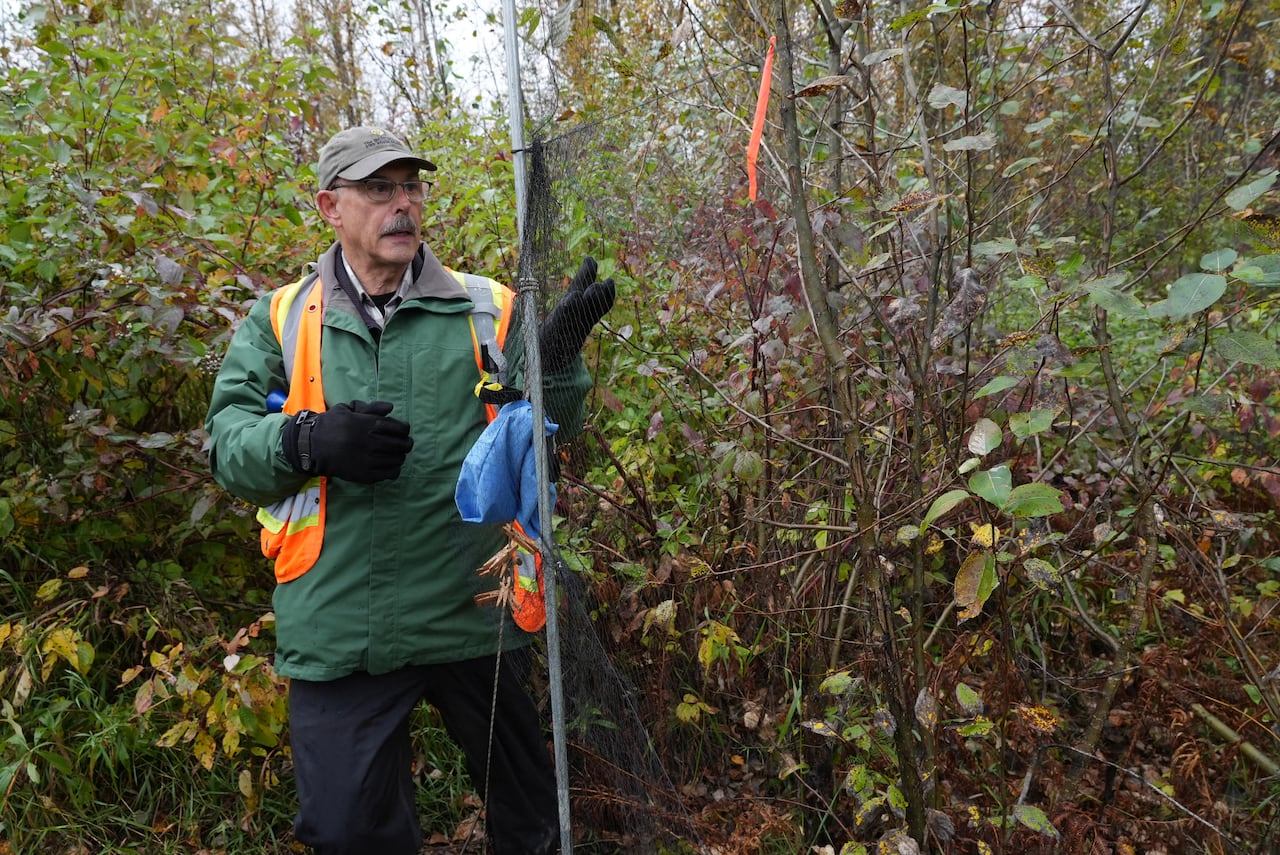
Ken Foster of the Wood Buffalo Wildlife Research Institute (WBWRI) inspects nets used to catch birds for tagging outside Fort McMurray, Alta., on Sept. 29, 2026. (Vincent McDermott/CBC)
Data gathered so far by Foster through OMEI shows bird species are responding differently to changes across the oilsands region.
He says he estimates the populations for some songbird species, such as the least flycatcher and northern waterthrush, have dropped by as much as 90 per cent in the last 15 years. This is mainly because of habitat changes from wildfires, industrial developments and other changes in areas on the birds’ migration routes to the south. There are also fewer flying insects to feed on, Foster says.
Generalist species, such as adaptable ground feeders like clay-coloured sparrows, are thriving in disturbed, early-growth habitats in former oilsands sites that have been reclaimed or regrown areas of the boreal forest destroyed by wildfires.
We all sense fewer birds.Ken Foster, Wood Buffalo Wildlife Research Institute
Foster says energy companies have been receptive to his research. And while he says there is overlap, the WBWRI’s goal is for research projects that can also offer greater opportunities for outreach and education.
“I kind of came in like, ‘Yeah, I want to work outside, this is a good experience for that type of thing,’ but then I learned a lot about birds,” said Ryan Campbell, a recent high school graduate who finished a summer internship with the WBWRI.
“They’ve got me buying binoculars, setting up eBird accounts. I’m definitely a bird person, and for that I’m eternally grateful.”
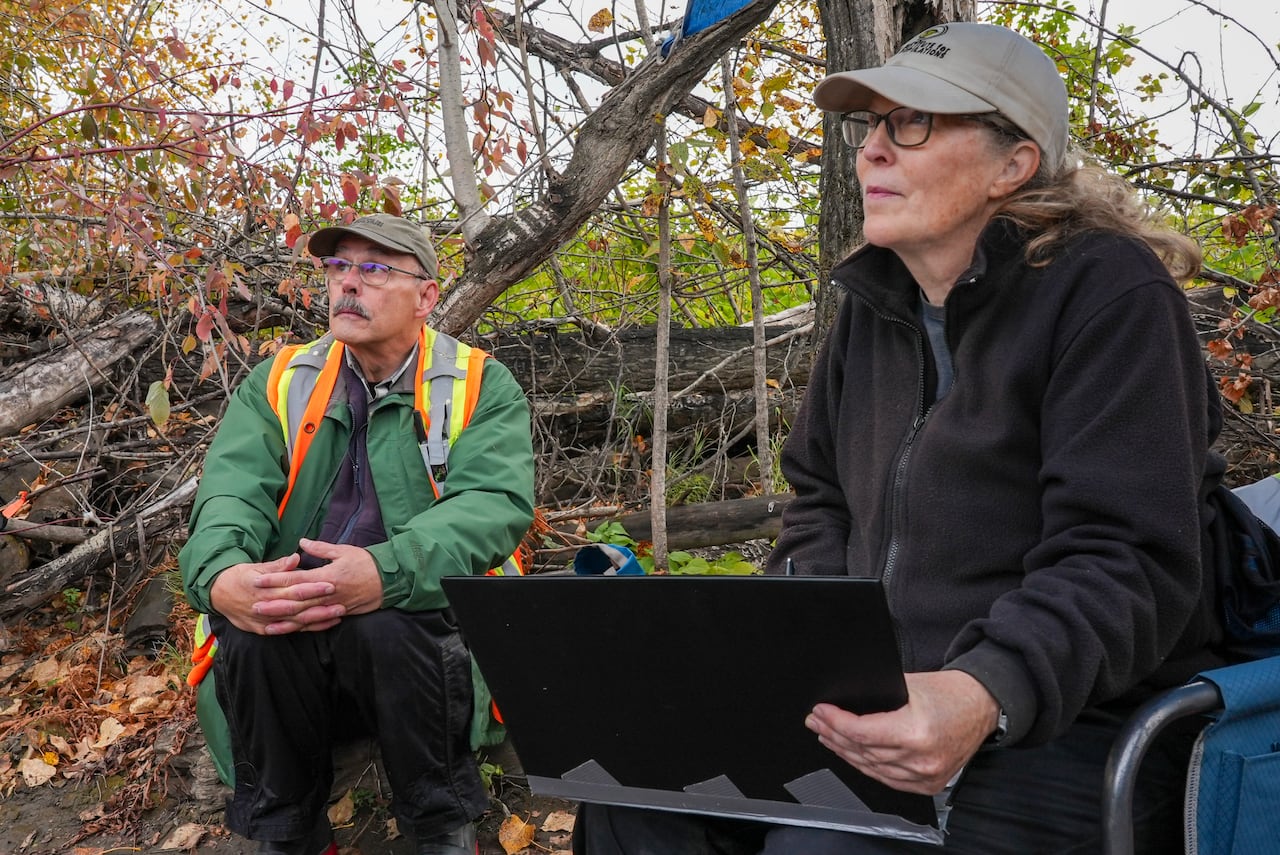
Ken Foster and Christine Godwin of the Wood Buffalo Wildlife Research Institute record notes during a bird banding exercise near Fort McMurray, Alta., on Sept. 29, 2026. (Vincent McDermott/CBC)
Erin Bayne, a biology professor at the University of Alberta who studies bird activities near industrial developments, told CBC News in an email that local studies and programs like Foster’s are crucial.
Species such as the least flycatcher and hermit thrush show stable numbers across North America, but Bayne said Foster’s work shows changes happening around Fort McMurray and potentially along migration routes.
When local data is combined with larger national databases, researchers can pinpoint local problems and alert governments, non-governmental agencies and industry partners.
“As to whether local monitoring is useful, absolutely,” Bayne said. “The key, however, to all monitoring is data integration.
“Local changes are real and of concern to local people.”
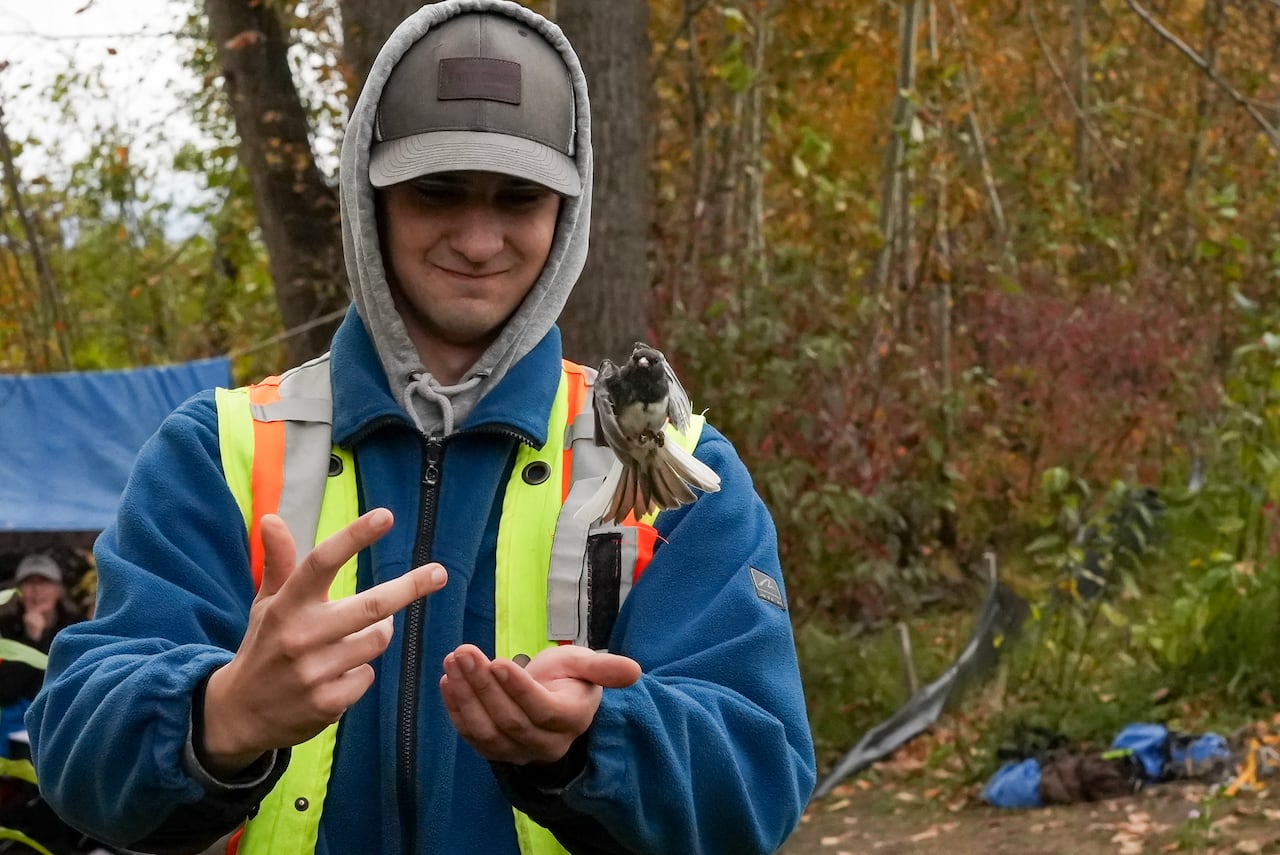
A bird flys out of Ryan Campbell’s hand during a bird banding project near Fort McMurray, Alta., with the Wood Buffalo Wildlife Research Institute (WBWRI) on Sept. 29, 2026. (Vincent McDermott/CBC)
Foster has other plans beyond banding birds for fall migrations. The WBWRI has also set up an automated tracking tower that tracks animals fitted with radio transmitters. It’s part of the Motus Wildlife Tracking System, which stretches across North America and South America. Foster hopes to raise enough money to tag birds with radio transmitters.
The organization is also starting to monitor the health of bat populations, and hopes to raise money to train volunteers to rehabilitate injured wildlife in the Fort McMurray region.
“Programs like this put a number to change that we’re all sensing,” Foster said. “We all sense fewer birds.”