
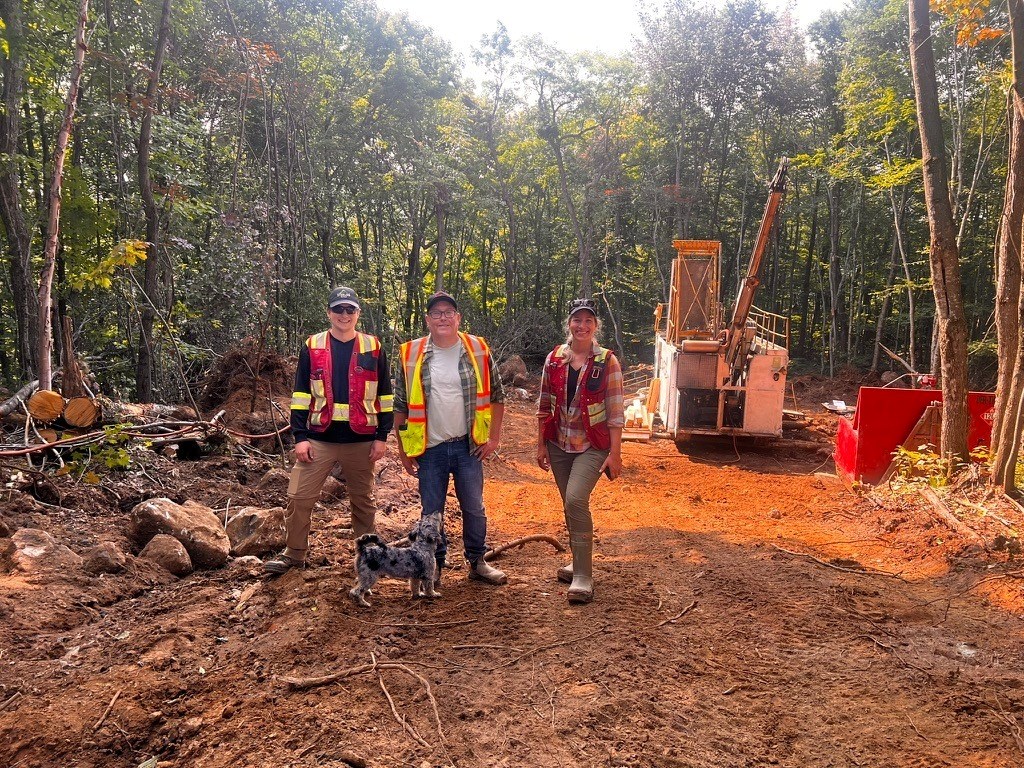
At a site in Batchawana Bay, north of Sault Ste. Marie, Mat Wilson and his team at Sterling Metals are working to solve what he calls “a copper conundrum” in Canada.
“Copper is kind of the metal of the future,” he told SooToday by phone.
“It’s what you need every time you turn on the light . . . anytime you need green energy, if you want to control any of your own data, data centres, whatever it is that you’re doing, you need copper.
“And I didn’t know this, but despite all of the vast resources that Canada has, Canada only produces one per cent of the world’s copper.
“But then, of the copper we consume, half of it actually comes from overseas,” he said.
“We don’t even make all of the copper we need and we don’t have enough of it.”
That’s the conundrum Wilson is trying to solve as the CEO of Sterling Metals, which he founded in 2020.
There’s a global shortage of copper, too.
“They say we’ll need more copper in the next 18 years than what’s been mined in the history of humanity because of all the things that are happening.”
In 2024, Sterling purchased a 35,000 hectare property from Copper Road Resources that’s located near Batchawana Bay that many people aren’t aware of.
Wilson said Sterling has drilled around 100 test holes and he’s hopeful it could eventually become the largest copper mine in Ontario, if not Canada.
“In the 60s and 70s, there were these two small mines about 30 km apart and they kind of got lost in history,” Wilson said.
“You find people throughout the Sault whose parents worked there, who prospected. No one really put the pieces together to understand that this is one really big copper system.”
To put that site in context, that would be the size of some of the world’s largest copper mines, Wilson said.
“Whether you’re looking at giant mines in Arizona or in the mountains of Chile,” he said, “but we’re in Ontario, so you’re not four km up in the mountains.”
Wilson said the Carp River Road site is much more accessible than some of the world’s other copper mines.
“Here, the Trans Canada runs right up the road and then there’s a rail line that runs right into the deep water port of the Sault. And then there’s this workforce within the Sault, which has been built up on one industry.”
Sterling Metals purchased a six-and-half-acre horse ranch in Goulais River to give the company’s 30 workers a place to stay.
“We have workers coming up from the Sault, coming in from Goulais, coming down from Batchawana, and drillers coming in from Quebec,” he said.
“They’re all kind of finding their way into this area as we start to expand the project.”
They began drilling in April with five cm cores, going down the equivalent of the height of the CN Tower.
“We’re starting to see the formation of something very very interesting: a large footprint of copper that potentially could be something that matters for many decades,” Wilson said.
If everything goes smoothly, Sterling Metals could break ground in five or seven years, Wilson said.
“I want to stress the early nature of this because there’s no economic study . . . The more people support it and the more people understand it, the faster this can go.”