
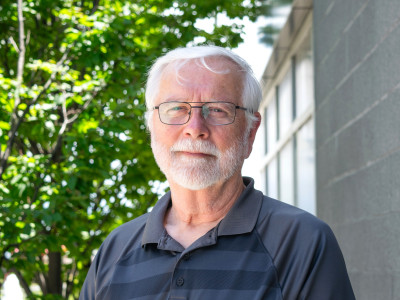
In a quiet neighbourhood of Erin Mills, 75-year-old Mike Matulewicz sits on a folding chair on a neighbour’s driveway. Beside him is his three-year-old golden retriever, Luke. He has no campaign signs, flyers or donation boxes—in fact, he goes out of his way to not have them.
In many ways, his campaign to become mayor of Mississauga is what many might call “unconventional.” On his website, the retired Toronto police detective says that his campaign will not canvass voters, and that he will simply listen to what the residents have to say about the issues affecting them.
At the end of the day, the message from Matulewicz is simple: It’s called, “Community first”.
He believes that a grassroots campaign like his is something all the money that politicians use cannot defeat. He believes in listening to community members when they speak of the problems that affect them.
He spoke on issues such as the increase in car thefts and the increase in home security measures. He believes these are all symptoms of leadership that has failed the public and the communities they are supposed to represent.
His utilitarian website simply states his intentions. Matulewicz wants to make back the $500-million shortfall the City of Mississauga is facing due to the gap in provincial funding, improve emergency services, affordability, homelessness, public safety and housing.
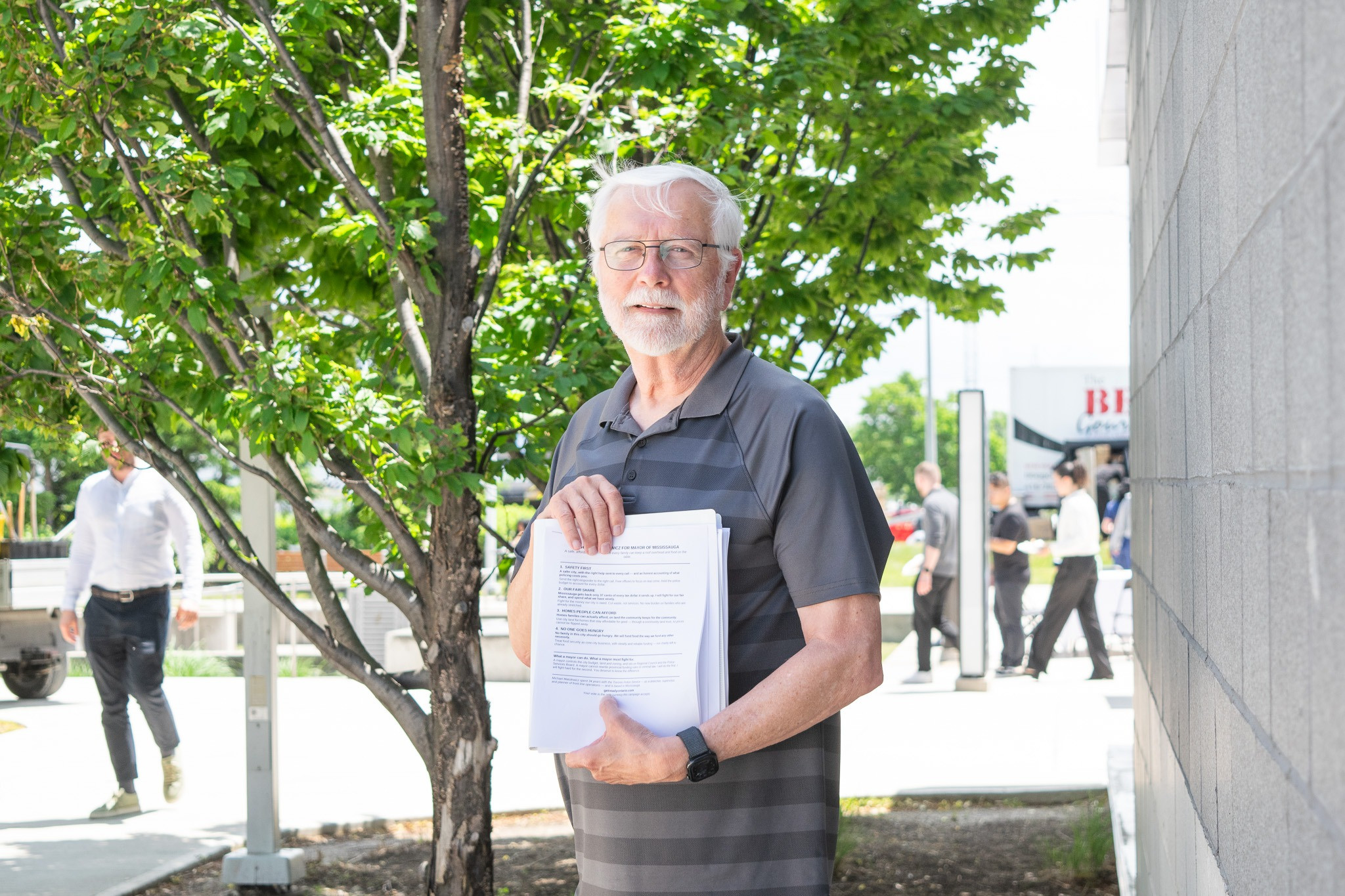
Mike Matulewicz is running a grassroots campaign to become Mississauga’s next mayor, hoping to highlight the central issues his fellow residents are facing. (Alexis Wright/The Pointer)
His website also highlights that Peel residents receive 37 cents back in services for every dollar in taxes paid, compared to an Ontario average of 76 cents. He uses the Blueprint report released by the Metamorphosis network, a Peel-based consortium of social services organizations and community agencies. Peel residents receive an average of $578 less per resident annually in provincial funding for municipal and social services than the Ontario average across municipalities, according to the group. The cumulative shortfall of this is $868 million per year.
Matulewicz’s $500 million figure refers specifically to Mississauga’s share of that gap across Peel.
The Pointer reported the funding shortfall when the Blueprint report was released. A motion was tabled in June for a fair funding model to make up for this short-change of taxation revenues.
In many ways, his policies are informed by his years of service in the Toronto police department. He spoke at length about all the times he was assigned to oversee family disputes and the homeless. To him, the homeless and hungry in Peel are not just statistics; they are the names and faces of those the city has failed.
“You never forget when you have to go into a cardboard box, or a tent or a blanket,” he said. “You never forget holding someone—the conditions of their life. You never forget these things.”
His website reminds readers that “Homelessness is not a crime—and it’s cheaper to house a person than to police them.”
Peel is dealing with a prolonged homelessness crisis, a reality that was not nearly as visible throughout most of the region’s earlier history. According to Peel Region’s 2025 Housing services annual report, the number of people experiencing chronic homelessness in the region reached its highest recorded level, with emergency shelter demand consistently exceeding capacity. Federal housing funding has not kept pace with homelessness.
Regeneration Outreach, a Brampton-based non-profit organization serving the homeless and vulnerable population, was forced by Brampton’s Mayor Patrick Brown and Councillor Rowena Santos to find a different location, pushing the agency out of the downtown core because politicians did not like the visibility of homelessness.
Matulewicz said his experience is also informed by years of service as a front-line operations planner. Now, as a retiree, the facts present themselves all too clearly. The City of Mississauga is not doing enough to help the less fortunate, and more people are falling through the cracks. His website is a call to action.

Mississauga mayoral candidate Mike Matulewicz and his dog, Luke. (Supplied)
For Matulewicz, whose career was spent with Canada’s largest municipal police service, increasing the number of officers or the budget is not the answer to combat crime and the social causes that lead to most problems police deal with. He believes police must build the trust of communities they serve.
One of the promises in his platform is what he calls a Community Response Unit, a non-police team that would handle roughly 40 percent of 911 calls that he says do not require an armed uniform officer. Things like neighbour disputes, wellness checks, noise complaints and mental health crises—calls that can tie up police officers trained for specific types of interventions—should be dealt with by other professionals.
Peel Regional Police’s operating budget has doubled to almost $840 million in just eight years, while crime solvency rates have fallen. He believes that without structural change, throwing money at the problem will not fix it.
Matulewicz spoke of past mayors with a level of respect and admiration, but he questions how the worsening problems facing Mississauga can be combatted if the community itself is not involved.
“If the skilled politicians can’t do it, if the truth of studies and community groups can’t do it—then what do the facts tell you?” he said. “The facts lead to that at a political level, in terms of honest dialogue between governments, no change will come.”
For residents, who pay their taxes to government one way or another, this is unacceptable.
“Tax dollars are not really given,” he said. “They are a debt due from households, from you and I, and are to be spent wisely. But they haven’t kept up with the jobless, the homeless, the housing issue.”
To this end, Matulewicz says his years being part of the corporate governance can also help overcome the challenges the city is facing.
Nelson Wiseman, a professor emeritus of political science at the University of Toronto who studies Canadian elections, is skeptical that a zero-dollar, no-organization campaign can overcome the structural advantages that incumbents and well-funded candidates hold in municipal races.
Matulewicz is not dissuaded. He hopes a grassroots campaign will at the very least convince non-voters to come out and make their voices heard.
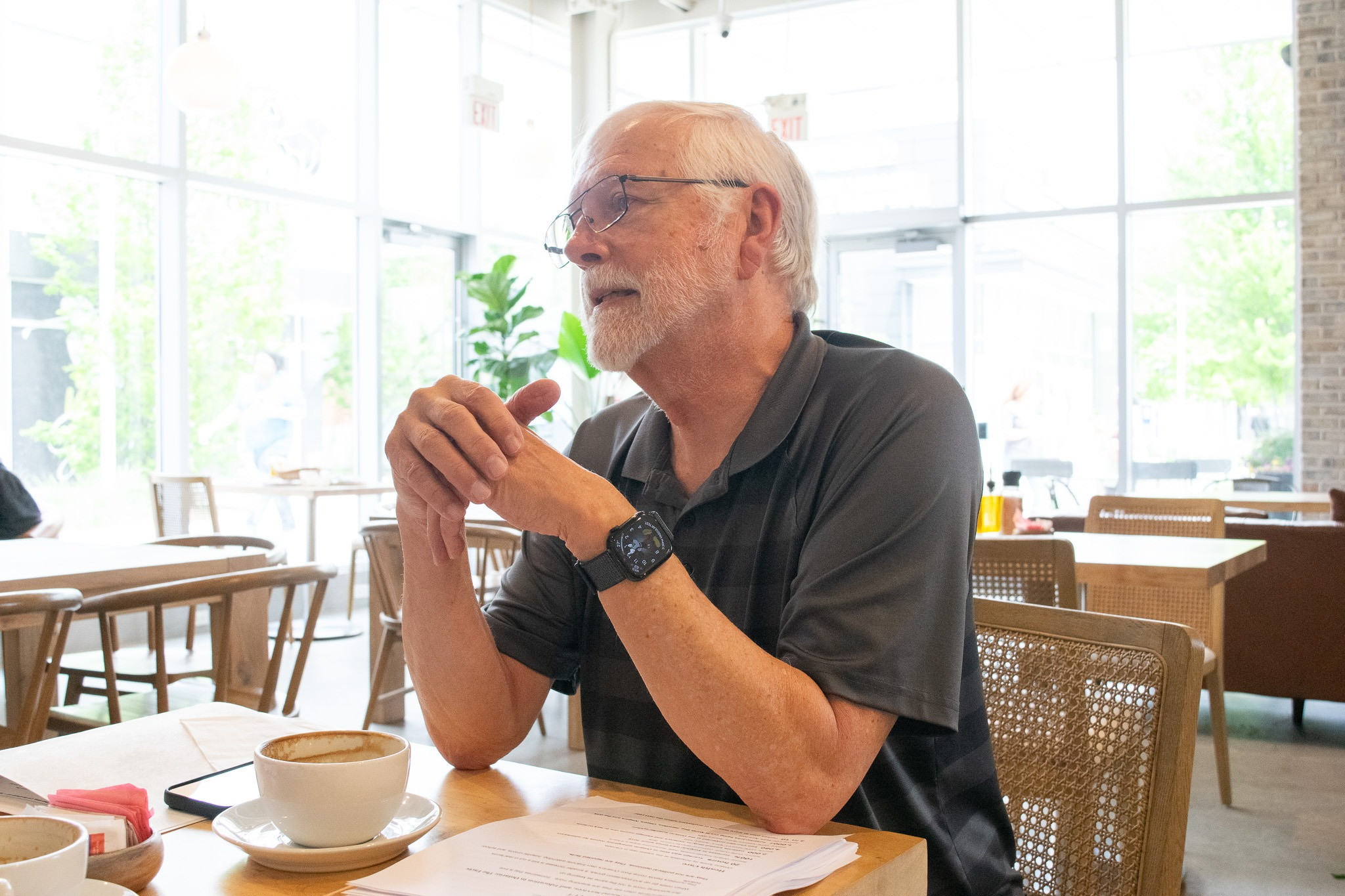
(Alexis Wright/The Pointer)
He is publishing his platform on his website after listening to his community members regarding the issues facing them.
“I’m sure you’re aware there is a growing dissatisfaction with the government,” he said. “They’re not responding to the needs of people.
“I believe it’s not only our right to participate in democracy—my children, my grandchildren, and my great-grandson, when he gets old enough, will know that it’s also your duty, in any small way, to serve your community.”
When asked what success would look like, Matulewicz paused.
“Pragmatically, realistically—I have left you with a seed. You will think about these issues. You will think how they conflict. And in your own way, you will have formed your opinion. For me, this is a win.”
He describes himself as “an old gardener with a few seeds left to plant, looking for some fertile ground.”
Email: [email protected]
At a time when vital public information is needed by everyone, The Pointer has taken down our paywall on all stories to ensure every resident of Brampton, Mississauga and Niagara has access to the facts. For those who are able, we encourage you to consider a subscription. This will help us report on important public interest issues the community needs to know about now more than ever. You can register for a 30-day free trial HERE. Thereafter, The Pointer will charge $10 a month and you can cancel any time right on the website. Thank you