
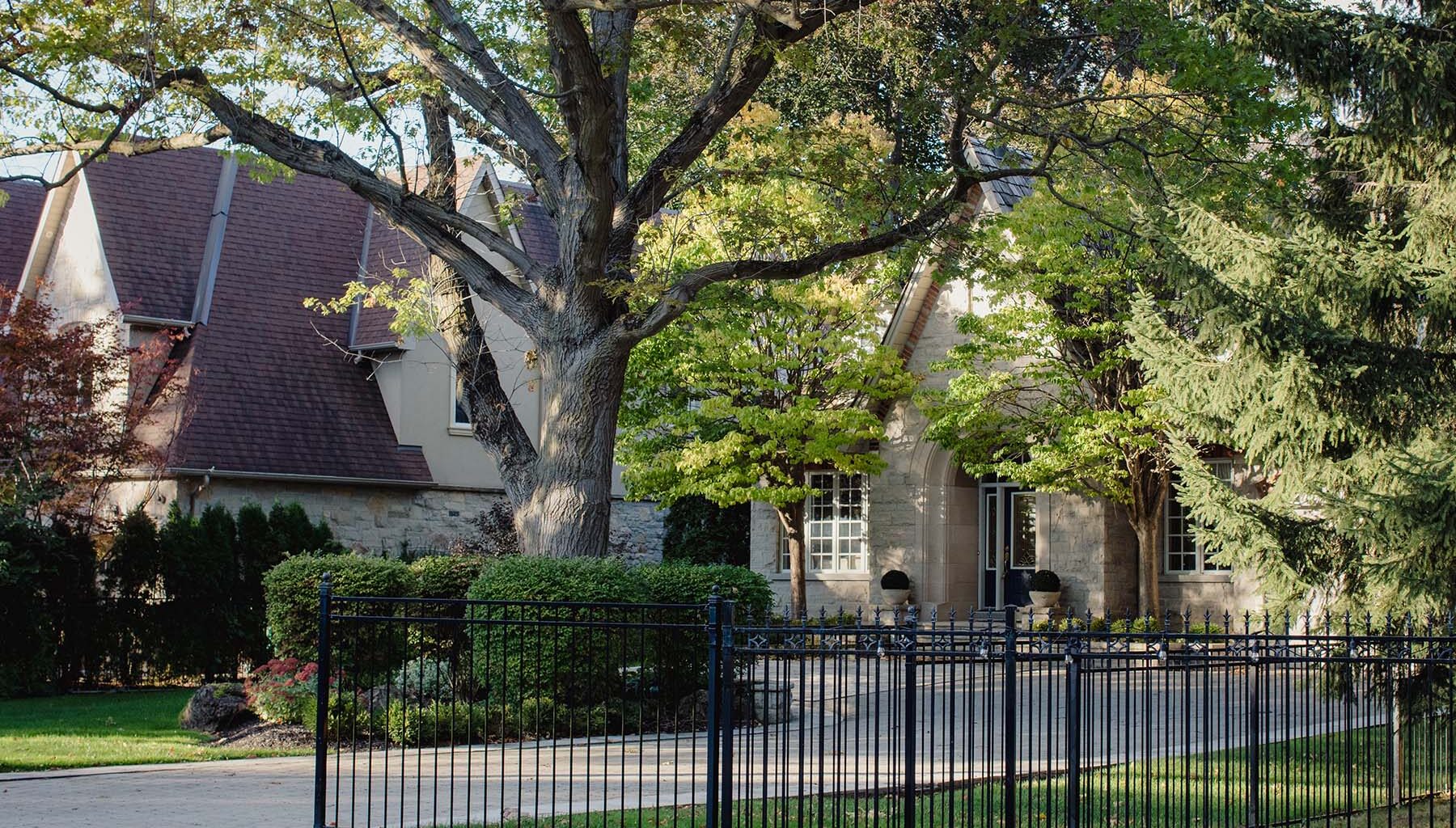
The Race in Mississauga’s Ward 2 at a Glance:
Current Councillor: Alvin Tedjo, first elected in 2022, is stepping aside to run for mayor.
The Candidates: 14 candidates are vying for the seat, including trustee Leeann Cole and former federal Conservative candidate Tom Ellard.
Central Issues: Car thefts, rising property taxes, and multi-storey residential developments are emerging as major issues.
There was a time when Alvin Tedjo would never have considered running for mayor. As a first-time councillor elected in 2022, he was happy tending to the concerns of Ward 2, in Mississauga’s southwestern corner. But that quickly changed. In 2024, he ran in the mayoral by-election, coming in second to current mayor Carolyn Parrish. Now Tedjo, known for his measured and deliberate presence on council, has another chance.
“I was very happy being a councillor… But seeing how the mayor led the city, I had some serious issues with that and decided I couldn’t just sit back.” Some of those issues, he says, have been raised time and again by his own constituents, such as the city’s failure to secure more funding from Peel Region.
Ward 2 hugs the shoreline of Lake Ontario and is bound by the Credit River to the east, Winston Churchill Boulevard to the west, and sections of Dundas Street and the QEW to the north. It includes quiet residential neighbourhoods such as Sheridan Homelands, Park Royal, and the estates of Lorne Park. Rattray Marsh, a 94-acre stretch of protected wetland conservation, is also located there, as is the Clarkson GO station, a major transit hub that sees more riders than any GO station in the province. Southdown, Mississauga’s second-largest employment district, is also part of the ward, and contains, among other things, the province’s largest cement plant and serves as the nucleus for the city’s water infrastructure.
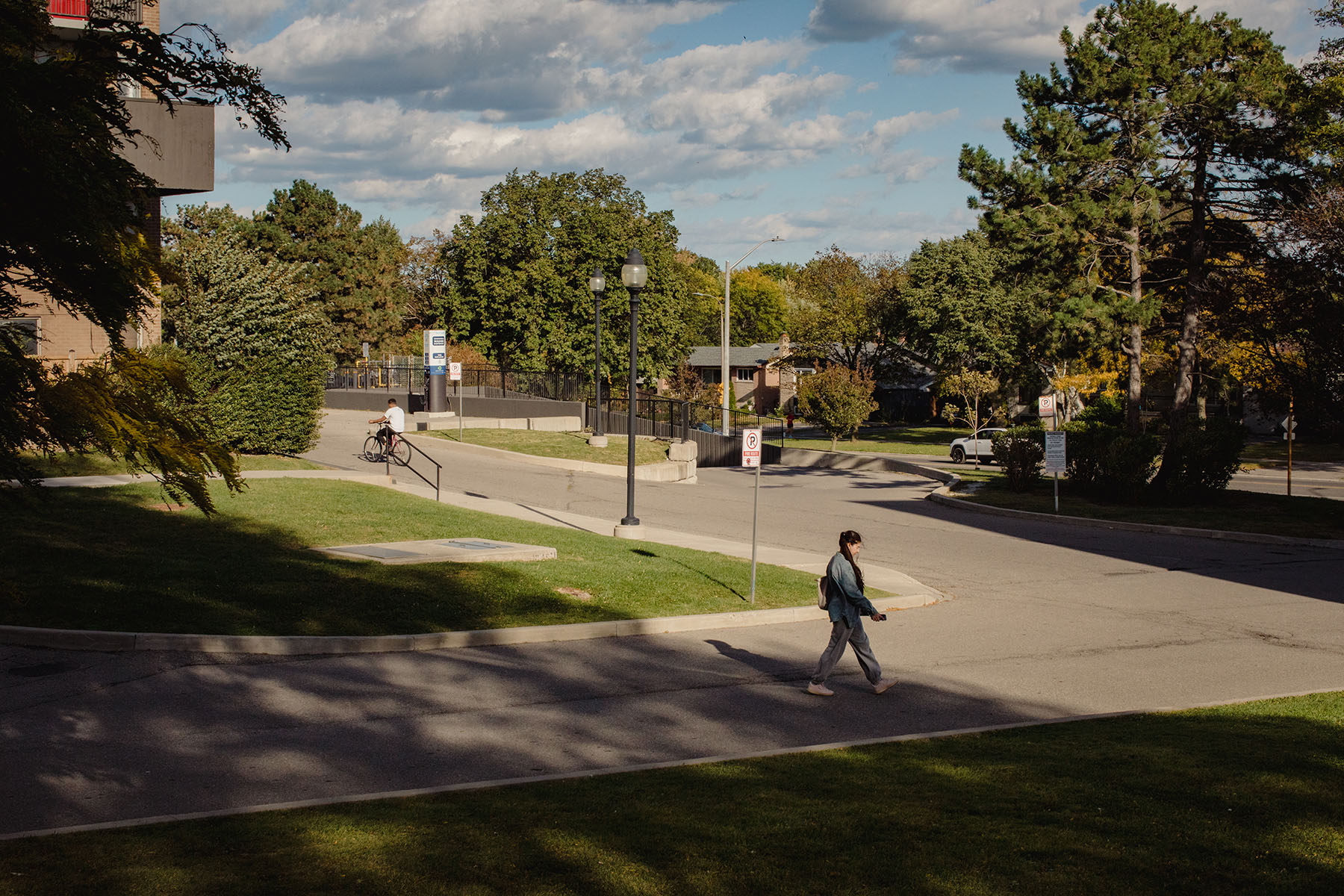
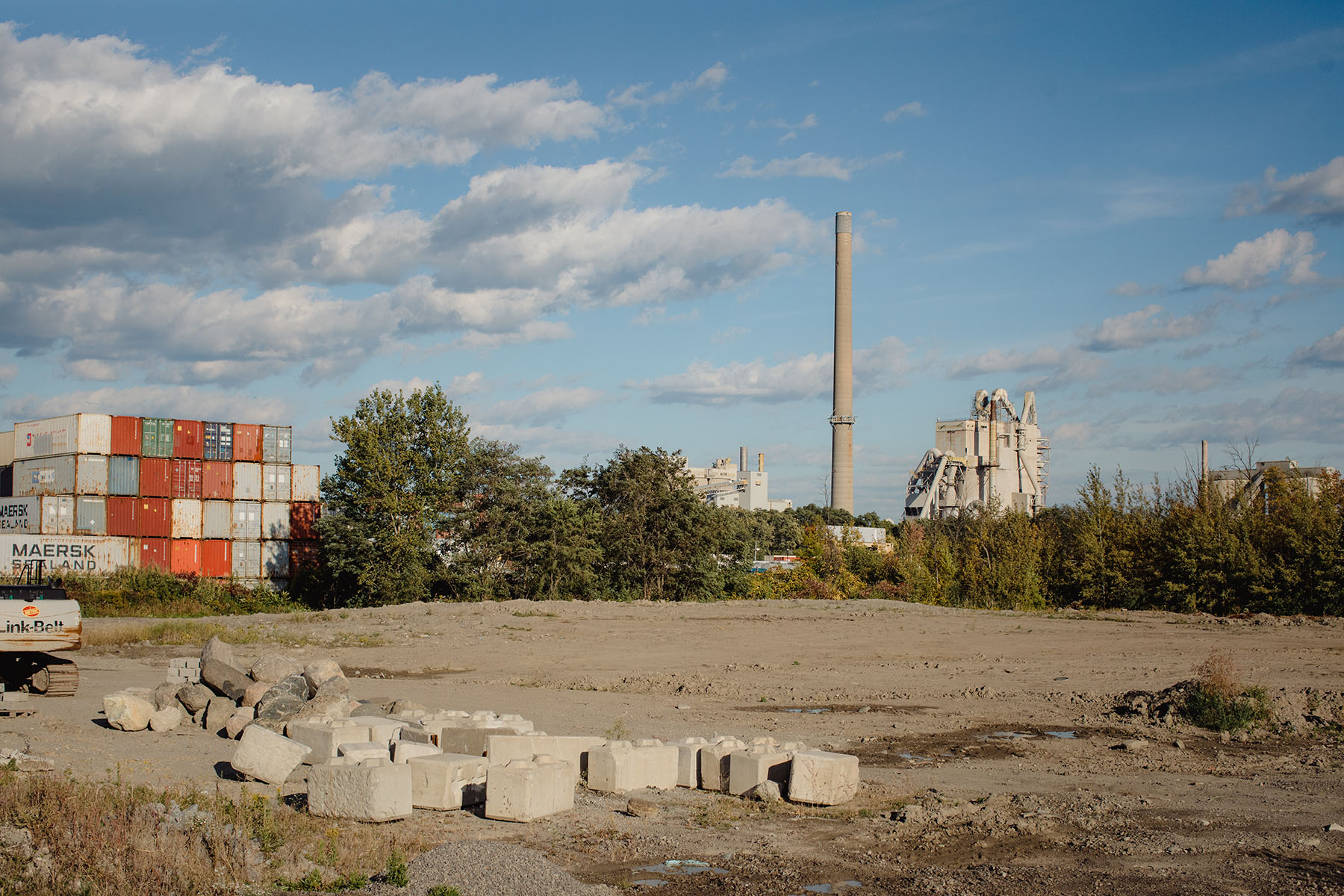
Left, residents walk between apartment buildings on Truscott Drive. Right, Mississauga Ward 2 contains the province’s largest cement plant, located along its southern border.
With Tedjo opting to run in this year’s mayoral race, the ward is at an inflection point. The council seat is open to anyone who wants to take a shot. There are 14 candidates registered, from co-op housing activists to real estate investors. What the ward needs now, says Tedjo, is someone who can find a delicate balance between Mississauga’s provincially mandated goal to build 120,000 units of housing, while managing concerns from the ward’s loudest—and most affulent—residents.
“There’s certainly a drive for change, and there’s a drive against it,” says Tedjo. “That’s a difficult thing to balance. When the city needs more housing the question then becomes, ‘well, where?’”
Find fact-checked bios of every candidate in Mississauga Ward 2
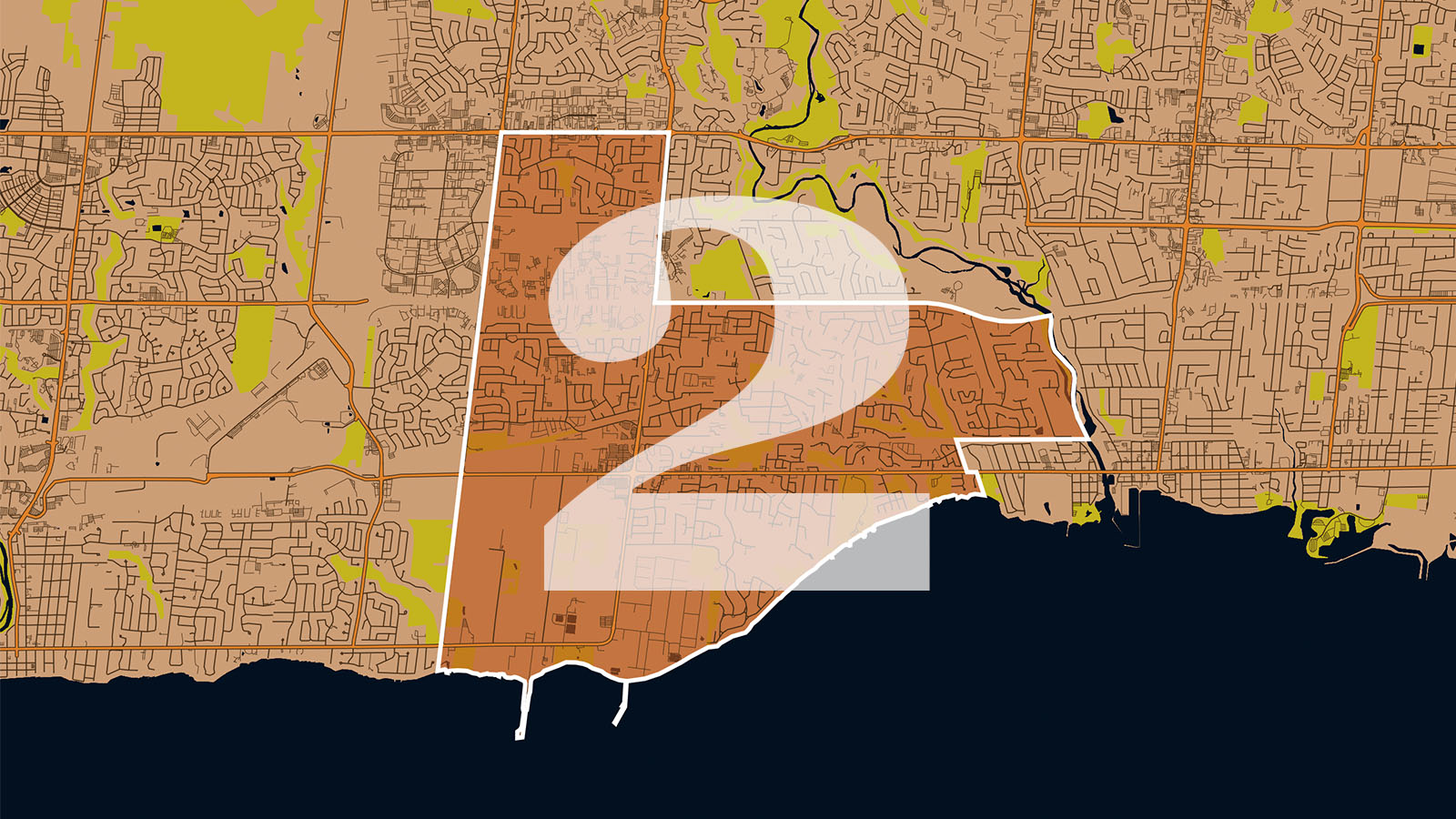
Recently, hundreds of Lorne Park residents signed a petition opposing an 11-storey condo proposed for a site on Lakeshore, citing a risk of “hurricane-force winds” caused by the building’s height, damage to the Carolinian forest ecology, increased traffic, groundwater management, and general incompatibility with the surrounding single-family detached homes.
“Let’s allow the community to once again have a voice in how their neighbourhoods evolve,” pleaded one local resident at a planning and development committee meeting last month where the condo proposal was considered.
Though most of the residents’ concerns were downplayed by the development team, and Mississauga’s planning staff recommended moving forward with the proposal, the item was deferred to a future council meeting to further address some of those concerns.
The area around Clarkson GO station, northwest of Lorne Park, is an obvious one for intensification, but those efforts, too, have been plagued by controversy. A master plan completed by the city in 2025 that would have prioritized more density (including affordable housing), pedestrian connections, greenspace, and a major retail hub had to be scrapped when the provincial government increased their density requirements for transit-oriented communities. Municipal staff are currently drafting the Clarkson Village study, but that likely won’t be ready until next year.
Reflecting on the tension between the need for more housing and the desire to preserve the city’s more established pockets, Tedjo warns against writing off the concerns of Ward 2’s more affluent residents just because they happen to have some of the highest property values in the city.
“Just because it’s affluent doesn’t mean it doesn’t have issues,” he says. “Property taxes have gone up 30 percent in the last four years. In terms of real dollars, that has a much more significant impact on residents here … If you’re a pensioner or on a fixed income, those impacts are hard to absorb.”
For candidate Leeann Cole, the rise in property taxes is exactly the issue she is banking on to nab the votes of the city’s more politically engaged residents. A former nurse and former vice-chair of the Peel District School Board, Cole was one of the first to sign up to run for council. She’s hoping the head start will help—estimating she’s clocked more than two million steps campaigning since.
While fielding the odd complaint from residents about gypsy moths and kids driving erratically on e-scooters, Cole says concerns about rising property taxes have dominated most of her doorstep conversations.
 Trustee Leeann Cole is running for council in Mississauga Ward 2.
“They’re not saying ‘We don’t want to pay property taxes.’ They’re not saying ‘We don’t want to pay for city services,’” she insists. “They’re saying they’re too high, too fast.”
Tedjo is correct about the 30 percent residential property tax increase over four years (slightly more than the City of Toronto). For a million-dollar home, that has added more than $2,500 to the annual carrying costs of a property, and many homes in Lorne Park are valued at much more than that. How easily a resident could weather those costs would, of course, depend on their lifestyle.
In Mississauga, properties are taxed both by the city and by the Region of Peel. As it stands, the City of Mississauga funds 62 percent of the Peel Regional Police budget versus Brampton, which pays 38 percent despite having a larger population. This imbalance has been a longstanding concern for Mississauga residents, some of whom believe they are “subsidizing” Brampton and Caledon’s municipal services, in turn requiring them to pay higher property taxes. According to a statement from the City of Mississauga, in 2025, 4.6 percent of the City’s property tax bill was “directly tied” to a historic 23.3 percent increase in the Peel Police budget.
Last month Mayor Carolyn Parrish told reporters that in the last five years, Mississauga has subsidized Brampton and Caledon to the tune of $399 million.
“We need someone to say, ‘Enough is enough,’” says Cole. “Can you imagine how our property taxes would stall for years if we got that money back?”
Cole admits she’s not quite sure, procedurally, how a rebalancing of the police budget would happen. But as she laces up her shoes and makes her way through the leafy residential streets and small-town retail corridors of Ward 2, she believes she has the chops to move the dial.
“I’m little and blonde, but I’m pretty mighty and I have a big personality,” she says. “It’s people like that that you need in council to take the hit.”
Tom Ellard, another long-time Lorne Park resident running for council, also believes Ward 2 residents want to see “managed growth” in the area, growth that preserves the character of the ward’s older residential neighbourhoods, even if it means saying no to certain kinds of housing. With a large proportion of greenspace, and most of the city’s public waterfront access, there’s little place for higher-density housing in the ward, he says.
“Residents don’t want to see new condo towers that ultimately become safety deposit boxes in the sky,” he says. “Ward 2 is like a country oasis in an urban setting, so that’s what draws people.”
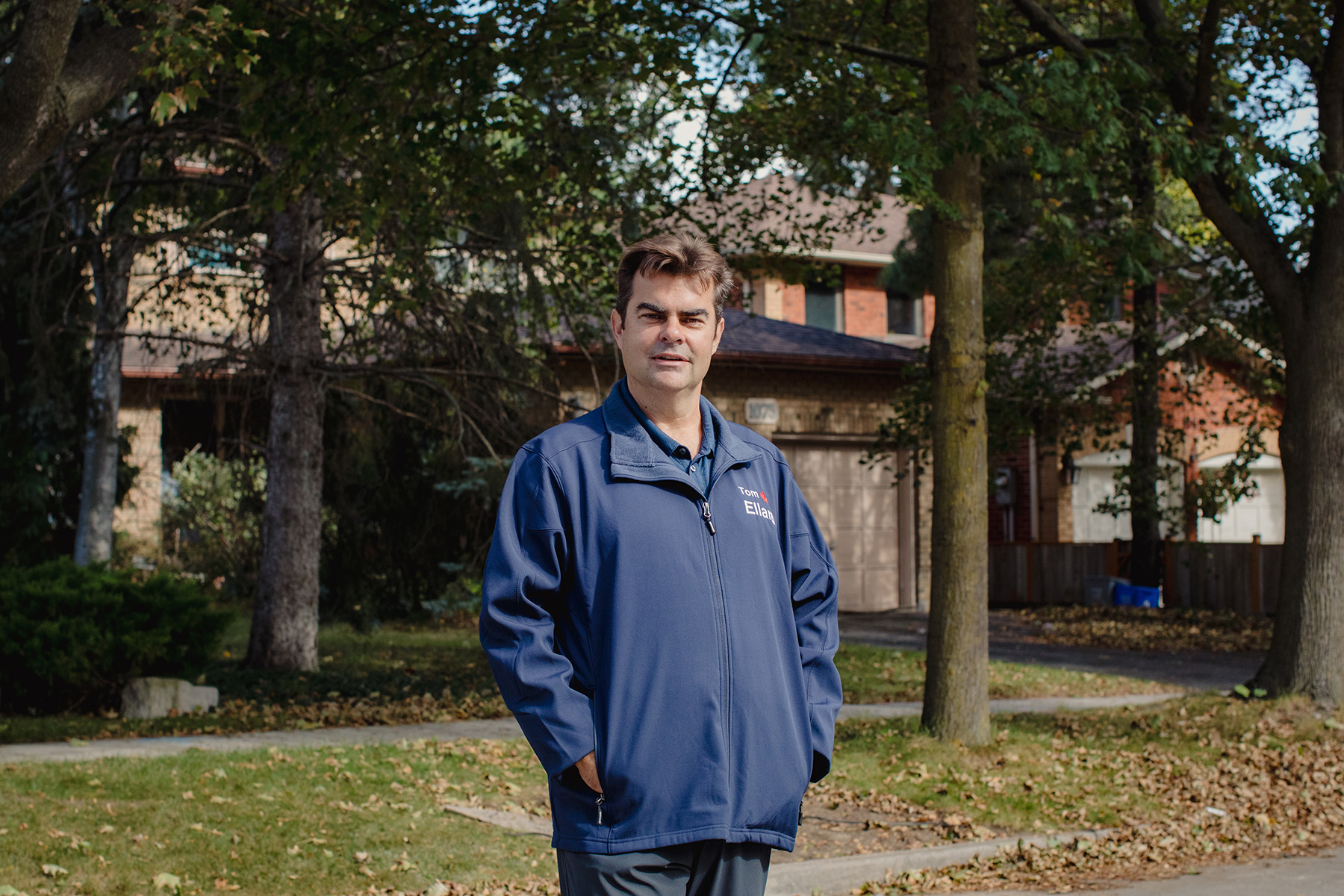 Former federal Conservative candidate and Lorne Park resident Tom Ellard is running for council in Mississauga Ward 2.
He’s also counting on his fresh perspective as an outsider to council to tackle what he sees as the ward’s biggest problem: crime.
“Crime is out of control,” he tells The Local. “When I’m out at the doors, everyone either knows somebody who has had their house broken into or has had their car stolen, or both. And that’s not a nice place to find yourself in, especially because we have a large constituency here that is moving into the seniors’ bracket.”
Though Peel Regional police say only three percent of reported stolen vehicles in Mississauga are from the neighbourhood, that hasn’t stopped nearly 400 residents from forming the Lorne Park Neighbourhood Safety Group, dedicated to keeping watch in the neighbourhood and advocating for tougher crime legislation.
Ellard, who served in the military before finding management work in the corporate sector, moved to the neighbourhood 22 years ago, where he and his wife raised two sons. When he first moved in, he recalls, his wife phoned Peel Regional Police to inquire about local safety initiatives and they laughed, telling her she had no reason to worry: There was no crime in Lorne Park.
“Those days are gone,” says Ellard. “That’s something I would like to see change.” His plan for that is to support neighourhood watch programs and advocate for more “visual deterrents,” such as a larger law enforcement presence, in the area. Like Cole, he believes a rebalancing of the police budget will allow for more law enforcement presence in Mississauga, specifically in Ward 2, although he admits the problem of crime is a complex one.
“I’m not Batman,” he says. “I can’t solve all of that.”