

Listen to this article
Estimated 3 minutes
The audio version of this article is generated by AI-based technology. Mispronunciations can occur. We are working with our partners to continually review and improve the results.
The association representing doctors in the Outaouais is calling for the incoming Parti Québécois government to address the shortage of family physicians in the region.
Around 15,000 residents were left without primary care physicians this year after Quebec passed Bill 2 last October. The law links the compensation of physicians to the number of patients they see, and 24 family doctors from the region left the province as a result.
But Dr. Guillaume Charbonneau, president of l’Association des médecins omnipraticiens de l’ouest du Québec, told Radio-Canada that staffing levels were stagnating long before the controversial bill was on the table.
There were 442 general practitioners in the Outaouais in 2021, said Charbonneau, who practices in Maniwaki, north of Ottawa.
Four years later, that number had ticked up just slightly to 445.
Meanwhile, the population has increased and is expected to continue growing at a higher rate than the rest of the province over the next five years.
According to the Institut de la statistique de Québec, the region’s population was 404,058 in 2020. As of this February, it was 429,056.
“We’re talking about roughly 100 more family doctors needed to meet the demand,” said Charbonneau in a French-language interview.
Data from Santé Québec Outaouais shows that as of September 2026, more than 123,200 patients were without a family doctor.
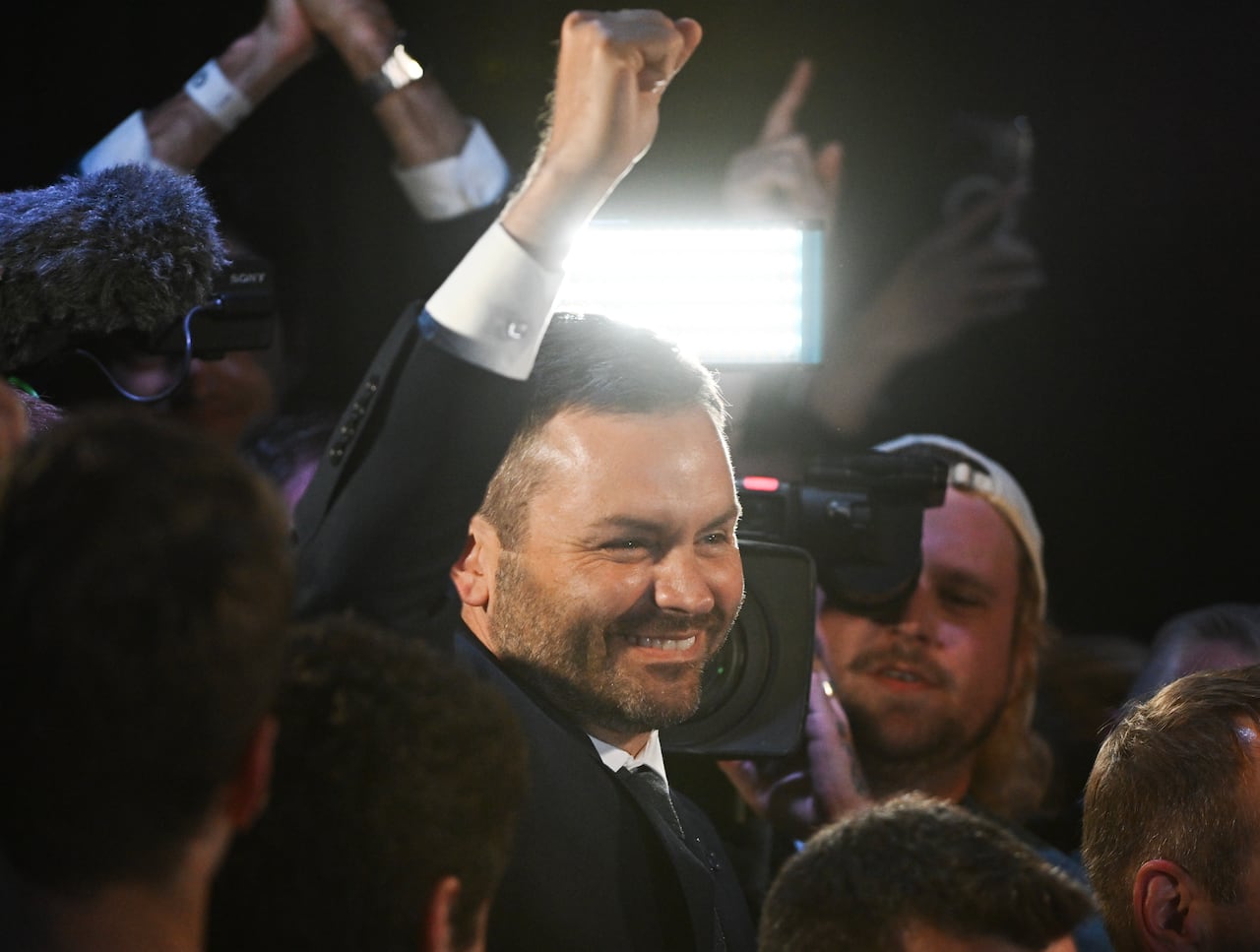
Parti Québécois Leader Paul St-Pierre Plamondon fist pumps to supporters after winning the provincial election last Monday. (Graham Hughes/The Canadian Press)
Big hopes for new government
Charbonneau said he’s glad the PQ acknowledged the shortage of family doctors across the province during the election campaign, but he hopes it will take into account the reality of the Outaouais — particularly its proximity to Ottawa — when it comes to tackling the problem.
“Family doctors are being courted by Ontario,” he said. “We have to do the same thing.”
Competitive compensation terms and incentives would go a long way in retaining, recruiting, and training new doctors, Charbonneau said.
“We really need our partners, our MNAs and our new government to help us turn the situation around, to make the practice of family medicine attractive and, ultimately, to improve access for the people of the Outaouais,” he said.
CBC requested an interview with incoming Papineau MNA Isabelle Millette — the first PQ candidate in five decades to win a seat in the Outaouais — but the party declined, instead pointing to its electoral platform.
The platform promises an annual increase of 200 admissions to Quebec’s medical schools and pledges to revitalize local community service centres for better access to primary care.
It also says it will abolish Santé Québec, the agency overseeing the health-care system created in 2024, and put the savings into government-run clinics.
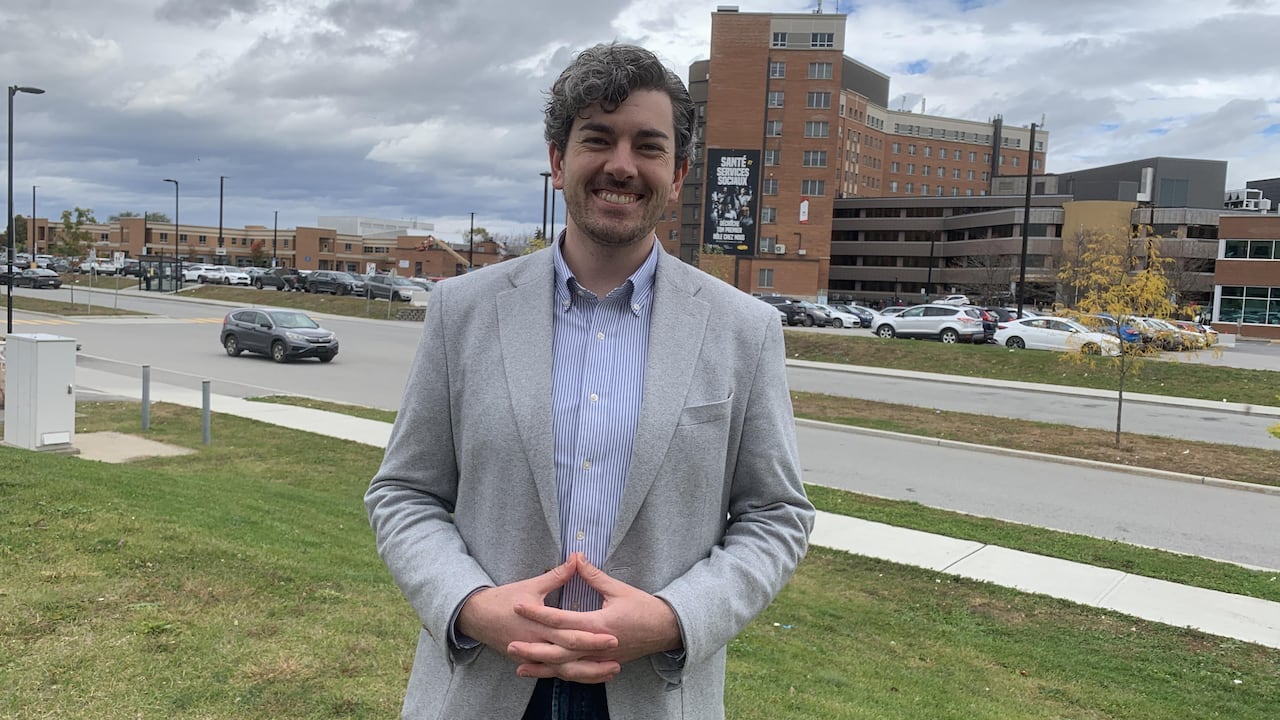
Sacha Cannon stands outside the Hull Hospital earlier this month. The newly elected Hull MNA says that when it comes to the physician shortage, the Outaouais needs ‘actions that will deliver results as soon as possible.’ (Simon Deschamps/Radio-Canada)
Sacha Cannon, the newly elected Liberal MNA for Hull, said many residents in his riding lost their doctors after Bill 2 passed.
The Liberal party campaigned on a promise to achieve and maintain pay equity with Ontario in the public health and social services network in the Outaouais region.
Cannon said the party intends to collaborate with the PQ to keep that promise.
“We can’t constantly mix partisan politics with health care anymore. We simply can’t afford to. We really need actions that will deliver results as soon as possible,” he said.