

Listen to this article
Estimated 4 minutes
The audio version of this article is generated by AI-based technology. Mispronunciations can occur. We are working with our partners to continually review and improve the results.
A limited supply of cricket pitches and soccer fields in need of investment are highlighted in a new city report.
The report examines the playing time, maintenance condition and demand currently placed on basic, unstaffed recreation facilities maintained by the city. Of the sports it studied, city staff found cricket pitches are the clearest case where demand is far outpacing a limited supply.
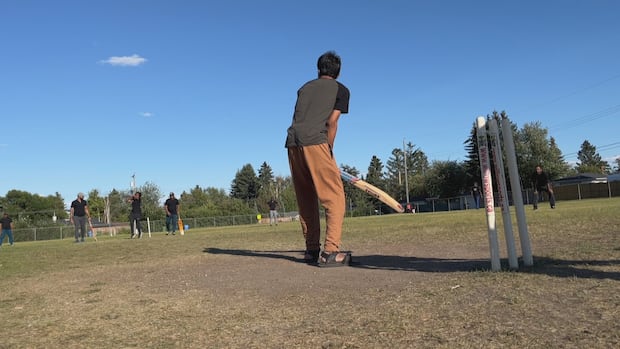
Booked cricket pitches around the city are used approximately 93 per cent of the time. By comparison, booked baseball diamonds see 40 per cent usage, while soccer fields are used 15 per cent of the time they are booked.
Hozaifa Cheema, an organizer with the Calgary and District Cricket League, said he’s surprised the utilization rate of local pitches isn’t even higher. He says the city has needed more pitches for years.
“We’re so constrained that we don’t have time for practice, everything’s just a game,” said Cheema.
This season marked the first time in the league’s nearly 120-year history that organizers had to reject new applications for teams due to popularity and a lack of space, Cheema added.
One obstacle the city faces is how land-intensive cricket pitches are, the report says, with nearly two hectares needed to build the facilities.
Cheema said Calgary’s cricket community is trying to grow the sport’s popularity among young players. But without more pitches, it’s difficult to develop players of any age.
“With the constraints that we have, we’re just not able to do that with our players, and not able to run any significant league-sponsored programs where we’d be able to develop players that can go on to play for Canada,” said Cheema.
He said Calgary has fewer than 10 cricket pitches for adults to use, most of which have barriers to play such as grass that’s too thick.
Calgary council recently invested in cricket, earmarking funding in this year’s budget to build a pitch at the Northeast Athletic Complex.
Council’s infrastructure and executive committee is scheduled to discuss the report on Wednesday. The report arrives just a month before council begins four-year budget deliberations.
More rec investment needed: Farkas
Mayor Jeromy Farkas said the low utilization rate the report found for soccer fields reflects their poor condition.
He said many fields are not adequately maintained to a high enough standard to host competitive play, which is a problem across other kinds of sports fields around Calgary.
“We haven’t adequately maintained what we have,” said Farkas.
Farkas argued more sports facilities of all kinds are needed both in growing, existing neighbourhoods and in greenfield communities. He added the city would benefit from more multi-use facilities, and that there’s a “dearth of accessible recreation options” in Calgary.
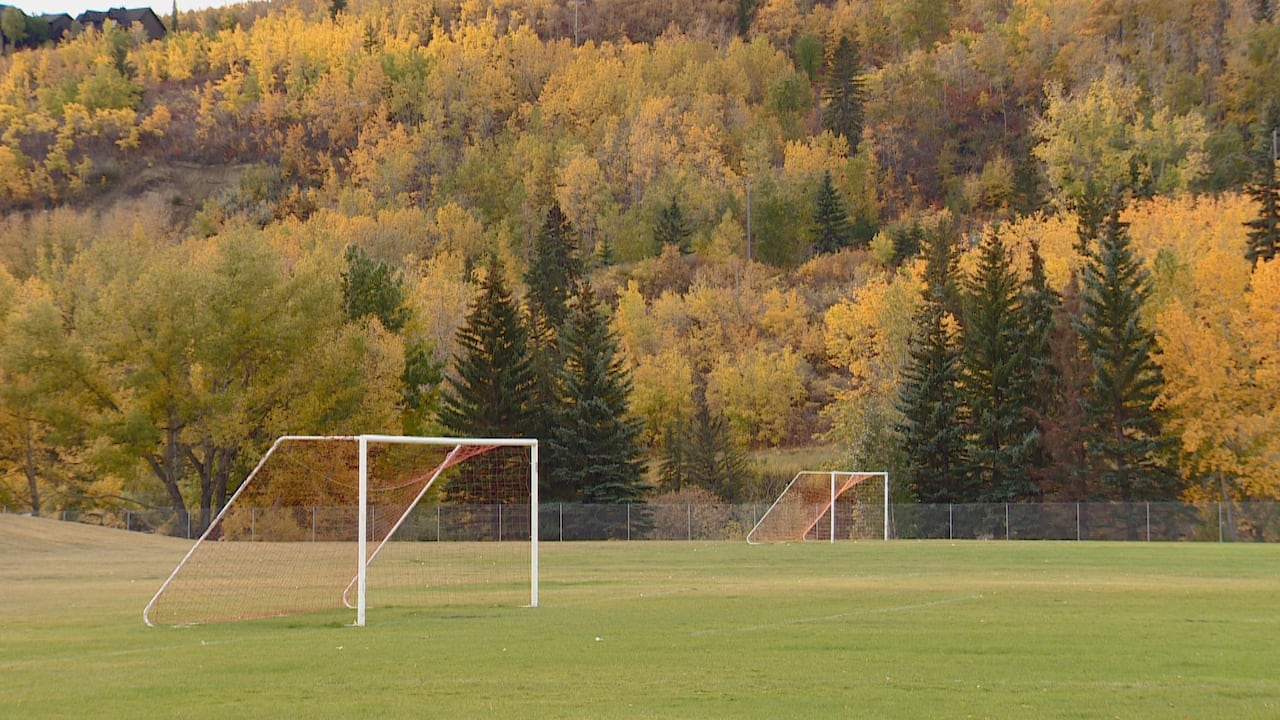
More soccer fields and more investment in Calgary’s existing facilities are both needed to keep up with the demand placed on them, Mayor Jeromy Farkas argued on Tuesday. (CBC)
“We need to be a little bit smarter in terms of the types of recreation facilities that we build. I’d like to see more multi-use facilities,” said Farkas.
“Let’s make sure that we’re building more smartly so that if there aren’t soccer players who want to play in a given field, are there other ways that it can be utilized by other different sports groups?”
Sport Calgary president Candice Goudie said there’s growing demand around the city for all kinds of sports as the population has boomed.
She pointed to examples like Calgary’s lack of a competition-sized fieldhouse or baseball diamond, that, if funded and built, could bring more tournaments and events to the city.
Looking ahead to council’s budget talks, Goudie said more sports infrastructure is needed to ensure people aren’t being pushed out of participating. Especially, because most of Calgary’s public recreation facilities are more than 35 years old.
“The cost of not investing is not inconvenience, it’s inaccessibility. And if we’re not looking at more ice, more water, more turf, more gymnasiums, we will have a city here where community sport is not accessible,” said Goudie.