
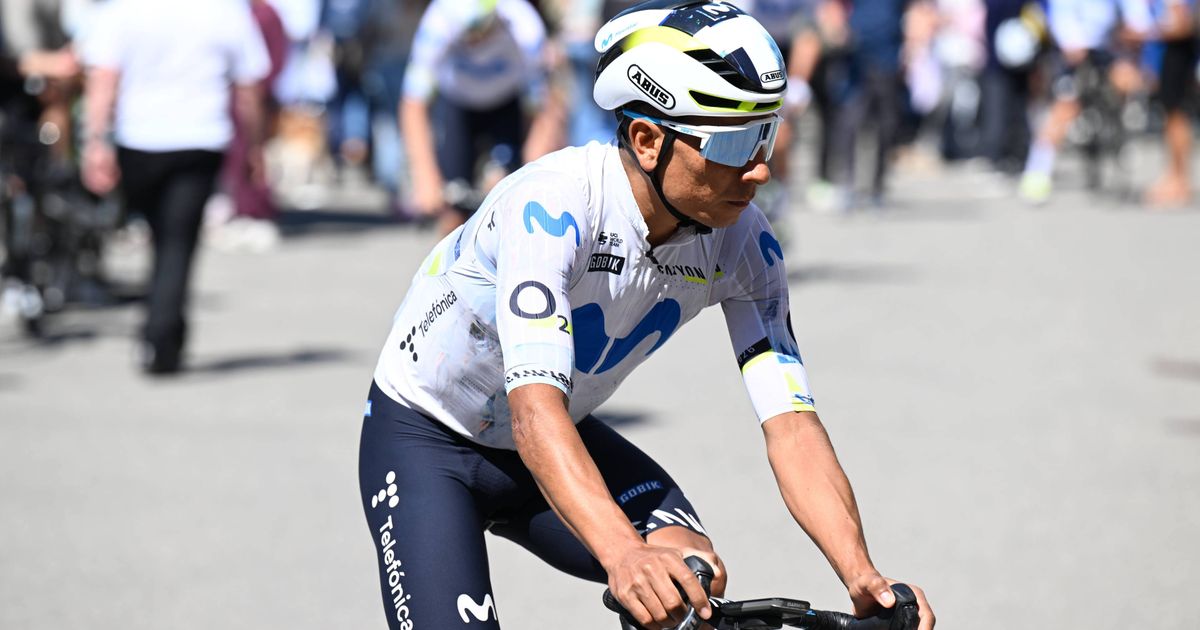
The farewell, however, did not happen overnight. He had begun planning his commitments away from competition some time earlier, allowing him to gradually accept that each race would be his last. “You feel a deep sense of nostalgia when you realise that it really is your last race,” he admits in an interview with El Espectador. The rider also knows the transition will be difficult, especially without racing and after leaving behind an activity that has shaped his life for so many years.
Figures who shared some of modern cycling’s most important chapters with him joined him at the close of this stage. Chris Froome, Alberto Contador, Joaquim Rodríguez, Samuel Sánchez, Dani Moreno and his sports director, José Luis Arrieta, were among those at his side. For Quintana, ending his career surrounded by the people who helped write that story made the farewell especially emotional.
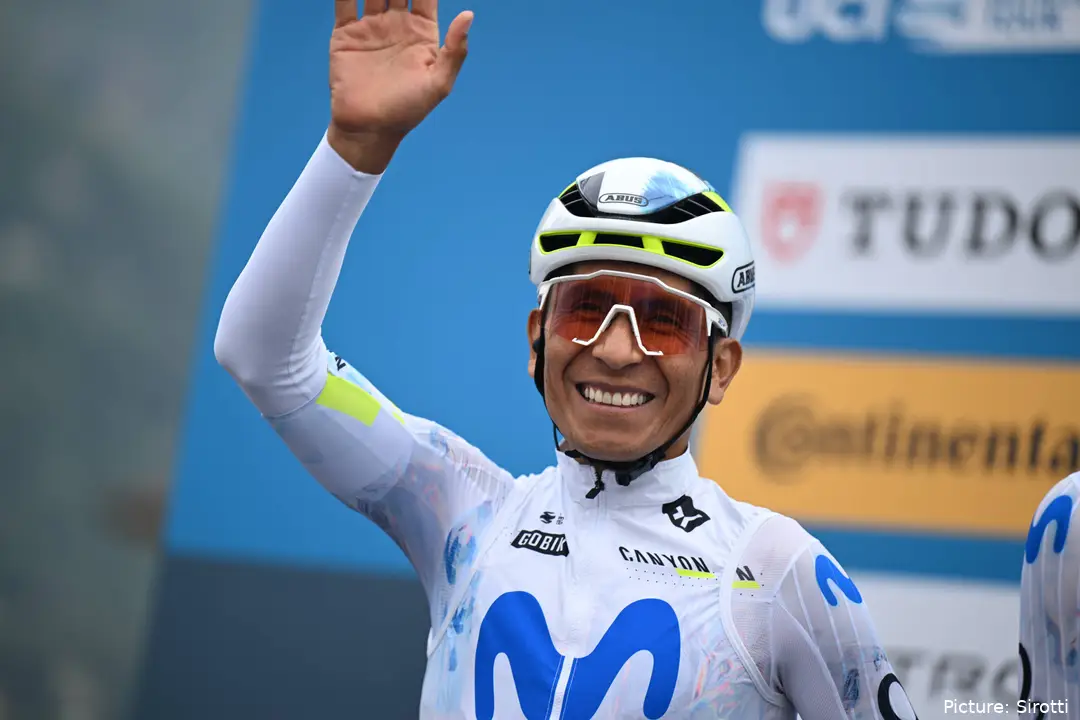
Nairo Quintana
The legacy of the Colombian champion
Beyond his retirement, Quintana also reflected on the state of Colombian cycling and the challenges it faces in maintaining its international standing. In his view, the problem is not a lack of talent, but a shortage of solid projects, funding and effective management to make the most of young riders’ potential.
“Colombian cycling needs investment.” The rider recalls how courage and adaptability enabled Colombians to go head-to-head with European riders in his early years. But he believes advances in technology and training methods have widened the gap.
In this context, he highlighted the importance of the Tour de l’Avenir in restoring confidence in Colombian cycling. That victory showed that riders from the country could beat rivals from around the world and ushered in a renewed sense of ambition. For Quintana, it was one of the finest experiences he could have as an athlete and a representative of Colombia.
Quintana’s dream to win the Tour de France
His own career was driven by a single dream: winning the Tour de France. He tried several times and finished second in 2013 and 2015, results that established him among the leading riders of his generation. Although he never wore yellow in Paris, he won the Giro d’Italia in 2014 and the Vuelta a España in 2016, adding two major titles to his palmarès and proving his ability to contend in Grand Tours.
Over the years, Quintana learned to accept the natural cycles of sport. He explains that, as a young rider, he had to work out for himself how to handle victories and pressure. Later, he understood that stronger riders would always emerge and that the spotlight never lasts forever.
“If I were strong, I wouldn’t retire,” he admits, while insisting that his decision was planned so he could bring his career to a close before sporting decline determined the ending.
His final assessment is positive. Quintana was able to keep racing, contribute to his team and win a race during his farewell season. Above all, though, he will remember the affection he received over the years. “The most important thing about an athlete is not their victories, but what they can share with and do for their people,” he says. That popular recognition, he insists, has been the greatest reward of his career.