
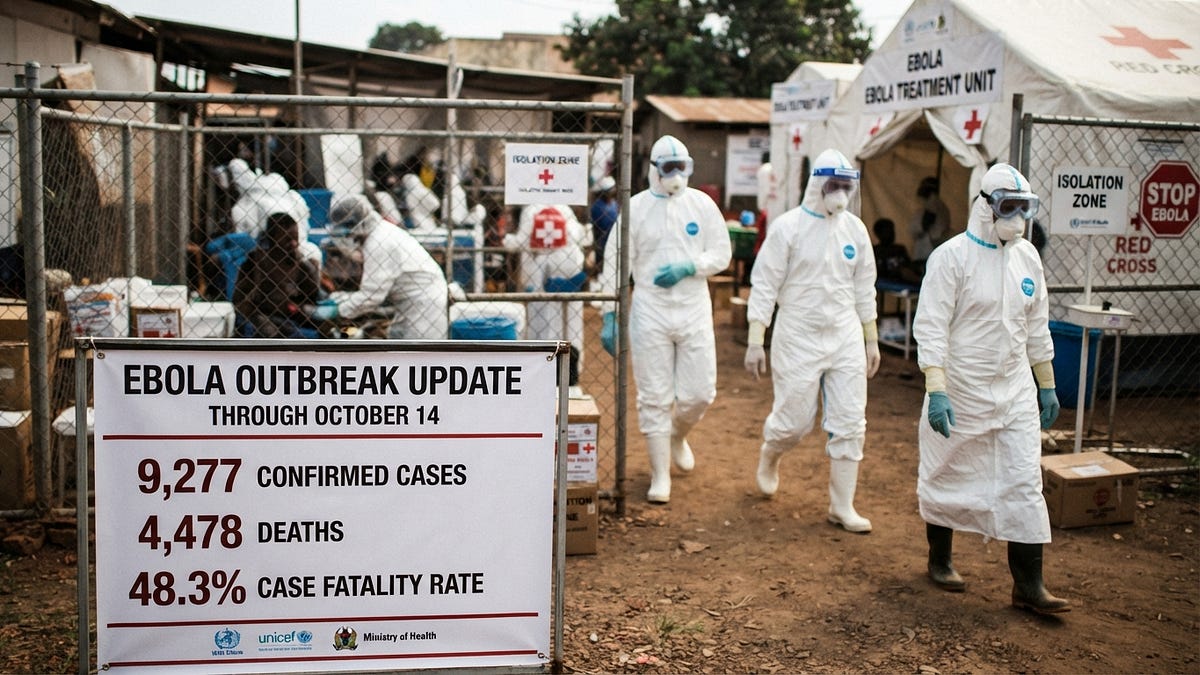
As of October 14, 2026, the Democratic Republic of the Congo Ministry of Health reports 65 new confirmed cases of Ebola virus disease (EVD) have been reported across four provinces: Ituri (31 cases), North Kivu (28 cases), Haut-Uélé (5 cases), and Tshopo (1 case).
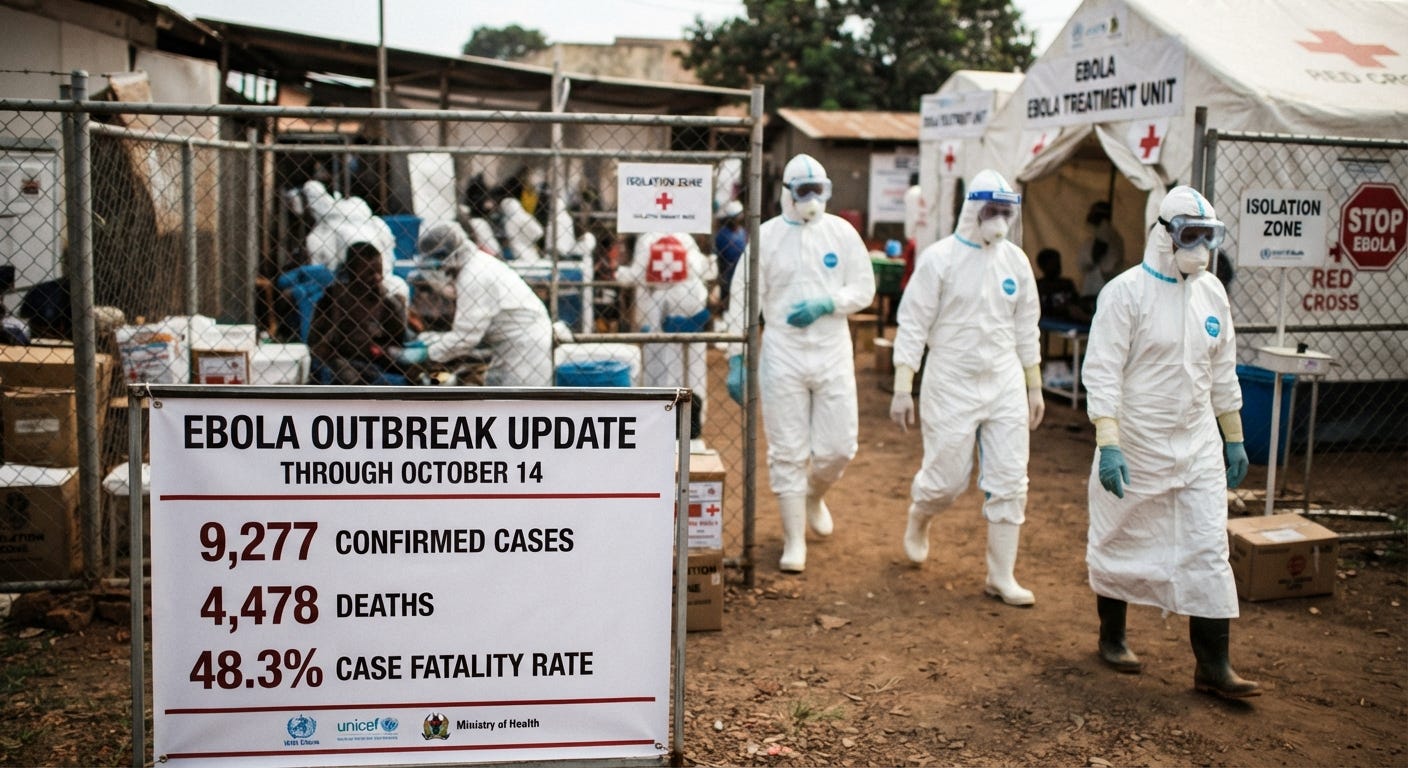
Additionally, 15 deaths were recorded in Ebola Treatment Centers (ETCs)—6 in Ituri, 6 in North Kivu, 2 in Tshopo, and 1 in Haut-Uélé—bringing the total number of confirmed deaths for the period in question to 37.
Furthermore, 38 patients (18 in Ituri, 15 in North Kivu, and 5 in Haut-Uélé) have been declared recovered after testing negative twice for EVD.
Since the beginning of the outbreak, the DRC has recorded a cumulative total of 9,277 confirmed cases and 4,478 deaths, representing a case fatality rate of 48.3%. Ituri remains the epicenter of the outbreak, accounting for 73.4% of all cumulative confirmed cases and 47.7% of the new confirmed cases reported over the last 24 hours.
To date, 65 out of 167 health zones (38.9%), spread across seven provinces, have been affected since the start of the outbreak.
The 2026 Bundibugyo Ebola outbreak in the Democratic Republic of the Congo (DRC) is the country’s 17th recorded Ebola outbreak and its largest and deadliest to date. It is also the second-largest Ebola outbreak in global history (after the 2014–2016 West Africa epidemic). Caused by Bundibugyo virus (BDBV), for which there is no licensed vaccine or specific treatment, it has expanded rapidly amid insecurity, high population mobility, and challenges with surveillance and community engagement.