
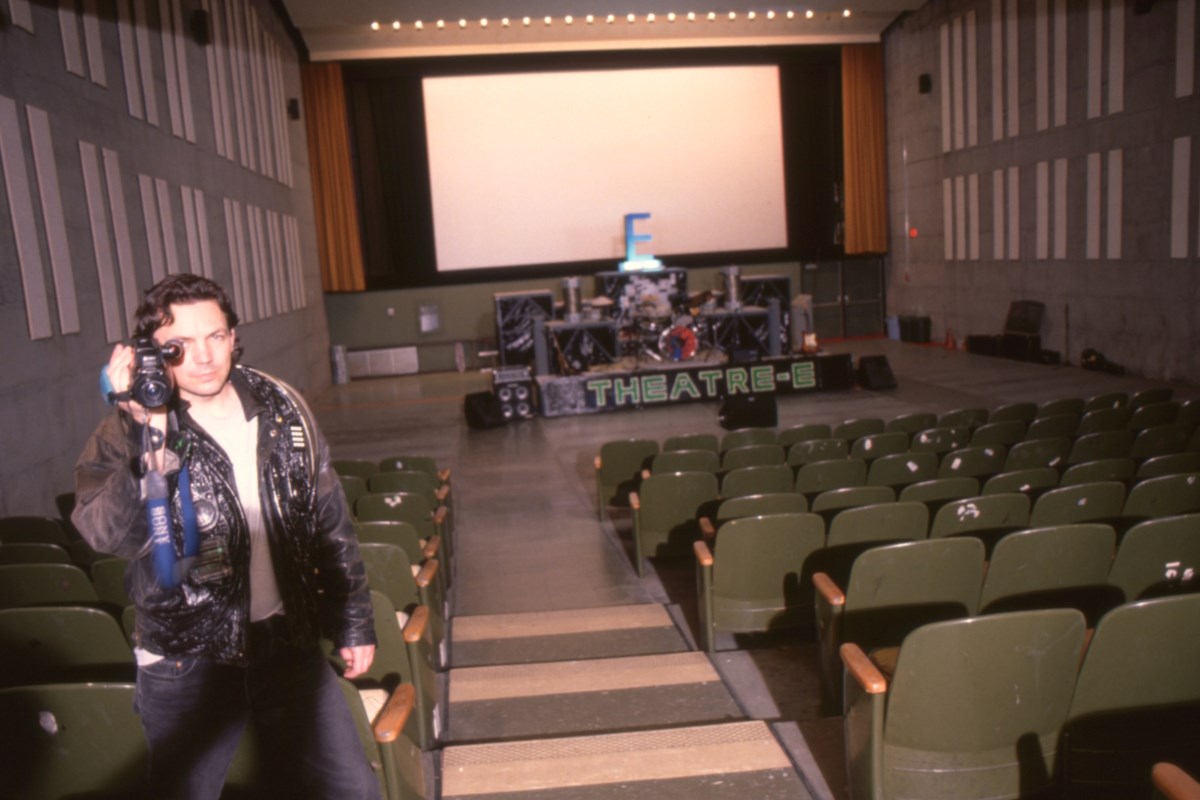
What was once the city’s Mecca for Kung Fu films became a haven for artists and dance parties.
History rarely goes quiet — especially in the case of one of the city’s longest-running live music venues.
Before The Rickshaw Theatre you know today, and after The Shaw Theatre screened its last Kung Fu movies in the mid 1980s, the cavernous building at 254 E Hastings St. in Vancouver went by a lesser-known name: Theatre-E.
As part of the global explosion of martial arts movies from Hong Kong in the 1960s and ’70s, two enterprising brothers — Tan Sri Runme Shaw and Sir Run Run Shaw — erected scores of screening rooms in major metropolises internationally.
But when the appetite for prolonged fight scenes paired with campy camera movement waned, these often elaborate venues were left to find new purpose or be doomed to the wrecking ball.
Granddaughter of a Kung Fu knight
Luckily for the Hastings Street theatre, an unlikely relationship formed that would preserve its operating status in the years that followed.
Rod Mabee was part of a group of Vancouverites — along with then-city councillor Jim Green — who was trying to save the Downtown Eastside from falling into a downward spiral in the early ’90s. To that end, Mabee had helped found a housing and community development society.
Advocates like Green and Mabee wanted to preserve the historic venues in what had once been the heart of Vancouver’s entertainment district. Those included The Lux (later called Princess), Pantages, Golden Harvest and The Shaw.
As part of those efforts, Mabee was introduced to Lucy Shaw, granddaughter of Run Run Shaw. She was in charge of The Shaw theatre, as well as a couple of multicultural cable TV channels.
They were both part of a business group that was looking at different ways of using the theatre at the time.
“One of them was … they were just going to turn it into a fish tank, to sell live fish out of there,” Mabee recalls. “Actually, it was a pretty good building for that because it’s cold and dark.”
After meeting Lucy in 1994, he says the two of them had a realistic chat that the building should retain its core identity as a theatre.
“She still had this idea that if they could, they would like it to be what it was — what they built it for,” Mabee says. “And I proposed basically that you could do live events out of there, like bands.”
But there were a few roadblocks. There was no active business licence, for one. That was easy enough to fix, especially when Mabee brought Lucy Shaw to city hall.
Harder to get a dance permit than alcohol in the ’90s
However, city staff wouldn’t allow live music events. It wouldn’t allow alcohol sales. And it strictly prohibited dancing.
“A dance permit back then was harder than getting alcohol,” Mabee says. “The reason behind all of that was that there was a fear of a stampede and people dying in these warehouse parties. And it did happen.”
But that was never going to happen at The Shaw, he says. “Because it was engineered for people [with a] proper exit.”
So, on the surface, Mabee did what he could with the space, renting it out to bands as a place to practice and allowing various arts and community groups to hold functions there.
Meanwhile, he tapped the venue’s more fulsome potential as Theatre-E. That included shows with live bands, some of which were shut down by police.
“Cops parked across the doorstep at the last minute, basically not even warning the person that was trying to put this on,” Mabee says. “I would always partner with somebody because if we leased it out … then they could sue me and the owner. But if it was a co-production, it was a way of limiting the damage to the owner.”
Many of the events held at Theatre-E fell into an “all ages” grey area. Those were raves, essentially, or afterparties for raves — supporting a scene that was blowing up at the time.
Promotional posters for an event called “xmas II” on Dec. 12, 1998 advertise an evening of live ambient performances with Pilgrims of the Mind and Dan Handrabur. Another teases a Full Moon Party with DJs Zen and Andre, alongside independent film screenings, art installations and a live radio broadcast on 89.3 FM.
For the most part, the city tolerated Theatre-E.
“It was so small. The place at most could accommodate 500 or 600 people. And because I was in the grey area, I wasn’t actually running underground like a lot of the raves … that was actually a legit place you could do it, because I had a business licence,” Mabee says. “I brought the theatre up to code, enough to get the business license. Everything was safe.”
Theatre-E ‘touched a lot of people’
For more than a decade, Mabee ran the theatre space in a sort of limbo state: not condemned nor equipped to fully succeed.
The catalyst that spelled the end of that stalemate, and of Theatre-E, was the 2007 financial collapse, when landlords became desperate to sell. The venue was later bought and re-opened in 2009 as The Rickshaw. After that, it still took years of scuffles with the city to finally get a permanent liquor licence.
It wasn’t until recently that Rod Mabee’s daughter Dawn Mabee sought to bring light to an unsung part of the beloved theatre’s past. Dawn spent nights of her teenage youth selling water to thirsty ravers, or hosting sleepovers in the otherwise empty building.
Dawn says it’s a shame that more than a decade of memories fell into obscurity.
“I think we touched a lot of people,” she says. “We had some really amazing and memorable times at the theatre. Also, the city and the rave scene was a whole moment. And it should be part of the history books about that theatre.”
Whether it’s Kung Fu movies, Christmas raves or death metal concerts, one legendary venue in this city has been fighting for fun, despite forces that might try to take it away.