
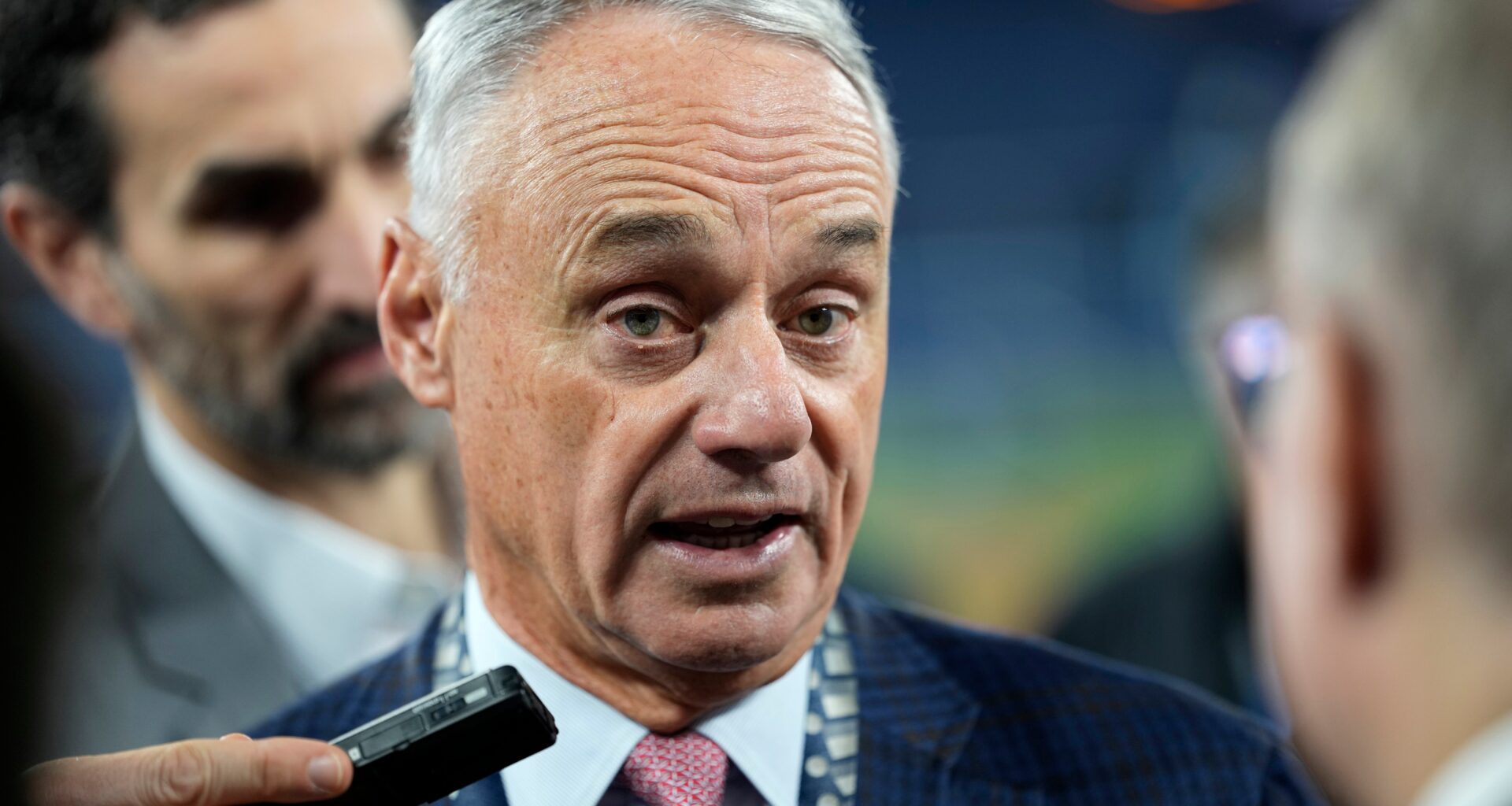
This coming Friday night when the World Series gets started in Milwaukee, it will feature two small market clubs looking to end decades-long championship droughts.
It should be a memorable, riveting end to an exciting season of baseball, but after the Commissioner’s Trophy is awarded and the bright lights go out, the sport will have to grapple with the uncertain future that awaits.
Until Major League Baseball and the MLB Players Association work out a new collective bargaining agreement, nobody can be sure how the sport will operate going forward. Will there be a salary cap? If not, will the current luxury tax system remain in place? And if so, what will the new tax thresholds be? Without the answers to those questions, the Red Sox and every other club are essentially flying blind.
Even if the big questions are sure to linger into next spring, the two sides have exchanged proposals outlining their preferred path forward. Neither side will get everything it wants, but here is a primer on what the league and players have already proposed and where there might be room to meet in the middle.
Cap or no cap?
The central question looming over baseball’s labor talks is the salary cap. The owners want one, the players are vocally opposed, and until games and dollars are on the line there’s no incentive for either side to budge from their positions.
That’s why when the previous CBA expires at 11:59 p.m. on Dec. 1 and the owners lock out the players, there’s no reason to expect any deal before at least March.
As part of its initial proposal over the summer, MLB outlined how a new salary cap system would work.
According to MLB.com’s Mark Feinsand and others, the salary cap would be set at $245.3 million along with a salary floor of $171.2 million. No club would be permitted to exceed the cap, and all 30 clubs would be required to meet the floor. MLB’s proposal would also split league-wide revenue 50/50 between the clubs and players.
In order to help the smaller market clubs meet those requirements, all local media revenue would be shared equally, which the league contends would create a more level playing field and eliminate one of the major advantages big market clubs like the Dodgers have enjoyed over the rest of the league.
The proposal also introduces the concept of maximum deals, which are familiar to fans of NBA. According to ESPN, the maximum contract a free agent could sign this coming offseason with a new team would be five years, $202 million. The free agent could return to his original club for as much as six years, $265 million.
There would also be restrictions on how long an extension a younger player could sign. A rookie could sign for up to 12 years — covering their six years of team control plus the maximum six-year deal they could have received as a free agent. A second-year player could sign for 11 years, a third-year player for 10 years, and so on.
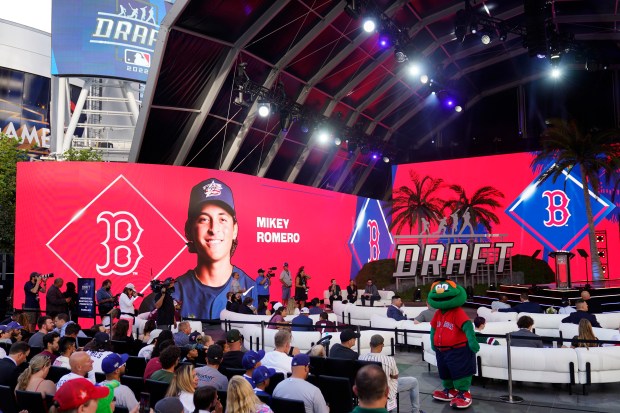 As part of its labor proposal to players, MLB has indicated a desire to significantly reform the draft. (AP Photo/Jae C. Hong)
What else is MLB proposing?
In addition to the salary cap, MLB has also made a number of other proposals. The initial proposal included a ban on deferred contracts, eliminating the qualifying offer system, raising minimum salaries and allowing a player with five years of service time to reach free agency if they’re 30 or older, as opposed to the current system where it’s six years of service time for everyone.
The league proposed changes to the MLB Draft as well, which would make high schoolers ineligible while allowing college players to enter after two years instead of three, along with the institution of a new international draft.
More recently the league also proposed reducing the length of the regular season from 162 games to 154, which would be a return to the length of the season prior to 1961 and allow for the creation of a league-wide weekly off-day similar to how the minors are set up. The league also proposed lengthening the divisional series from best-of-five to best-of-seven and allowing higher-seeded clubs to choose their postseason opponents during the early rounds.
All of these proposals are contingent on the players accepting a salary cap.
 The MLB Players Association has expressed vocal opposition to a salary cap and insisted it will never accept one. (AP Photo/Tony Gutierrez)
What do players want?
The players remain vehemently opposed to a salary cap, which they argue will suppress wages, eliminate the free market and create a zero-sum environment where gains for one player come at the expense of others.
In its initial proposals, the players have laid out an alternative vision for how the sport can address its financial disparities.
Instead of a cap and floor, the players have proposed the creation of a new “Competitive Integrity Tax” to complement the existing Competitive Balance Tax, which is the formal name for the luxury tax. Much like how the CBT functions as a soft salary cap, the new CIT would function similar to a soft salary floor, incentivizing low-payroll teams to invest more in their roster.
Like MLB’s salary cap proposal, the players envision increased revenue sharing amongst the clubs to help close the gap between big and small-market teams, along with increased benefits for lower revenue clubs that lose players in free agency. The players also want to see higher CBT thresholds and the elimination of non-monetary penalties for clubs that exceed them, which currently includes the forfeiture of draft picks under certain circumstances.
Beyond changes to the luxury tax system, the players have put forth a variety of proposals that would increase player salaries. They include higher minimums, an expanded pre-arbitration bonus program and expanded arbitration eligibility, among other things, as well as the elimination of the qualifying offer system and the ability for older players to reach free agency quicker.
As far as the draft goes, the players are opposed to making high schoolers ineligible or the creation of an international draft. They have proposed expanding eligibility to college sophomores, moving the draft from July to June, allowing clubs to trade draft picks and granting lower revenue clubs avenues to increase their signing bonus pools.
In terms of transaction changes, the players have made a number of proposals geared toward increasing and protecting job opportunities.
One example is a proposal to expand big league rosters from 26 players to 28 for the first 15 days of the regular season, which the MLBPA argues would help protect player health and provide more big league job opportunities out of spring training.
Another is a proposal to allow players to be placed on the 60-day injured list as early as the November tender deadline, freeing up 40-man roster spots over the offseason. That would allow a pitcher recovering from Tommy John surgery to be stashed, potentially sparing a fringe roster candidate from being designated for assignment to clear roster space for a player destined to open the season on the IL anyway.
The MLBPA also wants to reduce the number of times a player can be optioned to the minors in-season from five to three, accelerate eligibility for the Rule 5 Draft and ensure the 2026 draft takes place, guarantee player access to club-collected data and video so players can track their work with the same information the clubs are using, and ensure service time and salary protections for players optioned over the All-Star Break or immediately after a game where they’ve met certain performance thresholds.
That last one would primarily be geared toward middle relievers and spot starters who throw a bunch of innings and are immediately replaced by a fresh arm.
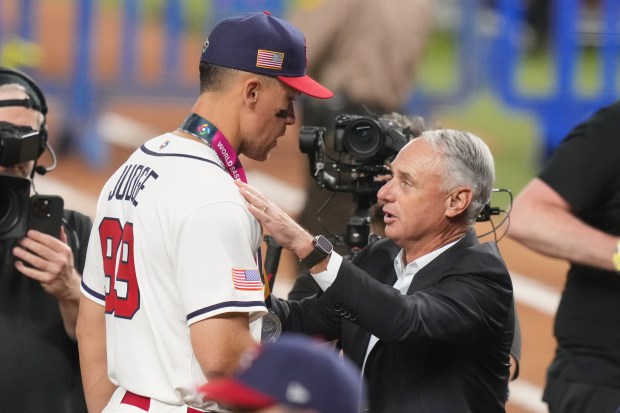 MLB Commissioner Rob Manfred talks to United States right fielder Aaron Judge during the awards ceremony following the championship game of the World Baseball Classic against Venezuela, Tuesday, March 17, 2026, in Miami. (AP Photo/Lynne Sladky)
Where’s room for compromise?
We have a pretty good idea of what a deal might look like if the players accept a salary cap. So far the league has accepted some of the player proposals as a tradeoff, including higher minimum salaries, the elimination of the qualifying offer system and allowing older players to reach free agency sooner.
Those would all be massive wins for the players in a vacuum. The problem, they argue, is that under a cap system all of those gains would come at the expense of others, and ultimately the only real winners would be the owners.
If the league wants to get the players to reconsider they’ll have to sweeten the pot and make an offer the MLBPA can’t refuse. What might that look like? Besides the league dropping other unpopular aspects of its proposal, particularly the restrictions on contract length, they would probably have to offer much higher than a 50/50 revenue split and perhaps also more generous changes to the free agency system.
Even that might not be enough.
If the league drops its insistence on a salary cap it’s possible a new deal could largely resemble the status quo. Perhaps the players get a higher minimum salary and some other items on their wish list in exchange for the league’s preferred changes to the draft, regular-season schedule and postseason format.
It’s also possible to envision a version of the players “Competitive Integrity Tax” concept as a more palatable alternative to a full cap and floor system. Instead of raising the existing tax thresholds and eliminating draft penalties for high-spending clubs that exceed them, the league and players could agree to make them even more restrictive and grow at a slower rate in exchange for adding the “floor” and implementing the necessary revenue sharing to make it all work.
It would be the closest MLB has ever gotten to a salary cap and could conceivably address the competitive balance concerns both sides claim to share, all while preserving the free market players cherish. But for now we’re a long way off from either side being willing to make a deal like that, so expect plenty more saber rattling and doomsaying before the negotiations really get going next spring.