

Listen to this article
Estimated 2 minutes
The audio version of this article is generated by AI-based technology. Mispronunciations can occur. We are working with our partners to continually review and improve the results.
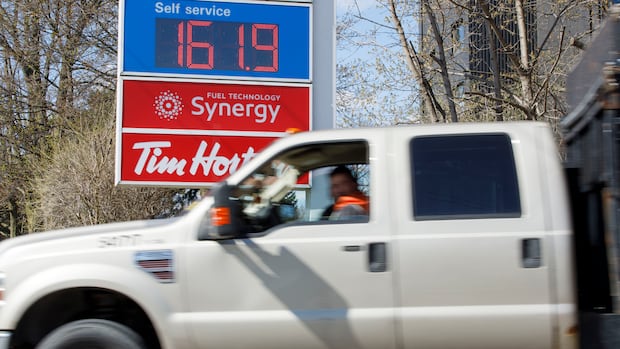
Canada’s annual inflation rate rose to 3.1 per cent in September, Statistics Canada said on Monday, as war in the Middle East caused gasoline prices to accelerate again.
The agency says the switch to less expensive winter blends of gasoline provided some relief last month, even as pump prices jumped 27.8 per cent year-over-year, following a 22.8 per cent annualized increase in August. Statistics Canada says ongoing conflict in the Middle East has pushed benchmark oil prices to their highest level since May.
Grocery prices also rose, by 1.7 per cent year over year, though this was down from the 2.8 per cent increase in August. September marked the smallest yearly increase since May 2024, the agency said.
The reduced food inflation was due to cheaper fresh vegetables, and a decline in the “sugar and confectionary” category.
“Despite the year-over-year slowdown in prices for groceries, prices have increased 33.0 per cent since September 2020,” StatCan said.
Shelter prices rose 1.8 per cent year over year, up from 1.5 per cent in August.
WATCH | Why diesel prices are high: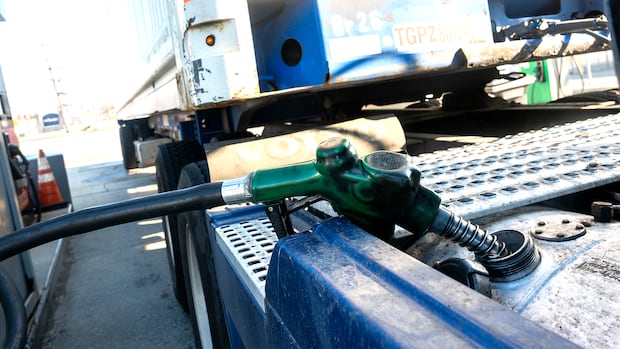
Here’s why you’re paying more for diesel
Crude oil exports through the Strait of Hormuz are slowly recovering, so why is the price of diesel skyrocketing? The National’s Eli Glasner breaks down what’s causing the increase, and why diesel prices likely won’t drop anytime soon.
Statistics Canada’s core inflation measures eased slightly on a monthly basis in September. These metrics, which strip out extreme price swings, are closely watched by the Bank of Canada.
Bank of Canada Governor Tiff Macklem recently warned that persistently high global energy prices due to ongoing conflict in the Middle East could drive up the central bank’s inflation outlook ahead of its Oct. 28 rate announcement.
Ahead of Monday’s release, a Bloomberg survey of 12 economists predicted the September consumer price index would rise 3.18 per cent year over year.
The national inflation rate held still at three per cent in August, according to a prior report.