
Progress has stalled on adding new patients at two of the Holt government’s first batch of collaborative care clinics.
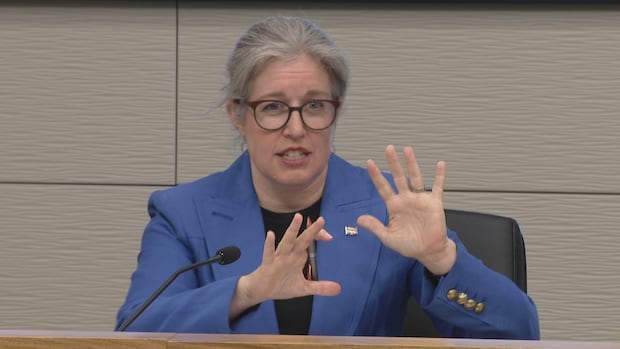
Premier Susan Holt told reporters Monday that there has been only limited growth in patient attachment at the clinics in Tantramar and Lamèque since her last update in April.
Tantramar had attached 277 patients as of April, and because of space issues at that clinic, “we haven’t seen a lot of movement on that number as they get the space ready to move into,” she said.
Lamèque’s attachment numbers actually declined in the April update because of staffing turnover and a cleanup of the existing patient roster.
“They’ve had limited attachment at that clinic so far,” the premier said, but with staffing now stabilized, “We’re looking forward to seeing their attachment accelerate.”
Holt, who described herself as a “data nerd” in her first state of the province speech in 2025, also said on Monday she didn’t have numbers for a third clinic in Campbellton.
But there was good news at other clinics.
WATCH | Province adds 72 family doctors since 2025:
Some collaborative care clinics struggling to attach patients, province says
While clinics in Fredericton and Moncton have succeeded in attaching hundreds of patients, collaborative care practices elsewhere in New Brunswick have made slower progress.
The Fredericton North facility, the very first one the Liberals announced, has now reached its target of 1,600 patients and plans to keep adding more, the premier said.
She called it “our biggest success.”
And a clinic on Mapleton Road in Moncton has added 631 of its 700-patient target and is on track to reach the goal by the end of this month.
Holt has made the clinics a centrepiece of her effort to improve access to health care during her mandate, which is approaching the halfway mark.
Her government has announced 22 of the 30 clinics she promised in the 2024 election campaign and has committed to seeing the remainder by 2028.
“Connecting people to primary care is a priority of our government, and these collaborative care clinics and our recruitment efforts are making a difference in communities,” Holt said.
The premier said there’s anecdotal evidence that the clinics are changing people’s lives.
She also attributed a 20 per cent decline in non-urgent visits to hospital emergency departments to improved primary care access.
Tracking progress in the clinics has been complicated by the province’s recent switch to a new way of counting unattached patients that is based on Medicare data, Holt said.
But the individual clinic targets also have different timelines, and at some clinics the targets themselves are changing as they add more medical staff.
“Just because they’ve achieved their target doesn’t mean that they stop attaching, if they have the capacity and the desire to grow their rosters,” Holt said.
Holt has been announcing new or repurposed clinics since April 2025 and has promised periodic updates on how they are faring with patient attachment as they pass the one-year mark of operations.
But the province has no online dashboard with updates, and some of the numbers Holt provided Monday came out only when journalists asked for them.
The clinic announced last year in the Nordin area of Miramichi aims to add 1,000 patients by June 2027.
Officials are “cleaning up” attachment data as they switch to the new counting system, Holt said. About 200 patients were added based on the previous way of counting but now the clinic will “accelerate” that number.
In Campbellton, the target is 1,500 new patients. That clinic has exceeded its target for adding doctors and other medical staff, so its target will be increased.
The Carleton North clinic has a goal of 800 new patients and had added 242 as of Sept. 1, according to the premier. It is “working toward” its target, she said.
In 2025 Holt said her advisers had asked if she was “crazy” for “sticking our neck out” by committing to providing detailed statistics on progress toward her goals.
“We are committed to being the most accountable and transparent government New Brunswick has ever seen,” she said at the time.
Last month, the Liberals announced they were revising the way they calculate access to primary care by switching to Medicare data from individual appointments.
That put her target of 85 per cent access by the end of her mandate further out of reach.
When Holt established that target, she was working with an estimate that 79 per cent of New Brunswickers had access. That estimate dropped to 72.5 per cent earlier this year.
But the new methodology produced an even lower figure of 70.2 per cent.
She said on Sept. 24 that 619,354 people registered with Medicare were attached to primary care services, out of a total of 882,112 current registrants.
Holt said Monday the province would continue putting money into clinics “until every New Brunswicker is attached, because we still have, as you all know, a pretty steep hill to climb.”