

Listen to this article
Estimated 3 minutes
The audio version of this article is generated by AI-based technology. Mispronunciations can occur. We are working with our partners to continually review and improve the results.
Long waits and strained resources are common at Edmonton’s Grey Nuns Community Hospital, but the night Prashant Sreekumar died was particularly overwhelming, a nurse testified Monday.
The emergency department was crowded and there weren’t enough beds, triage nurse Sean Kydd told court on the first day of the fatality inquiry examining Sreekumar’s death.
The 44-year-old father of three died on Dec. 22, 2025, after seeking care for chest pain. At the time, his family said he waited nearly eight hours in the ER before he was seen by a doctor.
WATCH | Grieving wife: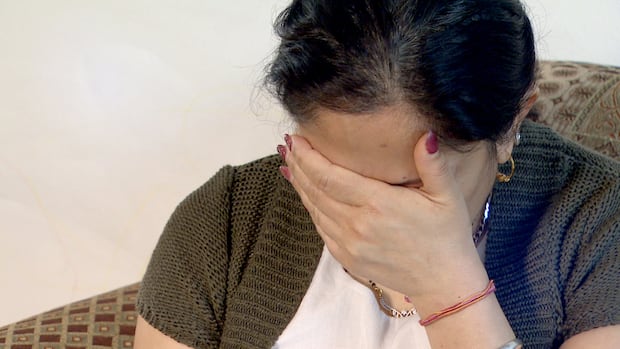
Woman wants answers after husband dies waiting in emergency department
The Alberta government has ordered a review after a 44-year-old Prashant Sreekumar died while waiting at Grey Nuns Community Hospital’s emergency department in Edmonton.
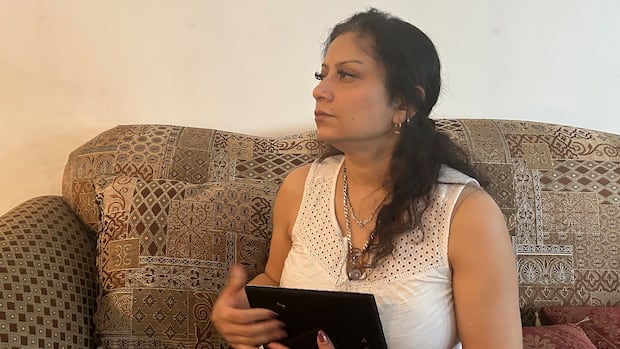
Sreekumar’s wife, Niharika, sat attentively through the hearing, taking notes. She was given the opportunity to ask the witnesses questions.
“He [Prashant] was taken inside and he collapsed in my arms … saying ‘Niharika, I’m very dizzy,’” she recalled, speaking to reporters outside the courthouse. “And that was it.”
Justice Randal Brandt of the Alberta Court of Justice will examine the circumstances surrounding Sreekumar’s death and can make recommendations aimed at preventing similar ones.
Sean Kydd, a triage nurse, described the day Sreekumar died as overstimulating, with multiple emergencies that kept staff very busy. He said he told a co-worker the waiting room was “spicy,” meaning patients were argumentative, interrupting staff and behaving aggressively.
He speculated that flu season may have contributed to the high number of people seeking care.
Kydd was the first to assess Sreekumar, who reported chest pain that had begun about 30 minutes earlier, and tapped the middle of his chest to show where it hurt. He also reported numbness in his hands.
WATCH | Acute Care Alberta review:
Acute Care Alberta releases review of man’s death in Edmonton hospital’s ER
Prashant Sreekumar died in the ER of Edmonton’s Grey Nuns Community Hospital on Dec. 22, 2025. His family says he had waited nearly eight hours to see a doctor about his chest pain. A review into his death by Acute Care Alberta outlines 16 recommendations to improve the health-care system. CBC’s Emma Zhao reports.
Kydd recalled that Sreekumar appeared uncomfortable, concerned and anxious. He couldn’t remember how severe the patient rated his pain.
Sreekumar did not show classic signs of a heart attack, such as dusky skin or an inability to speak in full sentences, he added.
Arranging to transfer him to another hospital would have required a doctor’s assessment and order, and was outside the scope of his role, Kydd said.
Expert witnesses
Forensic pathologist Dr. Cecilia Wu testified that Sreekumar died from an acute ascending aortic dissection — a tear in the inner layer of the aorta, which carries blood away from the heart. High blood pressure was a contributing factor.
Wu said she has identified 24 similar deaths in Alberta over 10 years where patients died while waiting for care in emergency departments or after they were discharged.
She recommended that medical examiners and doctors share more information to help identify patterns and prevent future deaths.
Cardiac surgeon Dr. Holly Smith described ascending aortic dissection as a life-threatening emergency. She said it can be difficult to diagnose because its symptoms may resemble those of other conditions, such as heart attack and strokes.
Without surgery, a patients’ risk of dying increases by roughly 0.5 to two per cent for every hour after symptoms begin, she said, so it’s critical to make a quick diagnosis, order tests and transfer them to a cardiac surgery centre.
Niharika said she hopes the inquiry will help ensure this doesn’t happen again.
“Hopefully they can have something in place … that is actively monitored,” she said.
The inquiry is scheduled to last for one week in October and another in December.