

Forty-eight pages into the final report from the Winnipeg police headquarters inquiry, commissioner Garth Smorang draws attention to one of thousands of emails authored by Phil Sheegl during his ill-fated five years as a senior City of Winnipeg bureaucrat.
Sheegl, then a deputy chief administrative officer and a longtime friend of then-mayor Sam Katz, wrote to fellow deputy CAO Alex Robinson about the need to reduce the construction bonding requirements for any companies interested in bidding on the police headquarters job.
At the time, the inquiry revealed, Caspian Construction owner Armik Babakhanians was having trouble finding the money for the bond, which is cash construction companies put up to ensure they can finish the work.
City officials Abdul Aziz, Barb D’Avignon and Bonnie Konzelman, however, were sticking to their guns when it came to the language in the city’s request for proposals to manage the police-HQ construction job.
Sheegl made it clear in his email that the dutiful city employees ought to comply with the request from Babakhanians to ensure he could bid on the job.
“I just know his next call is to Sam and the comment to me from Sam will be, ‘They are strong enough for Canada Post and the Department of National Defence but we can’t figure it out.’ PLEASE make this thing work,” Sheegl wrote.
To Smorang, the email from Sheegl to Robinson, who quit his city hall job the following August, epitomized the culture of the Sam Katz-Phil Sheegl era at Winnipeg city hall.
“If there is any single event that might be seen as the event that changed the course of history in relation to this project, it would be this email,” Smorang wrote in his report, released Monday.
“Without this email, the bonding requirements would not have been changed, and Caspian would not have been able to bid on the project. Instead, the bond was changed and the rest of the sad story unfolded.”
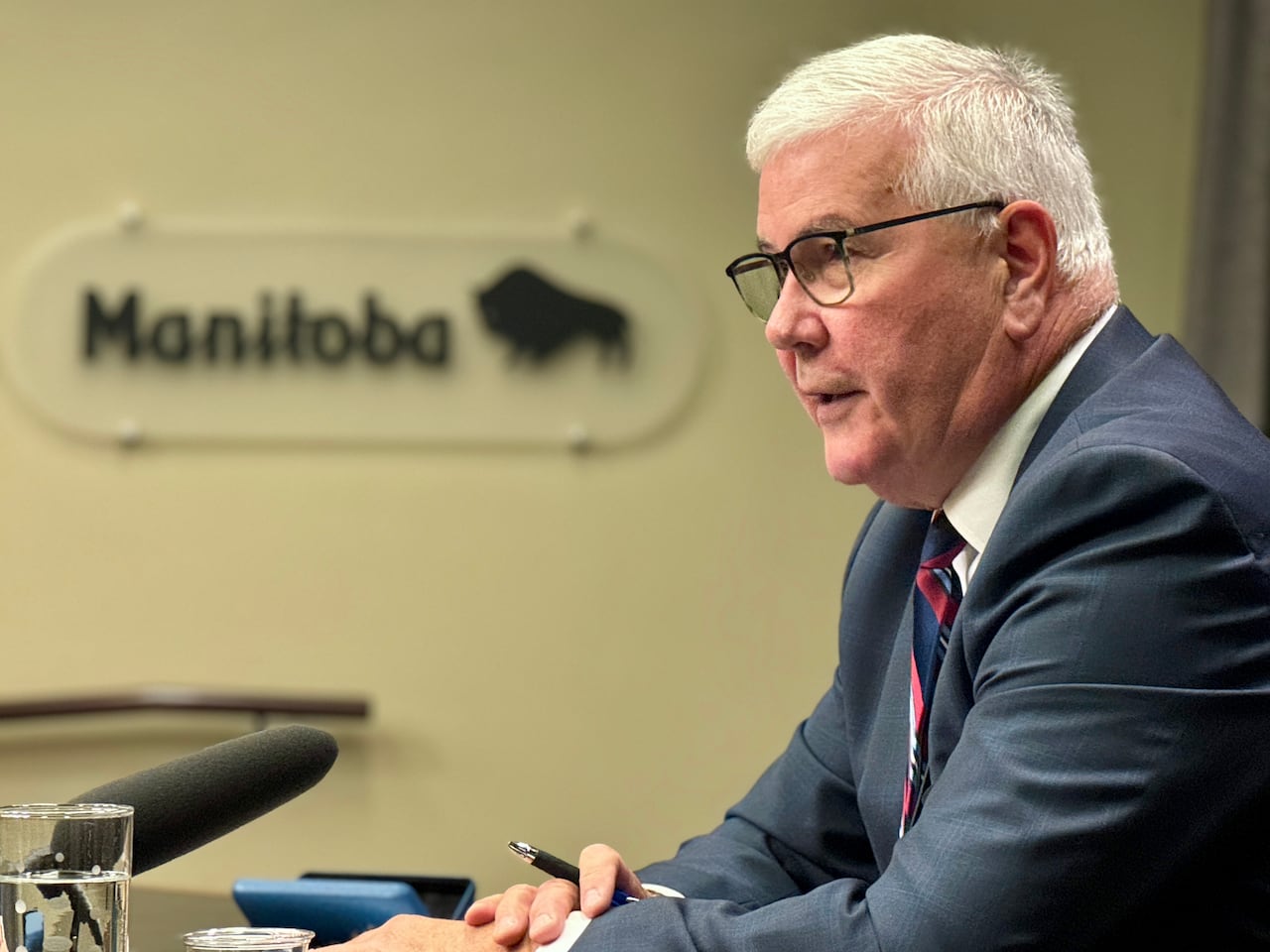
Police headquarters inquiry commissioner Garth Smorang speaks to reporters at the Manitoba Legislative Building in Winnipeg upon the release of his final report on Monday. (Justin Fraser/CBC)
That sad story we now know is one of an over-budget capital project completed late and rife with problems that range from the mundane deficiencies you would expect from a rush-job renovation of a 70-year-old Canada Post warehouse to a systematic effort on the part of Caspian officials and several subcontractors to inflate construction costs by $43.3 million.
The inquiry made this latter aspect clear after it hired forensic accountant Victor Neufeld to complete the work he started for the City of Winnipeg in 2018, when he and his team were part of the city’s litigation against Caspian.
More broadly speaking, the inquiry made many things more clear that were already well-known to a small cadre of reporters, lawyers and public servants who have been following every step of the police headquarters saga since police service facilities manager Aziz, former police chief Keith McCaskill and other police employees started eyeing up the Canada Post warehouse and office tower as a potential replacement for the Public Safety Building.
Over the past two years, Smorang and inquiry counsel Heather Leonoff were able to craft an easily understood narrative of what happened at the police headquarters project with relatively little provincial money — $2.1 million is bargain-basement funding for an inquiry — and a skeleton crew of two other inquiry employees.
They accomplished this with the help of two previous city audits and thousands of documents gathered as part of a five-year RCMP investigation and the city lawsuits against Sheegl and Caspian.
University of Manitoba political science professor emeritus Paul Thomas, a leading expert on public inquiries, commended Smorang for getting the job done.
“Through the testimony recorded during the hearings and the documents reviewed, especially key email exchanges among the central actors involved with the scandal, the report is revealing of the backroom manipulation of the planning and procurement process,” Thomas wrote in an analysis he provided to CBC News.
Smorang, Thomas said, fulfilled the mandate of the inquiry, given the terms of reference he was handed by Wab Kinew’s NDP government.
But it must be noted this was not the inquiry the City of Winnipeg had requested the province undertake when a Brian Bowman-led city council first made this call in 2017.
Former mayor Bowman, now a Manitoba judge, envisioned an inquiry that would look into other aspects of the Katz-Sheegl era, including the Parker land swap with developer Andrew Marquess, the Canad Inns Stadium sale to Shindico Realty and the purchase of the Canada Post complex on behalf of the Winnipeg Police Service.
Even that last transaction remains a mystery today, police-headquarters inquiry notwithstanding. The city asked consulting firm Hanscomb to cost it out compared to other options and found it would cost roughly the same as expanding the old Public Safety Building across the street from city hall.
City council was never told this and the $29-million purchase of the Canada Post warehouse proceeded in 2009. It’s likely no one will ever learn why the city was hell-bent on that acquisition, as the 2014 real-estate management review first pointed out.
The broader point here is there has never been a full accounting of what transpired at city hall even as many Winnipggers have been aware the culture was amiss ever since the 2013 fire-paramedic station construction audit revealed Sheegl’s “get ‘er done” directive to the official responsible for the three-for-one land swap with Shindico.
Thomas suggests there is a yearning for something more.
“Unless an inquiry offers harsh judgments and calls for specific individuals to pay a meaningful price for wrongdoing, many citizens will believe that full accountability has not been achieved and that the problems addressed by the inquiry have not been resolved,” Thomas said.
“This is not Mr. Smorang’s fault, just the opinion environment of suspicion towards politicians and bureaucrats.”
It would be fair to argue the suspicion, in Winnipeg at the very least, is based on demonstrable, objective facts chronicled by three audits, two lawsuits, one RCMP investigation and now, a provincial public inquiry.