
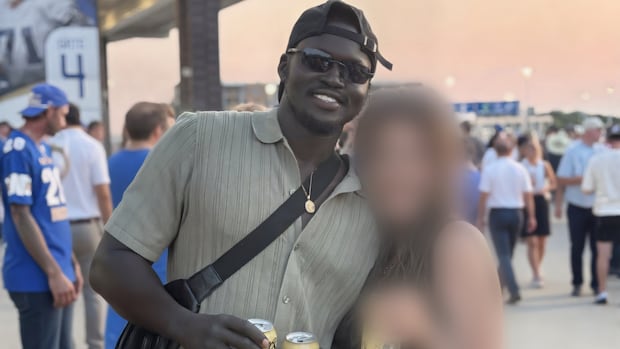
WARNING: This article contains details of intimate partner violence.
A Manitoba father says his family feels let down by the justice system after the man who shot his daughter in the face in what a judge described as an act of “intimate partner terror” was sentenced to less than eight years behind bars.
Machuor Akau, 29, pleaded guilty to aggravated assault, criminal negligence, possession of a prohibited firearm and careless use of a firearm in April.
Court heard he shot the 26-year-old victim in the face with a handgun during an “intimate partner confrontation” in the early hours of Nov. 2, 2025.
The victim, whom CBC News is not identifying, was left with “catastrophic disfiguring, and enduring physical and psychological injuries,” Manitoba provincial court Judge Sidney Lerner said.
Akau was sentenced to 7½ years in a Winnipeg courtroom Monday.
Prosecutors accepted that Akau did not intentionally pull the trigger, and that while he knew the gun was loaded, he was unaware a live round had been chambered, Lerner said.
“This case must not be treated as an intentional shooting,” the judge said. “However, it must equally not be reduced to negligent firearm handling.”
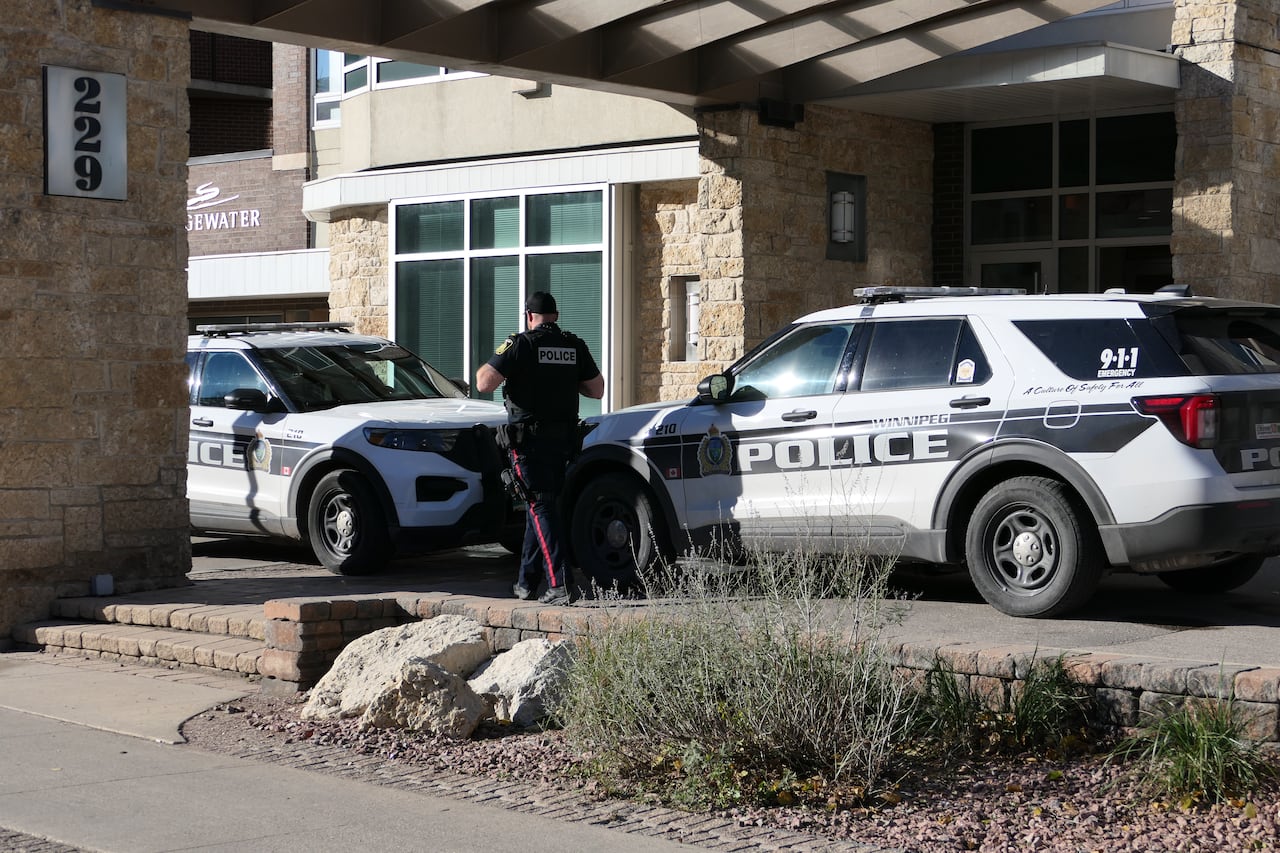
Police outside the Wellington Crescent building after the shooting. (Jeff Stapleton/CBC)
Akau used the handgun as an “instrument of intimate partner terror,” pressing it against the victim’s face while threatening her life, the judge said.
“The catastrophic injury was an unintended result, but it was the realization of the very risk his conduct had created.”
The Crown sought eight years for all the charges, while the defence sought five to six years.
‘Escalating’ violence before shooting
The victim’s father, whose identity CBC News is not revealing so as not to identify his daughter, said the sentence does not match the severity of Akau’s actions.
“I mean, this guy put a loaded handgun to her head. He threatened her life. He smashed her phone in advance so that she couldn’t call for help, and then he pulled the trigger and he shot her through the head,” the father told CBC News on Tuesday.
“Obviously, 7½ years doesn’t come even close to the sentence that we thought would be appropriate.”
He said Akau stared at the floor during his sentencing, never looking at his victim, her family or the judge.
“He’s just a coward.”
The agreed statement of facts said Akau and the victim had been dating since June 2025, and that Akau perpetuated “escalating” intimate partner violence against the victim in the weeks before the shooting.
Akau and the victim were drinking in a Wellington Crescent apartment on Nov. 2 when he became increasingly paranoid, the statement of facts said.
The two got into an argument before the shooting. Akau fled after the shooting and “did not call 911 and did not look back,” leaving the victim to walk into the street and wave down a fire truck to get help.
He was arrested the next day. Akau had disposed of his vehicle and the handgun, and the weapon has never been found, the statement of facts said.
Akau initially gave officers a fake name and accused them of racially profiling him, later offering differing accounts of the shooting, the statement said.
“It was an accident that happened. We were drunk. I would never do that. She is the love of my life,” Akau told officers while on the way to police headquarters, according to the statement.
The victim’s injuries were extensive, and she required several surgeries, the statement said. She needed a tracheotomy to help her breath, and her jaw was wired shut.
The shooting also left her with “equally profound psychological harm,” as she’s been unable to feel safe in her own home or when leaving it, Lerner said.
“Her visible scars are a continuing reminder of the offence, and her ability to trust others has been deeply affected,” the judge said.
“She describes herself as a shell of the person she was before the shooting. The effects upon her daily functioning, identity and sense of safety are enduring.”
Athletic injury led to addiction
Akau’s upbringing was marred by violence, Lerner said. He was born in Nairobi, Kenya, after his family fled conflict in what is now South Sudan, and he was exposed to extreme violence and his father’s alcoholism while living in a refugee camp.
He faced prolonged separation from his father once his family moved to Winnipeg, where they experienced poverty in a neighbourhood affected by gangs and violence, Lerner said.
But he found refuge in football and became an elite athlete, gaining a scholarship to play at Carleton University while studying criminology before an injury ended his career, the judge said.
“He became depressed and isolated, misused pain medication and later developed serious problems with alcohol, cocaine, crack cocaine and pills,” Lerner said.
Akau has accepted responsibility for the shooting and expressed remorse, telling the court, “I did this to her. It breaks my heart,” Lerner said.
But the victim’s father says Akau should have faced more serious charges.
“If that’s not attempted murder, then what is?” he said. “The system let us down.”
While Akau serving a prison sentence does give the victim relief, her father says it’s only temporary.
“The reality of the parole system in this country is he’s going to be able to [get out] in as little as two years from now,” he said. “So, at that point, whatever peace of mind we have right now is going to disappear, right?”
The victim’s father says his daughter is a warrior.
“She’s already done the most difficult thing she’s ever going to do in her life, which was saving her own life that night.”
If you’re in immediate danger or fear for your safety or that of others around you, please call 911. If you’re affected by family or intimate partner violence, you can look for help through crisis lines and local support services.