
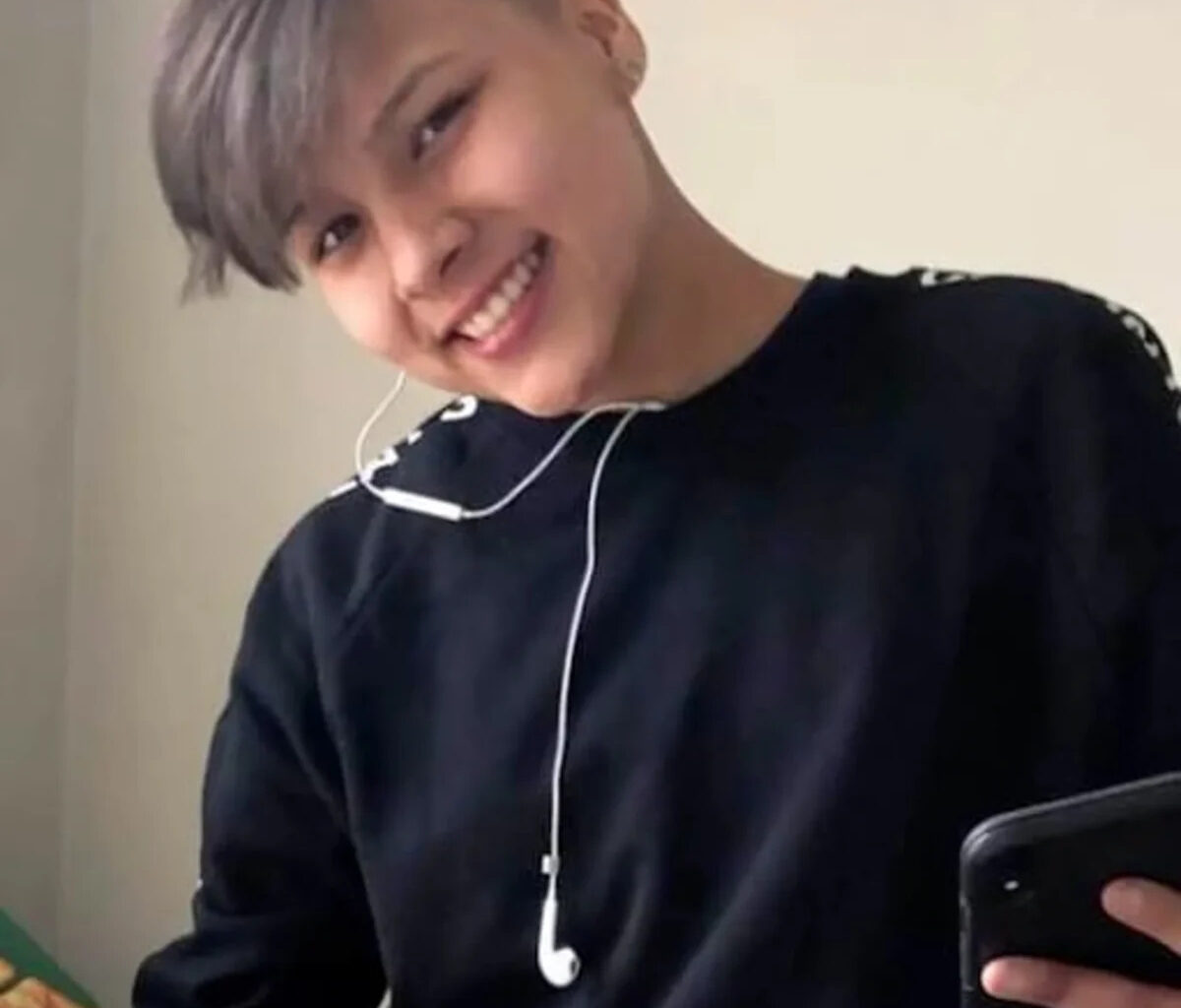
The family of a 16-year-old Ojibway girl killed by Winnipeg police in 2020 is calling for a public inquiry into deaths of other Indigenous people at the hands of officers.
“What I hope to come out of this is my daughter’s name to be more than just a headline,” Eishia Hudson’s father, William Hudson, said at a news conference Tuesday.
“I want her name to make change, systemic change, within the systems that I believe … are broken.”
The call for a broader inquiry comes after the inquest into his daughter’s death wrapped up last week.
Those hearings looked solely at Eishia’s death, and examined whether systemic racism played a role and whether the police use of force was appropriate. The inquest judge is expected to deliver a final report with recommendations within six months.
Lindsay LeBlanc, one of the lawyers who represented the family at the inquest, said Tuesday the hope behind the push for a more wide-ranging inquiry is to identify factors involved in other deaths that might help prevent similar incidents in the future.
Eishia was shot and killed after a chase in a stolen vehicle on April 8, 2020.
An agreed statement of facts prepared for the inquest said she was with a group of teens who robbed a Liquor Mart the day she was killed. One of those teens threatened to stab a security guard before the group took off in a stolen Jeep, driven by Eishia.
Police started the pursuit after an employee reported the theft, describing the suspects as Indigenous youths, the agreed facts said.
A report later prepared by the Manitoba Advocate for Children and Youth found Eishiadidn’t always get the support she needed from the provincial government and school systems.
Others who spoke alongside Hudson at Tuesday’s news conference supported the call for an inquiry, including Assembly of Manitoba Chiefs Grand Chief Kyra Wilson.
Both Hudson and Wilson raised concerns in particular with the Independent Investigation Unit of Manitoba, the police watchdog that investigated the officer who killed Eishia.
Const. Kyle Pradinuk told the inquest in February he thought his colleagues’ lives were in danger when he fired two shots at the teen. The watchdog later recommended no charges against the officer.
“The investigation was very flawed,” Hudson said, pointing to inquest testimony from use-of-force expert Chris Butler, who said he was hesitant to rely on video taken of the scene when he was retained by the watchdog for its investigation because it hadn’t been forensically analyzed.
“The IIU is built to protect their own,” Hudson said.
Wilson also raised concerns about a lack of Indigenous perspective within the police watchdog, which she said the assembly is hoping to work with to develop a new framework for First Nations leadership involvement.
A provincial spokesperson said in an email Tuesday the watchdog has had a director of Indigenous and community relations since 2023 “tasked with improving cultural awareness and sensitivity” and is “committed to anything that would improve their process, make investigations as fulsome as possible and become more trauma informed in its process.”
‘Where is Wab Kinew?’
Hudson also criticized the provincial government for what he described as only supporting his family’s calls for change before taking office.
At the news conference, he held a fan he said was given to him by Wab Kinew before he was premier. His voice trembled as he recalled the interaction.
“When he gave it to me, he put his arm around me and hugged me, and said, ‘Don’t worry, I got your back. Justice for Eishia,'” Hudson said.
“I’m sorry to stand here and say this, but they were there during the protest, the rally, when they weren’t in office. But when they hit office, where is Wab Kinew?”
At an unrelated news conference later Tuesday, Kinew said he hadn’t heard Hudson’s comments and wanted to see the findings of the inquest into Eishia’s death before discussing a broader inquiry.
“The inquest that just took place was a very robust process. And I think we need to see what that said, as well as what they said,” Kinew told reporters.
Hudson said the more than six years that have passed since his daughter’s death have been difficult ones, from the inquest to seeing memorials his family put up at the intersection where Eishia was shot being torn down.
He said he hopes to have a permanent memorial installed at the site. As his family waits for the inquest report into Eishia’s death, he said they’re going to keep advocating for change in her honour.
“We have to be the ones that are here to try to fight for change for our youth, for our people, on these broken systems that are in our path,” he said. “We have to be her voice.”