
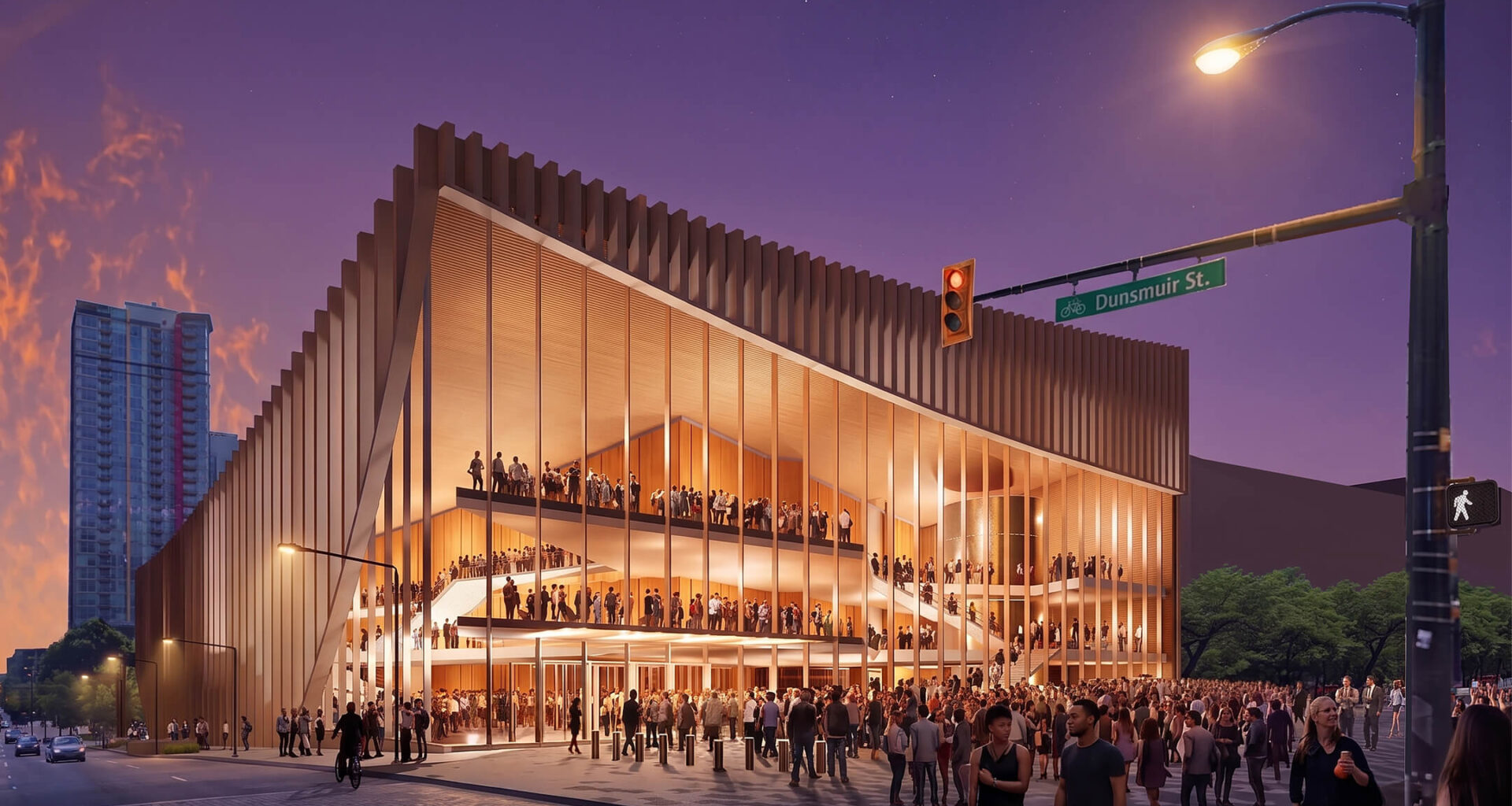
Diamond Schmitt’s vision for the Vancouver Cultural Precinct is featured in an article by Wallace Immen for The Globe and Mail, which highlights a proposal to address the city’s pressing need for purpose-built performance venues where more artforms can be staged and to strengthen its cultural infrastructure.
Led by the Vancouver Concert Hall and Theatre Society, an alliance of 32 performing arts organizations has spent the past two years developing a plan for a new cultural precinct in downtown Vancouver. “This is absolutely the biggest cultural project that has ever been imagined in Vancouver,” says Suzanne Anton, chair of the Vancouver Cultural Precinct’s (VCP) steering committee and former B.C. attorney general and Vancouver city councillor.
Through this extensive consultation, the project has identified an immediate need for more purpose-built performance spaces. Three potential downtown locations have been identified: Robson Square, Larwill Park and the northeast edge of False Creek. Each offers opportunities for transit accessibility, public amenities and connections to surrounding neighbourhoods. “We realized in the consultations that we can do more than just meet the musical, artistic and theatrical needs. We can help transform the city,” says Principal Matthew Lella.
With Diamond Schmitt as lead architect, the vision proposes four performance halls with a combined capacity of approximately 5,000 seats. Ranging from an intimate 400-seat hall to a 2,000-seat proscenium theatre, the venues would accommodate a diverse range of artistic disciplines, from chamber music, recitals and storytelling to dance, opera, ballet and large-scale orchestral performances. Each space would respond to distinct artistic and technical needs, enabling more ambitious productions, greater flexibility in programming and new opportunities for artistic collaboration.
The article, “Vision unveiled to tackle lack of performance space in Vancouver,” also covers the wider economic and civic benefits of cultural investment, Vancouver’s cultural history, the limitations of existing venues, previous efforts to develop new cultural facilities, and the feasibility work guiding the precinct’s next steps.
Read the full article in The Globe and Mail.