
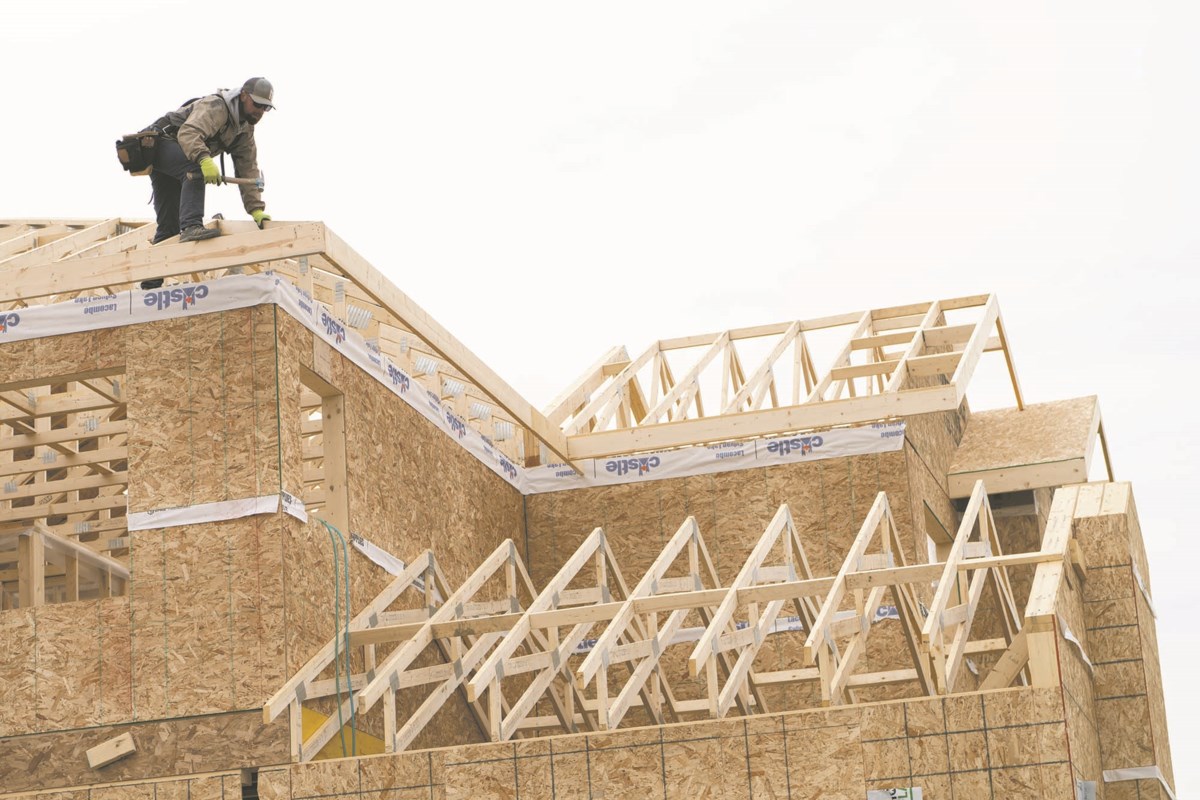
Audie Benson has been building homes across Alberta since 1978.
But as of this winter, he may have built his last. Benson, known to some as the guy who put those funny messages on the sign at Red Willow Community Church, says he and his crew finished their last house of the year earlier this month and were now completely out of work — something he blamed in part on the Canada–U.S. trade war. He’s now seriously thinking of hanging up his tool belt for good.
“The cost of building is just so extremely high that people are buying existing homes for a lot less than we can build them (new) for now. Tariffs are definitely one of the causes for that,” he said.
“I think it’s a good time retire now.”
Tariff troubles
The ongoing Canada–U.S. trade war has seen both nations slap tariffs on various goods crossing the shared border. This includes Canadian tariffs on about $27.6 billion of products imported from the U.S that kicked in on Sept. 8, including plywood, nails, doors, and other items used to build homes.
The Canadian Home Builders’ Association (CHBA) estimates about 155 of the 629 categories of imports subject to Canada’s new tariffs relate to residential construction and renovations. Of those, 24 were very difficult to replace in the short term, including drywall, carpet, steel fittings, window and door hardware, HVAC systems, heat pumps, wiring, and appliances.
While it’s tough to judge the precise impact, as import data doesn’t distinguish between products used for residential construction and other uses, the CHBA found that “additional costs and uncertainty could delay projects and further affect housing affordability and renovation activity, particularly while builder confidence remains weak.”
Brian Watters, construction manager for Akash Homes (one of the bigger home construction companies in the Edmonton region), estimated that Canada’s new tariffs could add $5,000 to $7,000 to the cost of an average home.
“It impacts affordability,” he said, especially when it came to applying for a mortgage.
According to Watters, about half of the joists and beams used by his crews came from the U.S., as did most of the drywall and carpet. There were few Canadian alternatives available: two of the main drywall manufacturers were American, for example, while Canada has just one large carpet maker.
“It’s not enough to backfill the demand in Canada,” Watters said.
Benson noted he’s seen the biggest tariff-related price hikes in appliances and electronics. He and his contractors often don’t find out about these hikes until they see the tariffs tacked on to their invoices.
Bigger builders have staved off the effects of the tariffs by drawing on their pre-tariff stockpiles, but Watters says those were now exhausted. He didn’t think the market would accept a $5,000 to $7,000 price hike, and suspected many builders would have to absorb those costs. That could mean job losses.
The CHBA is lobbying the federal government to start a pilot program through the Canadian Construction Materials Centre to test alternatives to American construction products.
Tariffs brought uncertainty to the housing market, which was a challenge for builders planning for the next year. It could also deter people from buying homes. Watters advised builders to buy local and find Canadian alternatives to avoid tariff costs.
“Some of it is hard,” he said.
“How are you going to build a house without drywall?”
The tariffs mean tough times ahead for homebuilders, but Benson was confident the industry would endure.
“Alberta is probably still a really good place to be living and building.”