
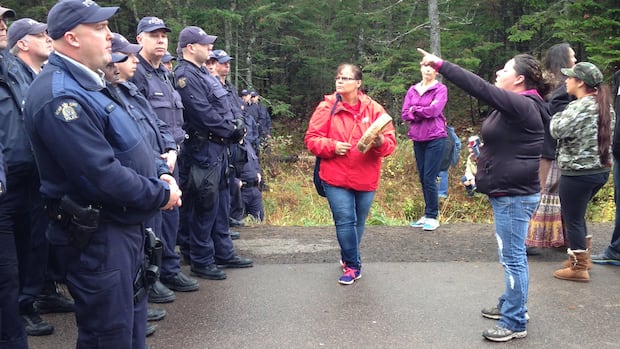
Thirteen years after standing against shale gas exploration near his community, Jason Augustine is back on the same stretch of road, facing the possibility of fighting the same battle all over again.
New Brunswick is reviewing its 12-year moratorium on fracking, raising the possibility of reviving an industry that sparked widespread opposition and historic demonstrations by First Nations more than a decade ago.
Standing on Route 134 near Rexton, N.B., where members of his community of Elsipogtog First Nation opposed shale gas exploration in 2013, Augustine is overcome with emotion.
“I knew I’d be back here for coming to pray, but not to look at what they’re trying to do with the moratorium now,” he said. “I never imagined that.”
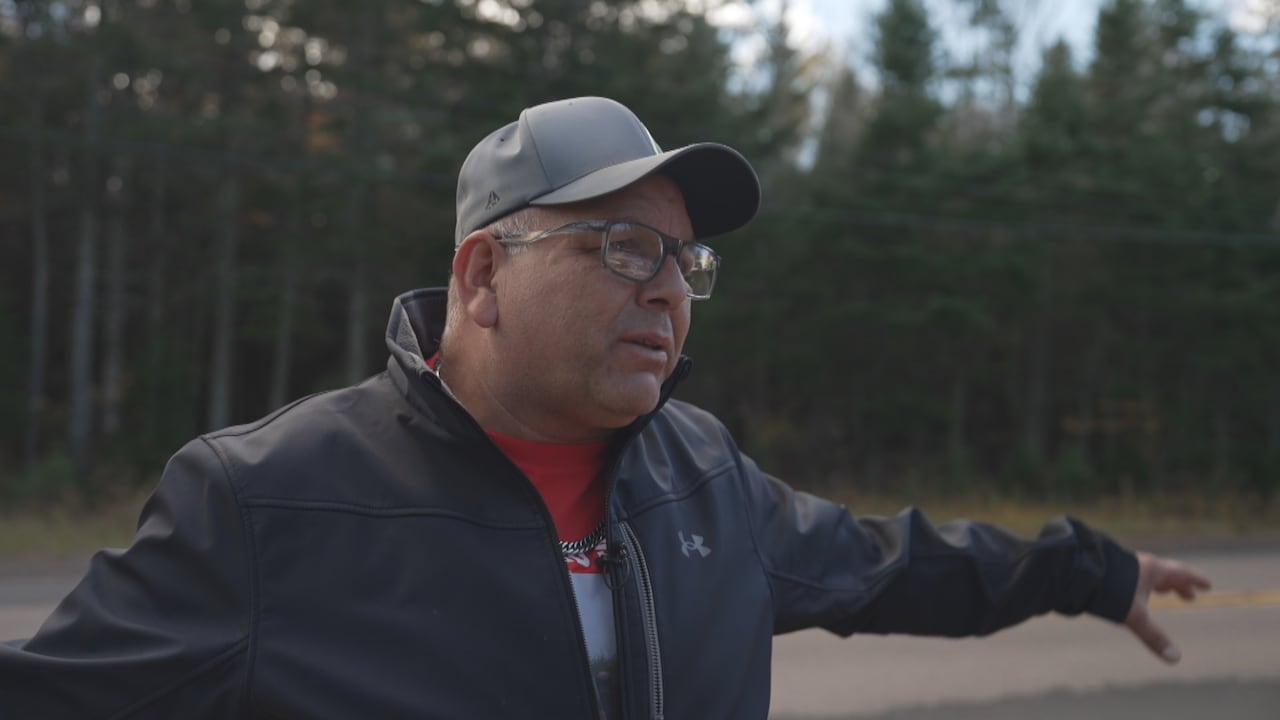
Jason Augustine stands along Route 134 near Rexton, N.B., where he and other members of Elsipogtog First Nation protested shale gas exploration in 2013. (Aniekan Etuhube/CBC)
Remembering 2013
Between 2011 and 2013, members of Elsipogtog First Nation, including Augustine, opposed shale gas exploration through a series of blockades and demonstrations.
Southwestern Resources Canada (SWN) had obtained the rights to explore more than a million hectares of the province to look for shale gas.
Protesters eventually blocked access to SWN’s thumper trucks, vehicles used to send vibrations underground to identify potential oil, gas and mineral deposits, Augustine recalled.
“If you break anything, insurance is just going to pay for their equipment back again, but if we keep them parked and safe, they can’t move,” Augustine said. “[That way], progress stops and negotiations start, and our chief and government officials [could] start talking.”
According to court documents, SWN claimed it was losing more than $50,000 a day because it could not access its equipment.
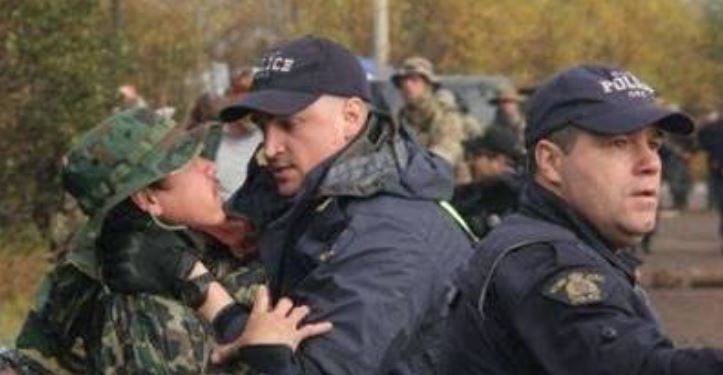
Officer Jimmy Pictou Jr. grips a man during the shale gas protests in Rexton in 2013. A RCMP oversight commission found police officers did not use excessive force or exhibit bias against Indigenous protesters. (Submitted/Miles Howe)
Tensions escalated on Oct. 17, 2013, when RCMP moved in to enforce an injunction and dismantle a blockage near Rexton.
Dozens were arrested as confrontations broke out between police and protesters. Officers used tear gas and bean bag rounds, while several police vehicles were set on fire.
The following year, Premier Brian Gallant’s Liberal government introduced a moratorium on shale gas development.
Now the province is reviewing whether that moratorium should remain, with a decision expected in January 2027.
The review comes as New Brunswick looks to strengthen its economy amid trade tensions with the United States.
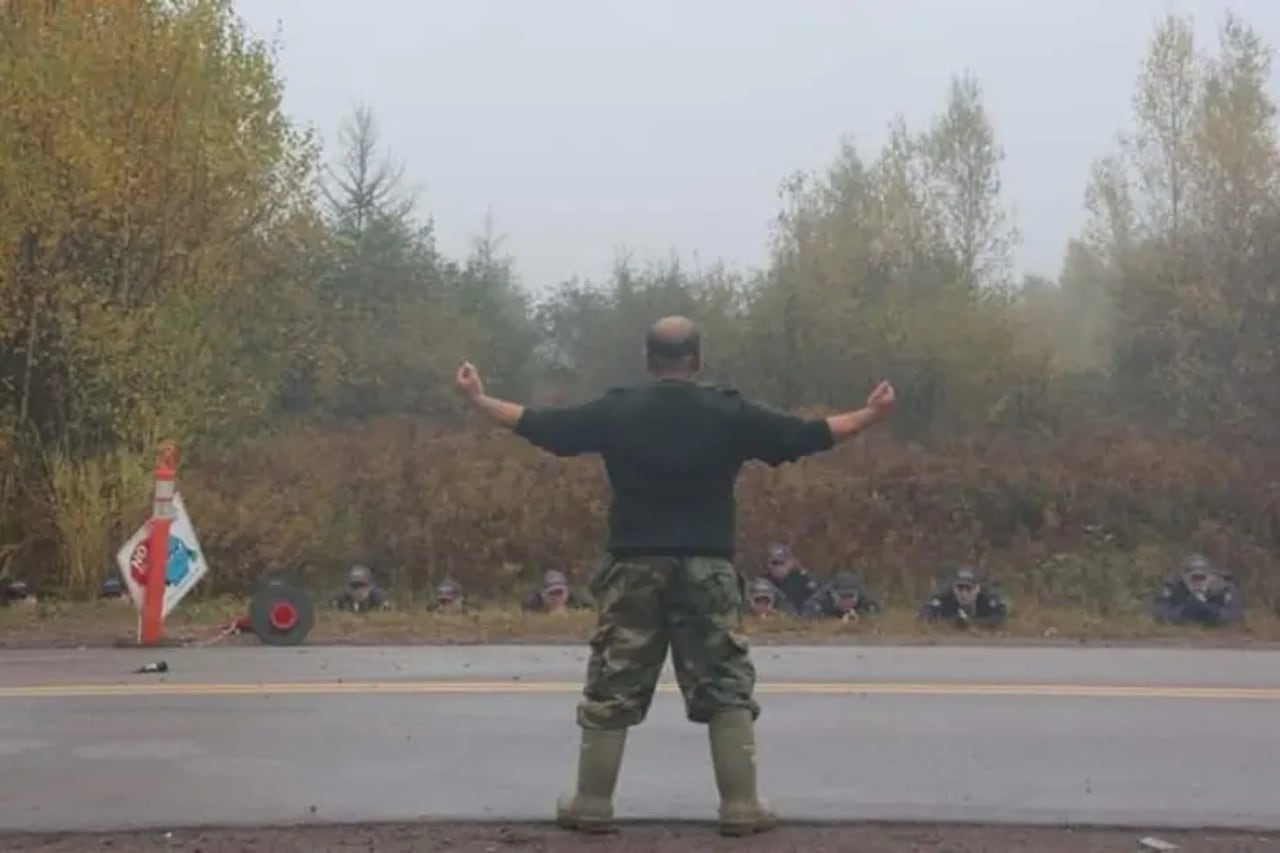
Jason Augustine pictured during the 2013 fracking protests near Rexton, where members of Elsipogtog opposed shale gas exploration. (Submitted by Jason Augustine)
“It’s still ‘no’ to me,” said Augustine. “As a Mi’kmaw district war chief, I look out for my people in their safety and their health.”
He said he remains concerned about fracking’s potential on the land and water surrounding his community, and fears lifting the moratorium could undermine what community members fought to protect.
A seat at the table
Former Elsipogtog chief Susan Levi-Peters also remembers standing on Route 134 during the protests.
“I drive by [there] just about every day,” she said. “I always look at it and I always remember the time Elsipogtog took the stand.
WATCH | Mi’kmaw leaders reflect on the fracking protests as province reconsiders: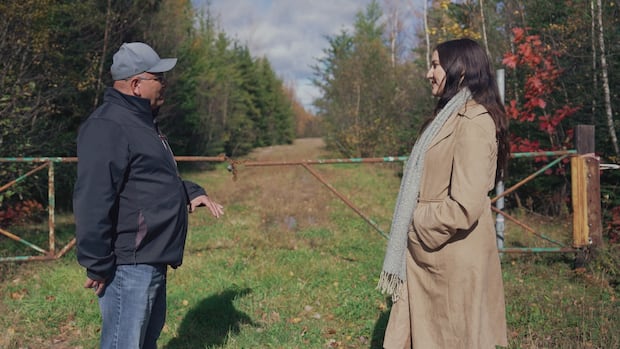
Elsipogtog warrior reflects on possible fracking return
Thirteen years after anti-fracking protests near Elsipogtog First Nation drew national attention, New Brunswick is reviewing its moratorium on shale gas development.
“It was about water and we’re very protective of water and land.”
Levi-Peters says she believes the province might ultimately lift the ban. Mi’kmaw people are not necessarily opposed to resource development, she says. However, they need a meaningful role in decisions affecting their territory.
“The premier did talk about new technology and we, as Mi’kmaw, know that the Creator gives us natural resources for a reason … to use and not abuse.”
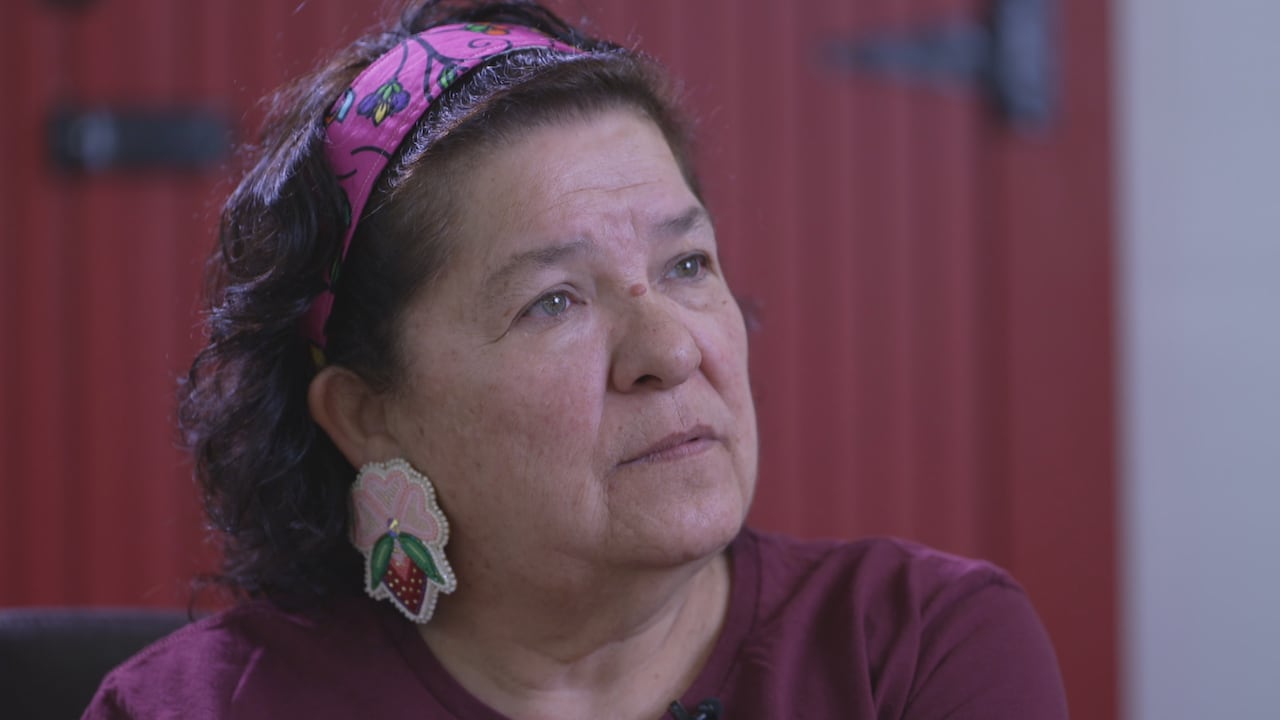
Former Elsipogtog chief Susan Levi-Peters says Mi’kmaw people need a meaningful role in decisions about resource development on their territory as New Brunswick reviews its shale gas moratorium. (Aniekan Etuhube/CBC)
She said questions remain about the province’s plans and whether First Nations will have a say in how decisions are made.
“If the … New Brunswick government does not change how they do business, then we’re probably going to end up like in 2013,” Levi-Peters said.
“We need to be at that table. We need to say when they do it, how they do it and [be] involved in the decision making.”
First Nations leadership sees opportunity for change
Pabineau Chief Terry Richardson is more optimistic about the province’s current relationship with First Nations compared with 2013.
“It’s not like it was last time,” Richardson. said “Let’s do this in the way we should do it, where we engage community members and give them the opportunity to voice their concerns.”
He believes the province has come to realize that First Nations must play a central role in decisions about resource development.
“First Nations hold the key to hold the key to development in Canada — not only in New Brunswick,” Richardson said.
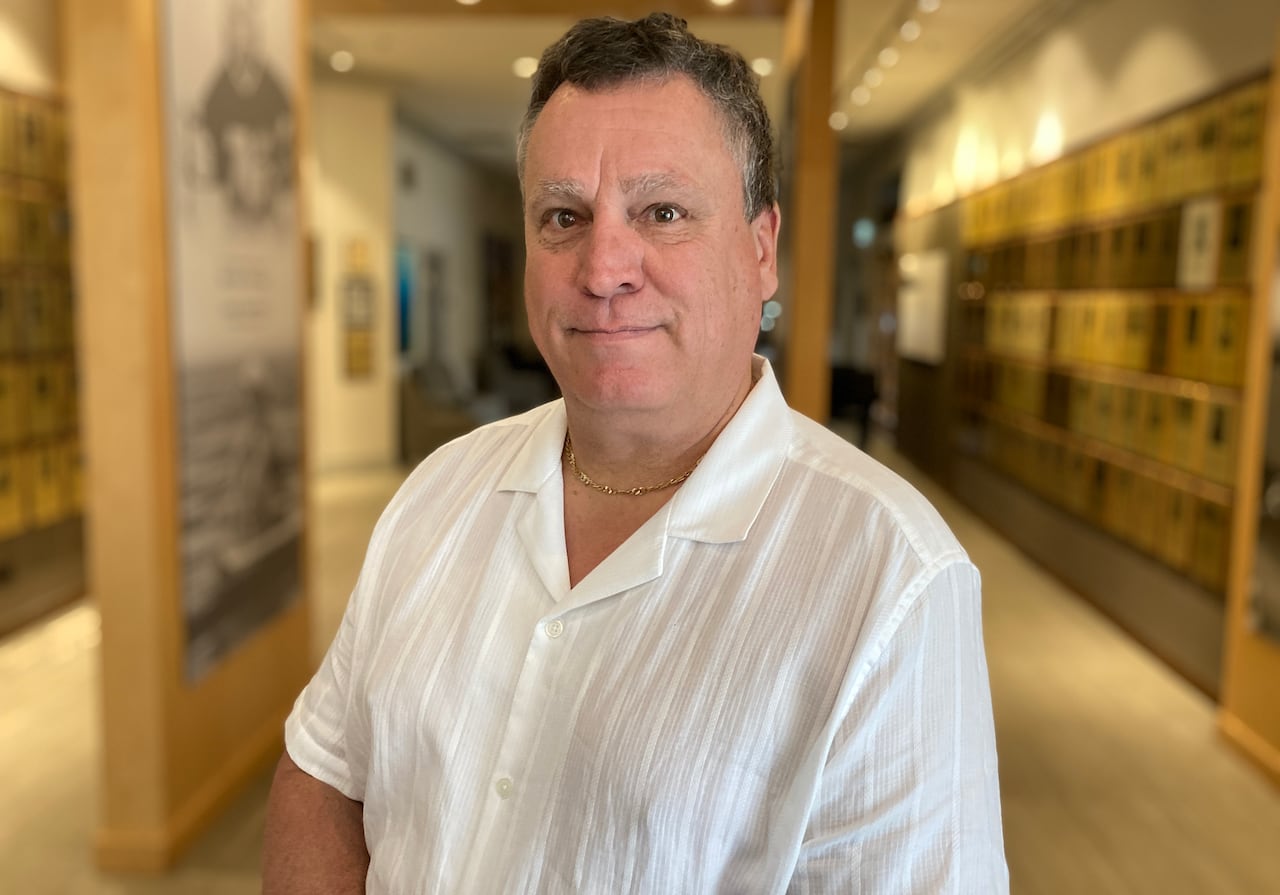
Chief Terry Richardson says while he’s optimistic about the province’s relationship with First Nations compared with 2013, communities must play a central role in decisions about resource development. (Jacques Poitras/CBC)
However, he acknowledged that First Nations leaders face difficult decisions when weighing the potential economic benefits against a responsibility to protect the environment for the next seven generations.
As New Brunswick moves closer to a decision on the moratorium, those competing priorities remain central to First Nations leadership.
CBC Indigenous contacted the province’s Department of Indigenous Affairs for comment but did not receive a response by deadline.
In its August announcement of the review, the province said conversations about natural resources must include First Nations from the beginning.
“We have initiated dialogue at our government-to-government leadership table, and this review provides an opportunity to continue that dialogue,” Indigenous Affairs Minister Keith Chaisson said in the announcement.
First Nations rights, interests and priorities are among of the five key areas being examined, alongside the province’s natural gas resources, scientific and environmental considerations, economic benefits and public support.
This story is part of the series Shale Gas Development Revisited: What’s Changed. CBC New Brunswick is taking a closer look at what has changed since the provincial government put a moratorium in place on shale gas exploration in New Brunswick in 2014. The provincial government is now reviewing the moratorium until January 2027, when it will decide whether to lift it. If you have a story or tip to share on this topic, please write: nbshalegas@cbc.ca.