
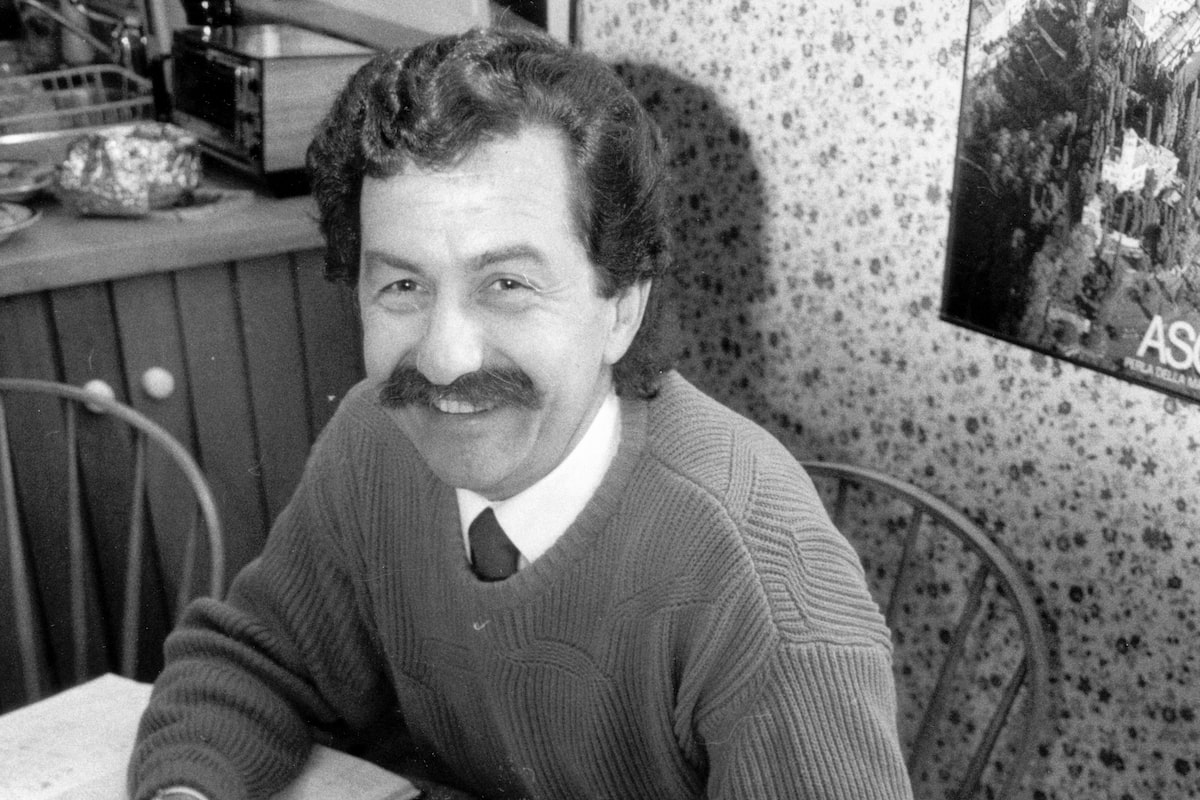
Erik Christensen/The Globe and Mail
Before service at the Toronto restaurant Centro, two servers would stretch a piece of string to line up the tables and chairs to Franco Prevedello’s exacting standards. The tablecloths had to fall evenly on every side, the glassware and salt-and-pepper shakers positioned just so. Once guests arrived, he worked that meticulously ordered room with an irrepressible charm, teasing one regular, squeezing another’s shoulder, pulling up a chair to talk. He remembered their favourite wine and asked after the children. Making his rounds could take an hour, each table briefly the centre of his attention. “I don’t think people would always say, ‘Let’s go to Centro tonight,’” recalled Michael Bonacini, his former executive chef. “It was more, ‘Let’s go see Franco at Centro tonight.’”
Mr. Prevedello helped change what Toronto expected of a restaurant. When he entered the scene, fine dining largely spoke French; he helped make Italian dining glamorous, championing wood-burning ovens, Super Tuscans and dishes such as caviar-topped fettuccine Natasha. Over a 50-year career, he opened and operated more than a dozen restaurants, including Pronto, Splendido, Terra, Acqua, Nota Bene and Carbon Bar. His influence extended well beyond that portfolio, rippling through the city’s dining rooms as chefs and restaurateurs who had worked for him carried his standards into places of their own.
Mr. Prevedello died on Oct. 4 in Toronto at Sunnybrook Health Sciences Centre. He was 80. He had been living with Parkinson’s disease, but died after a fall caused a brain bleed.
Over his prolific career, Mr. Prevedello collected plenty of titles: Godfather, Culinary Visionary, Grand Poobah of Pasta, Metro Maestro. The careers he shaped were more numerous still. Among them were those of Mr. Bonacini, Marc Thuet, David Lee, Frank Parhizgar, Chris McDonald, Yannick Bigourdan and David Castellan. Mr. Lee sees Toronto’s chefs as branches of a family tree, including those who never worked for Mr. Prevedello but learned from people who did.
“It all stems from Franco,” he said. Even Mark McEwan, who did business with Mr. Prevedello but never worked for him, learned by watching. “He was a mentor for me, unbeknownst to him,” he said. “He built some of the hippest, busiest, coolest restaurants in Toronto, and I learned by observation.”
Francesco (Franco) Giovanni Prevedello was born on Jan. 24, 1946, in Asolo, in Italy’s Veneto region, to farmers Atillio and Maria Prevedello. He viewed hospitality as a way to make a living and see something of the world. He enrolled at hotel school in Stresa in the early 1960s, then worked in European hotels and aboard a German cruise line. In 1965, he arrived in Toronto, where his older sister lived.
In August, 1967, while working as a waiter at the Ontario Pavilion at Expo 67 in Montreal, he met fellow waiter Barbara Jackson. A whirlwind courtship followed; they married that November. Stints at La Scala and Winston’s laid the groundwork for restaurants of his own. By the early 1980s, his ventures included Biffi Bistro, Bindi and Pronto, the latter of which he sold to Mr. McEwan in 1985. In 1986, he ran the Ontario Pavilion restaurant at Expo ’86 in Vancouver, showcasing Ontario food products. Jimmy Molloy, a friend and former Centro manager, saw those six months of serving large numbers without compromising quality as a rehearsal for Centro.
Before opening, Mr. Prevedello sent chefs to California for two months to study the cooking that would inform Centro’s Cal-Ital menu. When the restaurant opened in 1987, on Yonge Street just north of Eglinton Avenue, its 240 seats were a declaration of ambition: a two-storey dining room with white pillars, a cobalt-blue ceiling and photographs of Venetian scenes. Mr. Prevedello was betting downtown money would travel north for dinner. It did. “Everybody who’s anybody wanted to get in there,” Mr. Bonacini recalled.
For all its grandeur, Centro had little interest in making guests feel intimidated. It had white tablecloths and linen napkins, but even the maître d’ worked without a jacket. Guests could pick up the wrong fork without fear of correction. “Dinner at Centro was fun,” Mr. Molloy recalled. Executives ordering expensive wine and veal chops and a young couple splitting a pizza received the same unstinting attention.
The ease guests enjoyed took relentless work. He was at Centro in the morning, darting out for meetings and returning to inspect, adjust and improve. He might be under a table making sure it didn’t wobble, have his hand down a blocked drain or be lecturing a produce supplier on the proper ripeness of tomatoes (“We can’t be serving cucumbers for tomatoes!”). In the late afternoon, he went home for dinner with his wife and their daughters and, his colleagues suspected, a nap. By evening, he was back, adjusting thermostats and inspecting the room before greeting guests with the warmth of a man who had all the time in the world.
Barbara Prevedello helped make that pace possible. She managed the books, keeping track of the business while her husband juggled its many moving parts. “She was his rock,” Mr. Bonacini said. Together, they also helped establish the food-rescue charity Second Harvest.
Her husband, meanwhile, “could never say no,” Mr. Bonacini recalled. His instinct to welcome everyone could leave Centro overbooked; Mr. Thuet remembered reservations scribbled on slips of paper that disappeared into Mr. Prevedello’s pockets, often never reaching the host. His hospitality could exceed his seating capacity, but he turned the wait into part of the fun, working the crowd outside with glasses of prosecco and slices of pizza. Inside, order chits stretched out from the pass to the back of the kitchen, arriving faster than Mr. Thuet could call them out.
Mr. Prevedello’s enthusiasm outlasted the working day. After service, he still wanted to debate the menu. No adjective was safe: should the shrimp be “bronzed” rather than “grilled”? Mr. Molloy recalled these discussions stretching into the early hours, until it was 9 a.m. in Italy and Mr. Prevedello had wine producers to call. “I always felt Franco was the guy that was never finished,” Mr. Molloy said. “There was always something to do, something that could make it better.”
For people trying to meet his standards, there was little respite. Even a good dish offered something to correct. Risotto was too wet or too dry, overcooked or undercooked. “It was still a delicious risotto, but it was never, ever perfect,” Mr. Bonacini recalled.
For Mr. Lee, the mere sight of Mr. Prevedello approaching the kitchen pass could sharpen his work. “If you were working and your performance was a seven or an eight, and Franco would walk by, all of a sudden your performance became a 10.”
His pursuit of perfection could erupt into yelling. Colleagues remembered a volcanic temper, but also a generosity that outlasted his anger. “Franco would fire you in the afternoon, rehire you the day after, and pay for your dental work in the same week,” Mr. Bigourdan said. “In the same week.”
In 1997, Mr. Prevedello agreed to sell his half of Centro to general manager Tony Longo and executive chef Mr. Thuet for $1-million. The Toronto Star described a bitter ownership dispute. Mr. Thuet, however, recalled no animosity between them and spoke with enduring affection for a man he regarded as a father figure and credited with making own career possible.
Those who worked for Mr. Prevedello also remembered the concern beneath the bluster. Mr. Molloy recalled colleagues wondering why someone they thought deserved to be fired was back at work the next day. The explanation was simple: The person still had bills to pay. Mr. Prevedello could lose patience with an employee without losing concern for them as a person. “He was all bark; a big teddy bear who liked to make noise,” Mr. Molloy said.
When he saw people with ambition and the willingness to work for it, he helped them get ahead. “He liked to bring people along with him,” Mr. Molloy said. “It’s a remarkable talent.”
After Mr. Lee and Mr. Bigourdan bought a then 10-year-old Splendido from him in 2001, Mr. Prevedello remained their landlord, offering advice and patience when the rent was late. Later, he invited them to partner with him on Nota Bene. “When he believed in you, you felt you’d won the lottery,” Mr. Lee said. “To have him as our partner felt like a gift.”
At Nota Bene, which opened in 2008, that support came with firm opinions about design. Mr. Lee and Mr. Bigourdan balked at his choice of ipe wood floors and Italian leather chairs, but he insisted. “Yannick, trust me, the chairs are everything,” Mr. Bigourdan recalled him saying. They spent about $200,000 on 135 chairs. “They made the room.” Mr. Prevedello and Mr. Bigourdan went on to open Carbon Bar together in 2013, his final restaurant venture.
To Mr. Bigourdan, he was less a godfather than a “consigliere.” They met every Thursday for coffee. Business occupied “32 seconds,” Mr. Bigourdan recalled; the rest went to their joys, struggles, victories and defeats. Mr. Prevedello made time for others, too, whether they needed advice, an introduction or help getting an idea off the ground. When Mr. Bigourdan asked why he kept giving away his time, Mr. Prevedello’s answer was simple: “I enjoy it. I enjoy giving my time away.”
He was a builder by instinct, whether helping people realize their ambition or bringing his own ideas to life. He loved materials, design and construction. In an essay reflecting on his career, Mr. Prevedello described the pleasure of creating a restaurant, from construction through service. “I enjoyed all of the phases of it — not just running the restaurant, but building,” he wrote. “I loved creating and establishing restaurants. Then I would move on to something else.” Mr. Bonacini believed that building a restaurant gave Mr. Prevedello more satisfaction than actually running one.
His ventures took him well beyond restaurants. He brought Italian fashion label Replay to Canada, imported wine and spirits and launched a prosecco made from grapes grown in his hometown of Asolo. His love of building also drew him into property development. As a principal at Diamante Development Corporation, he oversaw the construction of condominiums, including The Florian and Phoebe. In recent years, semi-retirement still meant spending a few days a week at condo developer Mirabella.
In later years, Mr. Thuet and his wife, Biana Zorich, hosted an annual dinner with Mr. Prevedello as guest of honour. When Parkinson’s disease made conversation difficult for him, he sat smiling amid the chefs’ banter. The group plans to continue gathering, keeping his place at the head of the table.
He leaves his wife and daughters, Bobbie and Kate Prevedello.
You can find more obituaries from The Globe and Mail here.
To submit a memory about someone we have recently profiled on the Obituaries page, e-mail us at obit@globeandmail.com.