
WHEN I WAS A NEWBIE WRITER, one of my freelance gigs was banging out back-of-the-jacket copy for books.
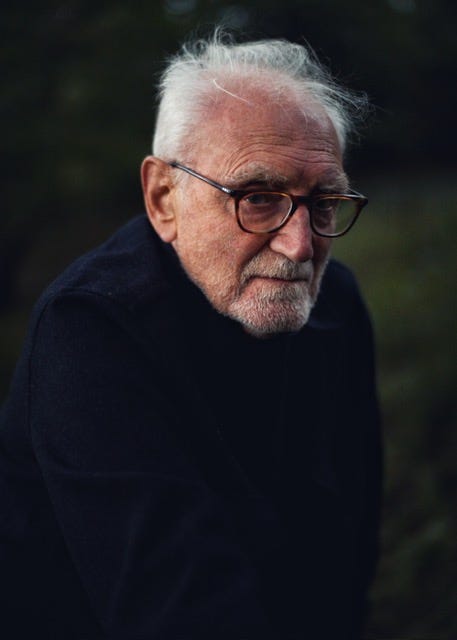
It’s been a minute since I’ve done it, so I’m going to make life easier on myself — and better for you — by letting the fine folks at the University of Chicago Press’ marketing department give you the skinny about the fantastic new book by the Emeritus Lord Northcliffe Professor of Modern Literature at University College London — and total boxing nerd — John Sutherland:
The noble art of boxing is the world’s oldest contact sport. Its Big Bang moment was the arrival of Thomas Alva Edison, whose pioneering feature film Men Boxing was produced in 1891. From that seed, boxing grew to become the first truly global sport.
Taking Men Boxing as its starting point, 97 Fights is a thrilling, no-holds-barred account that considers all the greats — Joe Louis and Muhammad Ali, Nicola Adams and Oleksandr Usyk among them. Modern boxing has weathered the storms of mob fixing, wayward fighters, and personal tragedy, in and out of the ring.
With signature precision and humor, and the passion of a true fan, John Sutherland charts the sport’s precipitous climb, its golden era, and its uncertain future, from the “Thrilla in Manila” to the unedifying spectacle of Logan Paul’s “Bragging Rights.”
Ultimately, the book asks: Where will boxing go? Or will it just go? These are the two questions to which Sutherland’s authoritative survey leads, and to which he supplies authoritative answers.
See? Way better than I’d have done.
Currently available in the U.K., 97 Fights drops here in the States on November 18. John kindly took the time — a lot of time, much to his credit — to discuss the book, as well as the sport’s past and present.
ALAN GOLDSHER: Some of the fight choices are obvious — the entire Tyson chapter, for instance — but others are considerably more obscure to casual American fight fans, i.e., the chapter called “Meanwhile in Britain.” How did you narrow it down?
JOHN SUTHERLAND: There’s been a new kind of popular historical discourse in the UK over the last 20 years led by a book published by the Director of the British Museum (the biggest collection of historically meaningful fragments anywhere). Neil Macgregor published A History of the World in 100 Objects 2011. Historians everywhere starting counting and thinking.
I could have called my book A History of Modern Boxing in a 100 Filmed Fights but I wanted to get across the raggedness of boxing — hence the Prime Number 97.
As the poet William Blake put it, you see the world in a grain of sand. That’s how I feel about boxing matches.
Boxing lends itself to this kind of approach. It drowns in its own data and so would we if we tried to immerse ourselves in its totality.
Boxing, of all world sports (and it qualifies as the most genuinely world wide; whether it’s a genuine sport is another question) has a small space time dimensionality (I’m not going to go Einstein on you). Around 20 foot square ring, 12 rounds the usual max, the length of an LP.
A boxing match tells its own beginning middle and end story — no commentary needed (though “live” descriptive and “color” commentaries are valuable additions). You see and feel the whole thing, neatly packaged, beginning to end. Watch someone watching a boxing match — they don’t watch they participate jerk, clench fists, yell. Then you find you’re doing exactly the same. It plucks one’s strings.
You can do the history of modern boxing on a wet weekend skipping from fight to fight on YouTube. You can’t do that with baseball, cricket, or soccer, or American football.
And, since Edison, the Merlin of Technology, invented the ‘fight film’ in the 1890s, the fight nowadays comes to you (sometimes, of course, via your wallet), not you tromping to it (although I love the stadium feel). The post PPV boxing arena holds tens of millions; live and archived (most of the second free of charge).
Boxing is the longest recorded contact/combat/conflict sport the human race has devised.
We know who the first winner in the 23rd Olympiad 686 BC was (the first time the sport featured in the Ancient Greece games).
At the same time we have the first written description of a boxing match in the 23rd book of Homer’s Iliad (it doesn’t, unfortunately, come up in Nolan’s smash hit film).
Homer’s boxing is not much different from what Homer Simpson’s would be as he sat on the groove of the family sofa, watching Fight of the Night.
So: to summarise and pick up your question ‘how did you narrow it down?’. There are points of evolution and adaptation (I’m not going to go Darwin on you, Alan) which reshaped boxing.
The famously violent Jack Dempsey vs Luis Angel Firpo fight of September 1923 (in which the Argentinian knocked Jack out the Madison Square Garden ring but lost) brought something new to the boxing table — estilo hispanico. There’s a straight line from Firpo (Wild Bull of the Pampas) to one of the very greatest (but least likeable) boxers of all time, fellow Argentinian, Carlos Monzon. The dark, murderous, pugilist.
Absorbed by the LA by culture but resolutely Mexican to every drop of his blood, ‘Golden Boy’ Oscar de la Hoya (who refused to anglicise his name, making you pronounce it modo Espanol) fought at many weights but in all of them like a heavyweight. Hispanic style. His great Hispanic compeer, Cesar Chavez, was more the patient hunter. Another hispanic style. The global American boxing sphere has been immensely enriched by fighting South of the Border.
In book’s section “Meanwhile in Britain,” there hangs a lot of boxing history.
Britain, the country which invented modern boxing, did not have a heavyweight world champion from 1897 when James Fitzsimmons beat James J. (‘Gentleman Jim’) Corbett until Lennox Lewis in the 1990s. Over that century long interval British top tier boxers were a joke: glass from the ankle to the gym, canvas kissers.
Fitzsimmons at 167 lbs. when he won the title was not exactly heavy. And he was not exactly British — he had been brought up in New Zealand and was of Irish heritage with a largely American career.
Race and nationality are always prime, and highly flexed, ingredients in modern boxing.
America had its “color line,” introduced to hamper Jack Johnson after he won the world title from Tommy Burns in 1908. The line was not effectively crossed until Joe Louis, incarnating every thing Johnson wasn’t, in the late 1930s.
Britain had its “colour bar,” brought in by Winston Churchill in 1911 which meant no boxer of colour, or of mixed race, could hold a British boxing title. That lasted until the late 1940s when enabling Randolph Turpin was permitted to be British middleweight champion and went on to win a world title from Sugar Ray Robinson.
After the rapid “winds of change” and dismantling of the British Empire in the 1950s Britain retained its imperial power by sucking back former colonised peoples for labour and, on the side, sporting supremacies.
Hence Lennox Lewis, of Jamaican heritage, Canadian upbringing and British migration (all three states could have had the queen’s head on their postage stamps). Britain, in the sixties and after went on to have a stream of British world champions at all weights. And pigmentations. The Empire struck back; with 10oz gloves.
A.G.: Was it difficult to pick which Muhammad Ali fights to cover?
J.S.: How Cassius Clay became Muhammad Ali (not, following his mentor Malcolm X as Cassius X, but as a devotee of the Nation of Islam) could inspire a whole book in itself. As much about America, and its larger quarrels with Islam. Does anyone think of Ali as the greatest Muslim ever, the Saladin of the ring?
In his early career his ability to move in a faster time dimension than his opponents, his balletic skills — able to play with his opponents like a matador with a bull — his physical beauty, and his wit Clay could lay a claim to be a founder of rap as well as Richard Pryor style stand up comedy monologue and even, with his ‘shuffle’, break dancing. No fighter better cracked American social codes.
Clay/Ali was also a career strategist. He realised that the Olympics were the largest, free to view, arena (via TV) in the world. You could gigantise your image: and he did; Howard Cosell talking him up at the microphone.
The boxing world was, when he arrived, unworthy of him. The two Liston fights are beyond murky, criminal fingerprints (not Clay-Ali’s) are all over them. ‘The Rumble in the Jungle’ (Kinshasa? Straight out of Science Fiction) has question marks all over it. From the loose ropes (making rope a dope possible) to the mysterious bottle George took a swig from on his way to the ring.
The great legacy of that fight is Don King made boxing universal via satellite. He also established boxing as something black foundational in the US. King is much underrated.
The highpoint fight for me is “The Thriller in Manilla” for its crystallizing out what I see as the two other foundation elements in boxing. Frazier’s power, Ali’s grace. It was the end of the 15 round battle. That length of fight cost too much. The 14th round had a fourth presence in the ring. A man in black carrying a scythe. Both fighters looked death in the face in that round. Neither boxer would ever again in the ring be quite what they had been when they came out in the first round. Some fights are like that (the St Valentine’s Day battle between La Motta and Robinson, or the Deontay Wilder Tyson Fury fights for example).
“The Thriller in Manilla” is the abolitionists’ main evidence that boxing should be put down.
And yet….was not life’s truth there? Can anyone, who has a shred of human sympathy, watch Ali’s painful ascent to light the 1984 Olympic torch not feel that what boxing did to this marvel of humanity was wrong.
Can anyone watch the Larry Holmes (self-hating) victory over his former sparring partner not feel the same. Muhammad Ali should not have been in that ring.
Muhammad Ali did not have as many great fights as his genius deserved because the boxing world did not serve them up to him. Neither, frankly, did America by taking him out of the game in his prime.

A.G.: I love that you spent so much time on female fighters. Why was that such a focus?
J.S.: I wanted more but the publishers put their foot down forbidding my going into the area in which women fighters excel, kickboxing. The target areas for women are the head and the legs — it’s all in whole body. Not head and torso as with males.
Female boxing has two characteristics: which have been described as feline, cat like, and slugfest.
Obviously it’s a department of boxing in development. I wish, in the interest of that development, the sport would get rid of the male framework around womens’ boxing: male promoters (Don King was an early adopter), male referees, male cornermen, largely male stadium audiences. Clint Eastwood’s Million Dollar Baby did good things and bad It publicised women’s boxing, and used the greatest of women boxers of her time, Lucia Rijker, in a major role, the villainous Billie the Blue Bear Osterman. But it ended with white male saviour, played by Clint Eastwood, doing the right thing, knowing it would damn his soul for eternity.
A.G.: I wouldn’t have minded more of my faves, George Foreman and Sugar Ray Leonard. Why didn’t they make the cut as often?
J.S.: The sanctification of the Rev. George (“Grillman”) Foreman, like the post-Hangover film semi-sanctification of Mike Tyson’s are Americana parables.
Looking at Foreman’s early fights, like Roberto Duran’s, is to see the boxer of their class and style as forces of nature. What turned our planet into the anthropogenic, man-dominated eon. The power of the will. Such fighters’ eventual decay (likewise there to see in late phase fights on YouTube) is one of the proofs of universal entropy.
Look on my works, ye mighty, and despair as the poet Shelley — spoken by a ruined statue of a once omnipotent ruler. Ashes to ashes.
The two fighters you mention seem to me to allegorize the two foundational truths of our cosmos. The ground (gravity, canvas) is always always pulling you down: life is resistance against life’s blows.
Secondly, as entropy decrees: however great, everything decays.
Boxing fans, I’ve noticed, don’t just watch. They reflect on the sport. They draw life lessons from it. It’s not pompous to say so. It lives with them and feeds into how they live.
The book is, I like to think, an act of reflection on this most complex, and paradoxical, of human activities. Inflicted hurt. Why can Mike Tyson bite a human ear off in the ring and get a slap on the wrist but a criminal charge if he punches someone who insults him in a parking lot. What does boxing tell us about the arbitrariness of the morality of violence. Over time and in our time?
Boxing’s tendrils, if thought about, go into strange places. Who was Iron Mike’s handler between Cus D’Amato and Don King? Donald Trump. It has been argued the future president learned a lot from that experience about winning.
As for why I didn’t do fuller jobs on certain boxers I’d offer the same answer astronomers I’ve known come back with. Too many stars, too little map to get round them all. Make your sectors (literary cutting the bits that suit what you think you can do best) otherwise the mountain of available data will drive you crazy and your book an unreadable list.
A.G.: Talk about your methodology.
J.S.: That would be to give it too grand a name. Do you remember that tale of Sinbad where he finds himself stranded in a valley where all the pebbles are diamonds? For anyone interested in finding out about boxing the internet is like that — full of expert, supremely well informed, chat. When I went to a fight in the US I always went to a bar and eavesdropped afterwards. Vox Populi is a powerful energy in the boxing world.
YouTube serves up, free, a bulk of important fights: you can test what you read (in boxing reportage) against visual fact. All the fights I talk about have visual cross-check available a couple of clicks away. Amazon’s self publishing facility has released a treasure house of fan knowledge and expertise in book form.
My approach was, bluntly, that of the Hoover vacuum machine. I sucked up what was needed. And then thought about it.
A.G.: You didn’t include anything beyond 2024. Is boxing washed?
J.S. It’s at a crossroads. Exemplified in the Netflix fight between Jake Paul and Mike Tyson in 2024.
It was generally regarded as the reduction of sport to vulgar spectacle: a talentless punkster vs a sick old man. But 120m at least were watching online via Netflix as well as a large crowd of 70,000 at the Dallas Cowboys Stadium. The main event was one of the most shameful in the history of modern boxing. But on the undercard was one of the best women’s fights the lens has immortalized. Katie Taylor vs Amanda Serrano. You could see the programme two ways. Boxing could go WWE, as wrestling and MMA was degraded into show business by Vince McMahon. Or it could, with the future enhancements of AI, in virtuality become not a sport but a game in which you were a player. Or it could adapt and survive.
The other problem boxing faced in 2024 had been prophesied by Ingemaar Johansson in the 1960s. Training techniques had become so efficient that the sport was now something akin to the Hunger Games — a massacre realm. Both Johansson and Floyd Patterson had died premature victims of CTE. Brain damage directly attributable to boxing. And training has got even more efficient over the last fifty years.
A third main problem is financial. Boxing, in its top, ever adapting tier, can no longer afford itself. If you have a boxer like Floyd Mayweather Jr (nickname “Money”) who was featured in Forbes’ Rich List.
A coming fight between two boxers will cost its backers hundreds of millions — and both boxers, will emerge multi-millionaired yet again. Those boxers, Anthony Joshua and Tyson Fury, are over the hill. Relics. They can’t be afforded.
Enter sportswashing, enter Saudi Arabia in whose parched deserts boxing no more has a suitable home than ice hockey. Very recent events have made that golden stream of patronage unlikely to keep flowing.
Because they cost so much the fights that make boxing history are becoming rare events. But boxing needs currency — a flow of battle — not biggest ever blockbusters.
The answer to the great 2024 self definitional questions about boxing will need at least a decade to come up with the historically necessary answers.
It’s fascinating to be here waiting.
A.G.: If you ranked the fights rather than wrote them chronologically, what would be your top three?
J.S.: Jack Johnson-Jim Jeffries, 1910. Marvin Hagler-Thomas Hearns, 1985. And Oleksandr Usyk-Anthony Joshua, 2021.
A.G.: Let’s say you could watch only one fighter for the rest of your life. Who would that be?
J.S.: Oddly the greatest pound-for-pound-ever fighter, the GOAT of GOATs, is one to whom we have relatively little film / video access — Sugar Ray Robinson. If I could have a full gallery of his fights those would be the ones I’d take to my desert island.
