The U.S. is removing the 50 per cent tariffs on certain Canadian products as the trade war with Canada becomes a ballot box issue in key races ahead of November’s midterm election.
Maine Sen. Susan Collins, a Republican, said nine categories of Canadian exports will be exempted from tariffs, including corrugated paper, plastic boxes and several types of machinery important to her state’s agricultural industries.
In a post on X on Friday, Collins said she helped to secure the exemptions.
“I am pleased to have secured additional tariff exemptions products crucial to Maine’s agricultural industries, including blueberry, potato, apple, and seaweed producers,” she wrote.
“In my repeated conversations with Ambassador Greer, Secretary Lutnick, and other senior Administration officials, I have asked for tariff relief for these important products and I will continue working directly with Administration officials to seek additional relief and encourage a broader trade agreement with Canada, our neighbor, ally, and largest trading partner.”
Collins said the tariff exemptions are for products crucial to Maine’s agricultural industries, including blueberry, potato, apple and seaweed producers.
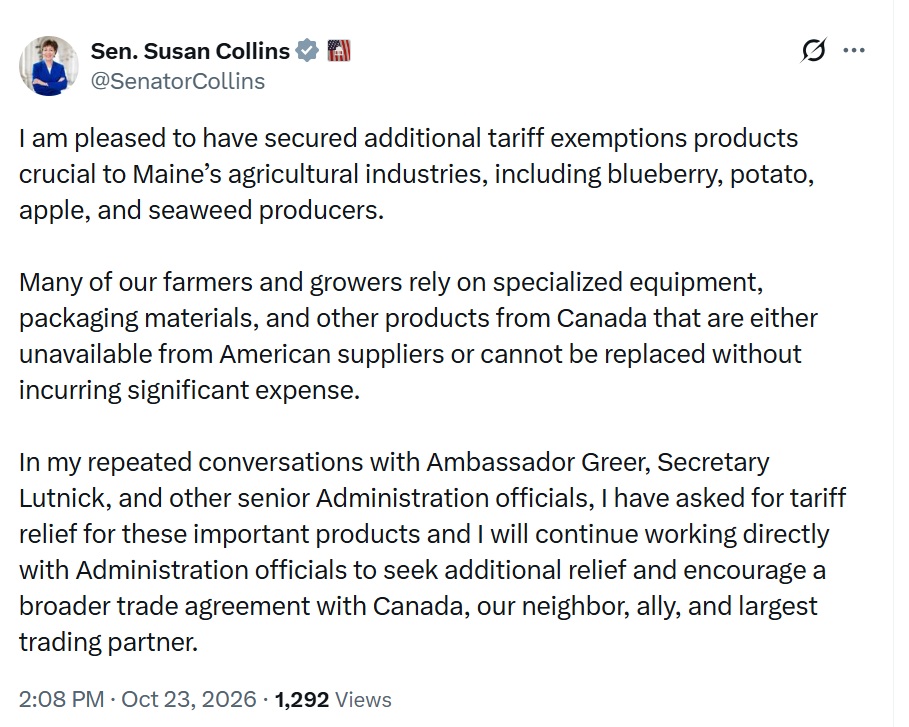 U.S. Sen. Susan Collins post on X on Oct. 23, 2026.
In a fact sheet published Friday, the White House confirmed it is removing certain products — such as plywood sheets, some paper products, certain machinery and refrigeration equipment, and certain packing crates and boxes — from the scope of the Section 338 tariffs, while replacing those with tariffs on “certain valves, carpets, waste products, and others.”
The fact sheet went on to state that the tariffs apply to all goods regardless if they are covered by the current Canada-U.S.-Mexico (CUSMA) trade agreement.
The changes take effect Oct. 30, 2026.
Back in late August, the U.S. levied 50 per cent tariffs on nearly US$20 billion worth of Canadian goods.
Trump’s trade war with Canada has become a political flashpoint in Collins’ state just ahead of November’s midterm elections.
Trump slammed an array of Canadian products with 50 per cent tariffs in August after trade talks with Ottawa broke down. The president also signed an executive order renaming Lake Ontario as Lake America.
Ottawa responded with retaliatory tariffs on specific American imports.
Trump again escalated trade tensions the following month by banning imports of certain Canadian goods, including motorcycles and some dairy products.
Collins has repeatedly pushed back on Trump’s tariffs on Canada. Maine shares a border with Quebec and New Brunswick and relies heavily on trade with Canada.
Files from The Canadian Press were used in this report
Keep it Factual
Add CityNews Toronto as a trusted source on Google to see more local stories from us.