
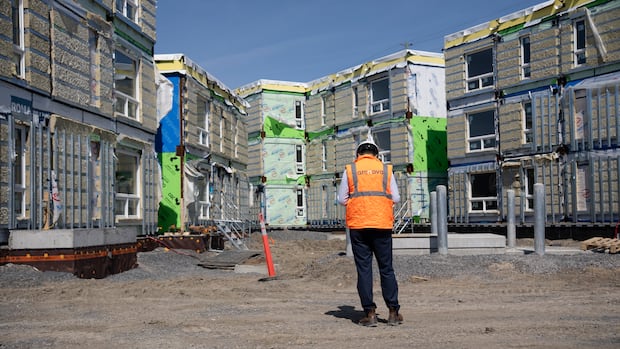
CBC Ottawa asked voters early in the municipal election campaign about the issues you care about. Now, with days to go before voting day, here’s what the leading mayoral candidates have promised on four of those top issues. Today: housing.
Six years ago, council unanimously declared a housing and homelessness emergency in Ottawa.
Since then, the waiting list for rent-geared-to-income housing has only grown, reaching above 16,000 households. Private rents have soared. Shelter demand has ballooned.
Meanwhile, the development industry is facing serious headwinds from high interest rates and construction costs, and the city has repeatedly missed provincial targets to get more units built.
And it will need to build many, many more. Going forward, the province wants the city to find space for more than 500,000 residents over the next quarter-century.
Soon after the election, council will have to decide whether to cram most of them into existing neighbourhoods, or open up space for new suburbs by pushing out the urban boundary that limits sprawl.
Council has already moved to pull down roadblocks to build housing, including through a new zoning bylaw that allows denser development in virtually every neighbourhood.
But the leading mayoral candidates say they want to do even more. Here’s how many houses they’re promising to get built, where they want to put them and how they’re proposing to get it done.
Jeff Leiper 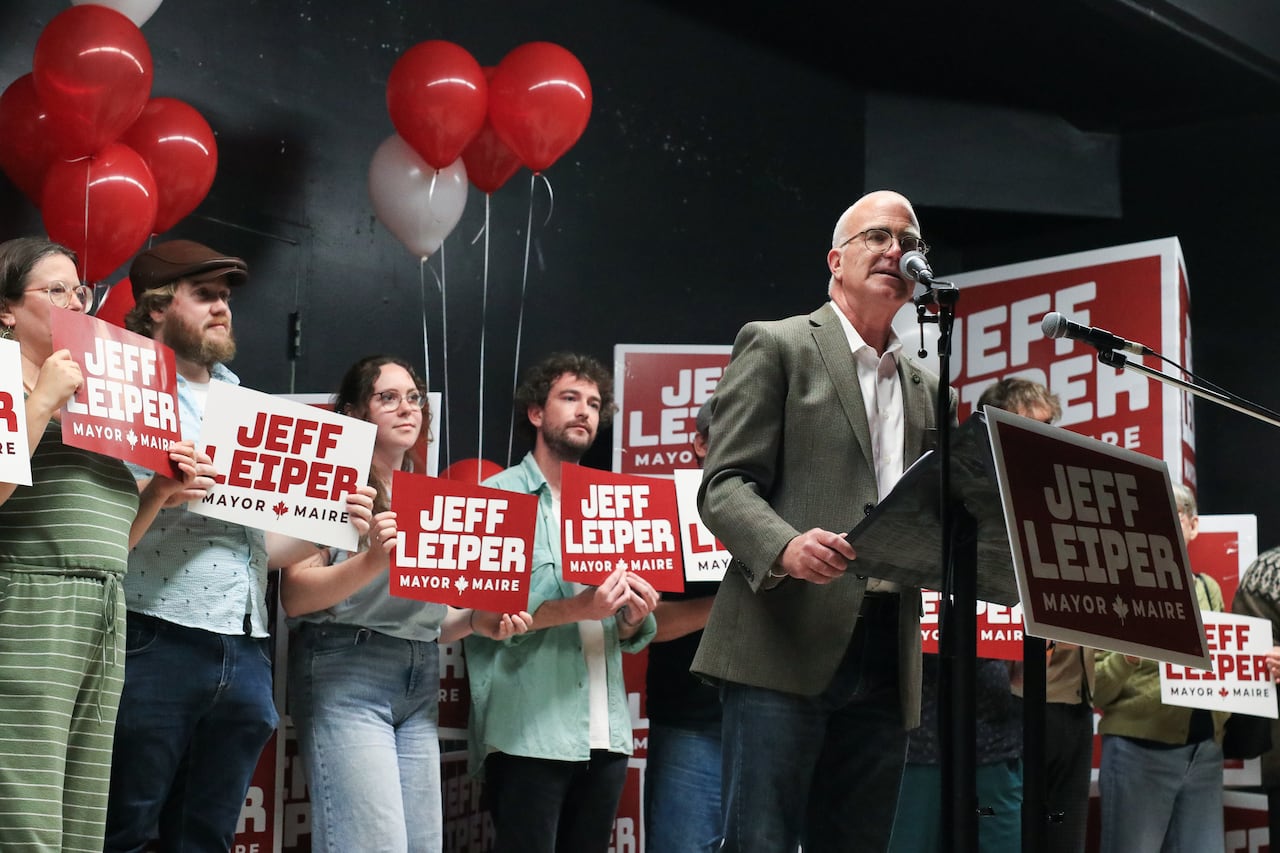
Jeff Leiper at a campaign event for his 2026 mayoral run. (Arthur White-Crummey/CBC)
Jeff Leiper is promising to get 1,500 non-profit homes built per year, or 6,000 over a four-year mandate.
He said he would do it by dedicating city-owned land, fast-tracking approvals for non-profit builders and using long-term leases instead of sales to reduce costs for builders.
Leiper is also pledging to launch an acquisition fund that would allow the city to buy up private market rentals that are at risk of demolition or sudden rent hikes. The city would then transfer them to non-profit operators to keep them affordable.
He told CBC he would put about $5 million to $8 million into the fund, using money from the city’s vacant unit tax, though that revenue already pays for affordable housing projects. His campaign team later said the number could be higher, calling around $10 million to $20 million in capital funding a “reasonable scenario,” though the precise amount would be set at budget time.
As a city councillor, he supported that idea when it came to committee in 2024, though it failed in an eight-to-four vote.
Leiper said he would also better enforce housing standards to address unsafe conditions, with more proactive inspections and escalating fines for landlords who repeatedly violate bylaws.
On private market housing, Leiper has expressed confidence that the more permissive zoning rules he championed as planning and housing committee chair will make a difference.
But he said the city can only do so much to spur private market development, which is why he’s putting so much focus on not-for-profit builders.
While Leiper has pointed to the high costs of servicing brand new suburbs like Tewin, he isn’t committing to holding the line on the urban boundary to halt all new sprawl, saying the city will have to take a close look at the math. Even so, he said the majority of growth should happen in existing neighbourhoods.
Neil Saravanamuttoo 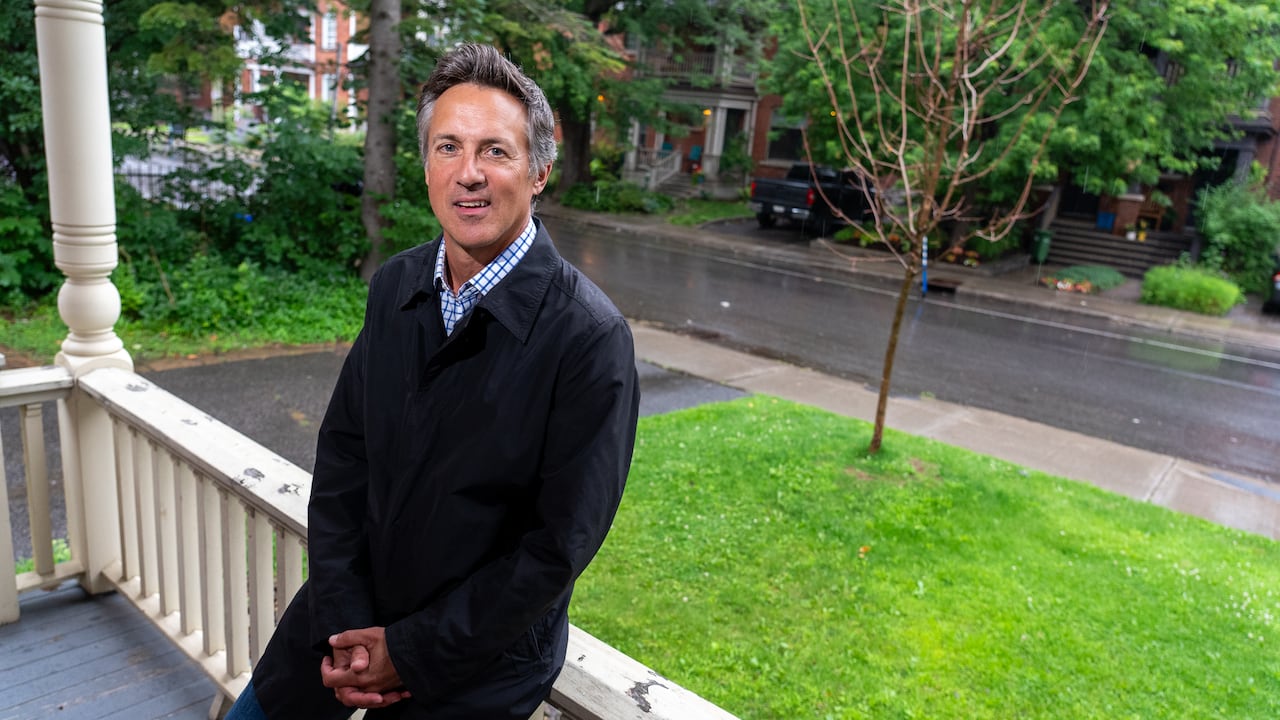
Neil Saravanamuttoo says he would double the share of non-market housing in the city by building about 25,000 to 35,000 non-market units. (Francis Ferland/CBC)
The centrepiece of Neil Saravanamuttoo’s housing plan is what he calls “the public option.” He would double the share of non-market housing in the city by building about 25,000 to 35,000 non-market units.
He said he would rely on a subsidiary of Ottawa Community Housing that focuses on affordable middle class units, rather than subsidized rent-geared-to-income housing. He said those units would still be cheaper than market rents since there’d be no need to earn a profit.
Saravanamuttoo said it wouldn’t cost taxpayers anything since rents would eventually pay for construction costs. But the city would have to guarantee loans to finance building upfront, and Saravanamuttoo acknowledged that would mean taking on billions of dollars in added debt.
He couldn’t give a specific debt number. It’s a long-term project, with Saravanamuttoo hoping to see it achieved within two decades.
Saravanamuttoo said the long-term solution to homelessness is subsidized social housing with wraparound supports, though he doesn’t make any specific commitments to get more built — not on a permanent basis, anyway.
He does have a temporary solution: He said the city can get people off the street quickly by imitating Gatineau, Que., which has a village of tiny homes built out of shipping containers. But he hasn’t provided details on the funding source or a possible location.
Saravanamuttoo is against expanding the urban boundary to allow more sprawl, saying Ottawa simply can’t afford the costs.
Alex Lawson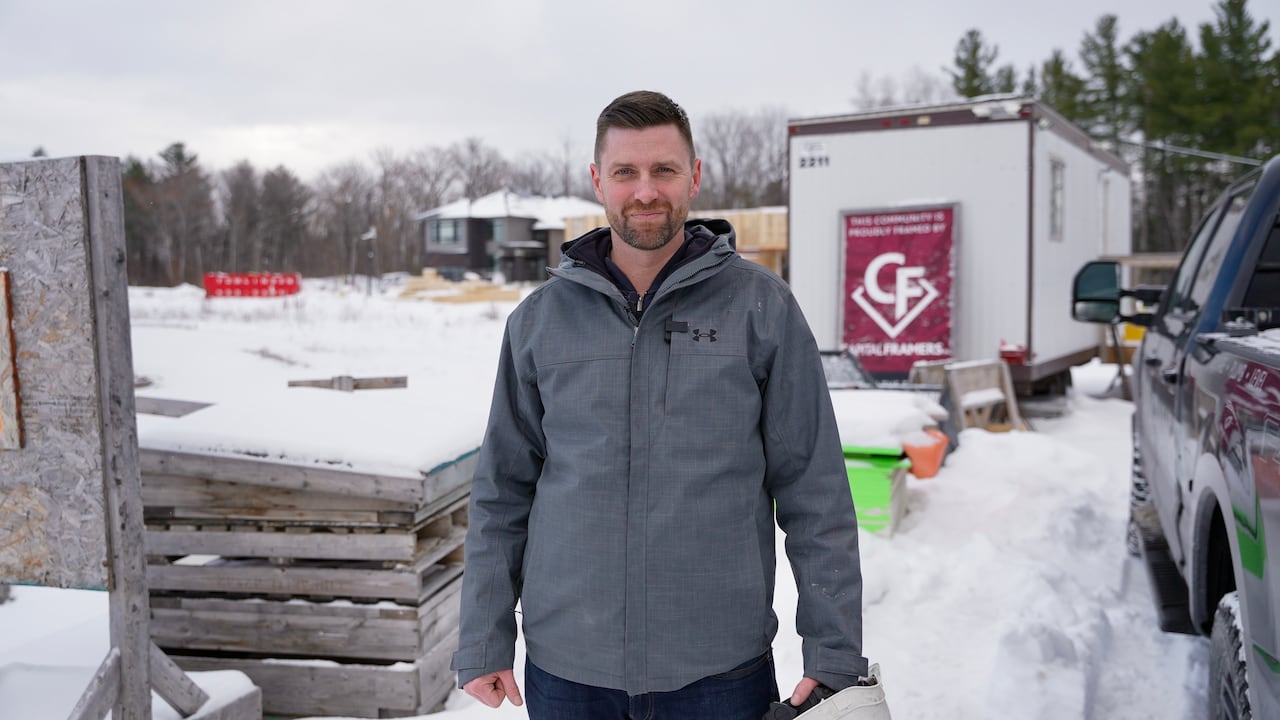
Alex Lawson on a job site for his company Capital Framers on the day he announced his run for mayor to CBC. (Nick Persaud/CBC)
Alex Lawson owns a company that frames homes, so it’s little surprise that one of his first announcements was about housing. He promised to cut fees that developers pay on every new home they build.
The money covers infrastructure the city needs to service those homes, but Lawson said he would draw on a federal and provincial fund to offset those losses and cut the fees in half.
Since then, the city has done exactly that and more, cutting the fees by even more than he promised.
Lawson said he will give private developers one year to take advantage of those cuts and build affordable homes. If not, he said the city should step in, using public land and public financing partners to build.
He said he wants to see new homes coming in at a price point of about $1,800 per month for a two-bedroom unit. He didn’t say how many homes the city would build if developers don’t play ball.
“Putting targets on homes, especially from politicians, is ridiculous,” he said, pointing to labour shortages in the industry. “The ones we are going to build will be pre-fab in a factory to make it quicker.”
Lawson has said that Ottawa’s homeless shelters are beset by a drug crisis that he called a “public safety failure.” He said he would do a top-to-bottom review of shelter safety.
On the urban boundary, Lawson said the city should allow the kind of housing that people are seeking. If that turns out to be three-bedroom single-family homes, he said most will have to go in the suburbs to remain affordable.
Mark Sutcliffe 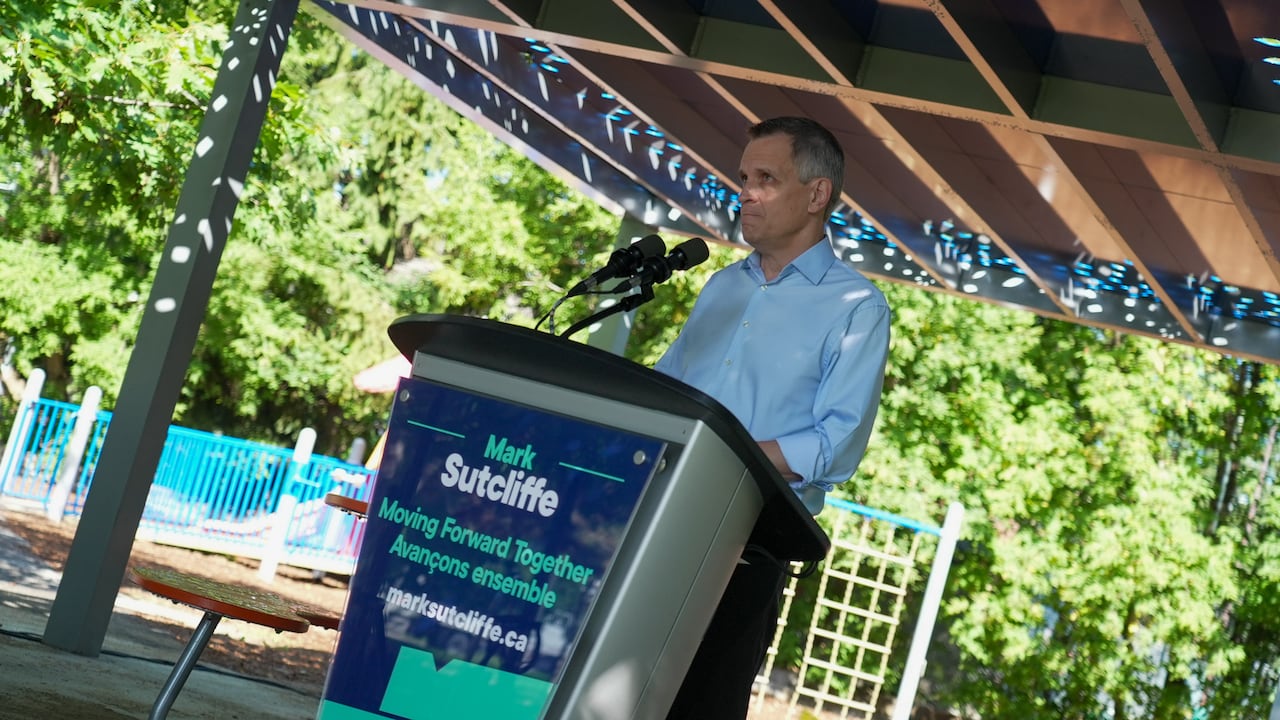
Mark Sutcliffe at a public safety announcement at Ottawa’s Fisher Park during his campaign for re-election. (Antoine Allain/CBC)
Mark Sutcliffe is promising to get at least 75,000 homes approved over the next four years — about the same number the city managed over the last four.
But approving homes isn’t the same as getting developers to build them. That will depend on the private market, though Sutcliffe said he would clear away more red tape and cut fees in some areas to make it easier.
He does have a specific promise to actually get homes built, though the number is smaller: He’s pledging 10,000 affordable, transitional and supportive units by 2030. That total includes some that were already constructed, however, so the actual number of new units is closer to 5,500.
Sutcliffe said he would rely on a mix of federal, provincial and private funding, but the city would do its part, too. He said he would expand the role and mandate of Ottawa Community Housing, possibly by having the city assume its debt payments.
He’s also promising to make it easier to build housing on municipal land, including efforts to develop Bayview Yards and around Moodie and Hurdman stations.
More broadly, he said he would “set a course” for ending homelessness in Ottawa – though he didn’t provide any timeline. He is promising to follow through on an earlier commitment to end youth homelessness by 2030.
Sutcliffe wants a “balanced approach” between building homes in established areas and in new suburbs, though he told CBC that most should go in existing neighbourhoods.