
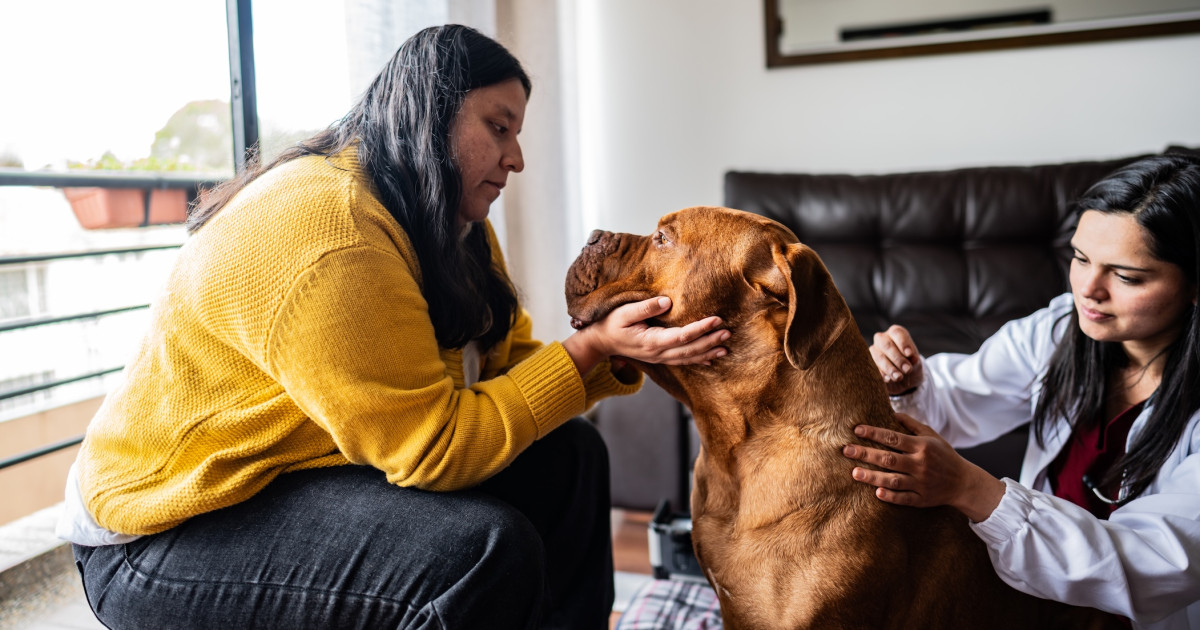
How animals respond to acupuncture
All that said, not every animal will tolerate needles.
This is why Hodges and other practitioners start slow. “I might begin with five needles for the first treatment, including the calming points, and my first treatment might be 10-15 minutes,” she explains. “With long-term, older patients who are accepting of needle placement, the treatment can last 30-40 minutes.”
Most animals, however, do tolerate the needles remarkably well, Hodges and Wright say. That’s because the needles are very thin and bypass the skin’s sensitive pain fibers. Plus, most animals also realize that they feel very good during and after treatment, in part due to the endorphins acupuncture releases.
Some of Hodges’ patients actually yawn when she arrives. One dog she regularly treats walks slowly to the living room, lies down on the carpet and snores during the treatments. “I take that as a compliment,” she says, “that they link me with a profound relaxation response.”
For animals who don’t tolerate needles, other forms of acupuncture may be tried. One version targets acupuncture points with lasers. Another uses weighted tuning forks to create sound vibrations at these points. A third form is acupressure, which involves applying manual pressure to certain spots on the body.
Common misconceptions about veterinary acupuncture
If these sorts of therapies sound strange to you, you are not alone.
For many people, acupuncture comes from a different culture and language, Wright says. “It uses language that feels very uncomfortable and [may not] sound logical, such as ‘Qi energy’ and ‘wind in the liver.’” Instead, she presents it to patients’ families in terms more familiar to them.
Another hurdle for caregivers considering acupuncture is that it takes longer for benefits to show. While a pharmacological approach typically provides quick, easily observable results, acupuncture is more cumulative and can take several weeks of sessions to manifest changes, making observation and calibration a key part of the process.
“When you give a drug, you can measure the effect during the time that drug is in the bloodstream,” Wright explains. “When you’re doing something like acupuncture or physical therapy, you’re looking at that stretched over a week, two weeks or a month.”
Both Wright and Hodges agree that about four weeks is enough time to determine whether acupuncture is working for your pet. This is also the time to establish ways of assessing your pet’s response, Wright says. “How do they seem in between sessions? Are they getting back to behaviors associated with a healthier time in their life?”
For caregivers interested in trying acupuncture for their pets, there are many resources. The American Holistic Veterinary Medical Association and Chi University have searchable directories. Caregivers may ask their veterinarian or trusted friend for a referral.
You can also simply seek out someone who’s employed acupuncture for their pet, Wright suggests. “Ask how they approached it. How did it feel? How did it go? What is the follow-up?”
The main takeaway Wright says: Don’t fear the unfamiliar or fall into myth narratives. “You hear people saying, ‘Oh, it seems so terrible that people are sticking needles in an animal, and it’s like witchcraft.’ There are hundreds of thousands of physiologic papers out there showing how acupuncture works, and it’s a scientific [tool] we’re bringing to the table.”