

Listen to this article
Estimated 4 minutes
The audio version of this article is generated by AI-based technology. Mispronunciations can occur. We are working with our partners to continually review and improve the results.
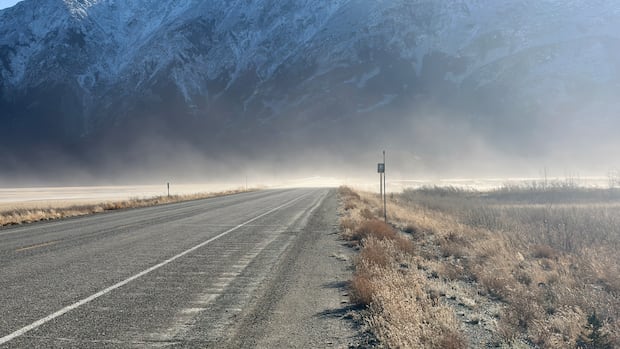
Researchers studying dust storms in the Ä’äy Chù, or Slims River, Valley are hoping new sensors will give them a better picture of how often the storms happen — including through the winter.
James King, an associate professor of geography at the University of Montreal, has studied dust in the valley for nearly a decade.
This summer, his team installed particle sensors at several locations throughout the valley. The equipment measures both the concentration and size of particles in the air.
King says previous monitoring has been limited by power sources and communications coverage, with some equipment only able to stay in the field for a few weeks at a time.
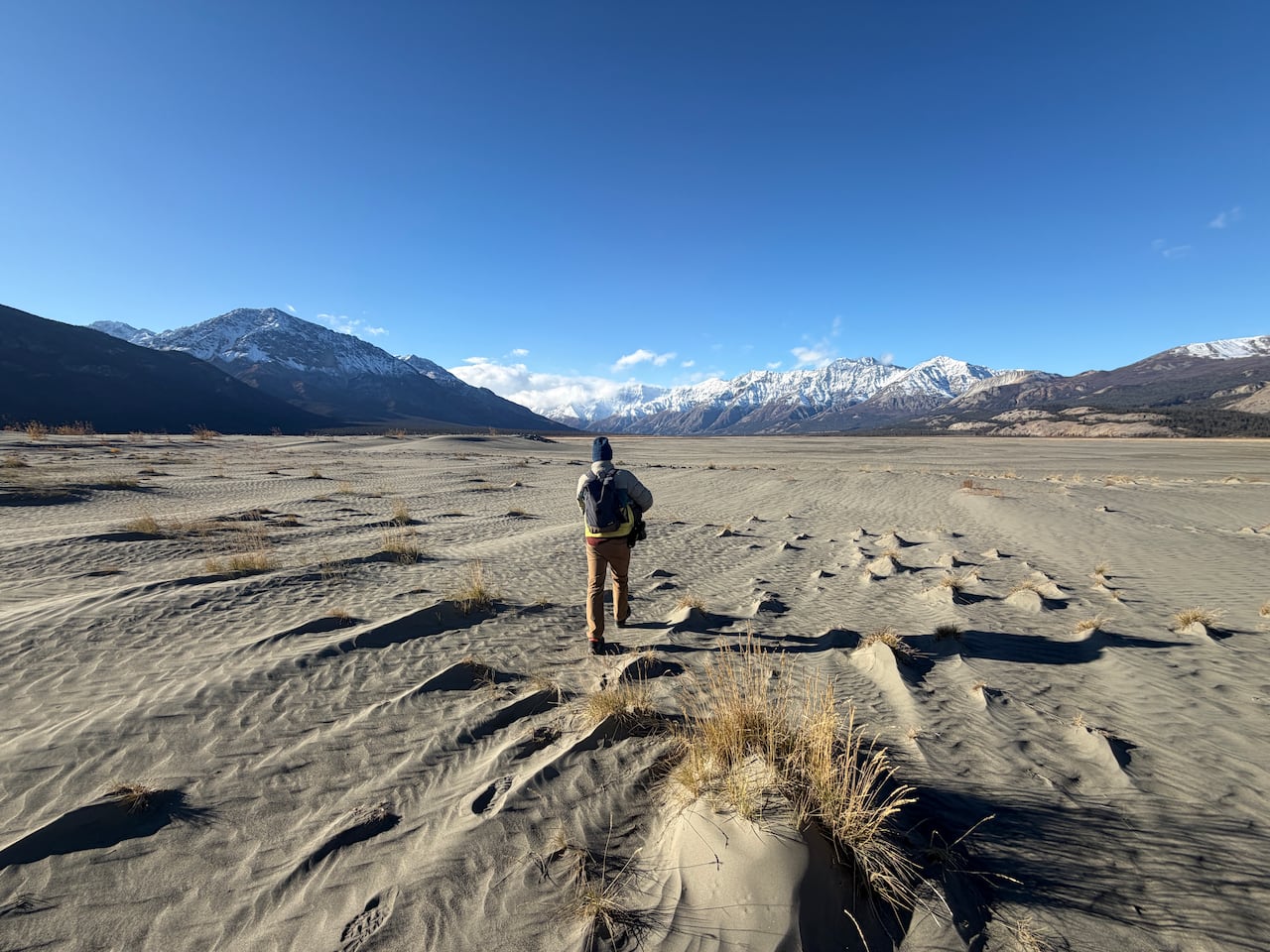
James King walks across exposed sediment in the Ä’äy Chù (Slims River) Valley, where researchers are monitoring how wind moves fine particles through the area. (Viktor Elias/CBC)
When CBC visited the valley this fall, King was preparing the new equipment for colder weather.
“The new sensors that were installed this summer were installed with a lithium battery system that won’t work over the winter,” he said.
“So we’re going to install a normal battery system and hope that they can measure all winter long.”
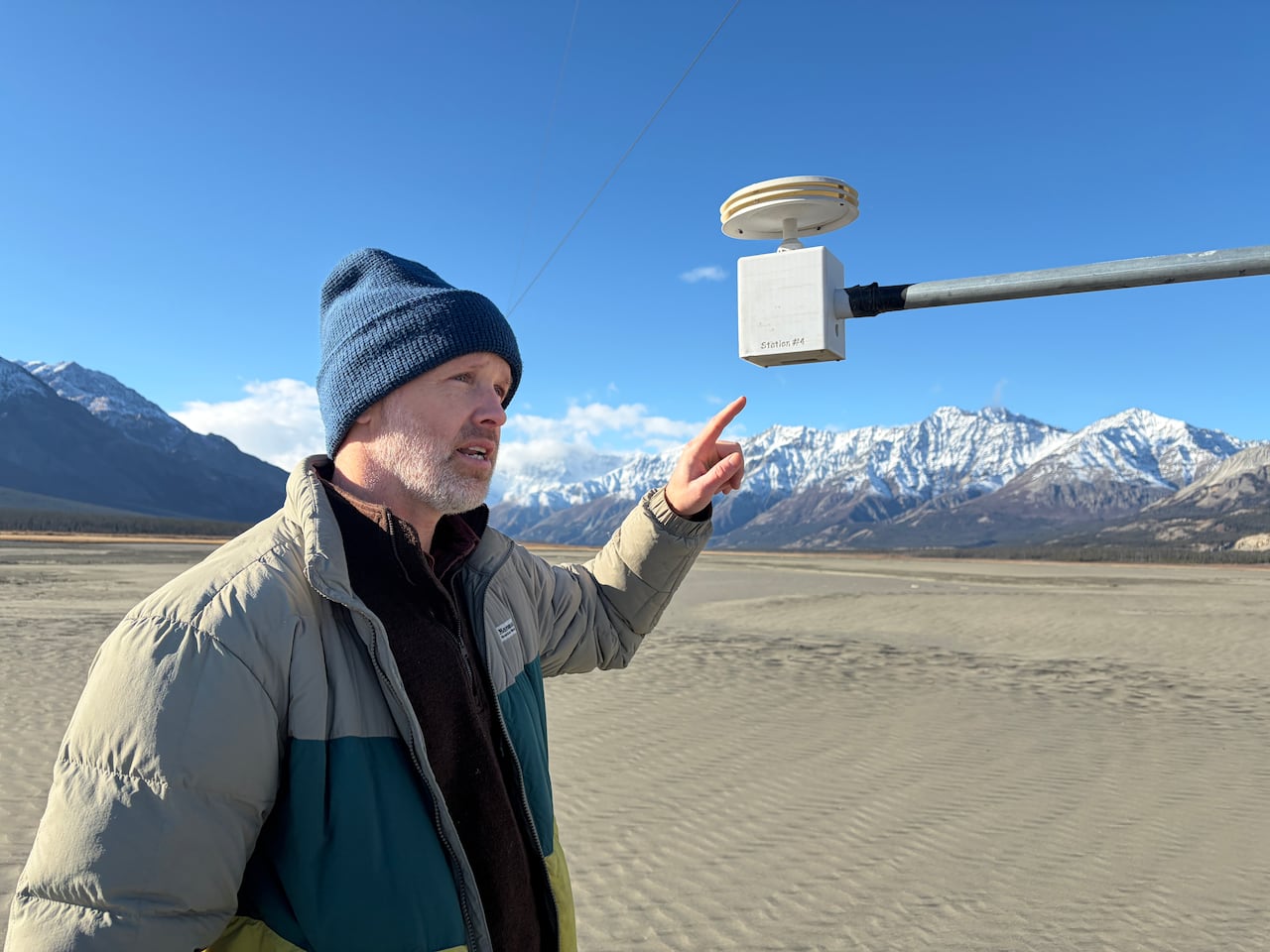
James King points to a particle sensor in the Ä’äy Chù (Slims River) Valley. The equipment measures the concentration and size of airborne sediment as part of research into dust conditions in the valley. (Viktor Elias/CBC)
Some of the data is also being transmitted online in real time.
Measuring the smallest particles
King says the new equipment could help researchers determine not just how often dust storms occur, but how frequently concentrations reach potentially unhealthy levels.
The size of the particles matters.
King says particles smaller than 10 microns are of particular interest because they can enter the respiratory system.
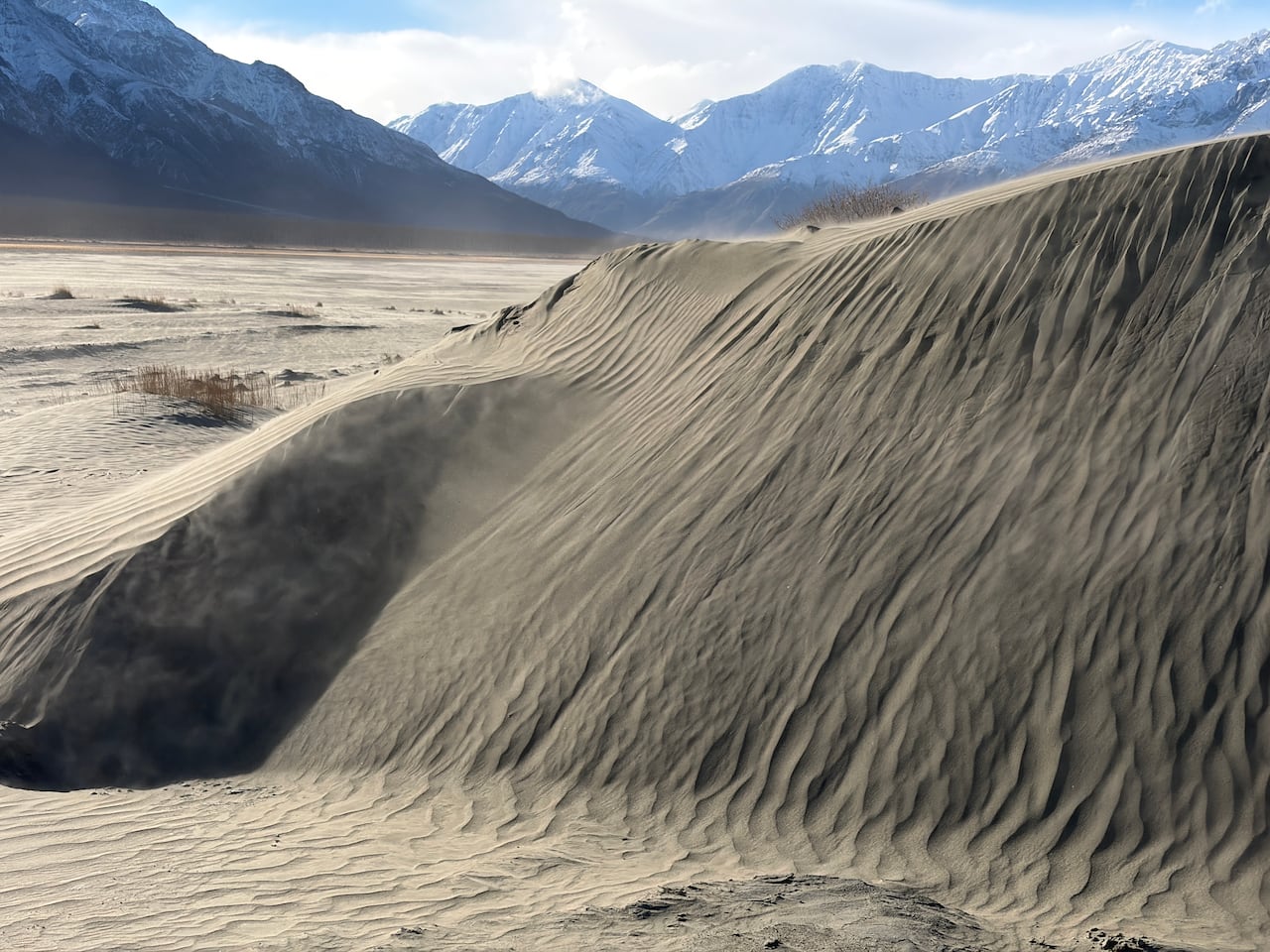
Wind shapes exposed sediment into ridges in the Ä’äy Chù Valley. The former riverbed has become a major source of airborne dust since the river’s flow changed in 2016. (Viktor Elias/CBC)
During stronger storms, he says dust concentrations can exceed air quality standards. He says concentrations of naturally occurring arsenic and lead carried in the fine sediment can also exceed applicable standards during some dust events.
In a statement to CBC, Parks Canada said research led by King has shown dust exposure in the Ä’äy Chù Valley can exceed World Health Organization (WHO) guidelines for particulates.
The agency advises visitors to prepare for extreme dust conditions. During high winds, it recommends eye protection and a covering for the mouth and nose, and says people should move camp out of affected areas when possible.
Parks Canada says it is working with First Nations and researchers to better understand potential health impacts from material contained in the airborne dust.
‘Whenever there’s a wind’
Gùdia-Mary Jane Johnson stands near Kluane Lake in Burwash Landing. Johnson says glacial dust is a regular presence in the broader Kluane region when winds pick up. (Viktor Elias/CBC)
For Gùdia-Mary Jane Johnson, who is a Kluane First Nation citizen, and a resident of nearby Burwash Landing, the dust is not something confined to the Ä’äy Chù Valley.
Asked how often she notices dust around Burwash Landing, Johnson’s answer was simple.
“Every day. Every day, whenever there’s a wind,” she said.
Johnson says strong winds can transport fine glacial sediment throughout the broader Kluane region.
She says particularly strong dust events can obscure parts of the surrounding landscape.
The particles themselves can be difficult to notice while they are airborne because they are so fine, Johnson says, but residents see evidence of the dust accumulating indoors.
She is also concerned about what the sediment could mean for wildlife.
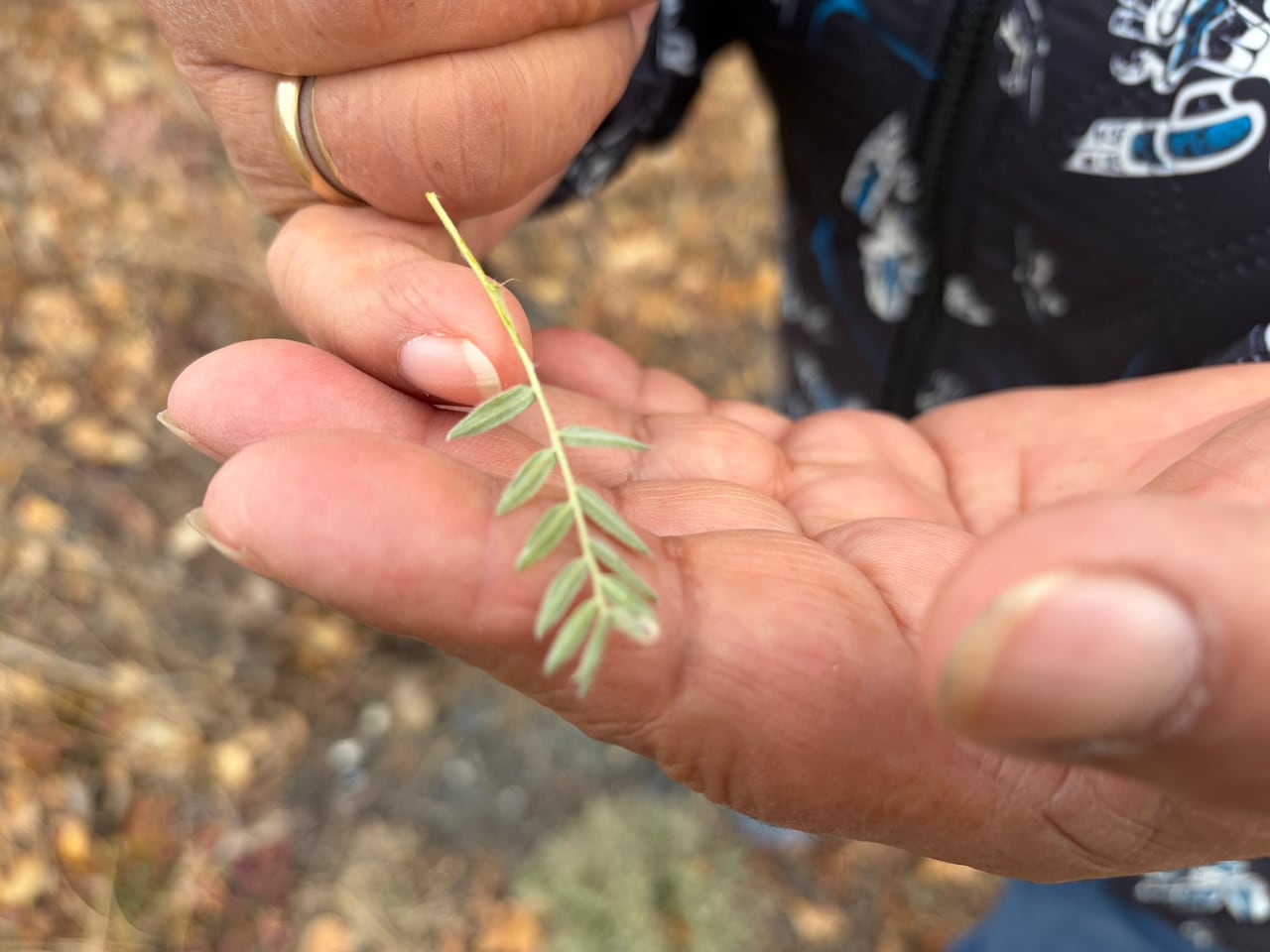
Gùdia-Mary Jane Johnson holds a low-growing plant near Burwash Landing. She says fine hairs on plants can collect glacial dust and wonders what repeated exposure could mean for animals, such as the Dall sheep, that feed on them. (Viktor Elias/CBC)
During the interview, Johnson pointed to fine hairs on low-growing plants that she says can trap glacial dust. She questioned what repeated exposure could mean for animals that graze on those plants.
She says Dall sheep are ruminants and spend much of their time feeding in river valleys where dust storms occur. Because they repeatedly chew and grind the plants they eat, Johnson wonders what ingesting dust-covered vegetation could mean for their teeth and health over time.
“They only live as long as their teeth,” she said.
But Johnson says enough time hasn’t passed to know what the long-term effects might be.
“We don’t know,” she said.
King says researchers are also interested in how the valley is changing geographically.
When he first began working in the area, he says much of the dust originated near the highway and former riverbed. In recent years, he says more dust has been coming from farther up the valley.
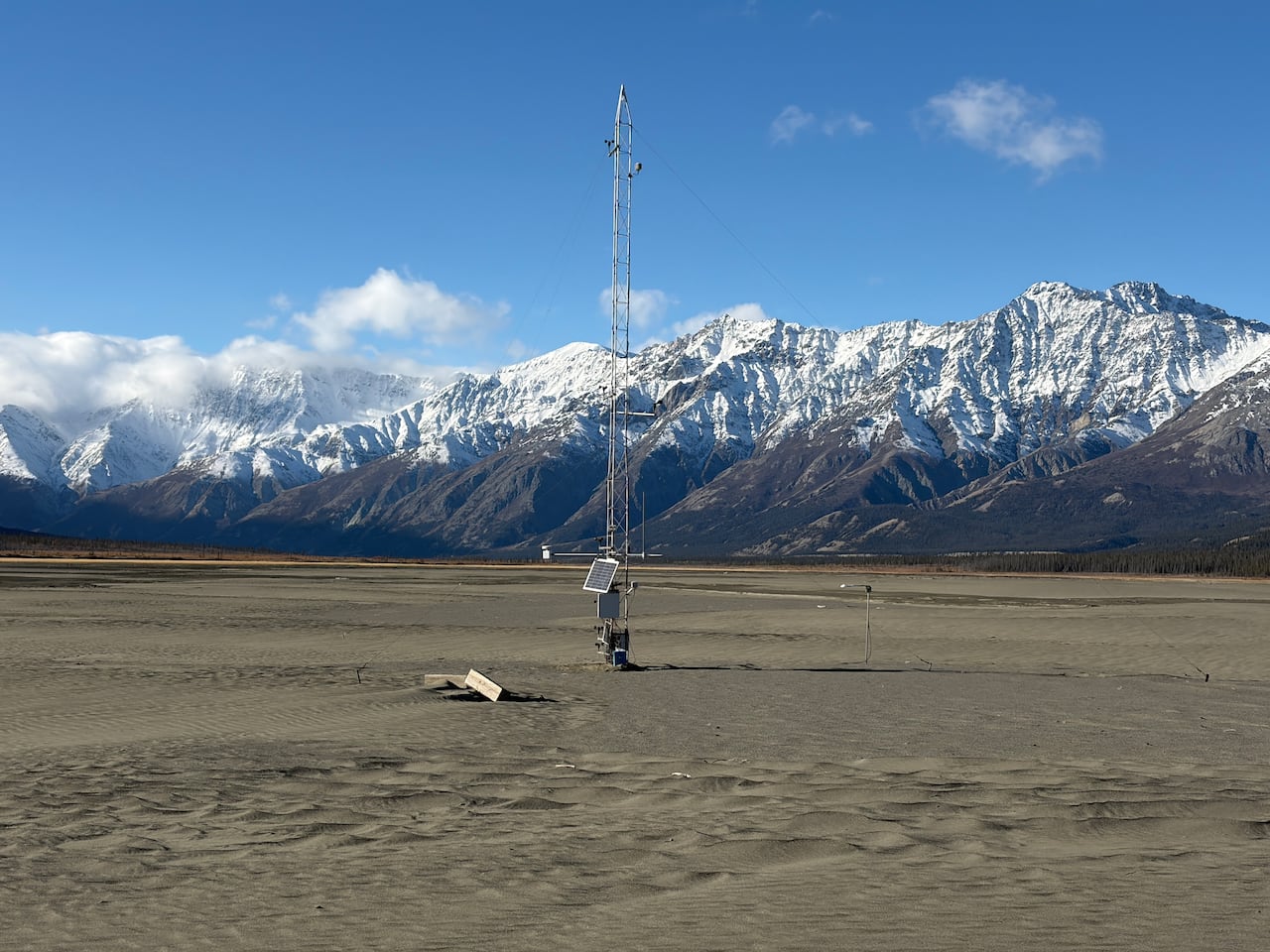
A monitoring station sits on the Ä’äy Chù Valley. Researchers are using equipment like this to track wind conditions and the concentration and size of airborne particles. (Viktor Elias/CBC)
The new sensors are intended to give researchers a longer and more consistent record of those changes – including during a season for which King says there has historically been very little data.
For Johnson, winter dust is already something residents can see.
“You really notice it in the winter time,” she said.