
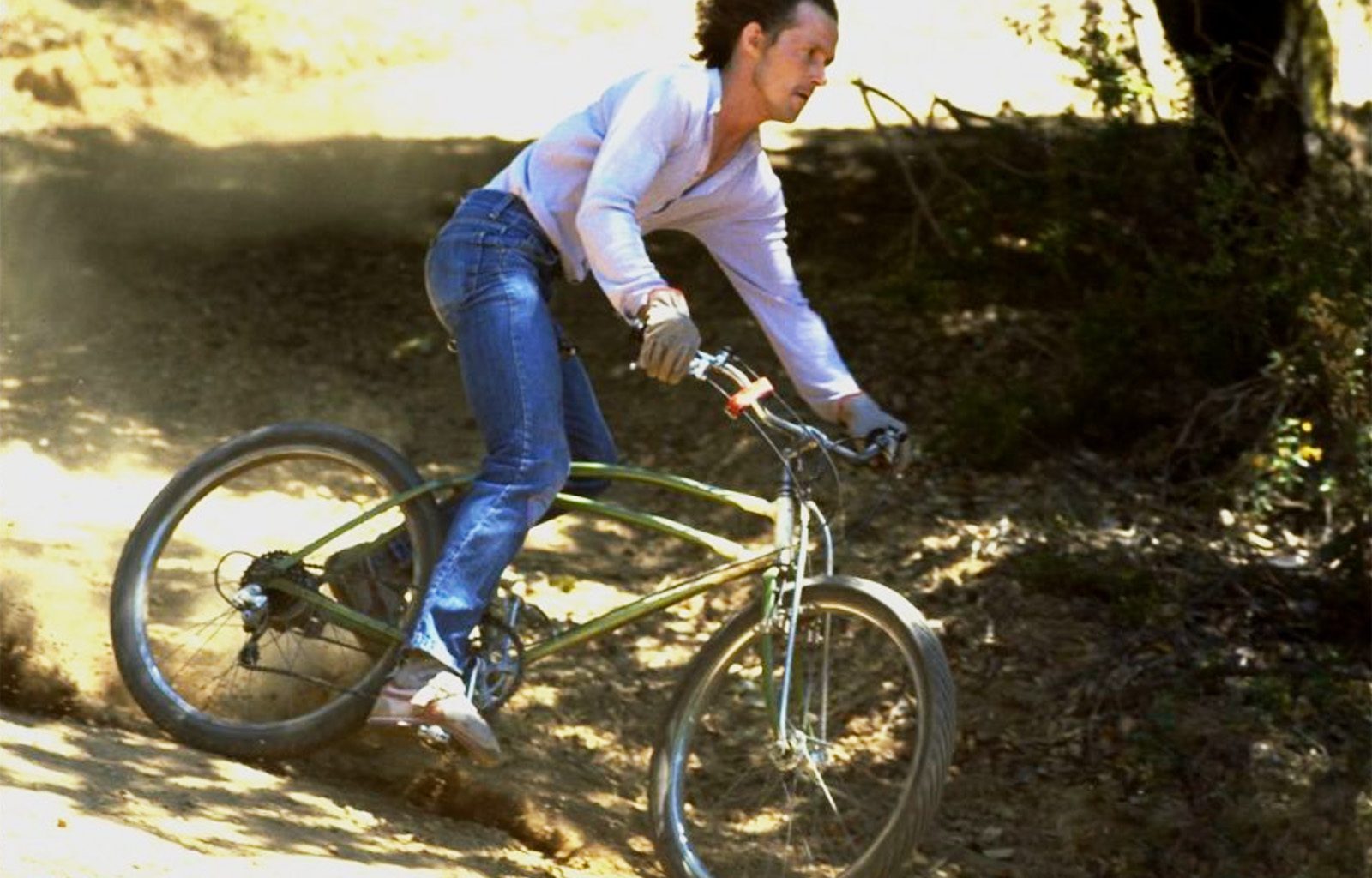
It was fifty years ago this week that a group of riders gathered at the top of a steep fire road in Marin County, California and asked one simple question; who’s the fastest?
About a dozen riders dropped in for that first Repack downhill race. There was nothing resembling modern day mountain biking. No carbon, hydraulic brakes of Red Bull helmets. There was only a bunch of heavy, old bikes with coaster brakes. You could argue that mountain biking was born that day. Sure, people had been riding off road since the early days of the bicycle, but Repack turned an obscure pastime into something resembling an organized sport.
Why Repack?
“The way it started was, we used to ride down on these coaster brakes. We’d just take an old bicycle and take it out here and go run down the hill. This hill is so steep, you’ve got to be on the brakes so much that when you get to the bottom, with just a coaster brake, one brake on your bike, it’s just pouring smoke out of it. All the grease, and I kid you not, all the grease has just turned into vapour. It looks like you’re riding a 250 Yamaha with bad rings, you know? You’ve got smoke pouring out the back. Anyway, all the grease is gone. It’s vaporized, and then you’ve got to go home and repack your hub. Hence the Repack.” — Charlie Kelly
The first race
The first Repack race came about because a bunch of local riders couldn’t agree on who was fastest. Charlie Kelly and Fred Wolf figured there was only one way to settle the argument: race. So they organized a downhill time trial.
On Oct. 21, 1976, around a dozen riders showed up to see what they could do. One by one, they launched themselves down the dusty fire road, riding bikes that weren’t exactly designed for the job. By the time everyone had made it to the bottom, Alan Bonds had clocked the fastest run at five minutes, 12 seconds.
The birthplace of modern mountain biking
The Repack races quickly became a gathering place for riders experimenting with different bicycles, components and riding techniques. Repack was held 24 times in total. There were 22 races between 1976 and 1979 and two more in 1983 and 1984. In total, only about 200 riders ever took part. But some of those would go on to become some of the most influential people in the sport. People like Joe Breeze, Gary Fisher, Charlie Kelly, Tom Ritchey and Otis Guy. But back then, they were just riders trying to make their bikes work better. Just like modern day downhilling, the race provided a testing ground.
Fifty years later, we’re still doing the same thing
After fifty years of racing down a hill, there’s really no sign of it slowing (pun intended) down. Around the world there are friends racing each other down hills. From the organized productions that are the Hardline, to the grassroots local enduro races riding bikes fast down a hill is always gonna be a part of mountain biking.
If you ignore the technology, pricey gear and sponshorships, mountain biking really hasn’t changed. We still debate tire pressures, suspension settings and gear ratios. We’ll still argue over which line is better.
The first Repack race wasn’t the beginning of riding bicycles off-road. People were riding off road as soon as bikes were invented. But there’s little doubt that Repack was a defining moment. And on Oct. 21, 2026, that defining moment turned 50.
After fifty years the bikes are better, the trails are bette and the brakes are unarguably superior. But the motivation is still pretty much the same. Find a hill get to the top then challenger your buddies to a race down it.