
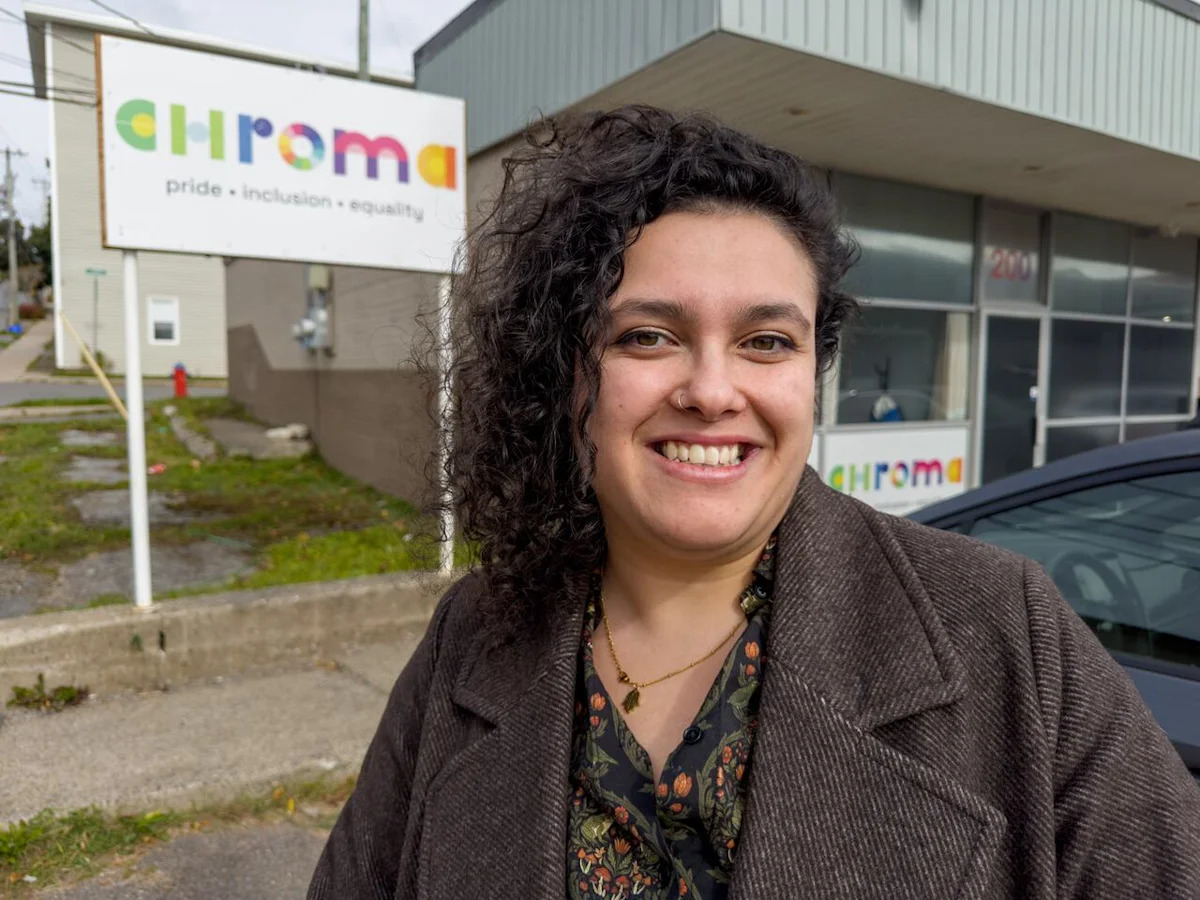
To Alex Arseneau, it seems an 2SLGBTQ+ organization closes its doors every week.
As the executive director of Alter Acadie, a francophone advocacy group based in Moncton, he points to a national charity his group partnered with as the latest example.
ARC Foundation is winding down in part because of financial pressure after nearly two decades of making K-12 education inclusive of all sexual orientations and gender identities.
It’s work the two groups pursued together in New Brunswick’s francophone schools.
“Losing them is huge,” he said. “It’s going to have a huge impact, and even more responsibility is going to come onto local organizations that are already doing way too much with too little.”
Alter Acadie is one of 45 organizations from across Canada that travelled to Ottawa in October to campaign for a renewed and expanded 2SLGBTQ+ action plan.
Born under the former Trudeau government, the five-year plan was launched in 2022 with the goal of advancing the rights of Canadians.

The original plan had $100 million in funding attached.
Alter Acadie exists as a direct result of that money, Arseneau said, making it the third organization in all of Canada with a specific advocacy mandate for 2SLGBTQ+ francophone people, and the only one in Atlantic Canada.
The action plan will expire in March 2027, and there’s no formal commitment from Ottawa to renew it. For 2SLGBTQ+ organizations across Canada, it means spring looms like a cliff.
“If the funding doesn’t renew, it’s going to be pretty disastrous for the sector,” Arseneau said.
Women and Gender Equality Canada — the federal department responsible for administering the plan and funds — told CBC News it’s reviewing the action plan and will share decisions about the program’s next steps at the appropriate time.

Chroma NB moved into its new quarters in Saint John a year ago. (Roger Cosman/CBC)
In the year since the non-profit Chroma NB opened its new space on 200 Carmarthen St. in Saint John, executive director Hadeel Ibrahim said people, including newcomers and refugees, have walked in off the street and, seeing and feeling they were in a safe space, spoke their identities aloud for the first time.
It’s the kind of dream that requires infrastructure: a sign outside, a building, staff inside.
Ibrahim said the capacity-building funding from the first federal action plan helped pave the way: Chroma became a non-profit, implemented financial systems and human resources policies and hired long-term staff.
She said this has opened Chroma up to more than one funding stream. With infrastructure and personnel in place, there is time and resources to apply for grants.
Without new funding to keep all this infrastructure in place, however, Ibrahim worries about how 2SLGBTQ+ organizations will move forward.
“What we’re trying to avoid is losing that progress that we already made,” she said. “It would be a real shame for that $100 million to feel like it’s a waste.”
Ibrahim travelled with Chroma to Ottawa in October for the lobbying campaign, helping explain the funding call to MPs: $450 million over five years — representing less than 0.02 per cent of annual federal spending — to support everything from housing and health-care programs to business development and refugee support.
Capacity-building funding can also help organizations become less reliant on government support over time, Ibrahim said.
Some MPs warned Canada needs to be fiscally responsible as it navigates a trade war with the United States, Ibrahim said
She finds this argument difficult to understand, however. More than 120,000 2SLGBTQ+ businesses in Canada contribute $86 billion a year to the economy, according to the Canadian Queer Chamber of Commerce, and with sustained support, that workforce could unlock further revenue.
“Supporting queer organizations and queer people is actually, it’s not the opposite of supporting the economy,” Ibrahim said. “It is actually helping the economy.”
Renewed funding could improve regional equity, Ibrahim added, especially for a small province like New Brunswick.
With the first round of funding, for example, Chroma and Alter Acadie helped develop training to help health-care providers better serve transgender and gender-diverse people, Ibrahim said
This means fewer people have to travel outside New Brunswick to access that kind of care.

In this space on 200 Carmarthen St., Chroma hosts events for 2SLGTBQ+ youth. (Roger Cosman/CBC)
Ibrahim said more funding would also build the capacity of groups like Chroma and Alter Acadie to provide services in New Brunswick’s rural areas.
“It shouldn’t be so much of a disadvantage to be a queer person in New Brunswick,” Ibrahim said. “Funding would mean less isolation. It would mean more access to health care and services.
“It would mean living in a small place doesn’t mean that you don’t have access to community.”
While Women and Gender Equality hasn’t formally committed to a new plan, it has sent some positive signals to the community, according to Queer Momentum executive director Fae Johnstone.
It’s a national advocacy organization that was founded three years ago to combat the rise in anti-2SLGBTQ+ hate, Johnstone said, and it helped facilitate the lobby day in October.
“The Department of Women and Gender Equality Canada did spend the summer engaging in conversations and consultation with queer and trans community organizations, the public and other stakeholders to help inform what they might do next on queer and trans equality,” she said.
“That was really well-received. That’s a sign that they know the action plan is expiring soon.”