
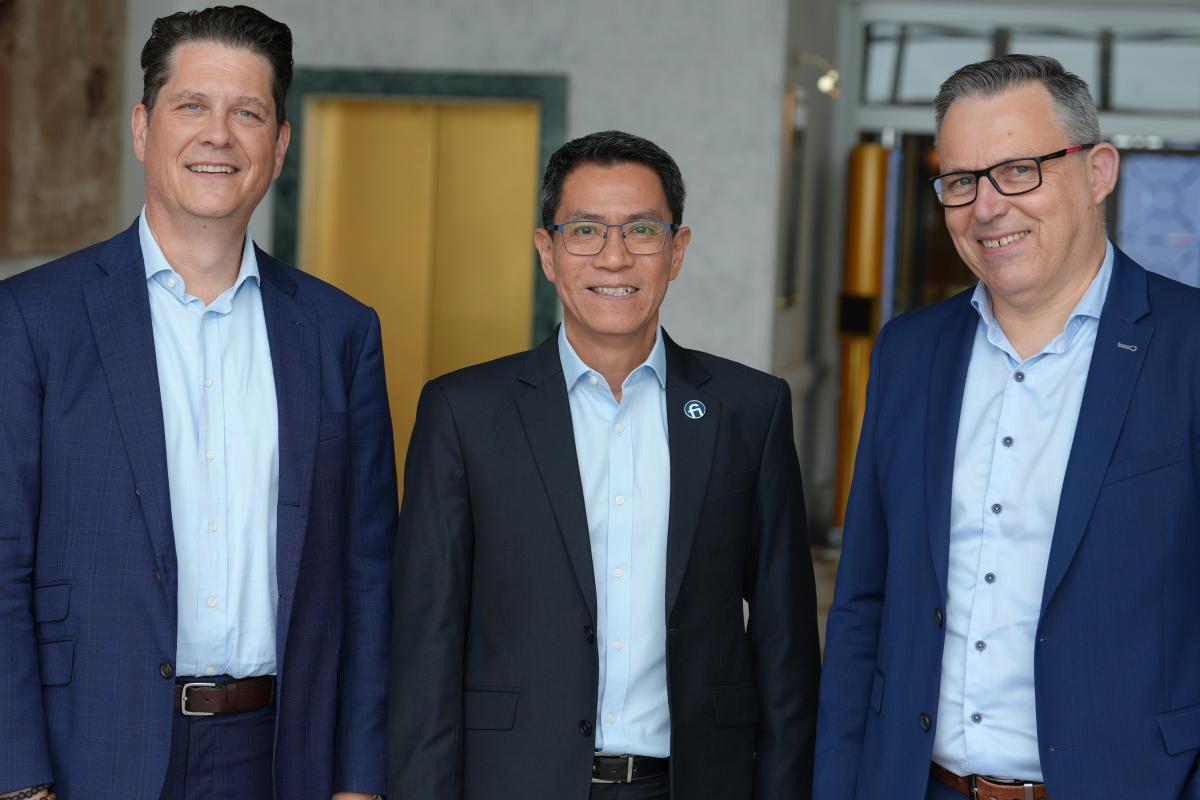
Artificial intelligence (AI) is already helping wealth management professionals analyse information, prepare client reports and reduce routine work. Applying it to the processes on which a bank depends raises harder questions about data, accountability and how employees use the time released. At a private roundtable hosted by Hubbis in partnership with Finalix at the Tower Club in Singapore in October 2026, senior banking and wealth management professionals compared their experiences of adoption. Finalix’s preliminary research provided a starting point, with administration and onboarding emerging as significant burdens on adviser time. The discussion examined where automation could help, what human oversight must involve and how institutions can turn experimentation into useful delivery.
Key Takeaways
Administration offers a practical starting point. Finalix’s preliminary research pointed to onboarding, know your customer (KYC) data capture and information gathering as major sources of effort. Participants saw scope to relieve that burden while keeping people accountable for decisions.
Access to AI is only one measure of adoption. Widespread use of assistants can coexist with limited deployment in core processes. Participants distinguished personal productivity, controlled pilots and the integration of AI into institutional workflows.
Source of wealth brings the data problem into focus. Banks may already hold relevant evidence across old files and disconnected systems. Extracting and assembling it can reduce repeated requests to clients, although reviewers still need to assess the resulting account.
Human oversight changes the skills required. A complex review assembled by AI needs someone capable of understanding the whole case. Automation also raises a training question: how will junior employees develop that expertise if their traditional work disappears?
Time saved needs a business purpose. Focused use cases, common controls and user feedback can support delivery. A productivity claim becomes more useful when an institution can explain how the released capacity improves service, generates revenue or reduces work.
The relationship debate remains open. Some participants expected experienced bankers to remain central to client acquisition and difficult investment conversations. Others anticipated greater delegation to AI, particularly among self-directed clients, and urged institutions to prepare for different service models.
Different Measures of AI Adoption
The opening contributions showed how differently institutions were measuring progress. Some participants described broad access to AI assistants and regular use across their organisations. Others focused on a smaller number of applications entering production, or on the caution required when tools influence client advice. A high rating for everyday productivity did not necessarily imply the same maturity in onboarding or compliance.
Practical uses were already varied. One participant described combining a rules-based framework with AI to produce personalised portfolio updates, including for clients with relatively modest balances. Others used AI to analyse business data, assist software development or review information. A legal and compliance professional described comparing AI-generated research on cross-border financing questions with external counsel’s work, while retaining human responsibility for the assessment.
Personal enthusiasm could run ahead of institutional deployment. One attendee rated personal adoption at eleven out of ten and described agents handling separate tasks in the background. The contrast helped establish a recurring distinction: an individual can experiment quickly, whereas a bank must decide how a tool fits its controls and who takes responsibility when its output is used.
Why Administration Comes First
Ronnie Chan, Senior Manager at Finalix, outlined the firm’s preliminary research drawing on more than 200 respondents across financial institutions in Europe and Asia. It examined the advisory process and onboarding, asking where effort accumulated and which tasks respondents would trust AI to undertake. The purpose was to identify productivity problems and where AI could help.
The preliminary responses put administrative work ahead of the investment activities that might have been expected to dominate. KYC data capture, account opening, periodic reviews and information gathering featured prominently. The useful intersection was work that took substantial effort and that employees were comfortable delegating.
The discussion gave that finding a familiar client perspective. One participant described spending nine months trying to open a private bank account before being declined. Another contrasted lengthy processes with the speed possible for straightforward digital onboarding supported by SingPass. Those experiences involved different client circumstances, but both showed why the time taken to establish a relationship mattered.
Onboarding also affected commercial choices. Ronnie noted that clients establishing a business or family office may choose the institution that can get them operating sooner. Repeated information requests and slow decisions can therefore cost a bank more than administrative time.
Finding the Evidence Behind Source of Wealth
Source-of-wealth reviews brought the information problem into sharper focus. Ronnie described the difficulty of returning to longstanding clients for evidence about wealth accumulated years earlier. The bank may already have much of the material, but it can sit across historical records, different systems and files inherited through acquisitions.
“The problem is not the lack of data,” Ronnie said. The work lay in finding and assembling unstructured, fragmented information so that a banker or reviewer could understand the client’s history. AI could prepare an initial account from available evidence, leaving a person to check the chronology, identify gaps and assess whether the explanation was supported.
The size of an institution did not settle how difficult that would be. Ronnie recalled a smaller bank assuming it could not match a larger competitor’s capabilities. Its simpler history and more unified data could, however, make implementation easier. Conversely, a polished client interface could conceal substantial manual work behind the scenes. Family offices faced a related issue when growth exposed records and processes that had become scattered.
Making the Process Explainable and Secure
Andrew Rufener, Head of Technology at Finalix, argued that work on a core banking process had to begin with the business requirement. “It’s not a technology project. It’s a business project,” he said. The choice of technology followed from what the institution needed to deliver and demonstrate.
He also distinguished generative AI from the wider set of techniques available. Where a defined rule or calculation could produce a consistent result, that could be preferable to asking a language model to generate an answer. In a KYC process, the institution needed to show how a conclusion had been reached and retain enough structure to examine it again.
Participants described hybrid approaches in which rules or analytical models supported decisions and generative AI helped interpret information or produce readable text. The language interface could make a system easier for a relationship manager (RM) to use, while calculations and defined decision logic remained elsewhere. Understanding those handovers was part of making the overall process dependable.
Michael Tscherter, Managing Partner at Finalix, brought the discussion back to security and data protection. In a global KYC project for a Swiss bank, questions about where data was held and where processing occurred were prominent. Broad access to tools brought a further challenge: enabling employees to create useful applications without losing control of client-facing output.
Participants also noted differences in regulatory expectations across jurisdictions. One observed that financial criminals faced none of the internal checks governing banks’ own AI use. The discussion highlighted COSMIC, Singapore’s platform for sharing financial-crime risk information, as an example of institutions improving collective controls.
Giving Human Oversight a Defined Job
The phrase “human in the loop” attracted broad support, but Andrew questioned how precisely institutions had defined the role. Automating a process previously divided among several employees could leave one reviewer facing a complex assembled result. That person needed access to the evidence and the decisions behind it, as well as the expertise to form an independent view.
A senior reviewer might therefore become more important even as routine preparation declined. Andrew saw the same issue in non-financial reporting, where the person approving the final output had to understand the subject as a whole. The requirement extended beyond checking whether a document looked complete.
Michael described work exploring a more collaborative KYC process in place of a conventional maker-checker sequence. “This requires the complete rethinking of processes, operating model, and organisation,” he said. Established working habits and organisational culture could make that change difficult, particularly in larger institutions.
The staffing implications also divided opinion. One participant was deliberately reducing reliance on outsourcing and asking prospective employees whether they used AI in daily life. Another still wanted junior analysts entering the organisation so they could develop into future managers. The unresolved question was how to build experienced judgement when machines increasingly performed the early work through which that judgement had traditionally developed.
Keeping Projects Focused and Measuring Their Value
One banking participant described concentrating investment on four areas: wealth advisory, source of wealth, knowledge management and conversational banking. Each had a designated lead, with proposed initiatives channelled through that structure. A common platform for building agents was intended to standardise controls and evaluation across the applications.
The institution was still at an early stage of assessing its first agentic deployment. It was looking both at user feedback and at an internal evaluation framework to judge whether outputs met the requirements of each process. That distinction mattered: technical performance and usefulness in day-to-day work both needed examination.
A separate contribution challenged the assumption that making employees faster would automatically produce a convincing business case. Giving people assistants was useful, but institutions still had to decide what happened to the time saved. Employees were unlikely to redesign their own roles simply because prompting made some tasks quicker.
Revenue opportunities sat alongside the efficiency agenda. Participants discussed better preparation for client conversations, more useful market information and the ability to identify affected holdings after an announcement. Andrew described a project using agentic AI to research prospective family office clients before an RM’s first approach. He reported an improvement in the quality of conversations and the success of those approaches, illustrating a use beyond processing existing accounts.
Advice and the Limits of Delegation
Participants were already using AI to challenge recommendations and examine their own investments. One described questioning private bankers and insurance propositions with the help of an assistant. For advisers, that raised a practical question about the value clients would expect when information and a persuasive explanation were readily available elsewhere.
An advisory professional favoured using AI to test an argument and expose missing perspectives. “It’s still my responsibility to know things, but it’s challenging me to know things better,” the participant said. That use preserved responsibility for the conclusion while making the preparation more demanding.
The same participant was less comfortable delegating open-ended investment judgement. A model could argue confidently for a recommendation and then provide an equally plausible case for the opposite. Working within an agreed set of acceptable options offered a more controlled application, but the adviser still needed to explain the eventual choice to the client and regulator.
Other attendees were more willing to experiment with AI-led portfolio decisions and compare them with their own investment principles over time. Their optimism did not establish that AI would outperform. It reflected a willingness to test whether a different approach could produce a better outcome. The discussion kept that experimentation distinct from handing responsibility for regulated advice to a general-purpose assistant.
Maintaining Relationships Across Generations
The strongest defence of the RM centred on work that extended beyond answering an investment question. Participants highlighted the difficulty of finding new clients, building trust and being present at important moments. A banker who understood a family’s history and ambitions could offer continuity that an isolated recommendation did not capture.
Investment conversations also involved emotion. An adviser might need to help a client through uncertainty or persuade them to consider advice they had not wanted to hear. Several attendees expected that role to endure, particularly for clients who valued an established personal relationship.
Others questioned how far current preferences could be projected into the future. A self-directed investor might already prefer to manage investments independently, and increasingly capable agents could change expectations over the next five to ten years. One participant urged institutions to prepare for that possibility even while the timing remained uncertain.
Intergenerational wealth transfer complicated the question further. Participants discussed involving younger family members early and using teams with different ages and experience levels. The client relationship needed to extend beyond the person who originally created or controlled the wealth. Digital capability could support that effort, but it did not remove the need to understand how individual family members wanted to engage.
Building Capability That Remains with the Client
For Finalix, these implementation questions explained the value of combining business experience with technical delivery. Ronnie described teams embedded within a client organisation, working with internal technology staff and external providers through design and implementation. Andrew emphasised small teams that helped the institution become capable of operating the result itself.
Michael acknowledged that AI was also changing traditional consulting. Large teams of junior analysts were under pressure as clients reconsidered what work they needed to buy. Finalix’s emphasis was on experienced practitioners who understood banking processes and technology and could provide practical support for a defined period.
Across the lunch, participants described considerable scope for AI to improve wealth management, alongside differences over how far to delegate. The immediate opportunities were tangible: assemble information already held, reduce repeated administration and prepare people better for client conversations. Realising them required institutions to make specific choices about the process, the evidence behind its output and the work employees would take on next.
**
About Finalix
Finalix works with financial institutions on the practical challenges of business and technology transformation. Founded in Switzerland in 2001, the company opened its Singapore office in 2019. Its teams work within client organisations, helping translate business requirements into processes and technology that can be implemented and run by the people using them.
That delivery experience shaped its contribution to the lunch. Michael Tscherter, Managing Partner, discussed the adaptions to the operating model (which includes technology, processes and organisational changes) involved in putting AI to work. Andrew Rufener, Head of Technology, drew on more than 25 years in technology and transformation to examine how those processes should be engineered and supervised. Ronnie Chan, Senior Manager, brought more than 30 years across private wealth management, investment banking and change delivery, connecting Finalix’s research with the administrative pressures familiar to the practitioners around the table.
Further information is available at www.finalix.com.