
Government points to cost savings as it limits which patients can receive out-of-country treatments
EDITOR’S NOTE: This article originally appeared on The Trillium, a new Village Media website devoted to covering provincial politics at Queen’s Park.
“I’m gonna turn 32 on Dec. 3. I am unlikely to turn 33.”
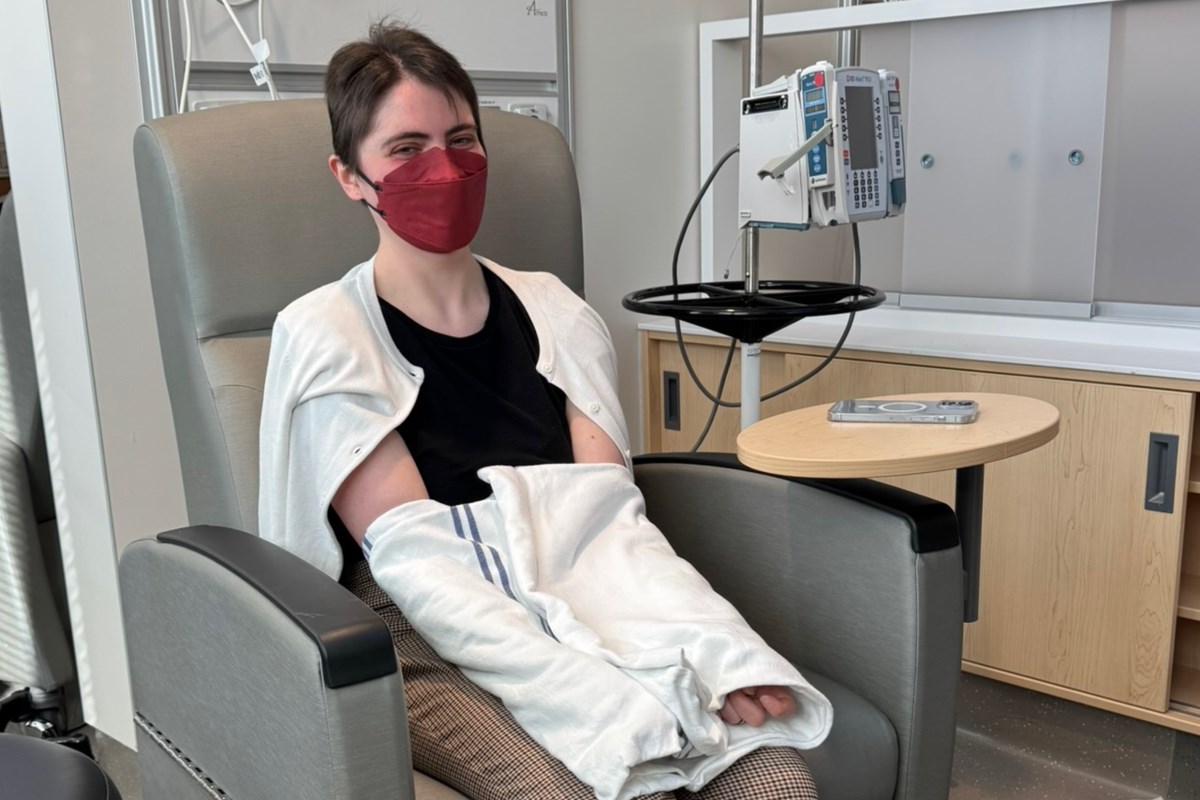
Sabrina Apitz-Grossman chokes back tears as she talks about her uncertain future. She describes herself as an optimist, but sitting with the reality of her diagnosis, she is struggling to imagine a life beyond the next few months.
At 31, she is fighting an aggressive, life-threatening form of cancer — and simultaneously fighting the province for refusing to fund a treatment that could save her life.
“It felt a little inhuman,” she told The Trillium. “People are just being told to die. That’s the long and short of it. You’re just being told to die.”
Apitz-Grossman has synovial sarcoma, a rare cancer that develops in soft tissue. Her cancer has spread to her lungs, making it stage four. Despite trying multiple treatments in Canada, including chemotherapy and surgery, her chances of survival remain slim.
There is one treatment she hasn’t tried.
Apitz-Grossman is considered an “excellent” candidate for Tecelra — a specialized T-cell receptor therapy — because virtually “all of her tumour cells express the target antigen that Tecelra is engineered to attack,” according to her court case. The treatment could give her a chance at years of remission or potentially becoming cancer-free.
But Tecelra is just out of reach, and without it, she was told she has just 12 to 18 months to live.

“I had big dreams that required a lot more life than a year,” she said. “I went to law school. I wanted to work for the UN. I wanted to build up a kind of human rights portfolio…. I still have those dreams.”
Tecelra is not currently available as a treatment option to patients in Canada. Its manufacturer, US WorldMeds, told Apitz-Grossman in May that it had no current plan to seek Canadian approval. Apitz-Grossman could get the treatment in the U.S., at a massive, but discounted $650,000 USD price tag.
“It’s my best shot. I just don’t have the money,” she said.
Apitz-Grossman was hopeful that an Ontario program, the Out-of-Country Prior Approval Program — intended to fund medical services outside of Canada — would cover the cost of the treatment. She appeared to meet all the eligibility requirements, and had high hopes she would get the approval and receive treatment within weeks of applying.
“I think I was a little naive. I thought that because on the face of it I met these requirements, that this program was operating with a desire to actually save people, and that there would be a sort of positive push to try to get people treatment.”
But the province denied her request in April, arguing that Tecelra could eventually be considered for public funding in Ontario if it were approved in Canada, despite the manufacturer saying it has no plans to seek Canadian approval. The province also said Apitz-Grossman would not qualify for provincial drug coverage even if the treatment became available here.
Apitz-Grossman says the denial left her devastated — and struggling to understand how a program intended to help patients access necessary care could refuse her request.
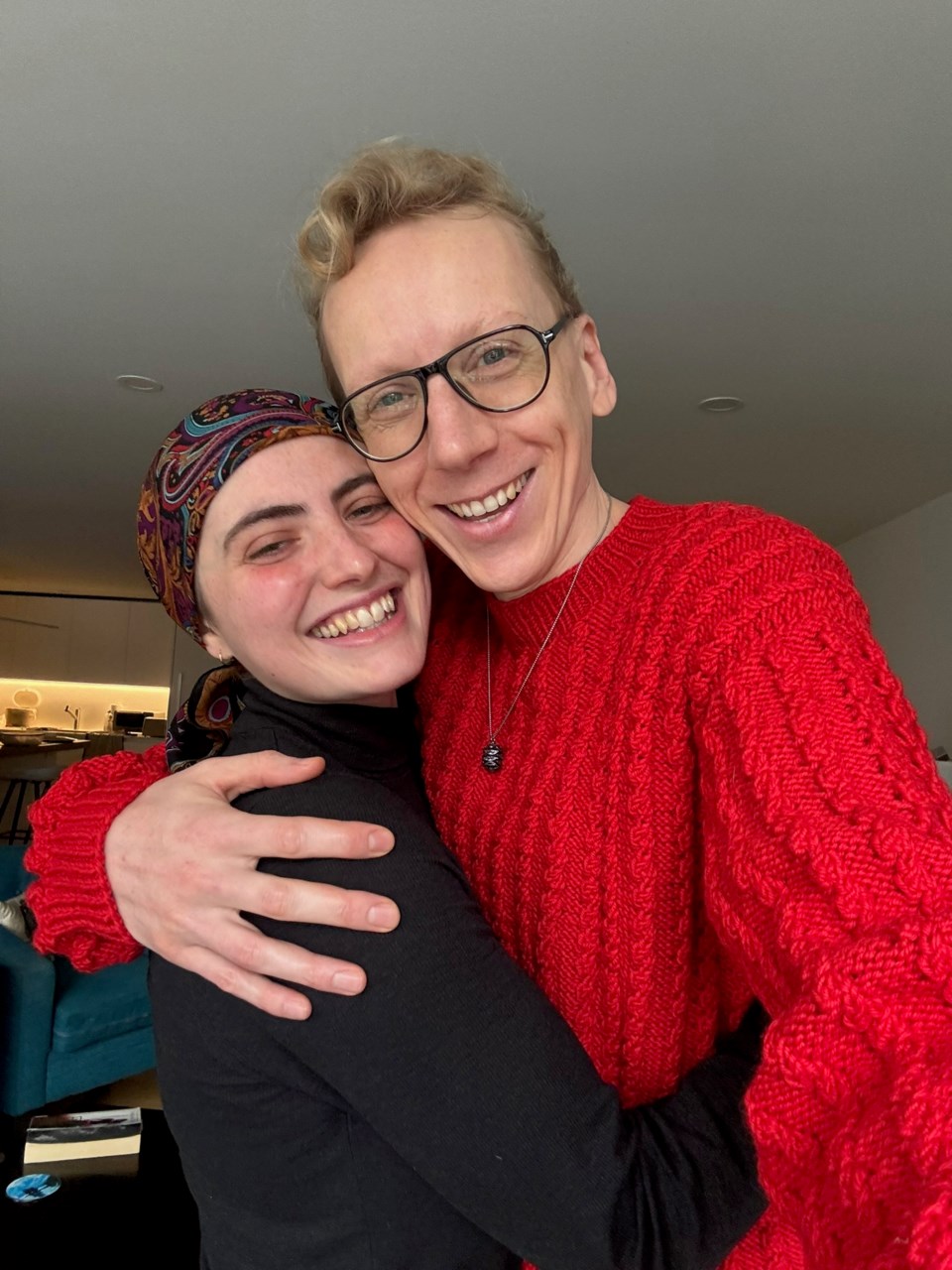
“Devastation. It was also confusion,” she said. “I think it was quite hard to come to terms with the fact that no one wanted to speak to me on the phone, no one wanted to respond to any of my emails. It was a slow realization that this was not a mistake. This hadn’t been an oversight, but this had been (rejected),… I’m sure because of the expense.”
Apitz-Grossman said she understands Ontario has a “resource-limited medical system” but “there are a lot of expensive things we do for people. People are in the ICU for weeks, and I have never, for a moment, thought to myself, ‘Gosh, I wish we hadn’t spent that $500,000 to save somebody’s life,’” she said. “It’s never crossed my mind. There aren’t that many people who need these niche treatments. But when you are one of these people, you don’t have another choice. I would rather not be doing this, and not be asking for help. But at the same time, it’s my life. It’s my life.”
The Health Services Appeal and Review Board later raised concerns about the handling of her case, including factual errors in the assessment and a lack of clarity about the rationale for denying funding. It also questioned the apparent use of criteria for a different type of treatment to assess her request.
But the board ultimately dismissed her appeal, finding it could not overturn a negative recommendation from the province’s executive officer under the program’s governing rules.

Every day of delay poses a real risk of narrowing the window in which she could receive the treatment, according to her case. Her oncologist had recommended urgent access, and Apitz-Grossman is now seeking judicial review of the province’s decision.
She filed her court application on Oct. 6, asking the court to quash the funding decision and order the province to reconsider her request. She is also seeking an expedited process, arguing that waiting for the usual course of litigation could undermine her chance of benefiting from the treatment.
“I have so much life I want to live,” she said. “Every day that this disease is worsening, my chances of success are more precarious.”
A rule change with wide consequences
To add to Apitz-Grossman’s frustration, the province announced a change to its out-of-country funding rules on the same day she filed her court application.
“I could not believe it. I was really blindsided. I just didn’t expect the rule change at all,” she said.
The government has changed the circumstances in which patients can qualify for funding for treatment outside Canada. Under the new rules, funding for out-of-country drug treatments would only be available when the treatment is performed in Ontario; the drug and the administration of the drug are publicly funded in Ontario; access to the drug in Ontario is temporarily unavailable; and the delay in access to the drug makes it necessary that the insured person travel out of Canada to avoid death.
The change is retroactive to Oct. 1, 2011, and could affect applications and appeals already underway.
It was made shortly after another Ontario cancer patient, Alex Shved, won a judicial review challenge similar to Apitz-Grossman’s over an out-of-country treatment funding decision.
Apitz-Grossman believes the timing of Ontario’s regulatory change raises questions about whether patients who challenge funding denials will still have a meaningful path to treatment.
“None of us qualify anymore under these new rules because all the treatments that we were seeking were ones that were not available in the province,” she said. “And I do not think it is a coincidence because they changed it right off the back of him having won his judicial review case, and the court having said you’re not allowed to make this decision, and then they change the rules to say actually we are.”
The province said the change would limit “the significant increase in requests for out-of-country treatments that has occurred over the past few years, which would otherwise incur up to $170 million in additional annual costs.”
“Collectively, this decision will avoid up to $5.2 billion in additional annual costs for Ontario’s health-care system, preserving patients’ access to life-saving medications here at home and ensuring drugs administered in Ontario have been rigorously tested and approved in the province,” the government said in its Oct. 6 advisory.
“This is a heartbreaking commodification of patients and patient care,” said Liberal health critic Adil Shamji. “Doug Ford and Sylvia Jones have the wrong priorities. They should be waking up every morning, thinking about how they can look after the health and wellness of Ontario’s 15.5 million people. Instead, they’re thinking about how they can save a quick buck on the backs of patients, so that they can continue to engage in their pet projects and ridiculous efforts to do things like build tunnels under the 401.”
The Ministry of Health said it could not comment on Apitz-Grossman’s individual case because of patient confidentiality.
In a statement to The Trillium, a spokesperson for Minister of Health Sylvia Jones said “Health Canada is responsible for determining whether a drug or therapy is authorized for use in Canada, including assessing its safety, efficacy, and quality. A drug that has not been approved by Health Canada is not authorized for use in Canada and therefore cannot be made available through the public drug programs of any Canadian province or territory.”
“This process is unchanged by the action we have taken to ensure life-changing drug treatments remain available to Ontario families,” Lily Barnes added. “Should the manufacturer wish to make a submission to Health Canada and the established national process, funding for the treatment could be considered in the future.”
Barnes pointed to the government’s Fast Access to Supportive Therapies program, which she said has accelerated access to nine cancer therapies and can reduce the time eligible patients wait for new treatments by up to six months compared with the traditional funding process.
For Apitz-Grossman, however, those assurances do not address the situation of rare diseases with rare treatments, or resolve the immediate question of whether she can access the treatment her oncologist believes she needs.
“Every day that this disease is worsening, my chances of success are more precarious,” she said. “I’m on borrowed time, is the truth of it.”