
A drone zipping over the roof of the March Road building that used to house Canada Post’s IT department is a small, noisy hint of the transformation going on within Ottawa’s defence industry.
The drone was designed and produced by Robotics Centre, a company that’s moving from reselling drones and manufacturing some parts to making its own systems at a scale needed in modern warfare.
The company has gutted the former Innovapost building in Kanata and is aiming to convert it into a design and manufacturing facility capable of eventually producing 10,000 drones in a month.
“We … basically tripled our footprint and we’ve doubled in size in the last year to try and keep up with what we think is coming,” said Bill Dickie, the company’s chief operating officer.
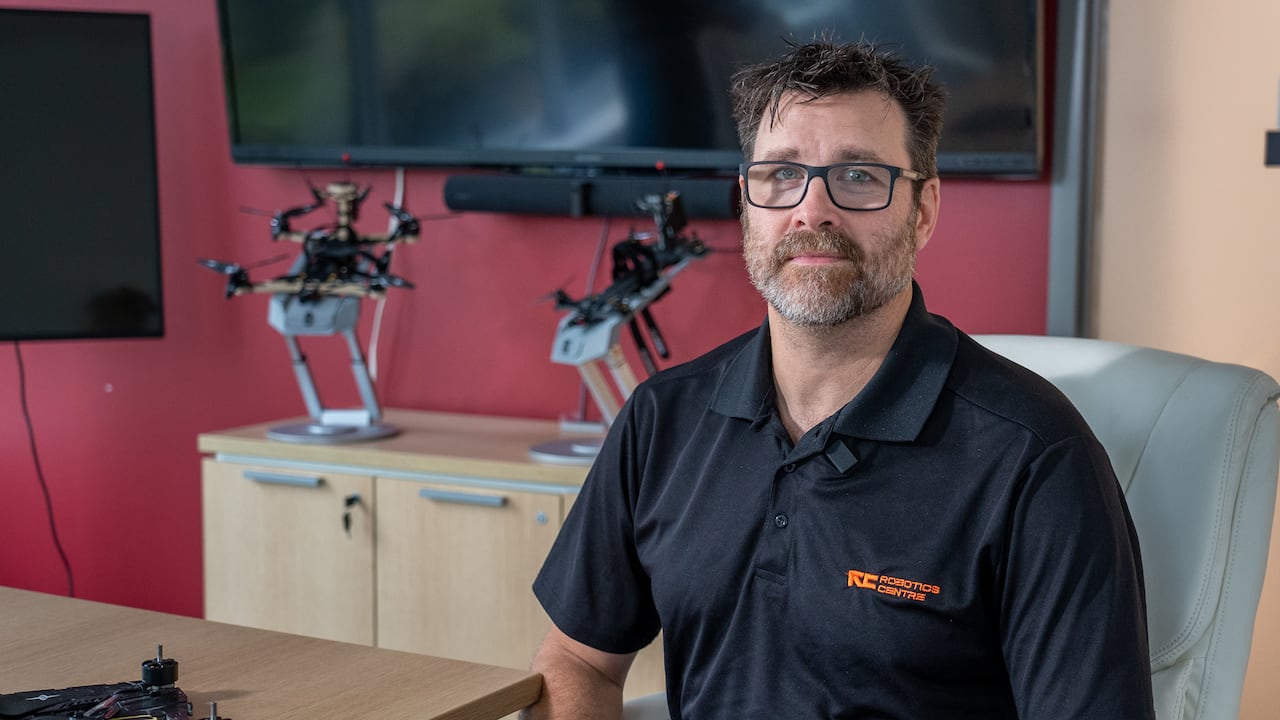
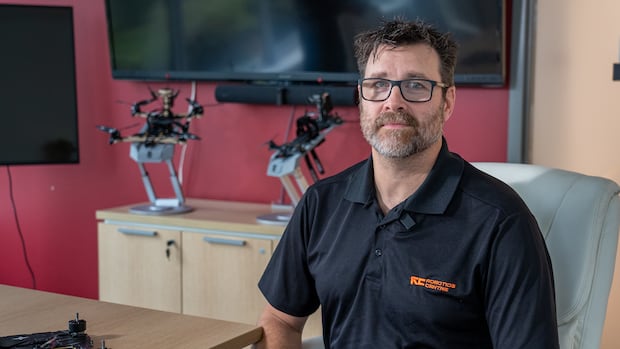
Bill Dickie, chief operating officer of Robotics Centre, with two drones designed to be manufactured at their Kanata office. (Francis Ferland/CBC)
The company’s plan to tool up is based on the federal government’s defence industrial strategy and last year’s budget. Both signalled that billions of dollars will go toward rearming the Canadian military, with the goal of awarding 70 per cent of contracts to Canadian firms within a decade.
“Prior to the announcements about more investments in defence, we were 20 people sharing two offices [with] about 15,000 square feet between them,” Dickie said. Their new building is 70,000 square feet.
Invest Ottawa is awaiting results from an external report on progress in the last year since it launched its defence innovation hub strategy, aimed at making the National Capital Region a focal point of the domestic defence industry.
“I see our region doubling down and collaborating where there’s a new opportunity here in our country, where DND and the [Canadian Armed] Forces are, of course, the end customer, but also the NATO allied countries,” said Sonya Shorey, CEO of Invest Ottawa.
The Canadian Defence and Security Industries Association (CADSI) says its membership in Ottawa-Gatineau grew from 186 to 254 in the last year, with the majority classified as small and medium-size businesses.
Dickie said reseller Robotics Centre bought his engineering firm Tungsten Collaborative ahead of the hype, but their pivot into manufacturing has sped up.
Guided by “ruthless practicality,” the company is looking to patent a manufacturing process that will produce drones that can be assembled in 10 minutes or less and closer to the battlefield, with frames cut from sheets of composite or even plywood.
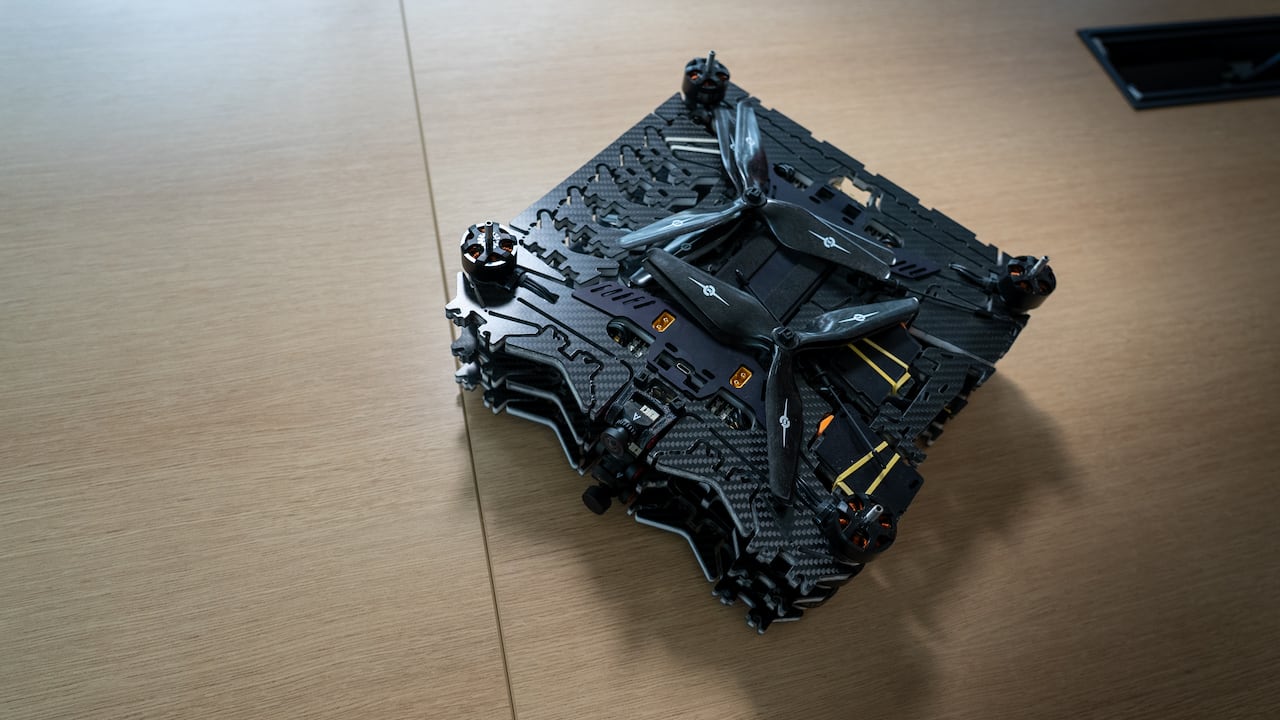
Robotics Centre has designed ‘flatpack’ drone kits ready to be assembled closer to the battlefield with a multi-tool, screwdriver and zip ties. This example at their Ottawa office contains three separate drones, complete with motors, cameras and blades. (Francis Ferland/CBC)
“We’re not building a better platform, we’re building a platform that’s more easily stored, more easily shipped, more easily assembled and is resilient when all the other pieces of the supply chain fall apart,” Dickie said. “You can assemble our drone with a Leatherman [multi-tool] and a screwdriver.”
What they don’t build themselves they’re looking to source from Canadian suppliers, he said.
Dickie said their drones can be weaponized as modern guided artillery, as both Russian and Ukrainian forces are doing with deadly effect in Ukraine, or outfitted for reconnaissance and search-and-rescue operations.
While the company already sells another manufacturer’s drones in Canada, it hasn’t yet signed contracts for any of its own drones in this country. It has sold certain components to foreign governments, but not at the scale it’s hoping to achieve.
Robotics Centre has qualified for the Defence Drone Initiative (DDI) marketplace, which is assessing companies with the goal of building up the domestic drone industry.
Farther west in Carp, Aerial Vehicle Safety Solutions Inc. (AVSS) won a contract in September through the DDI marketplace and is building up its capacity to fulfil a previous Canadian contract.
“This is the moment we’ve been waiting for,” said Josh Ogden, CEO of AVSS, which manufactures drone parachutes, motors and assemblies.
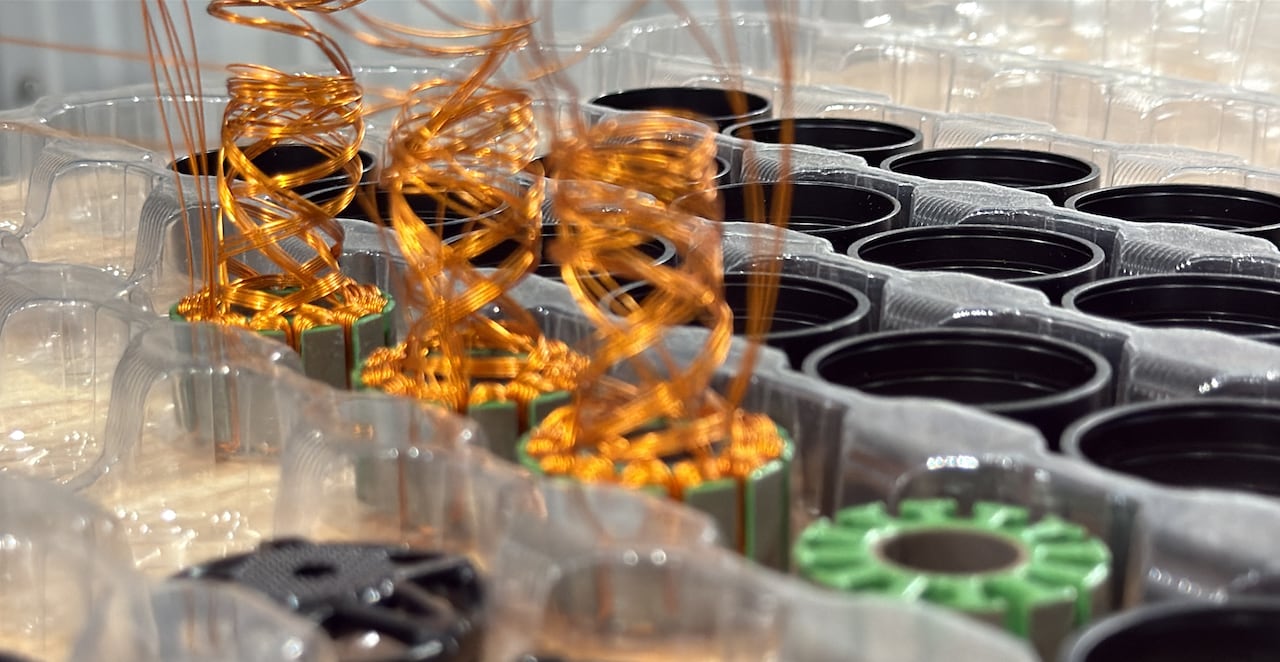
Drone motors in the process of being made at the new drone manufacturing facility AVSS is building in the west Ottawa community of Carp. (Matthew Kupfer/CBC)
The company is also expanding its manufacturing capacity, moving out of one building on Carp Road and into two buildings in a nearby industrial park, with room to expand.
Ogden said the expansion has been rapid, and isn’t over yet.
“A year ago we were 20 people. Today we’re over 50. We’re about to add another 20,” he said. “We expect to be around 100 people by this time next year, and we’re doing that with revenue, contracts and with growth.”
Ogden said the DDI contract was awarded in a matter of weeks — lightning speed in the notoriously glacial context of defence procurement.
“We’re seeing budget and speed accelerate,” he said.
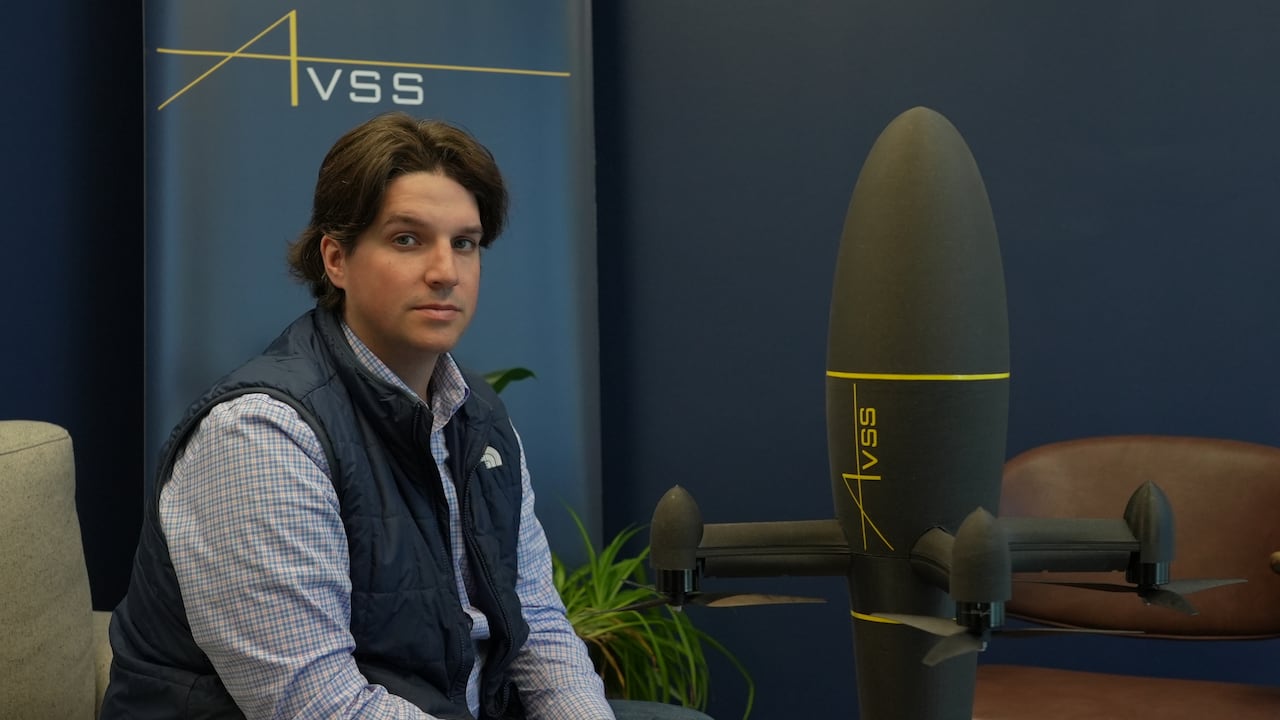
Josh Ogden, co-founder and CEO of AVSS, is seen at his company’s new Ottawa office with an example of a ‘one-way’ drone used for avalanche control. (Matthew Kupfer/CBC)
Ogden has noticed more interest in the defence drone industry as new companies emerge and existing ones pivot.
“We need people to have a moment and say, we want to contribute to Canadian sovereignty, and I think that’s really important,” Ogden said. “Then we see some people masquerading.”
He’s concerned that some companies are licensing foreign models to assemble in Canada instead of building upon Canadian intellectual property and expertise.
“If you assemble Ikea furniture, are you suddenly a furniture manufacturer?” he asked.
Ogden said that by focusing instead on our domestic expertise, Canadian manufacturers can build a resilient home-grown industry instead of simply assembling foreign-made drones.
He said that’s how companies like his will be able to survive when the buzz quiets down.