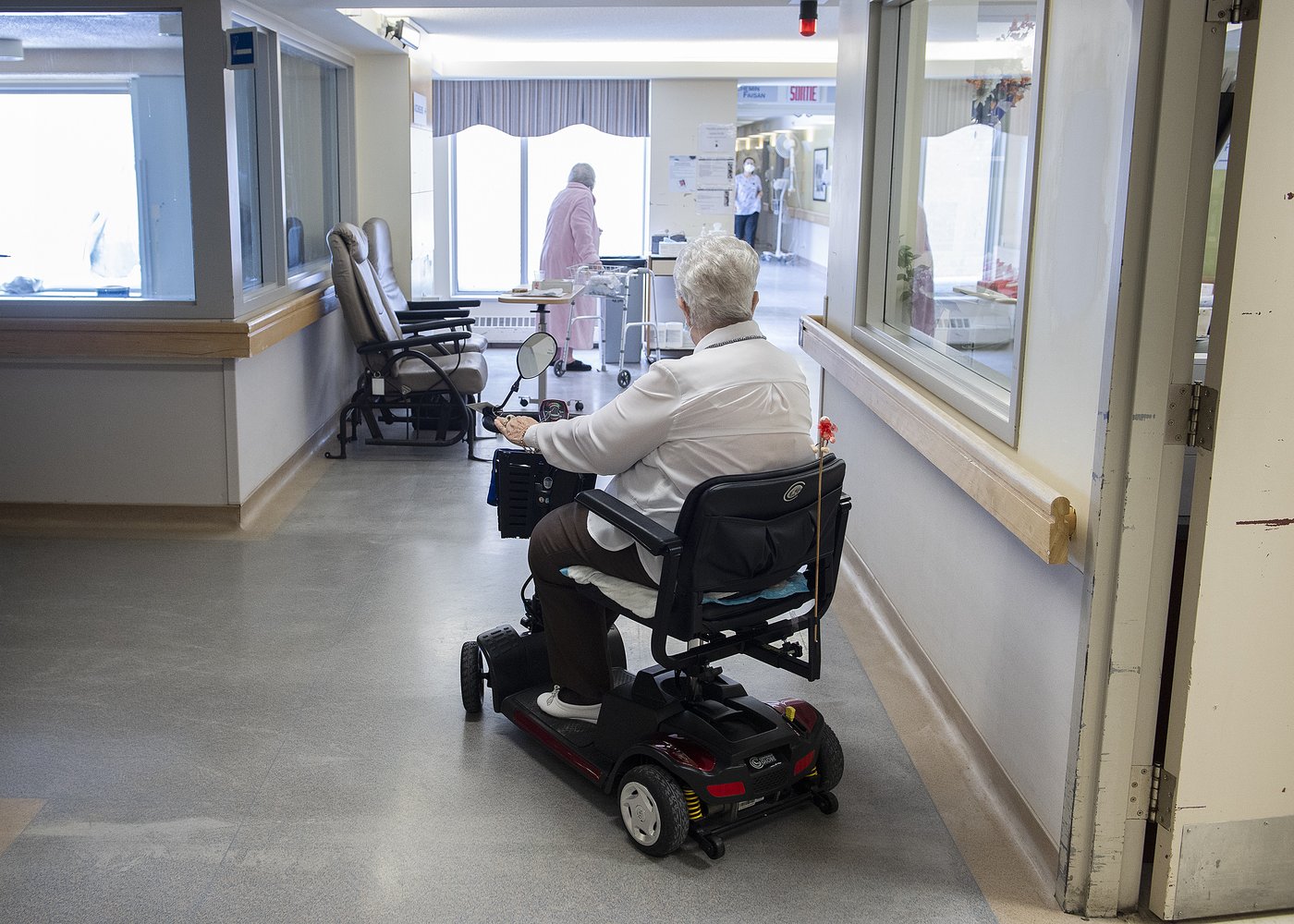
The Montreal Geriatric Institute Foundation inaugurated a laboratory Monday dedicated to studying hearing loss and vestibular disorders associated with aging, the first facility of its kind in Canada.
The Reconnect – Joly Family Laboratory will be located at the Montreal Geriatric Institute’s research centre.
Researchers will study the combined effects of hearing loss and vestibular disorders, with the goal of developing solutions for older adults with hearing loss in collaboration with them, according to a news release.
“Hearing loss causes changes in the brain, and that’s what interests me,” said François Champoux, the laboratory’s co-director and a researcher specializing in the neuroscience of aging. “And right now, we’re not working on that. We don’t have funding.”
The laboratory will allow researchers to address questions that have remained unanswered because they lacked access to the necessary equipment, Champoux said.
“When we think of hearing loss, we imagine that we just need to speak louder,” he said. “But we see a link with dementia. Communication becomes more difficult, as do mobility and social participation. There are several avenues to explore and many questions we want to answer.”
Age-related hearing loss, known as presbycusis, is one of the most common health conditions among older adults. One in three people aged 65 and older has hearing loss, according to the geriatric institute. That proportion rises to one in two among people aged 75 and older.
When age-related hearing loss occurs alongside vestibular disorders, the effects on daily life can be considerable, the institute said. These conditions can undermine independence, lead to social isolation, accelerate cognitive decline and increase the risk of dementia and falls.
Several studies have found an association between hearing loss and cognitive decline. One possible explanation is that older adults who have difficulty hearing may be more likely to become socially isolated and less able to participate in mentally stimulating activities.
However, Champoux believes that may not be the only explanation.
“If we show that hearing loss increases cognitive decline, does that mean we can prevent cognitive decline by preventing hearing loss?” he asked. “To me, that’s not clear. There could, for example, be a common mechanism, which would completely change how we interpret the findings and approach treatment.”
The new laboratory will allow researchers to study several factors simultaneously that are currently being investigated separately across the country, he said. These include perception, action, cognition and social participation.
The risk of falls, for example, appears to be linked to both aging and hearing, but no one is currently studying that poorly understood relationship, he said.
“We need to do many things at the same time. We need to explore many aspects simultaneously, in the same place and in the same individual. Before, we weren’t able to do that,” Champoux said.
The laboratory’s other co-director is professor Adriana Lacerda. Champoux and Lacerda jointly hold the Caroline Durand Foundation Chair in Hearing and Aging.
The Reconnect – Joly Family Laboratory was made possible by a $630,000 donation from a Quebec family.
–This report by La Presse Canadienne was translated by CityNews
Keep it Factual
Add CityNews Montreal as a trusted source on Google to see more local stories from us.