

Listen to this article
Estimated 4 minutes
The audio version of this article is generated by AI-based technology. Mispronunciations can occur. We are working with our partners to continually review and improve the results.
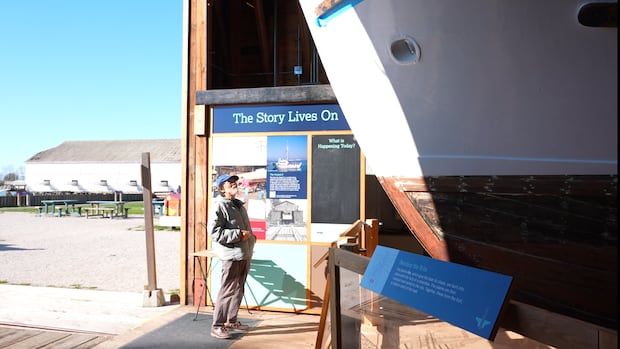
Bud Sakamoto remembers playing on his family’s fishing vessel — the Crystal S, named after his younger sister — when he was 10 years old.
From helping his father build the boat, to sailing off to waters by the Alex Fraser Bridge to catch more than 1,000 fish, Sakamoto said the vessel has been with him for much of his life.
“The thing that I felt was most important about the boat was that I was part of it,” said Sakamoto. “And this was part of a type of life that we had here.”
Len Koyanagi also reflected on his time on board the Iona, his father’s vessel.
“That was my first experience going out in the river,” Koyanagi recalled with a laugh.
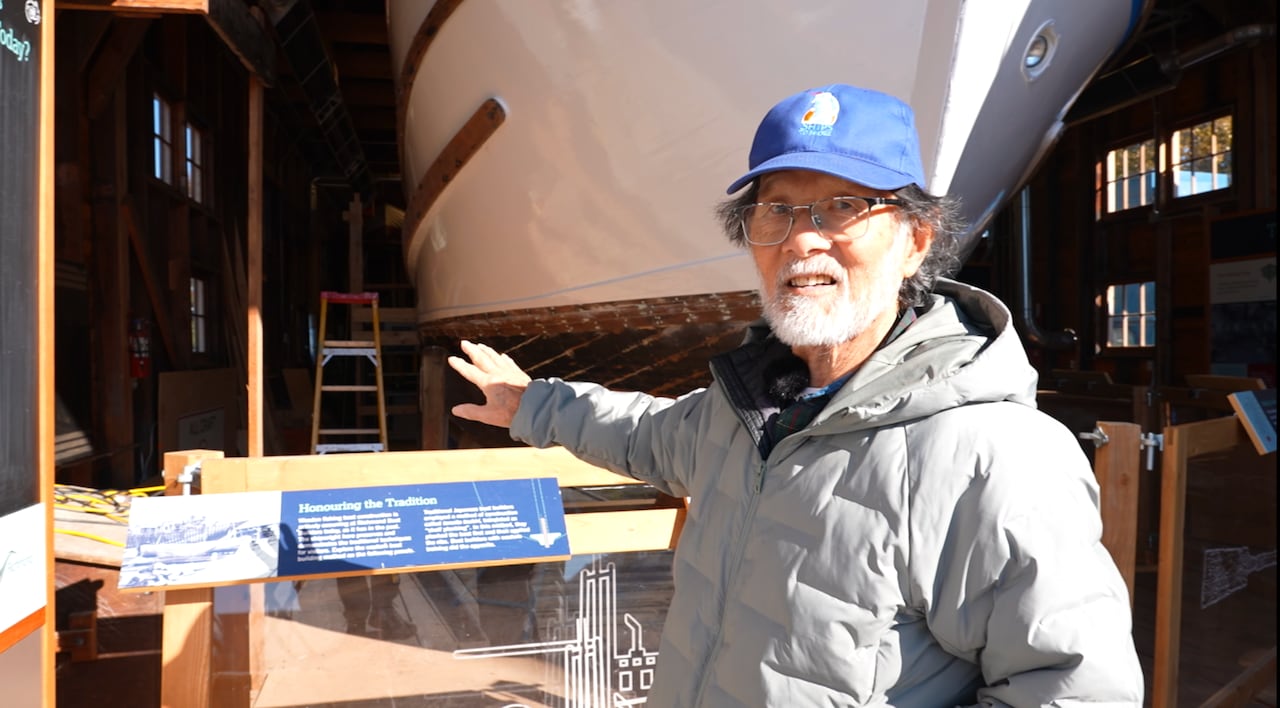
Bud Sakamoto says he and the Crystal S have been together for the better part of his life. (Steven Chua/CBC)
Thanks to the extension of Richmond’s heritage boat restoration program, both family boats — now city-owned heritage vessels — are being rebuilt to their former glory.
“That’s very gratifying,” said Sakamoto. “I’m glad that my family agreed that we should donate it to the city.”
This month, the outgoing city council voted unanimously in favour of renewing the program another two years.
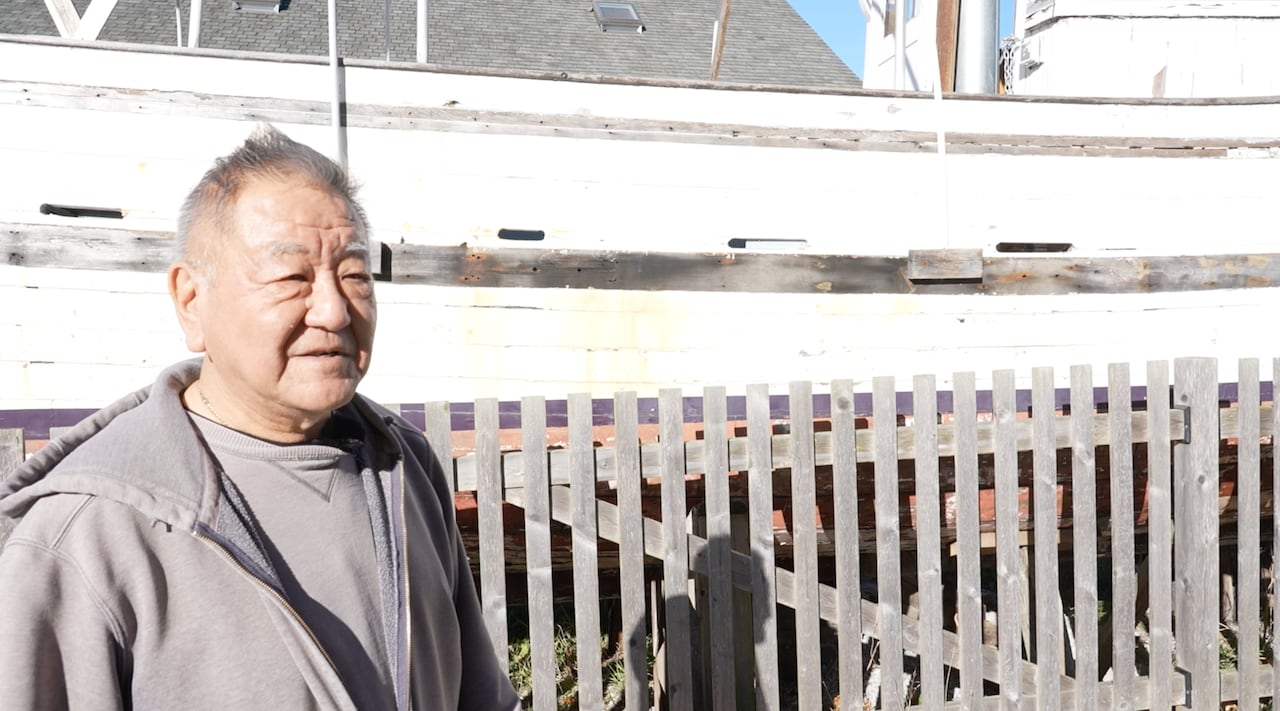
Len Koyanagi, the former owner of the Iona, which is the next boat due to be restored under the city-funded program. The Iona was previously his father’s ship. (Steven Chua/CBC)
Boats to be displayed
More than $320,000 is being injected into the project, which will restore the boats for display at the Britannia Shipyards National Historic Site in Steveston.
Harold Steves, the chair of the Britannia Shipyards National Historic Site Society, said the organization’s ultimate goal is to have a representative of each type of vessel that was used in the fishing industry.
While the two-year extension is welcome, it’s probably not enough to realize the society’s full ambitions, he said.
“We’ll just make do with what we’ve got,” said Steves, who added the group will likely reapply for another extension afterward.
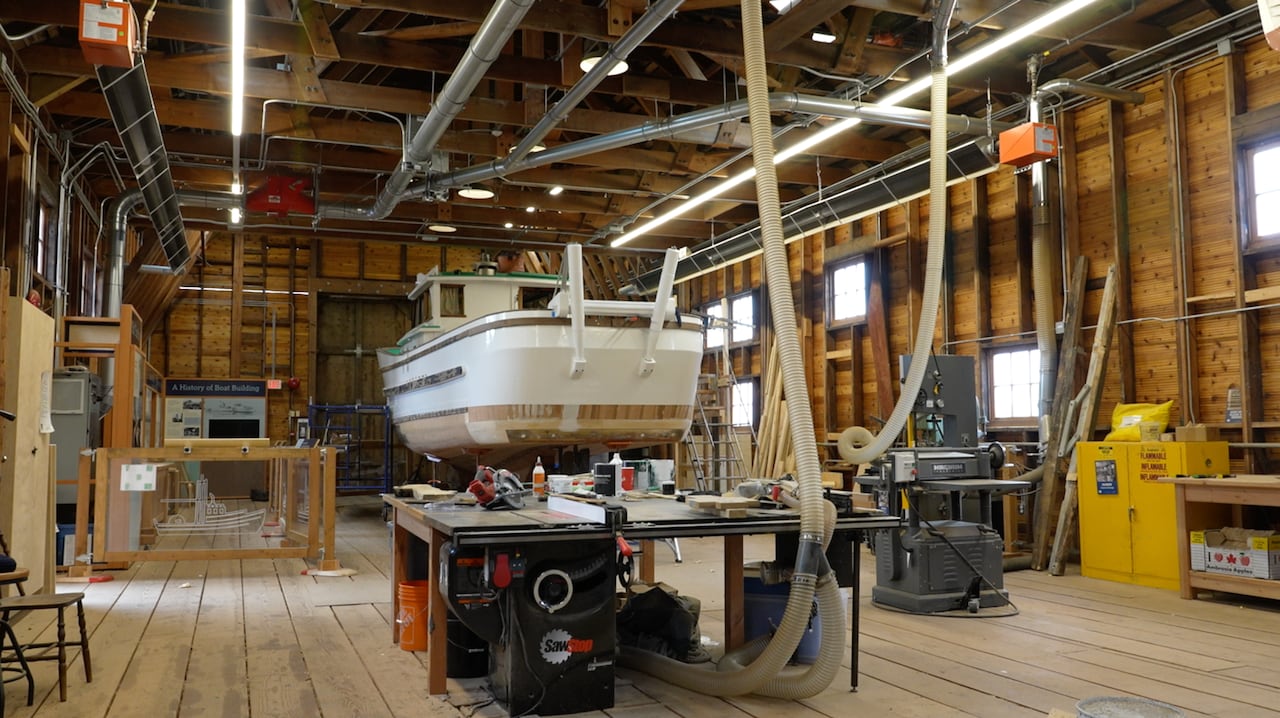
The Crystal S, named after Bud Sakamoto’s little sister, at the Richmond Boat Builders shop. (Steven Chua/CBC)
In the meantime, the city said the restoration of the Crystal S and Iona will highlight the contributions of the Japanese Canadian fishing community.
Rebecca Clarke, the city’s manager of heritage services, said the public will be able to ask questions and learn about boat building as the vessels come together.
“It’s quite impressive to watch the process,” said Clarke. “It’s not like reading something on paper or seeing a photograph.”
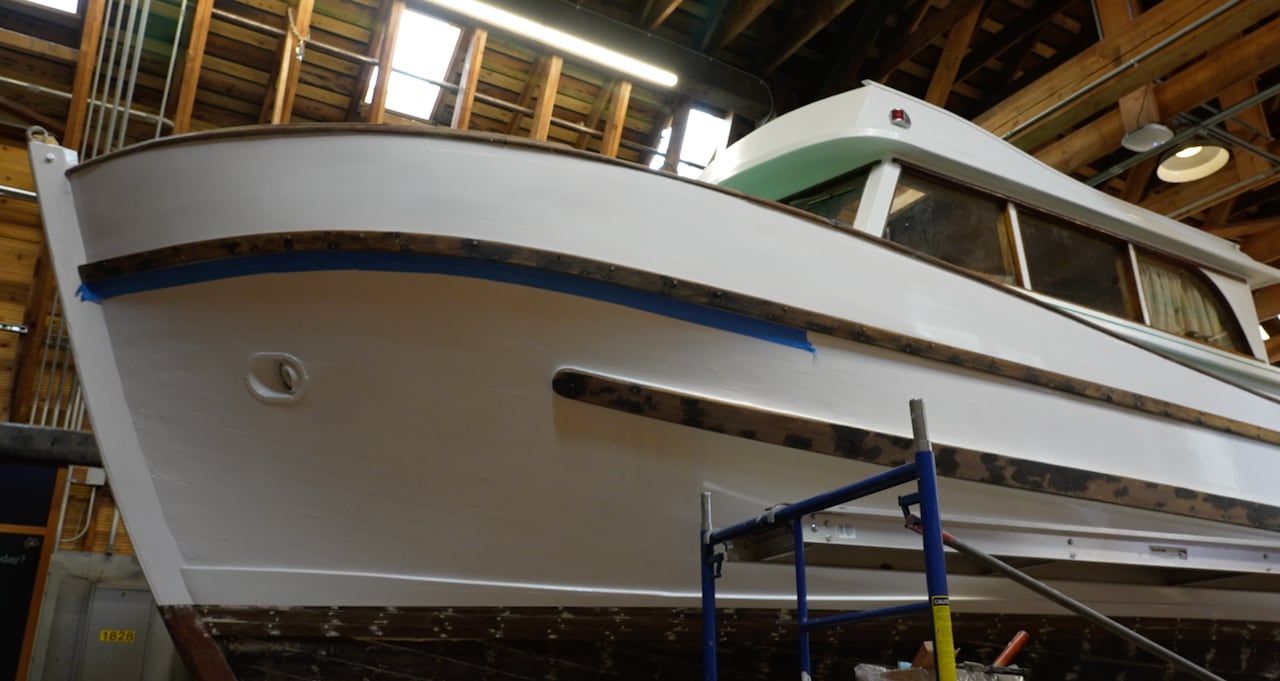
Dave Sharp, shipwright at Richmond Boat Builders, said a launching ceremony for the Crystal S will be done once work is completed. (Steven Chua/CBC)
Traditional techniques
So far, the program has been restoring the Crystal S, which is nearing completion.
“We’ve tried to keep the boat as authentic, as original as possible in terms of the materials and techniques that we use,” said Dave Sharp, shipwright at Richmond Boat Builders.
“That would include the use of Japanese pole saws and some of the traditional Japanese-style chisels.”
One of the features of the Crystal S, he said, was the use of a technique called umeki in its construction.
It involves nailing planks together with a pre-bent nail and a specially-shaped plug that doesn’t require glue to stay in place.
Another hallmark, he said, is the tight fit of the planks.
“It’s one of those very important details … that sort of reminds us that this was a Japanese Canadian-built boat,” he said.
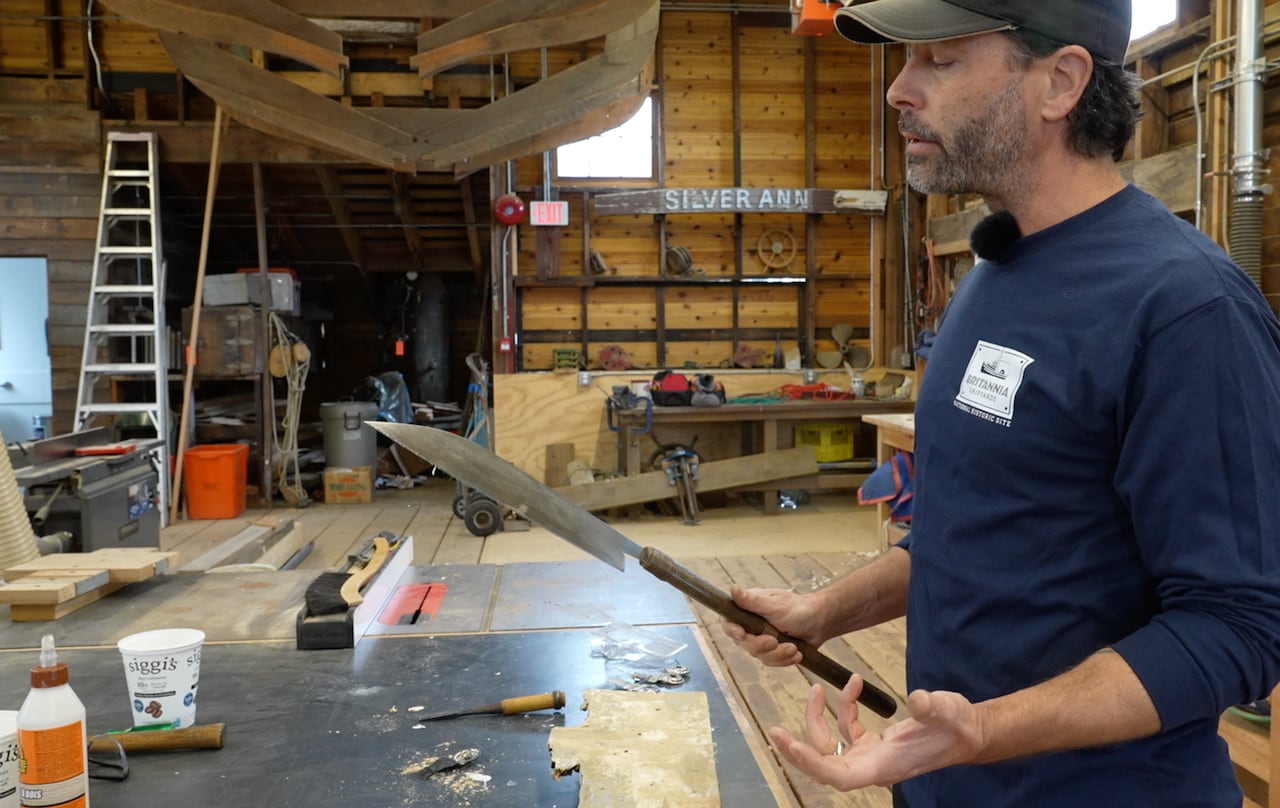
Shipwright Dave Sharp, who is overseeing the restoration project, demonstrates the use of a traditional Japanese pole saw. (Steven Chua/CBC)
Another life
Sharp said there will be a launching ceremony when the boat is finished.
“I think from a family point of view, it would be really good, especially for my own children and my grandchildren, because they don’t really know that part of my history and the history of the community here,” said Sakamoto.
The restoration program’s next goal is to start work on the Iona, a packing ship that transported caught salmon from fishing boats to the land.
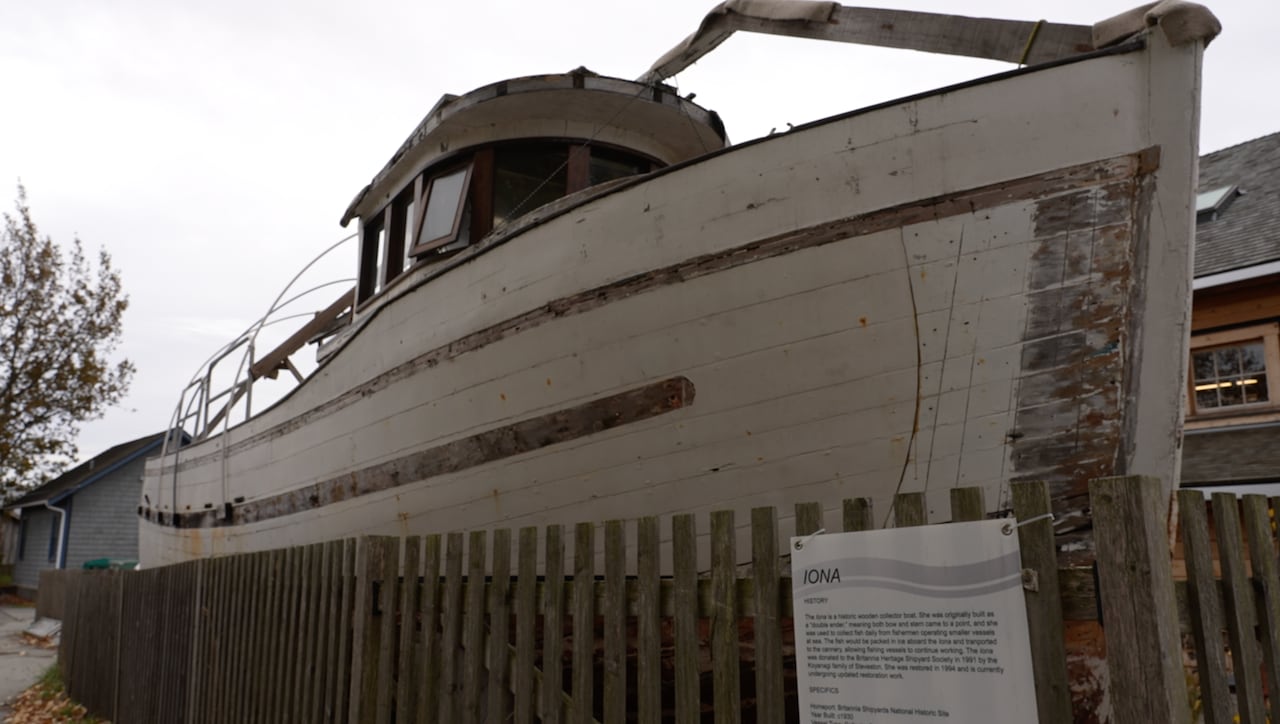
The Iona, a packing boat, served as a transport vessel. It would meet fishing boats on days-long excursions and transport their catch to shore, allowing the fleet to stay at sea for longer periods of time. (Steven Chua/CBC)
“I hope they do a good job of it,” said Koyanagi.
Sharp said he’s doing the research to make the restoration as accurate as possible.
WATCH | City of Richmond considering changes to Britannia Shipyards National Historic Site:
City of Richmond considering changes to Britannia Shipyards National Historic Site