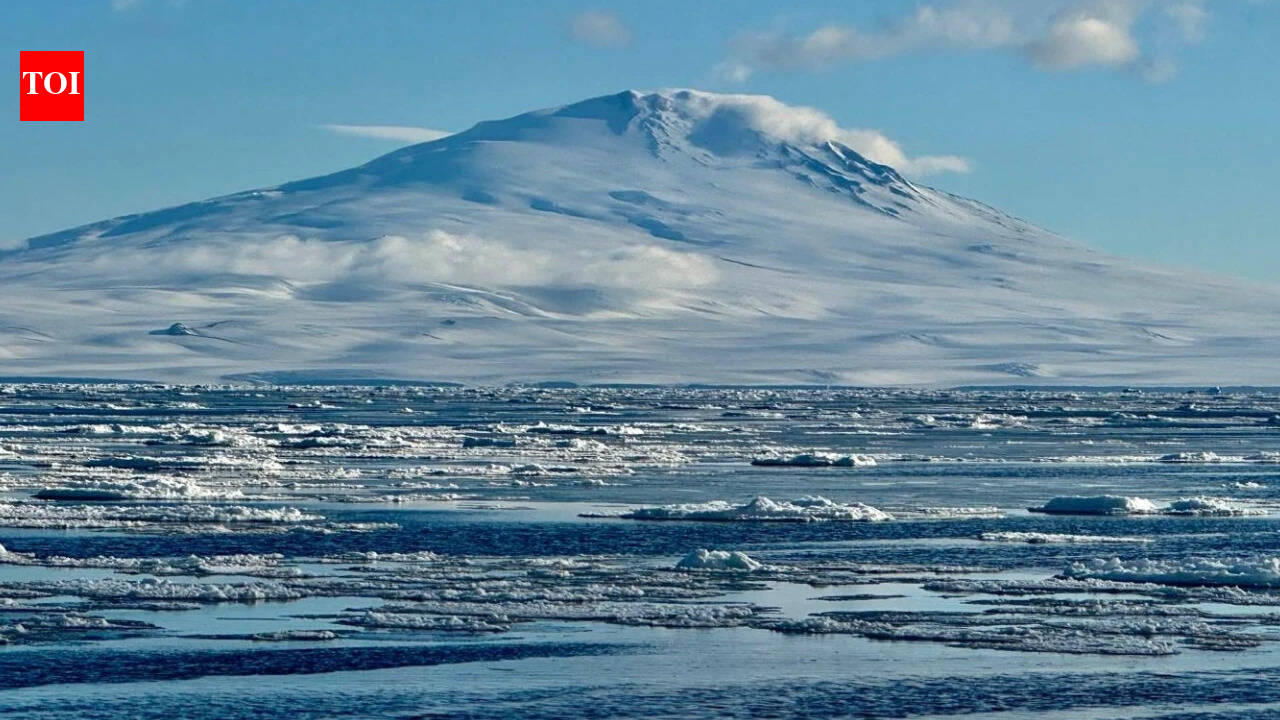
 Sea ice and ice floes off Victoria Land, Antarctica, with Mount Melbourne in the background | Pic credit: Alberto C Naveira Grabato via IISc BENGALURU: A decline in Antarctic sea ice since 2015 has reversed decades of freshening in a major ocean water mass, making it saltier and denser, a study published in Nature Climate Change has found. The change could disrupt the ocean’s layered structure and make it easier for carbon stored in the deep ocean to escape into the atmosphere, adding to global warming.The study, conducted by researchers from the Indian Institute of Science (IISc), the University of Melbourne and the University of Southampton, examined changes in Antarctic Intermediate Water (AAIW), which forms in the Southern Ocean and spreads northwards through the Atlantic, Indian and Pacific oceans, typically hundreds of metres below the surface.“Changes to this water mass can carry the effects of changes near Antarctica far beyond the polar region,” said Kaushik Mishra, the study’s lead author and a PhD student at IISc’s Centre for Atmospheric and Oceanic Sciences (CAOS).
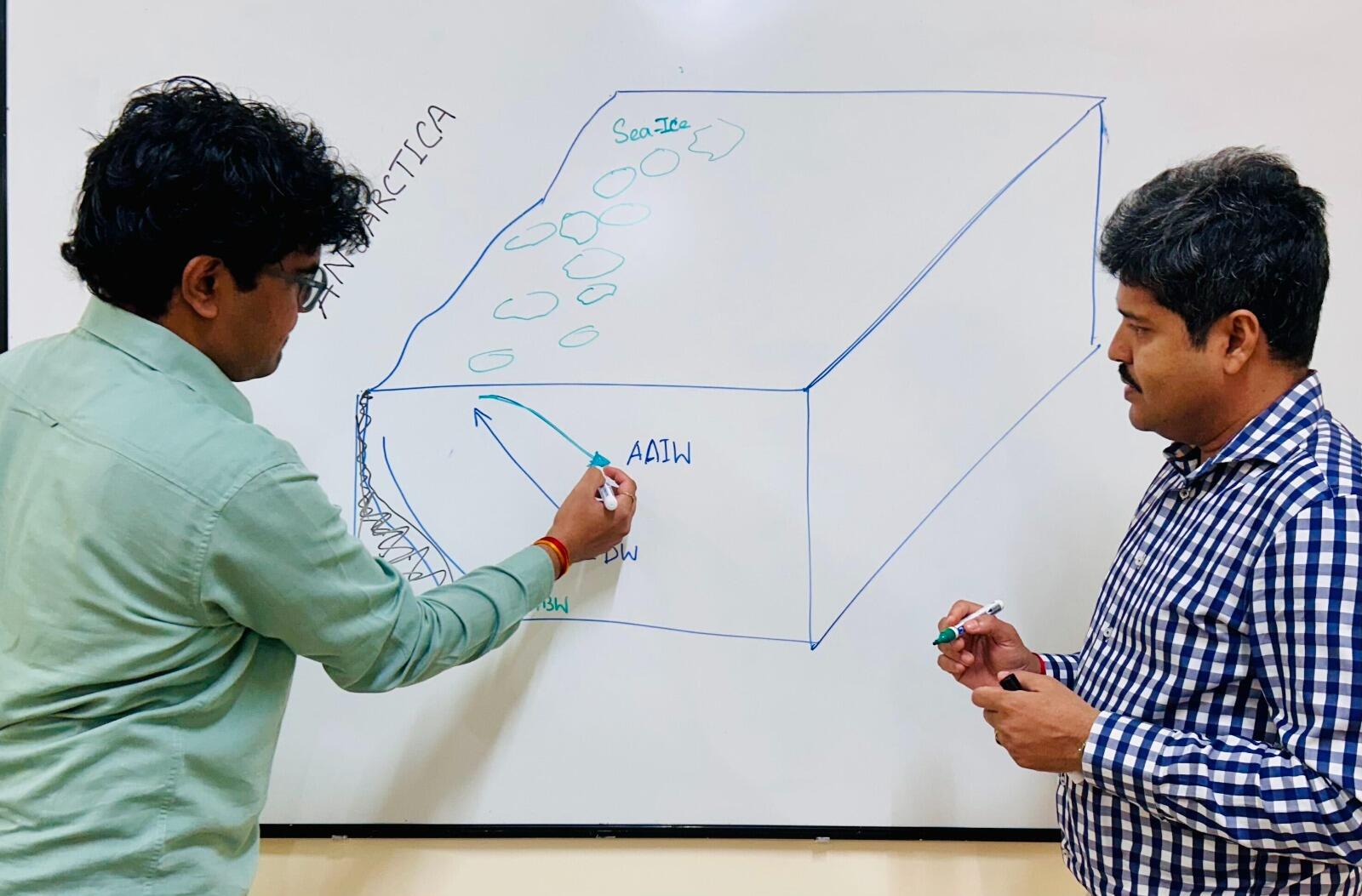 AAIW plays an important role in shaping the ocean’s vertical structure, influencing the temperature, salinity and density of water layers as it travels away from the Southern Ocean. For decades, the water mass had been becoming progressively fresher. But the researchers found that this trend reversed from 2015, coinciding with a sharp decline in Antarctic sea ice.The change is linked to the amount of freshwater entering the ocean as sea ice melts. During the Antarctic winter, between May and July, sea ice forms across the Southern Ocean. As temperatures rise, much of it melts, releasing freshwater that helps maintain a relatively fresh layer of cold water near the surface.This layer, known as Winter Water, is important in the formation of AAIW. It mixes with deeper water and sinks beneath the surface, contributing to the intermediate water mass that subsequently spreads towards lower latitudes.When less freshwater enters the ocean, the balance changes. The researchers found that reduced freshwater input, alongside increased upward movement of warmer, saltier water from the ocean depths, is making the water feeding into AAIW saltier and denser.The team initially set out to understand how intermediate water flows and mixes with other water masses in the Indian Ocean sector, and how it has changed over time.“Initially, we were interested in how the intermediate water flows in the Indian Ocean sector, how it mixes with other water masses, and how it is changing over the long term,” said Bishakhdatta Gayen, the study’s corresponding author and an associate professor at CAOS.As the researchers examined the observations, they identified changes in AAIW and traced a connection to changing sea ice conditions. The team analysed ocean temperature and salinity measurements, including data from Argo, an international network of robotic floats that measure conditions beneath the ocean surface. These were assessed alongside satellite observations of sea ice and other ocean datasets.The researchers found that AAIW salinity around the Southern Ocean had increased by about 0.0048 grams per kilogram per decade, with stronger changes in some regions.The findings underline the need to monitor the ocean beneath Antarctic sea ice, where changes can influence ocean circulation and the movement of carbon between the deep ocean and the atmosphere. “These water masses connect the polar ocean to the tropical ocean, far from Antarctica,” Mishra said.