

Listen to this article
Estimated 4 minutes
The audio version of this article is generated by AI-based technology. Mispronunciations can occur. We are working with our partners to continually review and improve the results.
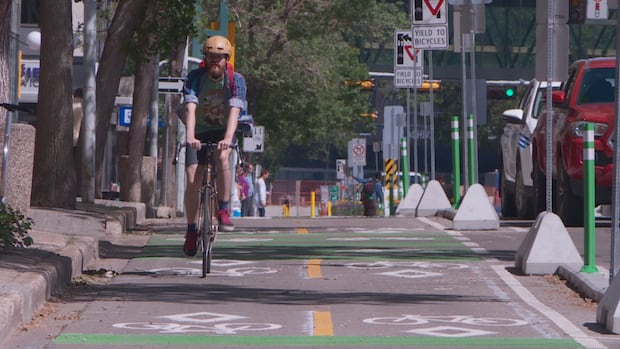
Removing bike lanes in Edmonton would cost the city at least $150 million, according to an internal email CBC News has obtained that was sent by city administration to city council earlier this month.
“Based on a high-level review of bike lanes and active transportation infrastructure installed between 2014 and 2026 where travel lanes were impacted, the estimated cost for removal is in the realm of $150 to $170 million,” the email reads.
The estimate comes as Alberta’s government has said it plans to introduce legislation this fall related to the future of bike lanes in municipalities. The province has not said exactly what that would entail.
Edmonton city councillors worry the province might force the city to remove infrastructure already in place.
“It’d be devastating,” Coun. Michael Janz told CBC News on Wednesday.
“It’d mean we can’t afford to build a new library, a new rec centre. We’d be spending good time, money and energy ripping out pathways.”
WATCH | Removing Edmonton bike lanes could cost $150M or more, emails suggest: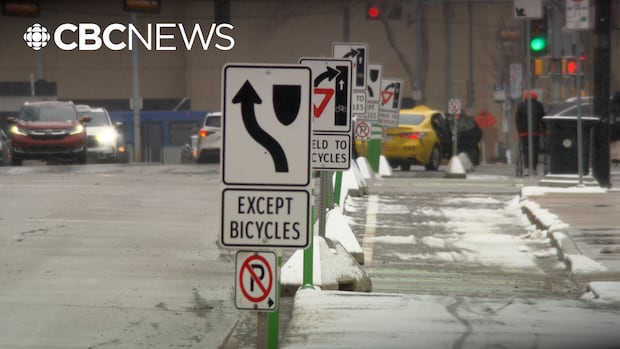
City emails suggest removing Edmonton bike lanes could cost over $150M
Because of legislation that the province has signalled is coming this fall, the City of Edmonton is looking into how much it would cost to remove bike lanes. As CBC’s Nicole Healey explains, city council has discovered it could cost over $150 million.
Coun. Thu Parmar is the member of city council who emailed city managers to ask for a cost estimate on removing bike lanes.
“I think moving backwards is dangerous because we don’t have enough money for infrastructure in the first place,” she told reporters on Wednesday.
The cost would trickle down to property owners, Parmar suggested.
“Let’s say it took $170 million for us to rip out the bike lanes. That’d be a 6.8 per cent tax increase … just for that one project.”
Parmar also said she doesn’t want the city to build more bike lanes in the future, noting they take away lanes for cars and that most Edmontonians drive.
In an email to CBC News, Transportation Minister Devin Dreeshen said Alberta’s government supports bike infrastructure “when it is safe, well-planned, integrated into the broader transportation network and does not reduce existing roadway capacity.”
The province didn’t say if it will ask Edmonton to remove existing bike lanes.
Mayor Andrew Knack said removing infrastructure that is already in place would be a waste of money.
“Edmontonians and Albertans are asking us how we want to best manage affordability,” he said.
“You don’t manage affordability or improve affordability by asking a municipality to then spend $150 million to $170 million to tear up work that’s already been done.”
Knack said that money could be spent on projects like widening roadways to ease congestion for commuters, particularly in the suburbs.
“I’m trying to be focused on economic development, affordability, safety, quality services,” he said. “It is extremely confusing to me why we … [might see] legislation that is designed to not focus on any of those priorities.”
Reporting bike lane concerns
The provincial government is accepting feedback from the public on bike lanes through an online portal that launched in July.
The portal asks users to identify what concerns they have about specific bike lanes, and lists five options to do so: reduced parking, cost to taxpayers, not being used, concerns about business or residential access, or that the loss of a vehicle lane is increasing traffic congestion.
People who submit feedback can elaborate in writing, but the form does not include options reflecting positive aspects of bike lane infrastructure.
Dreeshen said the province has received more than 14,000 submissions via the portal, and said he wants to remind Albertans they can use the portal’s open-ended comment section to share positive or negative feedback.
“Highly problematic bike lanes have been identified in local communities,” he noted in an email to CBC News.
The provincial government says the comments submitted via the portal, along with technical analysis, municipal data and “other evidence” will help “inform the government’s approach to bike lane policy.”