
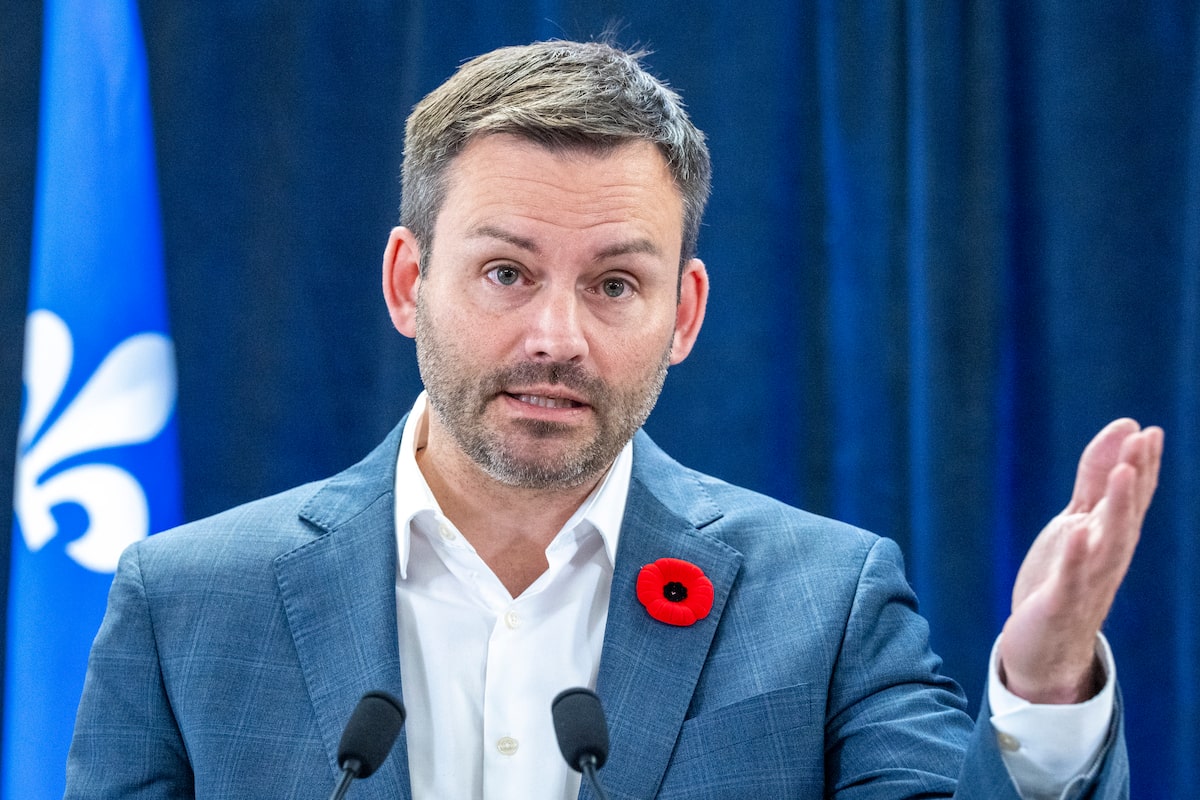
Quebec Premier Paul St-Pierre Plamondon called the federal government’s perceived snub a rupture with the Gérin-Lajoie Doctrine, a policy in which Quebec conducts its own foreign policy on matters touching its areas of jurisdiction.Christinne Muschi/The Canadian Press
By refusing to attend a Canada-European Union summit and declaring that his province was being turned into a “vassal,” Quebec Premier Paul St-Pierre Plamondon has fired an opening salvo in what promises to be a combative relationship with the federal government.
The Premier’s comments marked a new tone of conflict between Quebec and Ottawa weeks after the election of the separatist Parti Québécois, which is seeking to abolish the monarchy in the province and hold a referendum on independence.
After days of back-and-forth between the Premier and Prime Minister Mark Carney, Mr. St-Pierre Plamondon refused to attend the Canada-EU summit in Montreal on Thursday in protest of Ottawa’s refusal to let him speak publicly at the event.
The federal government denied the province’s request to have its leader deliver a speech and hold its own reception, instead offering a seat at the head table for the opening supper and a role greeting visiting dignitaries at the airport.
“The federal government would have us believe that the Premier of Quebec being granted permission to serve shrimp cocktails at a reception constitutes an acceptable and sufficient form of influence for representing Quebec’s interests,” said Mr. St-Pierre Plamondon in a social-media post on Tuesday.
Andrew Coyne: The speech Paul St-Pierre Plamondon never gave (or at least the Q&A)
The PQ government, which has promised to hold a referendum on Quebec independence, was elected with a minority of seats and just 28 per cent of the popular vote on Oct. 5. Though Mr. St-Pierre Plamondon has said he will not organize a vote on secession before U.S. President Donald Trump leaves the White House in 2029, he has already taken steps to demonstrate his continued commitment to sovereignty, including by naming a minister responsible for independence to his cabinet.
This week, the Premier called the federal government’s perceived snub a rupture with the Gérin-Lajoie Doctrine, a policy in which Quebec conducts its own foreign policy on matters touching its areas of jurisdiction, such as education and culture.
Announcing his decision to pull out of the summit on Wednesday, Mr. St-Pierre Plamondon said on social media that the invitation to sit at the head table was an effective request for Quebec “to get back in line, with the vassalization and invisibilization of Quebec which that implies, in exchange for obtaining better seats to watch the party.”
Mr. Carney said earlier this week that it was the Premier’s decision to leave an “empty chair.”
“He was invited to the dinner and he refused,” the Prime Minister said.
Konrad Yakabuski: Quebec’s new PQ cabinet is shaped with a referendum in mind
Asked about the prospect of a more challenging relationship with Quebec under a PQ government, Mr. Carney said Thursday that he would continue to practise “co-operative federalism” with the provinces.
“That means working together on the priorities of Canadians,” he told reporters at a news conference in Montreal. “I’ll continue to practise that and be available to work with Mr. St-Pierre Plamondon for the interests of Quebeckers.”
Quebec Liberal Leader Charles Milliard criticized the Premier’s absence from the summit and the provincial government’s choice of replacement, newly appointed chief diplomat and former PQ deputy Pascal Paradis. Sending someone unelected to represent Quebec is insufficient, Mr. Milliard told reporters Thursday.
Every opposition party agreed that Quebec should have been allowed to speak at the summit, however. Quebec Conservative Leader Éric Duhaime said Ottawa’s refusal constituted “toxic federalism.”
Even Quebec Liberal luminaries such as former deputy premier Nathalie Normandeau and the party’s former parliamentary leader Marwah Rizqy called Mr. Carney’s decision “a serious mistake” and an “enormous lack of respect,” respectively, this week.
Paul St-Pierre Plamondon sworn in as Quebec premier, adds independence minister to cabinet
There are precedents for inviting Quebec premiers to speak at international events held in Quebec, said the public policy scholar Stéphane Paquin, such as the UN biodiversity conference in 2022.
Many of the subjects likely to be discussed between Canada and the EU this week fall under provincial jurisdiction, such as the Erasmus+ program and critical minerals, said Prof. Paquin. Quebec could still refuse to implement aspects of any treaty touching on its constitutional powers, he added.
Mr. St-Pierre Plamondon seemed to threaten as much this week when he alluded to the “risks” involved in negotiating an international agreement without Quebec’s participation.
“Politically, it would have been easier to let him speak,” Prof. Paquin said.
The Quebec Premier gave another indication of his posture toward the federal government earlier this week, when he chose not to attend a first ministers’ meeting with First Nations leaders in Ottawa.
Simon-Pierre Savard-Tremblay, Quebec’s Minister for First Nations and Inuit Relations, said in a social-media statement that the Quebec government meets Indigenous nations “on a nation-to-nation” basis and “not at a table organized by Ottawa.”
Sophie Villeneuve, a political analyst and former Parti Québécois staffer, said Mr. St-Pierre Plamondon is setting the tone for future discussions with the federal government.
“Few premiers in the last 20 years have taken such a firm and clear position,” she said.
“Paul St-Pierre Plamondon intends to speak out more forcefully and to do so in a different way. We’ll see what kind of results that yields.”