

Listen to this article
Estimated 3 minutes
The audio version of this article is generated by AI-based technology. Mispronunciations can occur. We are working with our partners to continually review and improve the results.
Alberta’s referendum question on separation drew more interest from voters than the province’s last general election, according to the official results released Thursday.
The final tally of the referendum ballots has been released, 10 days after the vote was held.
More than 2.2 million ballots were cast for the separation question, representing a 70.4 per cent voter turnout — nearly 10 percentage points higher than for the 2023 provincial election.
Albertans soundly rejected the proposal to hold a second, binding referendum on separation, with 74.9 per cent voting against, while narrowly passing the five immigration questions and voting down the four constitutional questions.
WATCH | Mapping out where Albertans voted to remain (or not) in Canada:
Mapping out where Albertans voted to remain (or not) in Canada
Alberta voters overwhelmingly chose “remain in Canada” in the Oct. 19 referendum. CBC’s Helen Pike maps the ridings that favoured Option 2 to explore separation, and the results may surprise you.
A total of 22.1 million votes were cast across the 10 questions, including declined and rejected ballots. The turnout on all questions was around 70 per cent. (Voters could choose which questions they wanted to vote on.)
Question 5, on requiring proof of citizenship to vote in provincial elections, had the highest voter turnout of any question on the ballot. Nearly 600 more people filled out a ballot on that question versus the one on separation.
The turnout for the other nine questions came as a surprise to Mount Royal University political scientist Lori Williams.
“I think there was a sense that maybe there might be a big gap between the separation question participation rate and the responses on the other nine questions,” Williams said.
“Even though those questions were complex, those who did show up and didn’t leave the lineup, who went through the trouble to actually do the mail-in or the advance polls or the referendum day voting, almost all of them went through those questions.”
But with that high turnout came slim majorities for the five questions that passed.
The immigration questions passed with between 51.7 and 58 per cent support. Williams says those results are “not a really strong mandate” for Premier Danielle Smith.
“It didn’t give the government the authority to sort of take the fight to Ottawa in the way that they had hoped to do,” Williams said.
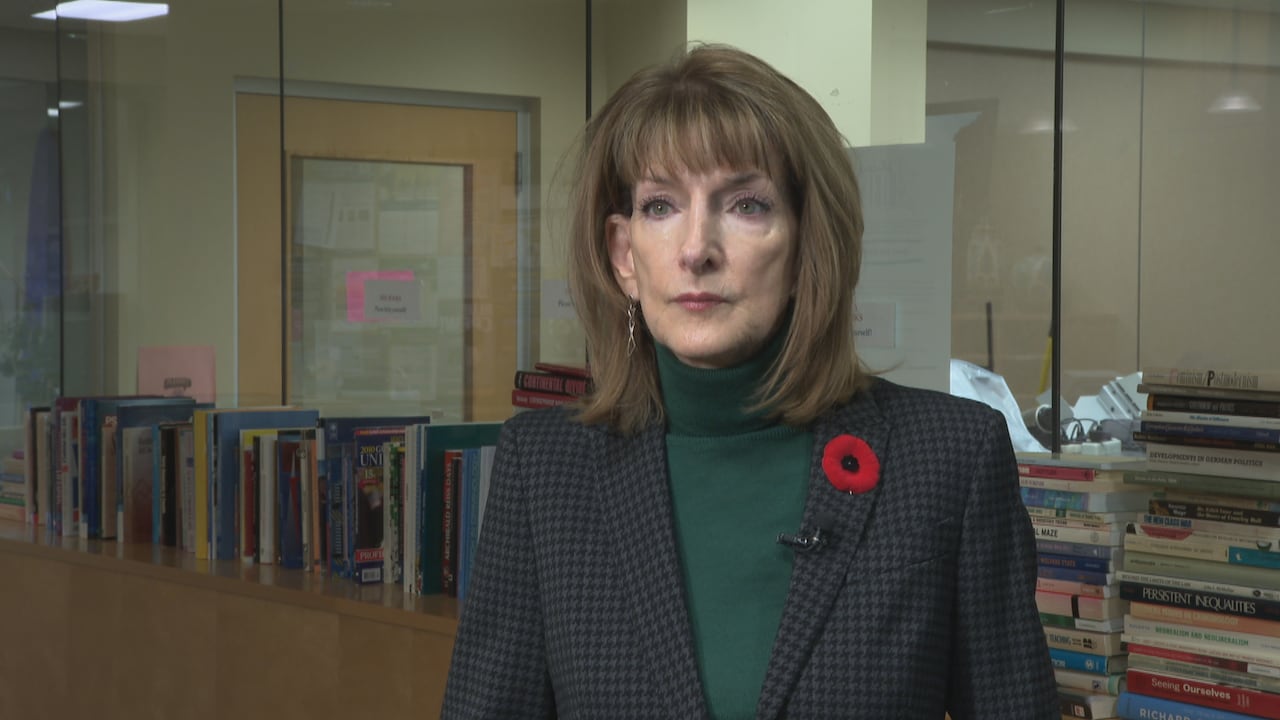
Mount Royal University political scientist Lori Williams on Oct. 29, 2026. (Chelsey Mutter/CBC)
The remaining four questions on constitutional reform failed, with between 42.4 and 47.2 per cent voting in favour.
Williams said internal polling and focus groups had led the province to expect a much higher success rate on the questions, and the province “might be more reluctant to go forward with a referendum” in the future since the results turned out so differently than expected.
“That’s got to be a bit of a cautionary note,” she said.
Elections Alberta to review how referendum went
The official numbers vary by less than a percentage point from the unofficial results available since Sunday.
Counting all of those ballots by hand took about five days, with unofficial results finalized well beyond the 48-hour deadline set out in Alberta’s referendum legislation.
WATCH | Why are votes being counted by hand?: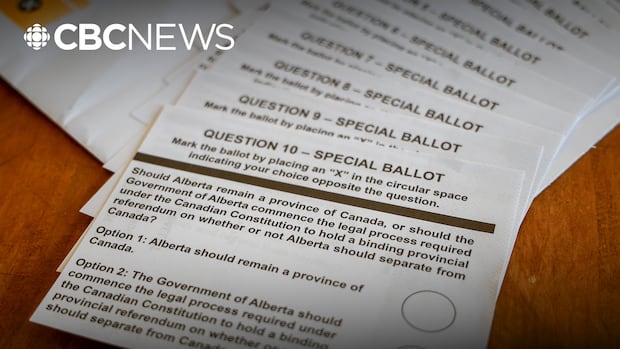
Why are votes being counted by hand?
CBC’s Jason Markusoff on what led to votes being counted by hand instead of by tabulators.
An Elections Alberta spokesperson told CBC News the provincial agency is not yet ready to discuss lessons learned from the tumultuous process, and that it “will be conducting reviews, debriefs, data analysis, and data entry” over the next few months.
The agency said the referendum had the highest number of ballots to count by hand in any Canadian electoral event, to its knowledge.