

Listen to this article
Estimated 5 minutes
The audio version of this article is generated by AI-based technology. Mispronunciations can occur. We are working with our partners to continually review and improve the results.
Pools for the salmon. Trembling aspen for the riverbanks. Rosebuds for the people.
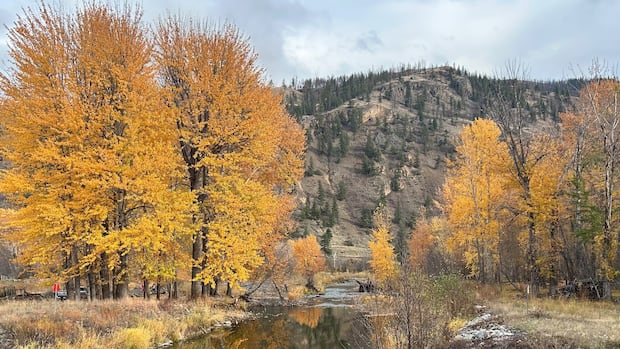
Skeetchestn Indian Band in B.C. is repairing areas of the Deadman River where critical salmon habitat has been altered by wildfires, floods and decades of outdated agricultural practices.
“The landscape has changed so drastically in the last little while,” said Tribal Kukpi7 Darrel Draney of Shuswap Nation Tribal Council.
“Trying to stabilize the banks … by planting these trees, we’re giving something back.”
In late October, over three dozen workers and community members planted native foliage at a restoration site to help river function on Skeetchestn land, around 60 kilometres west of Kamloops, B.C.
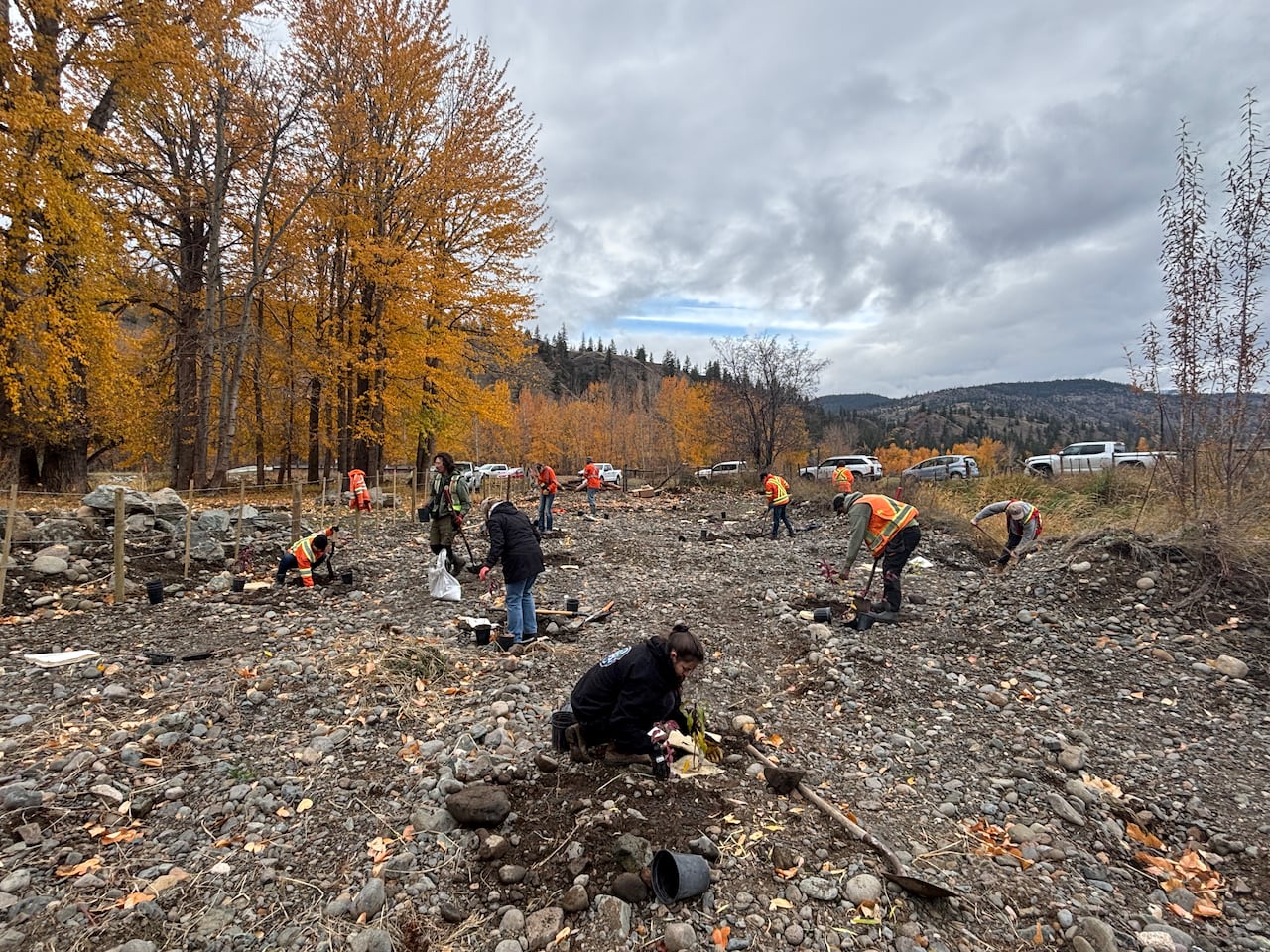
Skeetchestn Natural Resources restoration site sits within the Deadman River Watershed on Skeetchestn Indian Band land. (Edzi’u Loverin/CBC)
Christina Radyo, project co-ordinator at Skeetchestn Natural Resources, said the river has weathered decades of impacts from fires, floods and farming.
The project comprises large wood structures to help reshape the artificially straightened river, fencing to protect against cattle trampling, and planting native species like trembling aspen and rose bushes to support the riverbanks.
“The river has had to shift around large sediment deposits, and when it does so it widens out,” said Radyo.
That widening causes the river to become more shallow and more prone to heating up, said Radyo, impacting critical salmon habitat.
The plants will help keep the water cool and support riparian areas, said Radyo, which is the moist transition zone where aquatic and land ecosystems meet.
“Long story short, the salmon don’t like it too hot,” said Radyo.
“When it gets really hot we actually start to see it stresses fish, and then there can also be adverse effects psychologically or physiologically.”
Undoing straightening
Large wood structures installed in the summer will help reshape the river, after it was previously straightened as a part of outdated farming practices.
Radyo said straightened rivers increase water speeds and impact salmon habitat as it alters natural pooling areas, which are critical for salmon’s resting, and can impact spawning.
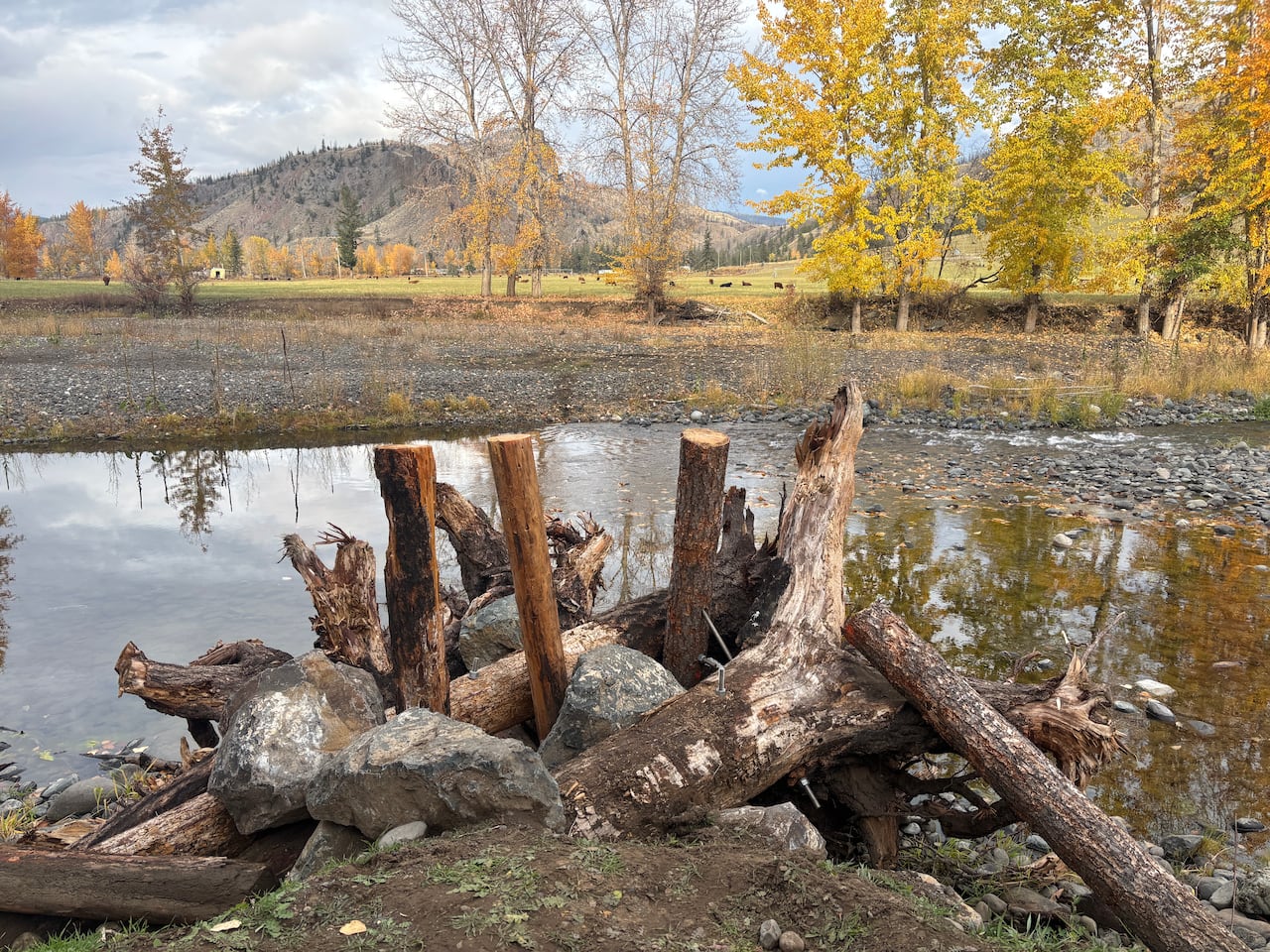
Skeetchestn Natural Resource’s restoration project has large wood structures which help the river re-direct where it has room to move, after outdated farming practices straightened it for drainage, flood control and plowing ease. (Edzi’u Loverin/CBC)
“This is a pattern that we see across Deadman, just practices that were kind of common back in the day,” said Radyo.
“We’re kind of learning more about the harm effects now … and are trying to reverse some of those things.”
Radyo said the $300,000 restoration project is funded by Pacific Salmon Foundation and New Gold, and is one of several restoration initiatives led by Skeetchestn, including Tsecmenúl̓ecwem-kt (We Repair the Land).
According to the Department of Fisheries and Oceans Canada (DFO), research and monitoring show salmon survival and reproduction rates improve in habitat restoration areas.
Sparks Lake fire
Skeetchetsn is within the Thompson-Nicola region, and is vulnerable to extreme climactic events such as drought, floods and wildfires, which now occur more often and for longer due to climate change.
The Deadman River Watershed was severely damaged by the massive, human-caused Sparks Lake wildfire in 2021 — the largest fire on record in the province that year.
The fire torched 89,267 hectares, 89 per cent of which was in the Deadman River Watershed. Around 55 per cent of the Deadman River Watershed had burned from this and other wildfires by the end of fire season.
Chereen Peters, cultural heritage worker at Skeetchestn Natural Resources and a Skeetchestn member, said after the fire, flooding and slides damaged the riverbanks on the reserve.
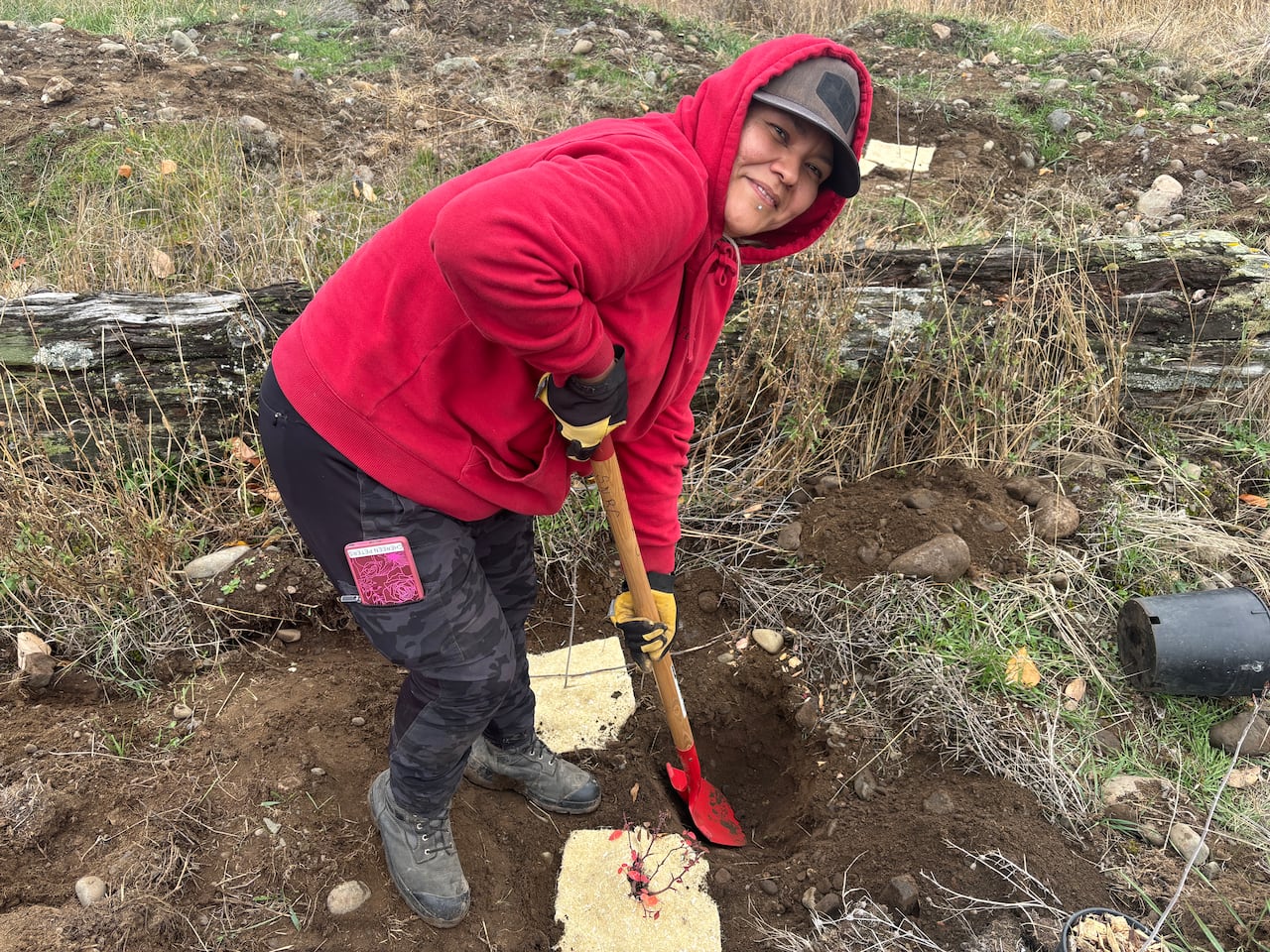
Chereen Peters, cultural heritage worker at Skeetchestn Natural Resources, prepares to plant a rosebush, a Secwépemc traditional medicine. (Edzi’u Loverin/CBC)
“Farm owners and community members within the band there, it took away a lot of their land just from the banks getting eaten away from the river coming in so high,” said Peters.
“I’ve been here for 10 plus years, and after the 2021 fire, that was the highest I’ve ever seen the river. It came in pretty angry.”
Flooding has become an ongoing issue in the area due to the impacts of wildfires, damaging the Deadman River Hatchery operated by Skeetchestn Indian Band in 2015, causing it to close.
DFO said in a December news release the hatchery has now has undergone extensive upgrades, and is now a climate-resilient state-of-the-art facility for salmon conservation.
Peters said she hopes the restoration work helps bring back the land to the way it used to be and enjoys the learning process of planting, especially when working with important plants like roses.
“We usually go out and harvest the rosebuds and then we give them to the elders,” said Peters.
“It does feel great to give back to it and help it replenish itself.”