

Listen to this article
Estimated 3 minutes
The audio version of this article is generated by AI-based technology. Mispronunciations can occur. We are working with our partners to continually review and improve the results.
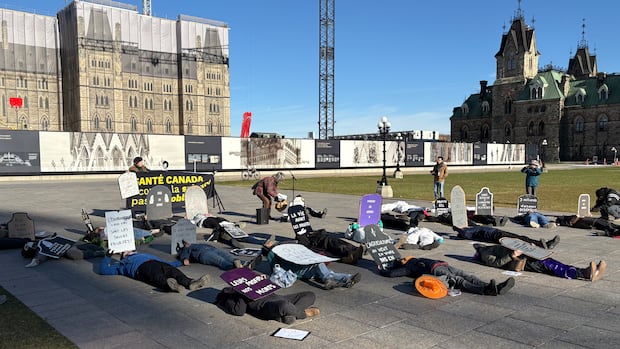
Protesters propped up cardboard tombstones on Parliament Hill Saturday as part of a “die-in” held over the federal government’s pesticide regulations.
The tombstones — nearly 40 in all — were designed to protest two bills they allege roll back restrictions and regulatory measures on pesticides and favour corporate profit over the health of ordinary Canadians.
“Kids especially have a lot more risk to pesticides,” said Elodie Mantha, who represents the Quebec-based non-profit Vigilance OGM.
“They have lower thresholds [when it comes to absorbing pesticides], and they’re also going to be eating this food and drinking this water for much longer. So it accumulates.”
The two bills in question are Bill C-30, passed in June, and the proposed omnibus Bill C-31, which is currently working its way through the House of Commons and the Senate.
Bill C-30 gives the federal government the authority to greenlight pesticides it feels are in the interest of economic or national food security, including those previously deemed unsafe by Health Canada.
The omnibus Bill C-31 includes a section with amendments to the Pest Control Products Act, allowing the minister of health to delay or narrow the scope of a re-evaluation of a registered pest control product.
C-30 has faced backlash
Bill C-30 has faced backlash from environmental and health organizations, who’ve called it the largest overhaul of pesticide regulations in a generation.
In response, a spokesperson for Health Minister Marjorie Michel said cabinet would be transparent in its decisions, and only permit the use of certain pesticides temporarily, and under certain conditions.
Still, some protesters, including Dr. Helen Hsu, say these new regulations go against the principles of evidence-based health policy.
“Without the opportunity to do this reassessment, we really risk exposing our entire population to harmful chemicals that can affect them for decades,” said Hsu, who represents the Canadian Association of Physicians for the Environment.
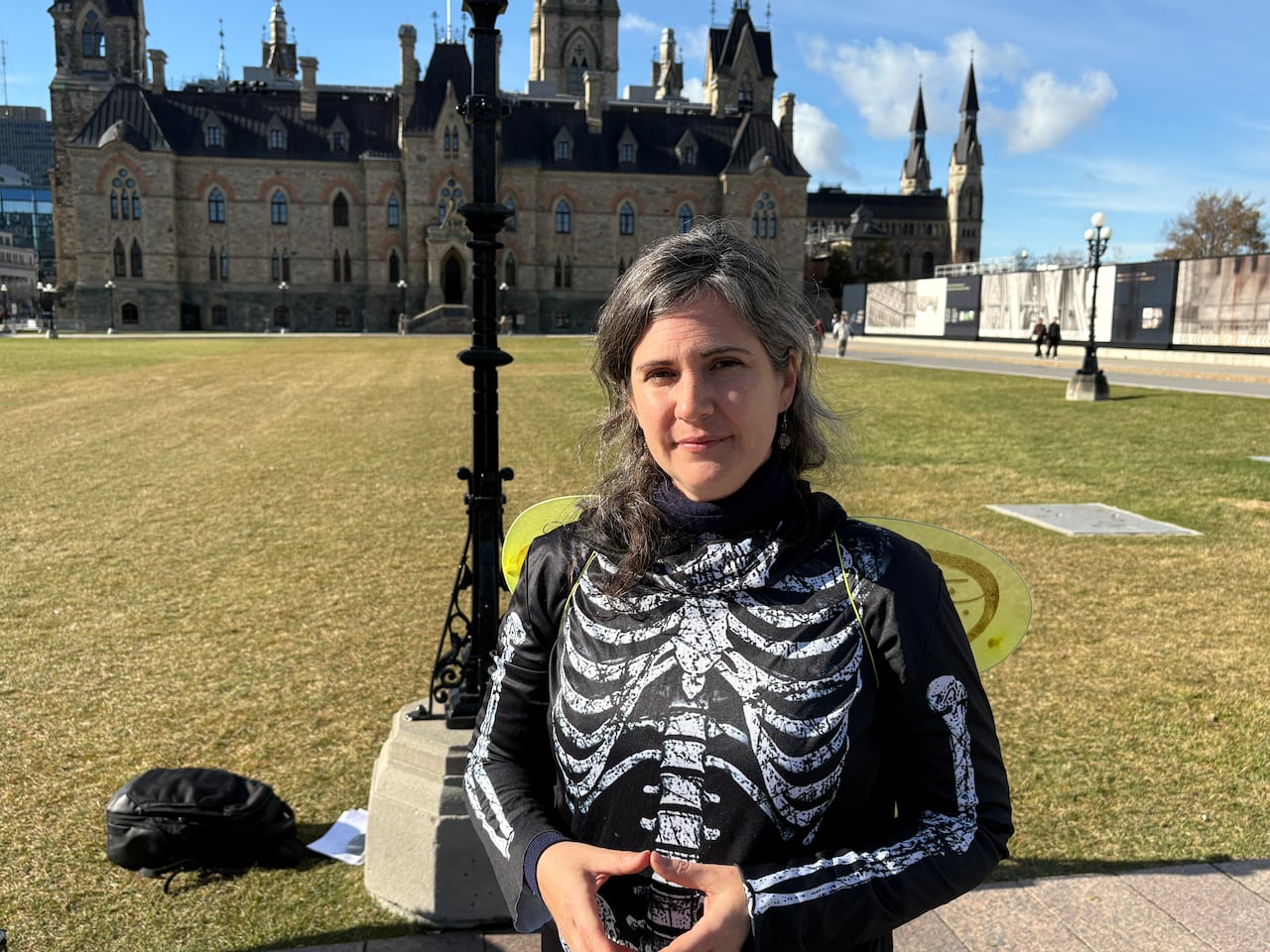
Elodie Mantha represents the Quebec-based non-profit Vigilance OGM. She says the latest government bills are concerning for Canadian children, who could be affected from exposure to harmful pesticides for generations to come. (Liam Baker/CBC)
‘Die-ins’ across Quebec
Similar protests occurred simultaneously in seven cities across Quebec on Saturday morning, including Quebec City, Montreal and Terrebonne. Protesters ranged from children to retirees, many of whom were dressed in Halloween costumes.
Alongside physicians and activists, farmers also spoke at the “die-in” about their experiences with pesticides, and the need for changes in testing practices.
“Some of these pesticides might be safe, we don’t know. We need the government to really run the tests, and not rely on the manufacturers of the pesticides to run those tests,” said André Houle, who runs a farm in Curran, Ont.
In a statement to the CBC, a spokesperson for Michel said Health Canada will continue to apply rigorous scientific standards and monitor pesticides throughout their life cycle.
“These changes will help reduce assessment delays and ensure that regulatory resources are focused on products with the highest risks and new concerns, rather than automatically reassessing products simply because 15 years have passed,” the statement read.
The spokesperson added the latest changes implement a more responsive, regulatory system to protect Canadians while supporting a stronger national food system.