

Listen to this article
Estimated 4 minutes
The audio version of this article is generated by AI-based technology. Mispronunciations can occur. We are working with our partners to continually review and improve the results.
The potential for using biomass as an energy source is abundant in the Yukon — but it’s not seeing much use.
“We’re just missing a massive opportunity here,” said Peter Wright, the executive director of the Yukon Wood Products Association, in an interview during the Yukon Forestry Conference in Whitehorse last week.
Biomass refers to wood products that can be burned in order to create electricity and heat. Wright says that typically involves waste wood products, such as wood chips or wood pellets.
But the Yukon still relies overwhelmingly on traditional heat sources, such as oil and propane, for power. A spokesperson for the Department of Highways and Public Works says biomass fuels cost more than traditional heat sources, making systems more expensive to operate.
Wright said it’s not just opportunities that are being missed with the lack of biomass heat systems.
“Our big message is that when that truck leaves empty after it’s dropped off its fuel, all of the employment, all of the revenue, all of the opportunity just left with it,” he said. “How do we keep more of that here and build capacity, opportunity, keep the economy local and build for it as a whole?”
‘Don’t be afraid’
Next door in the Northwest Territories, longtime government worker David Hatto says roughly 40 per cent of its buildings are powered by biomass. He sees a lot of potential in the Yukon to use biomass as fuel, including cord wood and wood chips.
“With the GNWT, we’ve been using pellets, which is a more refined product,” said Hatto, the acting director of project management with the Department of Infrastructure. “I think in the Yukon, they need to start small and realize the savings and the benefits to it and then start growing homegrown markets with the wood chips.”
Hatto’s biggest tip for the Yukon?
“Don’t be afraid,” he said. “Just step in and start and do it. Don’t look at one project trying to get your payback and your savings.”
Assessment delays causing problems
That’s easier said than done, though.
Woodcutters across the Yukon have been facing issues over the past 12 months, whether it’s the lack of new lots being opened, permitting errors or high diesel prices driving up the price of wood. This has led to harvesters facing financial difficulties.
Wright believes the Yukon government is doing what it can to open more woodlots, and the government has offered financial support to commercial harvesters. But a major challenge, he says, is delays at the assessment level.
“We saw YESAB (Yukon Environmental and Socio-economic Assessment Board) screenings going through under six months prior to 2024,” Wright said. “They’re 1793568390 well over 12, encroaching on 18 months at times.”
At least two other speakers at the Yukon Forestry Conference also referenced YESAB delays. Those speakers were Michelle Sicotte, the director of the Forest Management Branch with the Yukon government, and Jen Gehmair, the minister of Economic Development, Tourism, and Culture. Gehmair was speaking on behalf of Energy, Mines and Resources Minister Ted Laking, who was returning from addressing the House of Commons standing committee on Indigenous and Northern affairs.
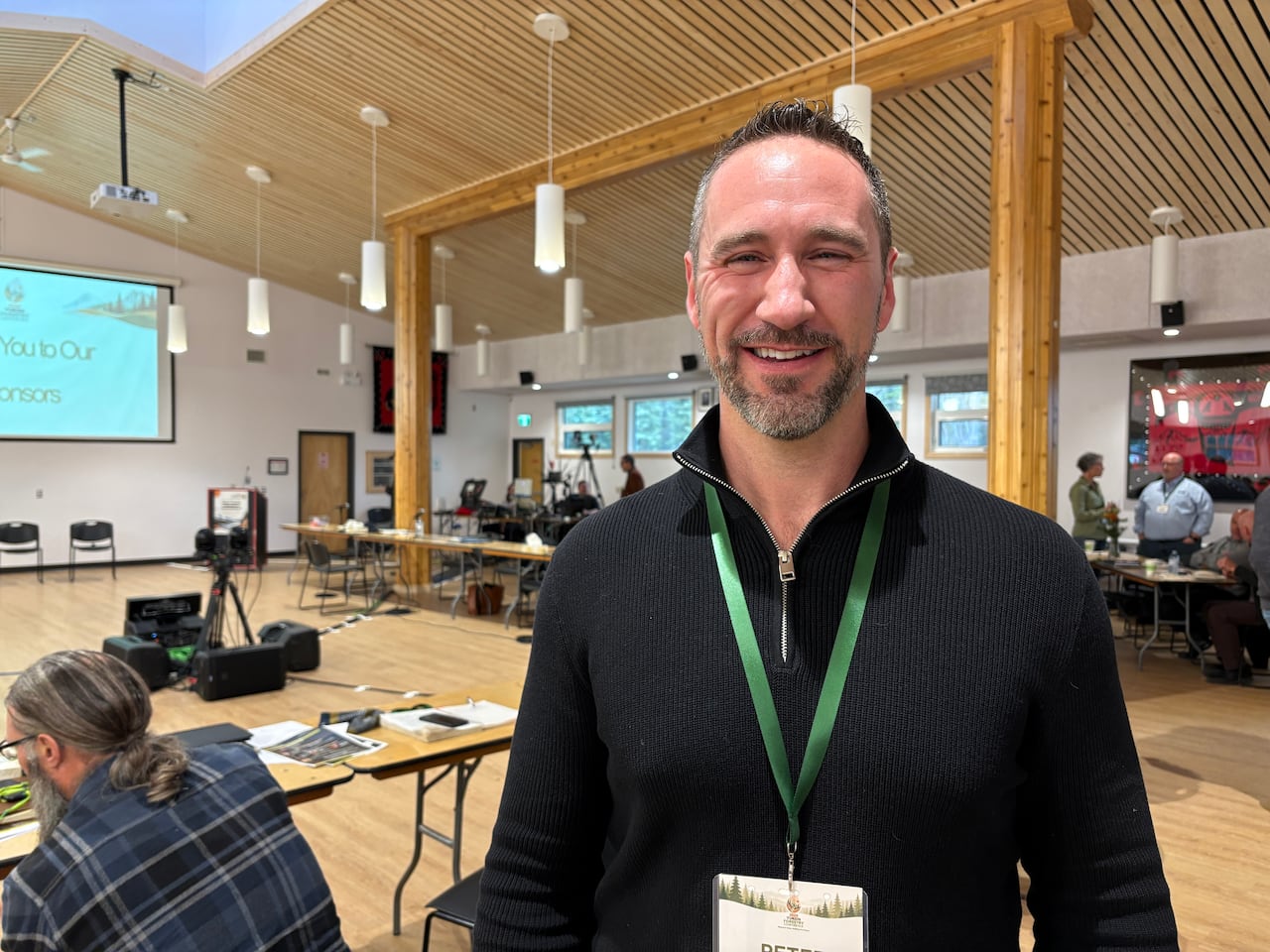
Peter Wright is the executive director of the Yukon Wood Products Association. He says environmental assessments of forestry submissions are taking at least twice as long as they were before 2024. (TJ Dhir/CBC)
YESAB executive director Kent Bretzlaff admitted that evaluations are taking longer, because more requests are coming in. Additionally, he said, more requests are becoming more complex due to “limited shared data availability and the strong, comprehensive comments from the public and various governments.”
“Right now, we’re sitting around just shy [of] about three months to assign an assessor,” Bretzlaff said, calling it “not normal” and the biggest challenge facing YESAB right now.
Most forestry projects on the YESAB registry over the last two years have been dealt with by regional designated offices. Updated rules for those offices are expected to take effect on Jan. 8. Bretzlaff said an update on the rules will be issued within a couple of weeks.