
CentrePort Canada is starting a large expansion in Winnipeg just as the federal government looks to start spending $1 billion on food hubs and terminals.
CentrePort president and CEO Carly Edmundson said they are well positioned to be at the centre of food supply networks.
“Whether they’re moving grains and products that have a longer shelf life using rail, whether it’s your more average shelf time on truck, or whether it’s very quick, short shelf life on air, you have all three of those options from CentrePort,” said Edmundson.
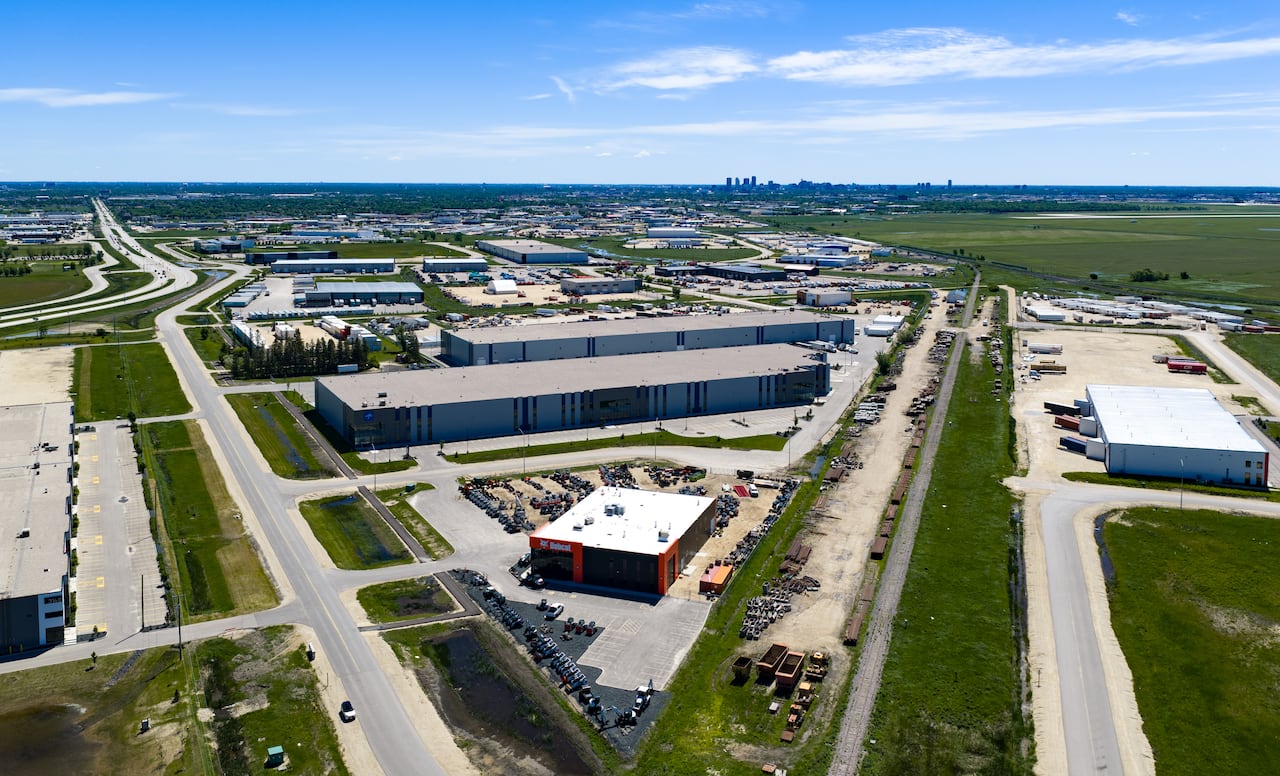
A small area of CentrePort Canada on the northwest corner of Winnipeg with the towers of downtown in the distance. (CentrePort Canada)
The federal government plans four food terminals and 20 to 40 smaller food hubs across Canada, with the goal of reducing prices by being less reliant on big grocery retailers’ supply chains.
A spokesperson with Agriculture and Agri Food Canada said in an email that food terminals link to regional distribution networks, extending their reach to remote communities, while food hubs focus on local or regional supply chains.
Pamela Kolochuk, the CEO of Peak of the Market on the edge of CentrePort, said more efficient distribution can lead to cheaper groceries.
“There’s so much food and not even just food, but supplies that go to one place and then come back just because of central warehousing and that that others have put together that just add a huge cost to product on the shelf,” said Kolochuk.
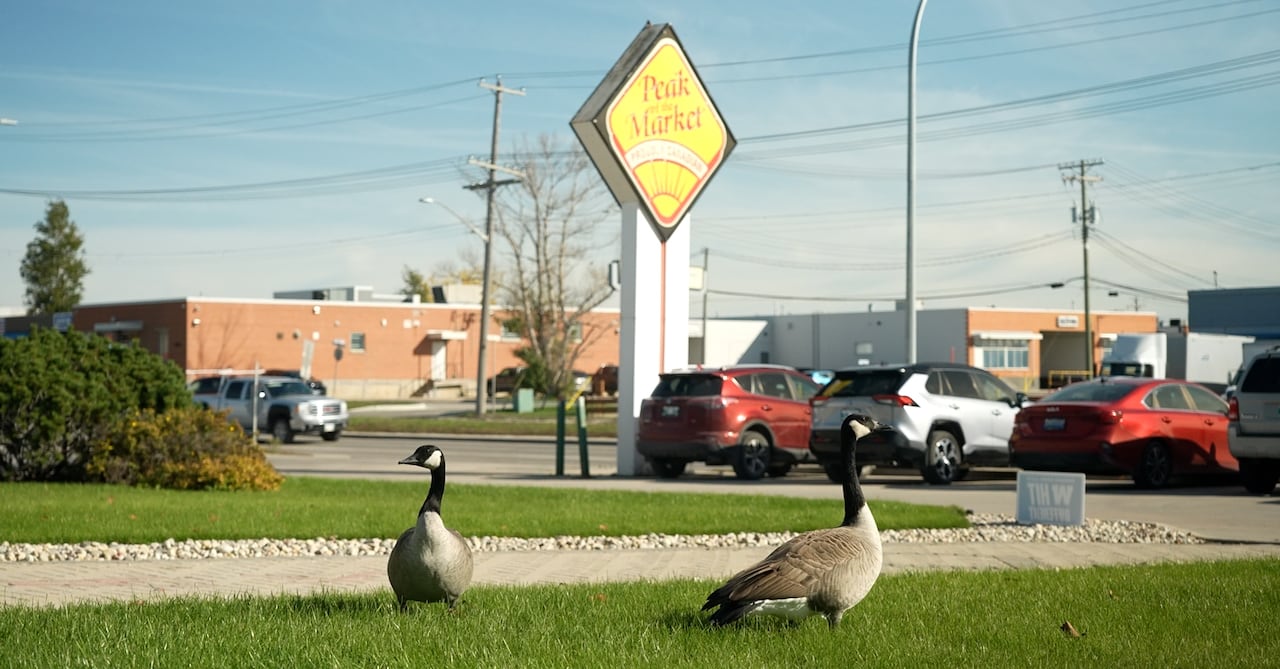
Peak of the Market on Route 90 is on the eastern edge of CentrePort Canada. (Christopher Gareau/CBC)
She hopes to expand Peak of the Market’s network of 65 food growers in North America and speed up the time it takes to get their food to places like Canada’s Far North.
“Maybe that’s an option through the port (of Churchill),” said Kolochuk.
A memorandum of understanding was signed by CentrePort on Oct. 26 with Port of Churchill owner Arctic Gateway Group, and global trading company DP World.
The groups said this could lead to an integrated transportation corridor linking the Port of Churchill, the Hudson Bay Railway, CentrePort Canada, and the world.
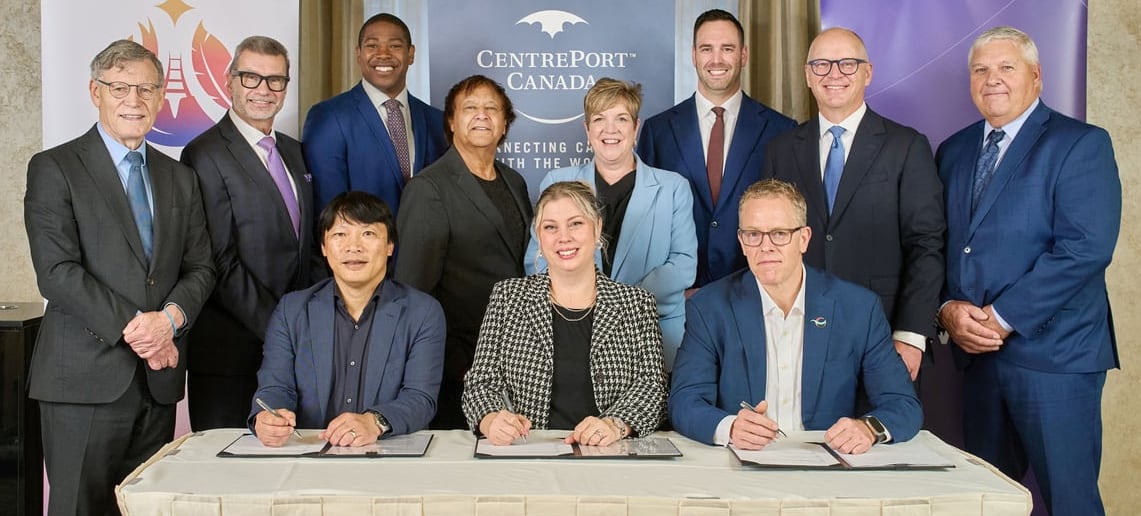
Federal, provincial and municipal leaders were at the memorandum of understanding signing between Port of Churchill owner Arctic Gateway Group, CentrePort Canada, and DP World. Pictured are, standing from left, MP Terry Duguid, MP Doug Eyolfson, Manitoba Economic Development Minister Jamie Moses, Churchill Mayor Michael Spence, Manitoba Transportation and Infrastructure Minister Lisa Naylor, MP Ben Carr, Winnipeg Mayor Scott Gillingham and Rosser Reeve Ken Mulligan. Sitting are Artic Gateway Group president and CEO Chris Avery, CentrePort president and CEO Carly Edmundson, and DP World vice-president Scott Weston. (CentrePort Canada)
Inland ports give room for food and anything else to move quicker through seaports like Churchill, Vancouver, Montreal or Halifax, said Edmundson.
“They create that environment as the next natural landing space for goods after they come off a boat, or conversely, to be prepped and ready to go out to a seaport and out to a global market. That’s the way that we already interact with seaports in Canada. And we will absolutely continue to interact with the Port of Churchill as they build on their capacity,” she said.
Canadian Inland Ports Alliance
CentrePort also signed a deal on Oct. 26 with two inland ports in Alberta to form the Canadian Inland Ports Alliance.
Their media release states the goal is to increase interprovincial trade, expand access to global markets, and strengthen supply chain reliability by increasing co-ordination and avoiding seaport congestion in a time of “shifting trade partners.”
On site, there is plenty of construction happening as the City of Winnipeg catches up with the RM of Rosser on providing infrastructure to allow more businesses to move in.
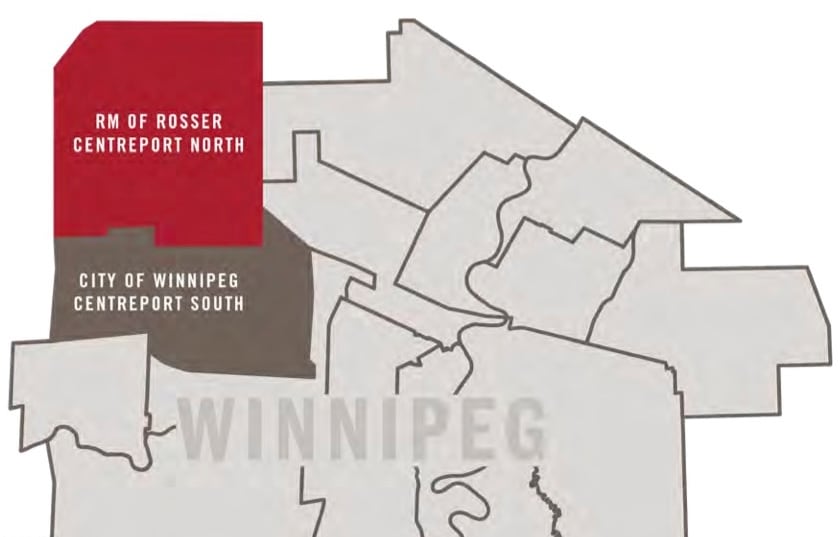
CentrePort Canada’s property covers 80 square kilometres in northwest Winnipeg and the RM of Rosser. (CentrePort Canada)
Water work is wrapping up, and roads are being paved connecting Winnipeg’s Richardson International Airport to the highway and rail network.
The roads would also include connections to Catalyst Park, projected to become the largest industrial complex in Winnipeg’s history. Phase 1 is expected to go to market early next year.
Groups interested in airport and military access
The Winnipeg Airports Authority is planning to announce the first tenant of its 220-acre West Lands development on Wednesday.
The shared space with the 17 Wing of the Royal Canadian Air Force means the airport is required to be open 24/7, an assurance for businesses looking to ship cargo including food and livestock to overseas markets.
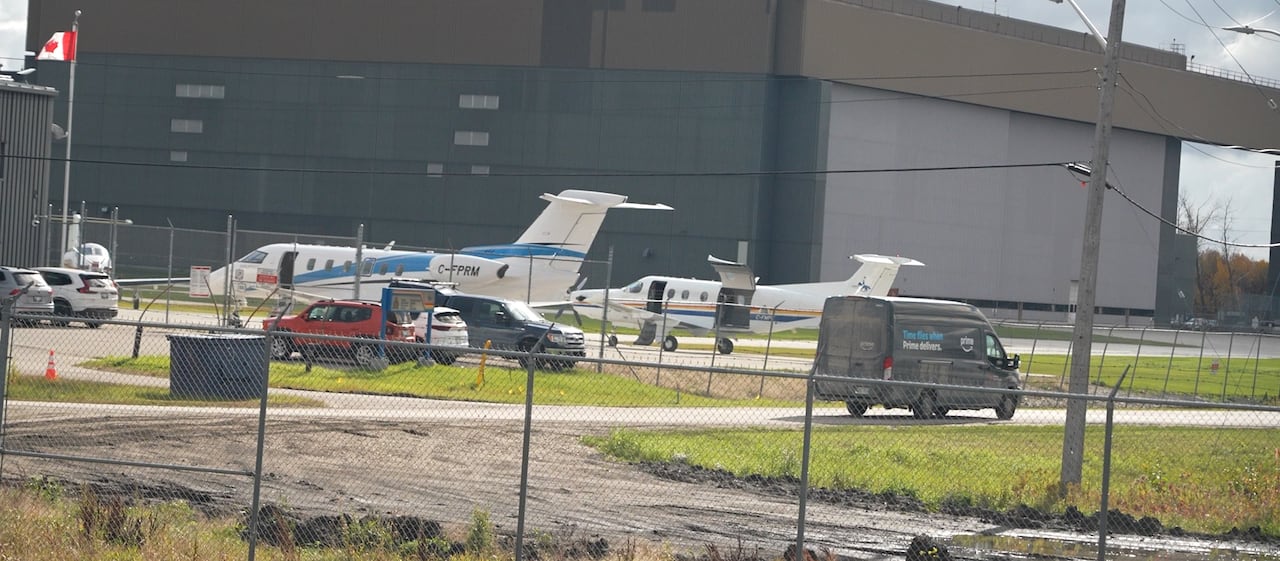
An Amazon delivery van drives by the RCMP aircraft base at CentrePort Canada in Winnipeg. (Christopher Gareau/CBC)
Air carriers, search and rescue, military and defence industry businesses are best suited for this area, said WAA director of real estate and development Will Rossall.
The prime real estate will be on the airport side of the security fence, which will give direct access to airport hangars and the apron.
“We’re starting to see some good interest from groups that need or want to be close to the military,” said Rossall.
“It happens to align nicely with the (federal increase in) investment in defence,” he added.
Construction by the airport is expected to start early next spring.
Rossall expects a high demand throughout the development as the infrastructure continues to get built.
He is optimistic about the vision of an inland port connected to the sea and global trade routes by rail, land and air.
“The opportunity in front of us is to realize on the potential we’ve always had. We are at the centre of the country. We are connected east, west, north, south.… And we have the talent, we have the desire,” said Rossall.