

For cyclists trying to improve their power-to-weight ratio, cutting calories while keeping protein intake high can seem like a sensible approach. The goal is to lose body fat without sacrificing the muscle needed to produce power on the bike. But a new controlled study raises an important question about what happens beyond the muscles: even a few days of severe energy restriction may disrupt biological processes associated with bone formation, regardless of whether protein intake is maintained.
 A cyclist sitting down for a meal after training. Image: TodoMountainBikeFive days of low energy availability were enough to change bone formation markers
The findings come from a randomized crossover trial published on October 10, 2026, in the European Journal of Applied Physiology. The study, titled Bone biomarker and inflammatory cytokine responses to short-term low energy availability with and without preserved protein intake: a randomized, controlled, multi-period, cross-over trial, investigated whether maintaining dietary protein could protect bone metabolism during short periods of insufficient energy intake.
Researchers recruited 19 healthy, physically active adults, including nine women and ten men. Each participant completed three separate five-day dietary interventions: one providing adequate energy, another involving substantial energy restriction, and a third maintaining the same restricted energy intake while preserving protein consumption at the level provided by the adequate-energy diet. Because every participant experienced all three conditions, the researchers could compare individual physiological responses across the interventions.
The difference in energy availability was substantial. The control condition provided 45 calories per kilogram of fat-free mass per day, compared with just 15 calories in both restricted conditions. These values describe energy remaining after exercise expenditure relative to fat-free mass, rather than total daily calorie intake. The intervention therefore represented severe low energy availability, not an ordinary moderate weight-loss diet.
Exercise testing was incorporated into the protocol. On the first and fifth days of each intervention, participants completed 45 minutes of cycling at 65% of their previously established peak power output, followed by an all-out Wingate test. Blood samples collected before and after exercise allowed researchers to examine changes in bone turnover markers and inflammatory responses.
One of the clearest findings involved P1NP, a blood marker associated with type I collagen synthesis and commonly used to assess bone formation. After five days, fasting P1NP concentrations were lower under both energy-restricted conditions than under adequate energy availability. Crucially, maintaining protein intake during a calorie deficit did not prevent this reduction.
Why preserving protein did not prevent the changes
The results revealed another unexpected pattern. When protein intake was maintained despite the severe energy restriction, the biological disturbances were generally more consistent than when all macronutrients were reduced proportionally. P1NP remained suppressed during post-exercise recovery, while CTX-1, a marker associated with bone resorption, increased during recovery under the protein-preserved condition.
These findings should not be interpreted as evidence that protein damages bone health. Protein remains essential for maintaining muscle tissue, repairing exercise-related damage, and supporting normal skeletal function. The researchers instead highlighted another possible explanation: maintaining protein within an equally restricted calorie allowance leaves less energy available from other macronutrients, potentially reducing carbohydrate availability.
That possibility is particularly relevant to endurance cycling, where carbohydrate intake influences training fuel availability and recovery. The study did not independently manipulate carbohydrates while keeping other variables constant, so it cannot establish whether reduced carbohydrate intake caused the stronger responses. Nevertheless, the findings suggest that carbohydrate availability and bone metabolism deserve closer attention when athletes restrict calories.
Researchers also observed increases in several inflammatory cytokines at different measurement points during the energy-restricted interventions. These signaling proteins help coordinate physiological responses to exercise and metabolic stress. The changes were generally more pronounced or consistent when protein intake was preserved, although the patterns varied between individual markers.
An important distinction is that the experiment measured biochemical indicators, not actual changes in skeletal strength. P1NP is a useful reference marker for bone formation, but it also reflects collagen synthesis outside bone tissue. A reduction over five days does not demonstrate measurable bone mineral density loss, establish that bones have become weaker, or predict an individual athlete’s fracture risk.
Why the findings matter for endurance cyclists
Cycling presents a particular challenge for skeletal health. Although it provides substantial cardiovascular and metabolic benefits, it is primarily a low-impact activity. Compared with running, jumping, and certain forms of resistance training, cycling generally produces less of the mechanical loading that stimulates bones to maintain their strength.
That distinction becomes especially relevant when an athlete combines high training volumes with insufficient food intake. The potential consequences of low energy availability in cyclists extend beyond muscle recovery and power output. Sustained energy deficiency can interfere with hormonal regulation and other physiological functions involved in maintaining healthy bones.
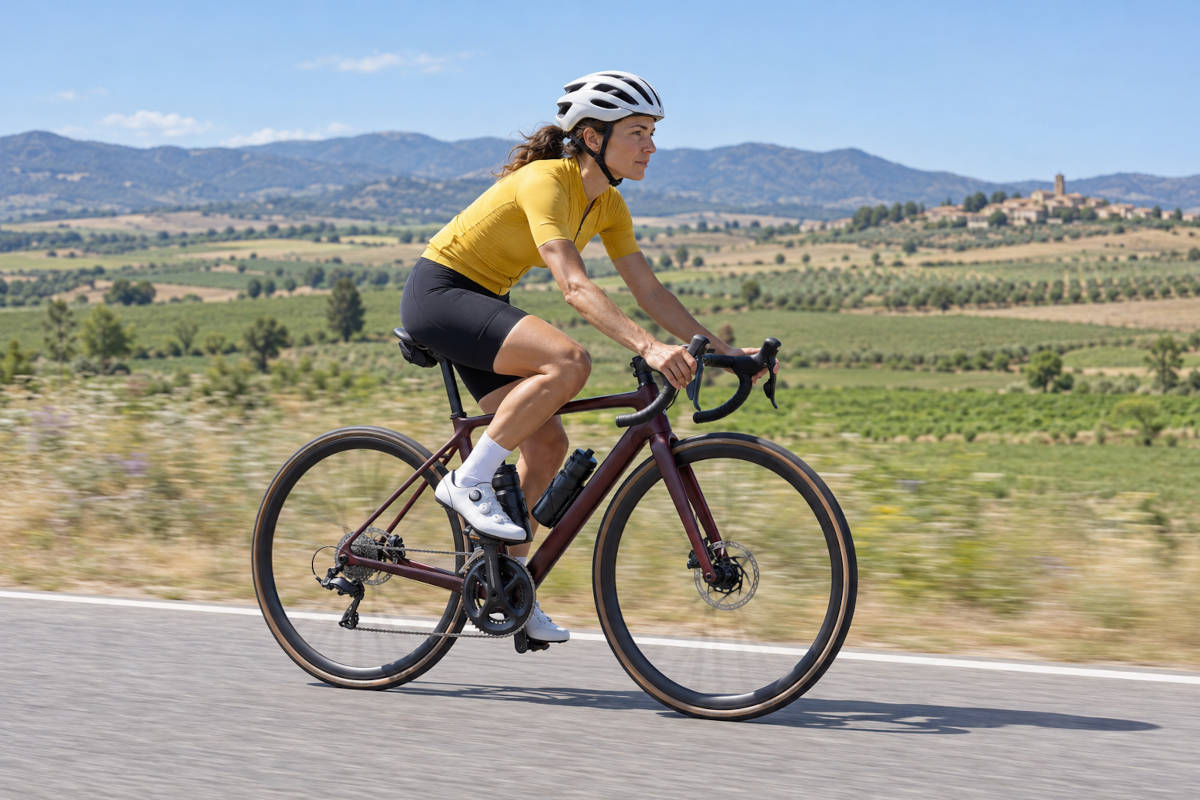 A cyclist riding along a rural road. Image: TodoMountainBike
Previous research involving professional cyclists has documented reductions in bone mineral density over the course of a competitive season. Those longer-term findings cannot be directly attributed to the short-term biochemical changes observed in this new trial, but they help explain why bone health has become an important concern in endurance sports.
The issue also connects with Relative Energy Deficiency in Sport (RED-S), a condition associated with prolonged or repeated periods of insufficient energy availability. RED-S can affect athletes of any sex and may involve disruptions to bone health, hormonal function, immune function, and athletic performance. The new experiment did not diagnose RED-S in its participants, but it investigated physiological responses relevant to understanding the risks associated with inadequate fueling.
For cyclists attempting to reduce body fat, the practical implication is that protein should not be treated as a nutritional safeguard against every consequence of energy restriction. Maintaining adequate protein is useful for preserving lean mass, but healthy weight loss for cyclists also requires consideration of total energy intake, carbohydrate availability, training demands, and recovery.
This does not mean that every calorie deficit threatens bone health. The study used a particularly severe restriction over a short period, and the participants were recreationally active adults rather than highly trained competitive cyclists. Their responses cannot automatically be applied to athletes following carefully planned, moderate reductions in energy intake.
The researchers also could not determine whether the observed changes would persist over several weeks or translate into measurable reductions in bone density. Future trials will need to examine longer interventions, different levels of energy restriction, and diets that maintain carbohydrate availability while independently adjusting protein intake.
For endurance athletes, the most relevant takeaway concerns the limits of a protein-focused approach to nutrition. A cyclist may consume enough protein to support muscle maintenance while still failing to provide sufficient energy for other physiological processes. The new findings suggest that bone-related responses can begin changing within days under severe energy restriction, even before any measurable loss of bone density has been established.