

Ghost Bikes has become the latest established manufacturer to fall victim to a cycling industry downturn that has claimed businesses across the United States and Europe since 2023. The German mountain bike brand is shutting down after failing to secure a buyer, adding its name to a growing list of companies that have faced bankruptcy, liquidation, suspended operations, or emergency restructuring. For American riders, the crisis extends well beyond Europe: Colorado-based Niner has been put on hold, GT has stopped developing new bikes, and manufacturers including Revel, Rad Power Bikes, and Rocky Mountain have needed new ownership to survive.
 Ghost Lector FS Pro. Image: Ghost Bikes
Some manufacturers have disappeared, while others have returned under their founders or new investors. The downturn has also exposed an uncomfortable reality for bike owners: a company can go out of business while thousands of its products remain on the trails, potentially leaving riders with uncertain warranties, proprietary components, and limited access to replacement parts. What began as a correction following the pandemic bicycle boom has become a prolonged restructuring of the global cycling industry.
Mountain bike brands that have closed, suspended operations, or narrowly survived
Mountain bike manufacturers have been particularly vulnerable to the downturn. Developing carbon frames, proprietary suspension systems, new electric mountain bike platforms, and specialized products requires substantial investment. Manufacturers must commit to engineering, tooling, production, and inventory months or even years before they know how many bikes customers will actually purchase.
When demand slowed, many companies found themselves carrying expensive inventory while competing with heavily discounted previous-season models. The resulting financial pressure has affected boutique manufacturers and internationally recognized brands alike.
The mountain bike industry bankruptcy crisis has produced very different outcomes. Some manufacturers have permanently stopped operating, others have suspended product development, and several have returned after their founders or outside investors purchased their assets. Understanding those distinctions matters, particularly for riders who already own their bicycles.
Ghost Bikes (2026): Operations are shutting downFounded in Germany in 1993, Ghost Bikes has confirmed that it will cease operations after failing to find an investor capable of keeping the business running. Insolvency proceedings for Ghost-Bikes GmbH formally opened on November 1, 2026. The restructuring team determined that none of the offers received provided a financially viable alternative to an orderly shutdown. Remaining bicycle inventory is expected to be sold as a single lot, and 53 employees were still on the payroll when proceedings opened. The company has not announced a definitive solution for the Ghost brand name, existing warranties, or long-term replacement-parts support. Although Ghost has had a more limited presence in the United States than some domestic manufacturers, its closure represents another significant loss for the international mountain bike industry.Guerrilla Gravity (2023): Colorado manufacturer closesGuerrilla Gravity was one of the more distinctive American mountain bike companies, producing carbon frames in Colorado rather than relying entirely on overseas manufacturing. Its bikes targeted trail and enduro riders, while its proprietary Revved Carbon process represented a substantial investment in domestic production. The company ceased operations in September 2023 after financial difficulties made continued business unsustainable. For owners, the shutdown created concerns about proprietary frame parts and long-term maintenance. Canfield Bikes subsequently helped make certain replacement components available, demonstrating how aftermarket support can continue even after the original manufacturer disappears.Pole Bicycles (2024): Finnish manufacturer enters insolvencyPole earned international recognition for its aggressive geometry, unusually long wheelbases, and machined aluminum frames. Its designs attracted attention among enduro riders looking for alternatives to conventional mountain bikes. In April 2024, the Finnish company filed for insolvency after accumulating financial, production, and supply-chain problems. Founder Leo Kokkonen acknowledged the challenges that had made the business difficult to sustain. The insolvency affected the original manufacturing operation, although the fate of particular designs, intellectual property, and commercial rights must be distinguished from the legal status of the company itself.Orange Bikes (2024): Historic British brand survivesOrange Bikes entered administration in early 2024, threatening a manufacturer associated with British mountain bike history and distinctive aluminum suspension frames. The brand subsequently found a path forward through a new business structure supported by Ashley Ball, a former company executive. Orange continued operating under Orange Bikes Ltd, while the previous legal entity, Orange Mountain Bikes Limited, remained subject to insolvency proceedings. A notice concerning the dissolution of the former company appeared in October 2026. Orange illustrates why the collapse of a legal entity does not necessarily mean the disappearance of the bicycles or the brand.Kona Bicycles (2024): Founders buy their company backFounded in 1988, Kona became one of the most recognizable names in North American mountain biking. Its future became uncertain after a difficult period under Kent Outdoors, which acquired the brand in 2021. Excess inventory, aggressive discounting, and questions about the company’s direction contributed to concerns about its survival. In May 2024, original founders Jake Heilbron and Dan Gerhard bought Kona back. The transaction returned the brand to independent ownership and allowed the company to rebuild its operations. Kona did not undergo a definitive liquidation; it survived through an ownership change that restored control to the people who started it.GT Bicycles (2024): Product development goes on holdFew brands have played a larger role in American BMX and mountain bike history than GT. In December 2024, the company announced that it was suspending new bicycle development and launches while reducing its workforce and focusing on existing inventory. GT, which belongs to the Pon portfolio, did not announce bankruptcy or formal liquidation. Nevertheless, the decision raised serious questions about the future of a manufacturer with decades of racing heritage. Its situation remains fundamentally different from a confirmed shutdown: GT paused significant operations, but that announcement alone did not establish that the brand had permanently disappeared.Rocky Mountain (2024-2025): Canadian investors step inRocky Mountain, founded in 1981, has long been associated with the development of modern mountain biking and maintains a substantial following in the United States. The Canadian manufacturer entered court-supervised restructuring in late 2024 after encountering serious financial difficulties. On May 9, 2025, Chaos Sports Inc., a group of four Canadian investors, acquired the company’s assets and announced plans to revive the business. The transaction preserved one of mountain biking’s established names and launched a recovery strategy spanning 2025 and 2026. Rocky Mountain survived, but its future depended on a new ownership structure.Revel Bikes (2025): A Colorado comebackRevel Bikes, based in Carbondale, Colorado, announced the closure of its operations in April 2025 after running out of financial resources. The company had developed a following for carbon full-suspension mountain bikes using the CBF suspension platform, along with gravel and titanium models. Its shutdown appeared to mark the end of a promising American manufacturer. That changed on May 21, when founder Adam Miller announced that he had purchased the company’s assets. Revel returned to independent, founder-led ownership and resumed work on its product range. Few examples demonstrate the possibility of recovery after a business collapse more clearly.YT Industries (2025): Insolvency followed by a U.S. comebackGerman direct-to-consumer manufacturer YT Industries entered insolvency proceedings during the summer of 2025 after a major investor withdrew financial support. The resulting crisis led to layoffs and major operational disruptions. Founder Markus Flossmann subsequently regained control of the brand and reorganized the business under Young Talent Industries GmbH. Recovery progressed through 2026, with YT announcing its commercial return to the United States in September. American customers again gained access to direct bicycle sales, replacement parts, and local technical support. The brand survived, although its organizational structure changed substantially.Niner Bikes (2026): United Wheels pauses operationsColorado-based Niner helped establish 29-inch wheels as a defining feature of modern mountain biking. In May 2026, parent company United Wheels announced that it was pausing operations at Niner and its Buzz electric bike brand to concentrate resources on Huffy and Batch. The decision followed pressure from excess inventory, widespread discounting, and changing product demand. United Wheels said it intended to support existing riders and dealers with warranties, customer service, and replacement parts during the transition. The announcement did not constitute a formal liquidation, but it placed the future of one of America’s best-known mountain bike specialists in uncertainty.Juliana Bicycles (2026): Brand folded into Santa CruzJuliana began in 1999 as a Santa Cruz mountain bike named after racing legend Juli Furtado. It subsequently developed into a separate brand focused on women in mountain biking, building a distinctive identity within the American cycling industry. In October 2026, Santa Cruz confirmed that Juliana would no longer continue as an independent bicycle brand. Its broader mission and associated support activities would be integrated into Santa Cruz. This was a corporate decision to discontinue a separate product badge, not an insolvency or bankruptcy. Existing owners therefore face a different situation from customers of a manufacturer that has gone out of business.
These cases cannot accurately be described as a single wave of bankruptcies. Guerrilla Gravity and Ghost represent operational closures. Kona, Revel, Rocky Mountain, Orange, and YT found new paths forward. GT and Niner suspended major activities, while Juliana was absorbed into its sister brand.
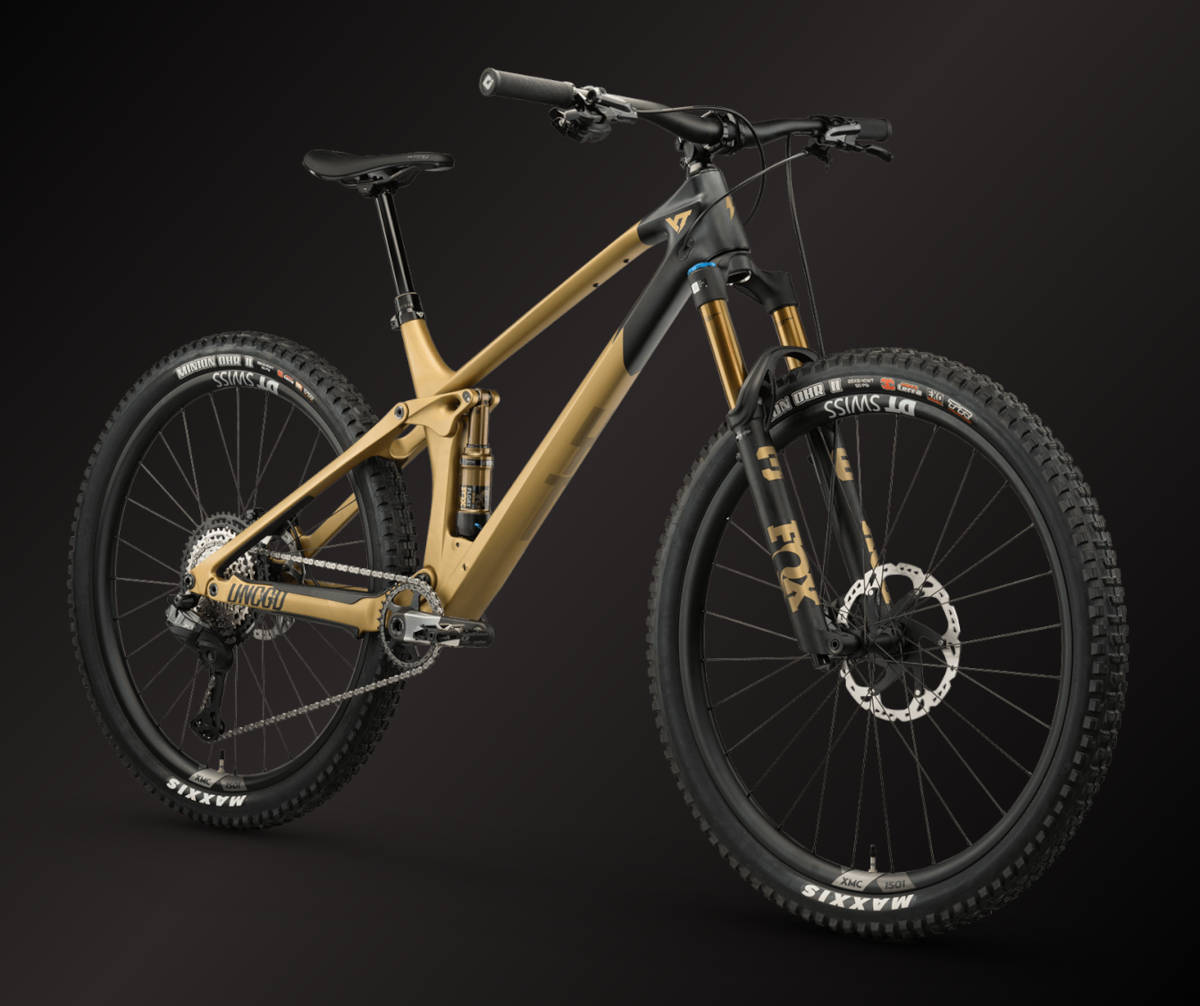 YT IZZO CORE 4. Image: YT Industries
The distinction matters beyond corporate terminology. When a company is rescued, its name and product designs may survive while its original engineering team, manufacturing arrangements, dealer relationships, or warranty obligations change. Rebuilding a recognizable brand can be easier than restoring the industrial organization that once supported it.
The loss of specialized manufacturers may also reduce the diversity of mountain bike design. Companies such as Guerrilla Gravity, Pole, and Niner helped develop or popularize approaches that differed from those favored by larger manufacturers. Their disappearance or suspension can narrow the options available to riders seeking particular frame designs, suspension concepts, or manufacturing methods.
Electric bike bankruptcies and the collapse of major cycling businesses
Electric bike companies have faced a different set of financial pressures. Many attracted significant investment during the pandemic as demand for urban transportation alternatives accelerated. But rapid expansion also created expensive obligations involving batteries, electronics, proprietary software, distribution, and customer support.
For American customers, the failures of Rad Power Bikes, Fuell, and Electric Bicycle Company are especially relevant. Their financial problems affected domestic businesses, employees, customers, and established sales channels.
The consequences of electric bike company bankruptcies in the United States can extend beyond the availability of replacement bicycles. Some e-bikes depend on proprietary displays, controllers, batteries, diagnostic systems, and mobile applications that may become difficult to maintain if the original manufacturer stops operating.
VanMoof (2023): Bankruptcy followed by a relaunchDutch manufacturer VanMoof declared bankruptcy in July 2023 after financial and operational problems overwhelmed its technology-heavy business model. The company had pursued highly integrated urban e-bikes, direct sales, and proprietary electronic systems. That approach created a distinctive product but also required substantial investment in repairs, logistics, and customer support. Lavoie, associated with McLaren Applied, subsequently acquired the brand and began rebuilding its operations. VanMoof introduced a new generation of electric bikes in 2026. The brand survived, although the original bankruptcy created significant uncertainty for existing owners.Fuell (2024): Chapter 7 liquidationFuell, the electric mobility company associated with American motorcycle engineer Erik Buell, developed electric bicycles and motorcycles with a strong technological focus. Financial difficulties eventually led to Chapter 7 bankruptcy liquidation in October 2024. Unlike a Chapter 11 restructuring, which may allow a business to continue operating while reorganizing its obligations, Chapter 7 generally involves liquidating assets. Portions of Fuell’s assets were auctioned in September 2025 to help address creditor claims. The original business did not achieve a comparable operational recovery.Electric Bicycle Company (2025): U.S. manufacturer enters liquidationElectric Bicycle Company, known for customizable electric bicycles and domestic manufacturing, filed for Chapter 7 bankruptcy in October 2025. Court filings reported approximately $6.1 million in liabilities against assets worth less than $1 million. The company had developed a business around configurable e-bikes and American production, but financial difficulties ultimately resulted in liquidation proceedings. Its facilities, equipment, and other assets became subject to sale. The case showed that a differentiated product and domestic manufacturing operation were not enough to protect a company from financial collapse.Podbike (2025): Norwegian mobility startup failsPodbike developed enclosed, electrically assisted pedal vehicles intended to offer an alternative to conventional bicycles and small urban vehicles. The Norwegian company filed for bankruptcy in May 2025 after encountering rising production costs, supply difficulties, and deteriorating economic conditions. Although its product occupied a niche beyond the traditional bicycle market, its failure reflected financial pressures also affecting more established electric mobility manufacturers.Rad Power Bikes (2025-2026): Bankruptcy and new ownershipSeattle-based Rad Power Bikes became one of the most recognizable names in the American electric bike market. The company filed for Chapter 11 bankruptcy protection in December 2025 following a prolonged financial decline. Its revenue fell from approximately $129.8 million in 2023 to $103.8 million in 2024, with additional weakness during 2025. Life Electric Vehicles subsequently acquired Rad’s assets, completing the transaction in early 2026. The new owner outlined plans to rebuild the business, preserve the brand, and restore commercial operations. Rad survived under new ownership, but the bankruptcy marked a major reversal for a company that had previously benefited from rapid e-bike market growth.Ampler Bikes (2026): Insolvency affects customer supportEstonian manufacturer Ampler entered insolvency in May 2026 after facing difficult market conditions, financial pressure, and the lasting impact of quality issues with earlier models. A dispute involving its Berlin retail premises also contributed to the company’s difficulties. Ampler had developed a reputation for minimalist urban e-bikes with integrated technology. Its insolvency disrupted customer support and warranty programs, illustrating the additional risks associated with bicycles that rely on specialized electronic systems. Existing bikes could remain usable, but access to manufacturer assistance became more uncertain.Frog Bikes (2026): Children’s bicycle brand acquiredBritish children’s bicycle manufacturer Frog Bikes entered administration in February 2026. The company had built a reputation for lightweight, ergonomically designed bicycles intended for younger riders. In April, Frasers Group acquired its brand, intellectual property, and remaining inventory, creating a possible path toward continued commercial activity. The acquisition preserved valuable business assets, but the survival of those assets should not be confused with the uninterrupted operation of the original company.Cowboy (2026): Connected e-bike brand announces recoveryBelgian connected e-bike manufacturer Cowboy experienced financial and operational difficulties that affected deliveries and replacement-parts availability. On November 2, 2026, the company announced a renewed commercial push, reporting that popular models were available for shipment and parts availability was improving. Cowboy also described efforts to reinforce its team and customer support. Its announcement signals a recovery attempt rather than a permanent closure. The brand remains a useful example of how closely the future of a connected electric bike can be tied to the company’s operational health.
The problems extend far beyond individual manufacturers. The insolvency of Accell Group, one of Europe’s largest bicycle businesses, has created a complicated restructuring involving multiple brands, manufacturing facilities, distributors, and national markets.
Accell’s portfolio included Ghost, Haibike, Winora, Lapierre, Raleigh, Batavus, Koga, Sparta, Babboe, and Carqon, along with the XLC components and accessories business. The company’s financial difficulties therefore affected a much broader network than any single bike manufacturer.
In 2022, Accell was acquired by an investor consortium led by U.S. private equity firm KKR in a transaction valued at approximately €1.56 billion. The deal occurred while the cycling industry was still influenced by unusually strong pandemic-era sales.
As demand normalized, excess inventory, discounting, and financial obligations placed increasing pressure on the business. In February 2026, major lenders took control of Accell through a restructuring agreement that included additional financing and debt reduction.
That arrangement failed to produce a lasting solution. On August 5, 2026, Accell announced that its Dutch entities had received a provisional suspension of payments and would enter the relevant insolvency proceedings. Its principal Dutch companies were subsequently declared bankrupt.
 Lapierre XR 10.9. Image: Lapierre Bikes
The Accell Group bankruptcy and its impact on bicycle brands has produced different outcomes across the portfolio. Some assets have been sold, other businesses remain in restructuring, and Ghost has announced that it will shut down.
Accell brands: Status as of November 3, 2026Ghost Bikes: Operations are being wound down after the company failed to secure a financially viable buyer. Remaining inventory is expected to be sold.Haibike and Winora: An asset purchase agreement was signed on October 29, 2026, with Bike Tree GmbH, associated with the Tri Star/DuTech group. The arrangement is intended to preserve part of the business and 87 jobs, although significant workforce reductions are involved. Final closing was expected in early November.Batavus, Koga, and Carqon: These brands were included in an acquisition led by Singapore-based Dutech in October 2026, alongside additional industrial and commercial assets.Babboe, Loekie, and XLC: Brand rights and other assets were included in the Dutech-related transaction. The precise scope of ongoing operations must be distinguished from the transfer of intellectual property and commercial rights.Lapierre: The French manufacturer remains involved in court-supervised restructuring as it seeks a viable financial solution.Raleigh: The historic British brand has been affected by insolvency proceedings and the reorganization of Accell’s United Kingdom operations. The condition of the original business does not establish that the Raleigh name has permanently disappeared.Sparta: The brand has been affected by Accell’s broader portfolio restructuring, and its future commercial role must be considered separately from the insolvency of the former parent company.
For American riders, Accell’s collapse may appear less immediate than the problems at Niner or Rad Power Bikes, but the broader implications are similar. When ownership changes, dealers and customers need to know whether warranties, proprietary parts, and authorized support networks will continue.
An asset purchase may preserve a brand without transferring every liability of the previous company. The outcome depends on the transaction, the governing law, and the obligations that the buyer expressly assumes.
The downturn has also reached companies outside bicycle manufacturing. Retailers, distributors, component specialists, and used-bike platforms have encountered the same combination of falling margins, inventory pressure, and financing difficulties.
Wiggle and Chain Reaction Cycles (2023-2024)The British online retail business entered administration in October 2023, placing two internationally recognized cycling retailers in crisis. Frasers Group subsequently acquired selected assets and brand rights, but the original business ceased to operate as an independent organization. The restructuring also affected related bicycle brands, including Vitus and Nukeproof, whose assets and commercial rights underwent separate sale and recovery processes.7Anna Group (2025)The Polish group associated with NS Bikes, Rondo, Crème Cycles, and Octane One filed for bankruptcy in August 2025. The company initially continued certain manufacturing, sales, and support activities while pursuing a financial solution. In August 2026, Rondo returned under new ownership. The case does not establish that every brand formerly associated with 7Anna permanently stopped operating.The Pro’s Closet (2024)American used-bike platform The Pro’s Closet announced the closure of its operations in 2024 after 18 years in business. The company had helped develop the market for inspected and certified pre-owned bicycles through a specialized online sales model. Its assets were subsequently acquired, and the business returned in early 2025 under a new structure. Its experience illustrates how the cycling downturn affected the resale market as well as manufacturers of new bicycles.Genuine Innovations (2025)American CO₂ inflation specialist Genuine Innovations was shut down by parent company Illinois Tool Works as part of a decision to concentrate resources elsewhere. The move represented a corporate discontinuation rather than a confirmed standalone bankruptcy of Genuine Innovations. It nonetheless removed an established specialist name from the cycling accessories market.Alpkit and Sonder Bikes (2026)British outdoor company Alpkit, owner of Sonder Bikes, entered administration in January 2026 after several years of difficult trading conditions. Its management cited rising costs, trade barriers, interest rates, and accumulated financial obligations. At the time, discussions were underway with prospective investors and business partners. Entering administration did not automatically mean that Sonder Bikes had permanently disappeared.Saddleback (2026)British distributor Saddleback ceased trading on May 29, 2026, and entered administration. The company represented major cycling brands, including Pivot, Castelli, Sportful, and Sidi. Its closure affected employees, commercial relationships, and customers with outstanding orders. The shutdown concerned the distributor, however, and did not mean that the international manufacturers whose products it handled had gone out of business.Rotor (2026): Spanish component manufacturer seeks financial stabilitySpanish component specialist Rotor faced serious financial challenges during 2026. Restructuring efforts became public in March, followed by reports in May of additional financing difficulties and attempts to attract investment. Known internationally for cranksets, oval chainrings, and power meters, Rotor is an established supplier to riders in multiple markets, including the United States. Its situation should be described as financial restructuring and an effort to secure continuity, not as a confirmed permanent closure.
Another significant example of industrial reorganization involves Cannondale. In June 2026, Pon.Bike announced plans to close Cannondale’s manufacturing facility in Almelo, the Netherlands, by the end of 2027 and transfer production to other European factories. The decision concerns manufacturing capacity and industrial organization. It does not mean Cannondale is going out of business, nor does it establish financial conditions comparable to Accell’s insolvency.
Why so many bicycle companies are failing—and what it means for American riders
The succession of bankruptcies, closures, and suspended operations cannot be explained by a single cause. Each company has faced different circumstances, but several problems have appeared repeatedly since the end of the pandemic bicycle boom.
Between 2020 and 2022, global demand for bicycles increased dramatically. Restrictions on travel, growing interest in outdoor recreation, and changes in urban transportation encouraged purchases at levels that proved difficult to sustain. Manufacturers expanded orders, increased production commitments, and built inventories based on expectations that did not materialize.
Supply-chain disruptions made the situation worse. Some components were subject to exceptionally long delivery times, prompting manufacturers to place orders far in advance. In some cases, products ordered during the height of supply shortages arrived after consumer demand had already begun to slow.
That timing created a difficult inventory problem. Companies needed to sell bicycles and components they had already paid for while preparing new products for a market that no longer supported the same sales volumes.
Discounting became widespread. Dealers and manufacturers reduced prices to clear inventory, putting pressure on profit margins and making it harder to sell newly released bicycles at their intended prices.
The consequences were particularly severe for smaller manufacturers with limited financial reserves. A business can have technically competitive products, loyal customers, and substantial inventory while still being unable to generate enough cash to cover payroll, suppliers, rent, financing, and future development.
Older models also competed directly with new product launches. When discounted bicycles from previous seasons remained available, customers had less incentive to pay full retail prices for the latest versions. Manufacturers were therefore caught between the need to clear existing inventory and the expense of continuing product development.
Higher financing costs, inflation, logistics expenses, and international trade difficulties added further pressure. Companies dependent on outside investment or additional borrowing became particularly vulnerable as financing conditions tightened and investors demanded clearer paths toward profitability.
The experiences of Accell, Revel, and YT demonstrate different ways in which financing difficulties can threaten established bicycle businesses. That does not mean private equity or outside investment caused every failure. Some companies faced more immediate problems involving manufacturing, operating expenses, product quality, or the inability to sell existing inventory.
 Bicycles and shipping boxes accumulated inside a distribution warehouse during an industry inventory surplus. Image: TodoMountainBike
The downturn has also challenged business models built around rapid growth. Direct-to-consumer sales may eliminate certain distribution expenses, but they require manufacturers to manage marketing, shipping, customer service, returns, warranty claims, and replacement-parts inventory.
For electric bike companies, the financial commitments can be even greater. Proprietary electronics and integrated software may help differentiate a product, but they also create long-term maintenance obligations. A company that develops its own battery management systems, controllers, or connected services must maintain the infrastructure needed to support those products.
That becomes a serious concern if the original manufacturer stops operating.
The warranty and replacement parts risks when bike brands shut down are among the most immediate consequences for riders. A company’s disappearance can create uncertainty about who is responsible for manufacturing defects, whether proprietary components will remain available, and whether authorized service centers can continue providing support.
On conventional bicycles, many components can be replaced with compatible products from other manufacturers. Drivetrains, brakes, tires, wheels, and certain suspension components often have alternatives, provided the specifications match.
The situation becomes more complicated when a repair requires frame-specific parts. Suspension linkages, proprietary pivot hardware, derailleur hangers, frame inserts, integrated cable-routing components, or unique mounting hardware may be difficult to obtain after production ends.
A mountain bike can remain mechanically sound in nearly every respect and still become difficult to repair because one small proprietary part is unavailable.
Electric bikes introduce additional complications. Batteries, controllers, displays, wiring harnesses, anti-theft systems, and mobile applications may depend on technology controlled by the manufacturer. If that manufacturer disappears, access to replacement electronics, diagnostic software, or firmware updates can become uncertain.
An acquiring company does not automatically assume every warranty obligation of a bankrupt manufacturer. The answer depends on the type of acquisition, the governing law, the warranty terms, and the liabilities expressly transferred to the new business.
In the United States, consumer warranty protections involve both federal and state law. The Magnuson-Moss Warranty Act regulates certain written consumer-product warranties, while state laws may provide additional protections, including implied warranties in particular circumstances.
However, the existence of a warranty does not guarantee that a defunct company will have the resources to honor it. Customers may face considerable difficulties obtaining service when the original warrantor is no longer operating.
For riders who purchased directly from a manufacturer, the risks may be different from those associated with a purchase through an independent dealer. The identity of the seller, the payment method, and the applicable state law can all affect the available options.
Credit card protections may provide another avenue when a purchased bicycle is never delivered or certain billing disputes arise. The circumstances and deadlines matter, so buyers should contact their card issuer promptly rather than assuming that bankruptcy automatically guarantees a refund.
Before purchasing a bicycle from a brand experiencing financial difficulties, American consumers should consider several practical checks:
Identify the legal company selling the bicycle and confirm that it is still operating.Review the written warranty and determine which business is responsible for honoring it.Ask whether proprietary frame components, suspension linkages, and replacement hardware are available.For electric bikes, verify continued support for batteries, controllers, displays, diagnostic tools, and software.Check whether authorized dealers or independent repair shops can service the bicycle.When buying discounted liquidation inventory, confirm the seller’s return policy and the status of manufacturer warranty coverage.Keep copies of purchase receipts, warranty documents, order confirmations, and communications with the seller.
The financial difficulties of manufacturers can also influence retail pricing. Liquidation sales and inventory reductions have created opportunities to purchase bicycles at substantial discounts. Those prices, however, do not necessarily represent a sustainable new market level.
Some discounts reflect an urgent need to generate cash or recover part of the value of existing inventory. A heavily discounted bike may be an attractive purchase, but the savings should be considered alongside the availability of long-term support.
Independent bike shops face their own challenges when manufacturers disappear. A dealer may hold inventory from a brand that has suspended operations, lose access to replacement parts, or encounter difficulties processing warranty claims.
Uncertainty can also influence future ordering decisions. Shops may become more cautious about committing to brands whose financial situation, distribution arrangements, or technical support networks remain unclear.
For customers, the local dealer’s ability to provide repairs and source compatible components can become especially valuable. A bicycle built primarily around widely available components may be easier to maintain than one relying extensively on manufacturer-specific systems.
This does not mean proprietary technology is inherently undesirable. Integrated frame designs, specialized suspension systems, and connected electronics can provide genuine performance or usability benefits. The concern is whether the manufacturer can continue supporting those systems throughout the product’s useful life.
The disappearance of smaller companies can also affect innovation. Boutique manufacturers frequently experiment with unusual geometry, manufacturing processes, suspension layouts, and materials that larger businesses may be reluctant to adopt immediately.
Guerrilla Gravity, Pole, and Niner each contributed distinctive ideas to the mountain bike market. Their closure or suspension does not eliminate those technologies, but it reduces the number of independent businesses actively developing alternatives.
At the same time, the downturn has created opportunities for founders and investors to recover established brands. Kona, Revel, Rocky Mountain, and YT have demonstrated that a company’s name, products, and engineering knowledge can retain commercial value even after its original business structure becomes unsustainable.
Those recoveries do not necessarily mean that the revived companies return with the same workforce, production capacity, or product catalogs. A successful relaunch may require lower operating expenses, fewer models, revised distribution arrangements, and more conservative production targets.
It is equally important to distinguish the financial difficulties of individual manufacturers from the overall health of cycling. A succession of bankruptcies does not mean Americans have stopped buying or riding bicycles.
Demand continues, but commercial conditions have changed. Different segments of the market have experienced different levels of pressure, and the outcome for one manufacturer cannot automatically be applied to the entire industry.
The bicycle brands that have closed since 2023 represent only the most visible part of a broader restructuring. Other companies have reduced workforces, transferred manufacturing, delayed product launches, or abandoned individual categories without entering formal bankruptcy proceedings.
Those changes also reshape the industry, even when they attract less attention than the closure of a well-known brand.
 A bicycle mechanic examines a rear suspension linkage while comparing replacement components in a workshop. Image: TodoMountainBike
Ghost Bikes is particularly significant because of its history and the timing of its closure. More than three years after the first major bankruptcies that followed the pandemic sales boom, a manufacturer with decades of experience has still been unable to find a financially viable path forward.
Accell’s collapse demonstrates that the restructuring also affects large international companies. The sale of individual brands and assets is changing ownership, manufacturing arrangements, and distribution relationships across Europe, with potential consequences for international markets.
For American riders, the industry’s transformation is about more than the number of brands available or the discounts offered at bike shops. The financial stability of a manufacturer, the availability of replacement components, and the continuity of technical support have become increasingly important considerations, especially as bicycles incorporate more specialized and electronically integrated systems.
The closure of Ghost, the suspension of GT and Niner, the recoveries of Kona, Revel, Rocky Mountain, and YT, and the fragmentation of Accell show that the industry has not completed its adjustment.
Some historic manufacturers have disappeared. Others are operating under new ownership, while several remain in search of viable financial solutions.
The outcome will depend on demand, inventory management, financing conditions, and the ability of individual businesses to operate profitably in a market that looks very different from the one they experienced during the pandemic.
For the riders who already own their products, the most important question is often much simpler: whether the company, its successor, or the aftermarket will still be able to provide the parts and support needed to keep those bicycles running for years to come.