
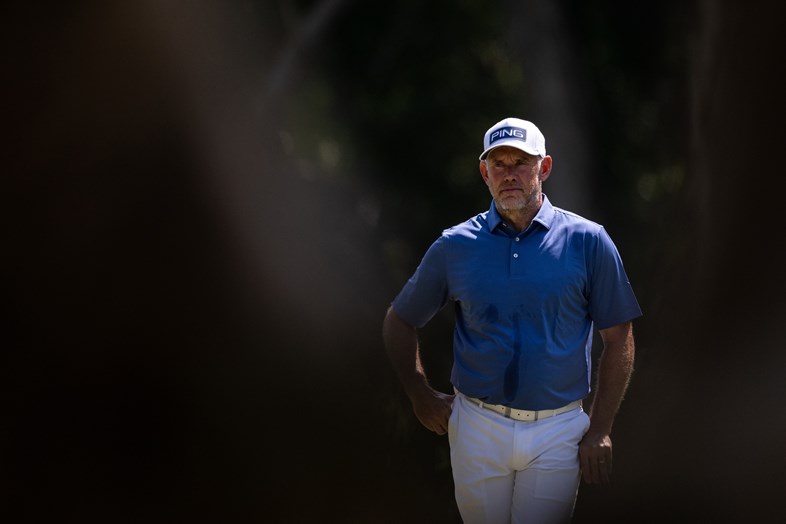
Lee Westwood has no regrets about taking LIV Golf’s money. But with his own future undecided, the former World No.1 believes the original operation wasted too much and still needs convincing about its proposed replacement.
Lee Westwood has defended his decision to join LIV Golf, saying the financial package would have been foolish to turn down, while blaming the way the business was run for the failure of its original model.
The former World No.1 has been with LIV since its first event at Centurion in June 2022. He still sees a future for the team circuit, but has signed nothing for next season.
At 53, he is weighing up rejoining the DP World Tour alongside senior golf, and how much time he wants to commit to either.
Speaking on The Chipping Forecast, Westwood discussed the money that persuaded him to leave, the loneliness of tour life and the shortcomings of the business he helped launch.
The podcast pairs broadcasters Andrew Cotter and Iain Carter with DP World Tour pro Eddie Pepperell, whose criticism of LIV has led to several public disagreements with his fellow Englishman.
This time, though, they had rather more room for debate than X’s character count. Here are the highlights of the hour-long conversation…
Why Westwood took the money
Westwood was among LIV’s original recruits, joining a field that included Phil Mickelson, Dustin Johnson, Sergio Garcia and Ian Poulter a stone’s throw from St Albans back in 2022.
He had turned 49 just a few weeks earlier. Whatever else the move represented, it offered a player approaching senior eligibility an extraordinary financial opportunity late in an already hugely successful career.
“A massive financial package was put in front of me – I would have been stupid,” he said of turning it down. “[But] that wasn’t solely the reason that I signed up with LIV.”
“I have no problem saying part of it was financial. I’ve made a fortune over the last four and a half years.”
The four-time European Tour Golfer of the Year says the money has left him in a position where he does not have to play again. Golf can now fit around his life, with considerably less pressure to keep earning from it.
Westwood was still competitive before joining LIV. He won his third European Tour season-long title at 47 in 2020, when victory in Abu Dhabi took him to 25 tour wins across four decades. In March 2021, he was runner-up to Bryson DeChambeau at Bay Hill and Justin Thomas at The Players, losing both by a single shot.
Westwood recalled how a subsequent break sent him sliding down the FedEx Cup standings. For a player living in Britain, keeping up meant either another lengthy stay in America or more transatlantic flights.
LIV offered fewer events and familiar faces, as well as the money. That combination suited him.
“I found it very lonely out on the European Tour and the PGA Tour,” he said, adding that he has “not a lot in common with a lot of the guys”.
He described taking people he knew away with him because the weeks and evenings otherwise felt so long. In one recollection, a younger playing partner recognized a song Westwood was humming as a remix rather than the original.
“I suddenly realized that they weren’t born in the 90s,” he said.
Too much waste at LIV
LIV’s original operation is now being wound down as the organization attempts to establish a new business under different ownership.
Saudi Arabia’s Public Investment Fund decided in April to end further equity funding, having bankrolled the league’s rise to the tune of billions. LIV subsequently entered a Chapter 11 restructuring process in the United States on September 8 and announced an agreement with BC Partners Credit for a proposed recapitalization.
Under the proposal, players would become majority owners of the reorganized business. LIV have said they intend to begin the next phase in early 2027, subject to court and stakeholder approval.
A host of players have already decided their futures lie elsewhere – Jon Rahm the biggest of those. Westwood’s Majesticks co-captain Ian Poulter is another, along with the likes of Garcia, Tyrrell Hatton, Tom McKibbin, and Louis Oosthuizen. Westwood, meanwhile, is still waiting to be persuaded by what comes next.
“I think it was the running of it more than anything,” he told The Chipping Forecast when asked why LIV had failed.
“I think the way the business was structured, there was too much waste, really. I think there is a business there.”
He pointed to Australia and South Africa as examples of an appetite for the product, arguing that the more relaxed atmosphere, concerts and activities for children had helped attract families and younger spectators.
Westwood believes those tournaments showed a market for a different kind of golf event, and sees scope for a revised operation to make it work.
“I think if LIV 2.0 gets off the ground, it will be a successful business,” he said. “And I think they’ll still have great tournaments like that, which kind of takes me back to the very start of it. Surely with a 52-week year, there was room in the calendar for 14 events.
“But how much was the discussion had [to make it work with the other tours]? You know, it felt like when LIV came on the scene, the door was pretty much slammed shut straight away.”
Westwood said he got the feeling of “an us and them” and doesn’t believe there were any serious conversations between the various tours and the authorities in the game about how they could all operate cohesively.
LIV have outlined plans for larger fields, a cut and additional qualification routes as part of their proposed next phase, but final plans remain to be confirmed.
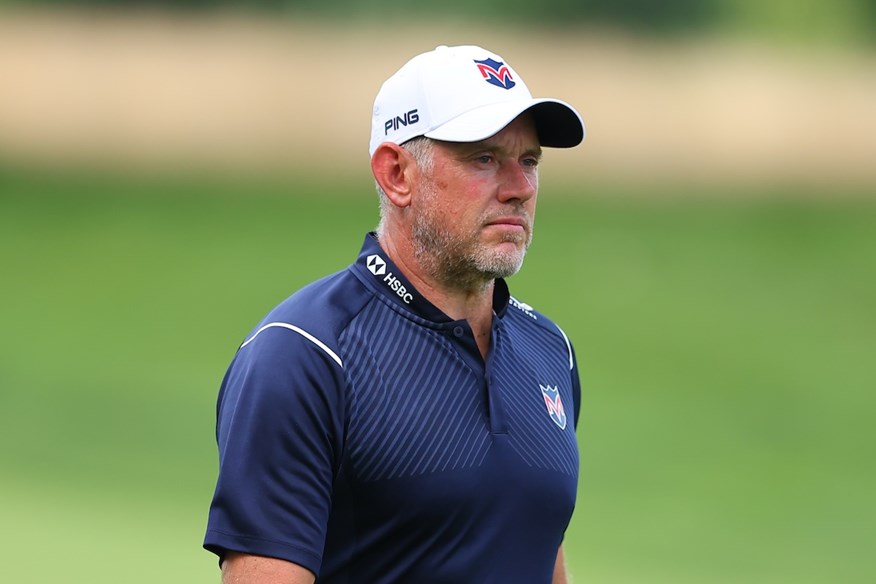 Lee Westwood told The Chipping Forecast that his future is undecided. (Getty Images)A global player with concerns about Europe’s future
Westwood’s argument for LIV also reflects the career he had before it existed.
The Worksop golfer won in Sweden and Japan in 1996, and Malaysia, Spain and Australia the following year, beating Greg Norman in a playoff at the Australian Open. To date, no golfer has won in more countries than him.
His record gives some substance to his frustration with a game he believes has become too focused on the United States. He was prepared to travel to compete around the world long before doing so so became part of LIV’s sales pitch.
On the podcast, Westwood recalled a meeting with then European Tour chief executive Keith Pelley and PGA Tour commissioner Jay Monahan around the time of his 2021 Players Championship appearance.
“I remember Keith saying to me, ‘It’s my goal, it’s my dream to have the European Tour feed into the PGA Tour.’ At that moment, I just got a shiver down my spine, and thought that was just not for me. I didn’t feel like that was the way that the person, the CEO of the European Tour, should be talking. It was almost like he’d given in.”
It is Westwood’s account of a private conversation, but the broader disagreement is familiar. He sees a danger in Europe’s best players being drawn away from the tour that developed them. The tour’s leadership have presented closer ties with America as a way to strengthen its finances and improve opportunities for members.
The alliance was expanded in June 2022 through a partnership running to 2035. It included increased PGA Tour investment and a route to PGA Tour cards for the leading 10 eligible players on the season-ending DP World Tour rankings.
Westwood acknowledged that Pelley had faced a difficult position, particularly after the disruption caused by the Covid pandemic, but he remains unconvinced about the longer-term consequences for European golf.
“It’ll be interesting to see what happens at the end of 2027 with future funding from the PGA Tour, what they will ask of the European Tour, and what assets they will want in return for dollars,” he added.
Why ‘growing the game’ still matters to him
Westwood clearly resents the suggestion that players’ work in that area began and ended with an explanation for taking Saudi money. He pointed to his own academies, international playing career, and involvement with junior golf, along with Poulter’s charitable work.
Their Majesticks team’s Little Sticks project takes golf into schools as part of PE lessons, including those where children have limited access to the sport. It has reached more than 50,000 children in 300 schools. Westwood revealed that he, Poulter, and Majesticks executive James Dunkley intend to help fund it despite the loss of the previous backing for “as long as we can afford to, certainly next year”.
“I’ve been playing the game of golf for 33 years. And I have been growing the game for 30 odd years. I’ve played all around the world, which I consider is growing the game. When I’ve been world number one, I’ve gone to other places around the world. So that insinuation that people weren’t growing the game on LIV – a lot of us have been growing the game for years.”
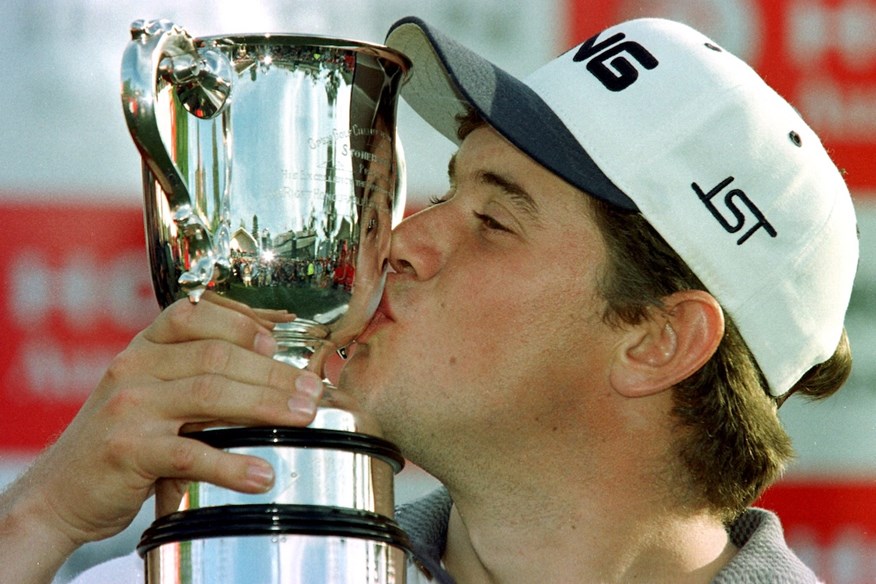 Lee Westwood beat Greg Norman, who would later be the first commissioner of LIV Golf, in a playoff to win the 1997 Australian Open. (Getty Images) ‘I am comfortable in my own skin’
Westwood remains comfortable with his move to LIV, despite the criticism it has brought. He does, however, acknowledge that some of his public comments could have been better phrased.
“I don’t have any regrets about what I said. I probably could have phrased them slightly different,” he told Cotter, Carter and Pepperell.
When the word “pariah” came up, Westwood suggested the reaction to golf’s split had been excessive.
“It’s just a game. Everybody got way too emotional and wound up about it. I am comfortable in my own skin. I made all the decisions that were right for Lee Westwood. And when you’re making decisions in life, you got to make the right decisions for you.”
For Westwood, that also meant considering the people closest to him. He said there were only a small number of people whose opinions he would take seriously.
“I think people listen to too many people that don’t mean anything to them.”
Nothing signed for next season
Despite defending his original decision and the possibilities for LIV’s future, Westwood made no commitment to being part of the next version.
“I’ve seen everybody’s statement and I just don’t get it. I won’t be making a statement. It’s nobody’s business, but mine, where I go and play golf,” he said. “And I don’t feel like I’ve got to put a press release out [for] where I go and work.”
“I currently am unemployed. I haven’t signed up to anything anywhere. There’s nothing been presented to me that was agreeable for LIV 2.0. There’s still a lot of things on that that would need fine-tuning.”
Rejoining the DP World Tour is one possibility, although Westwood said he had not yet had substantive discussions with the tour about membership. He resigned in May 2023, alongside Poulter, Garcia and Richard Bland, after an arbitration panel upheld the tour’s right to sanction members for playing conflicting events without permission.
He has already made a playing return, appearing by invitation at October’s Dunhill Links Championship. A place in an individual field and restored tour membership are separate matters, however. It is the latter he is now considering for next season.
The DP World Tour’s position has also hardened. Chief executive Guy Kinnings said last month that players must choose, with those signing for LIV in 2027 set to be refused membership. Any decision by Westwood to rejoin would have to take that into account.
Westwood said rejoining would involve serving a 10-tournament suspension. On his current understanding of the timetable, he suggested Turkey in May could be a possible starting point if he chose that option.
Senior events are also under consideration. A rather different appointment is already appealing: playing the Sunningdale Foursomes for the first time with his son, Sam.
Having previously been been attracted by LIV’s shorter schedule, Westwood is now questioning the requirement to play on fixed weeks. He wants room for holidays and the people he misses when he is away. He would also quite like to go to the Cheltenham horse racing festival.
“At the age of 53, do I want to be doing that? I’m not sure I want to,” he said of committing to a prescribed schedule. “There’s a tournament the week against Cheltenham. I want to go to Cheltenham, right?”
He concluded: “I’m enjoying not having to make decisions at the moment.”
You can listen to the full conversation between Lee Westwood, Eddie Pepperell, Andrew Cotter and Iain Carter on The Chipping Forecast.