
What This Story Is About
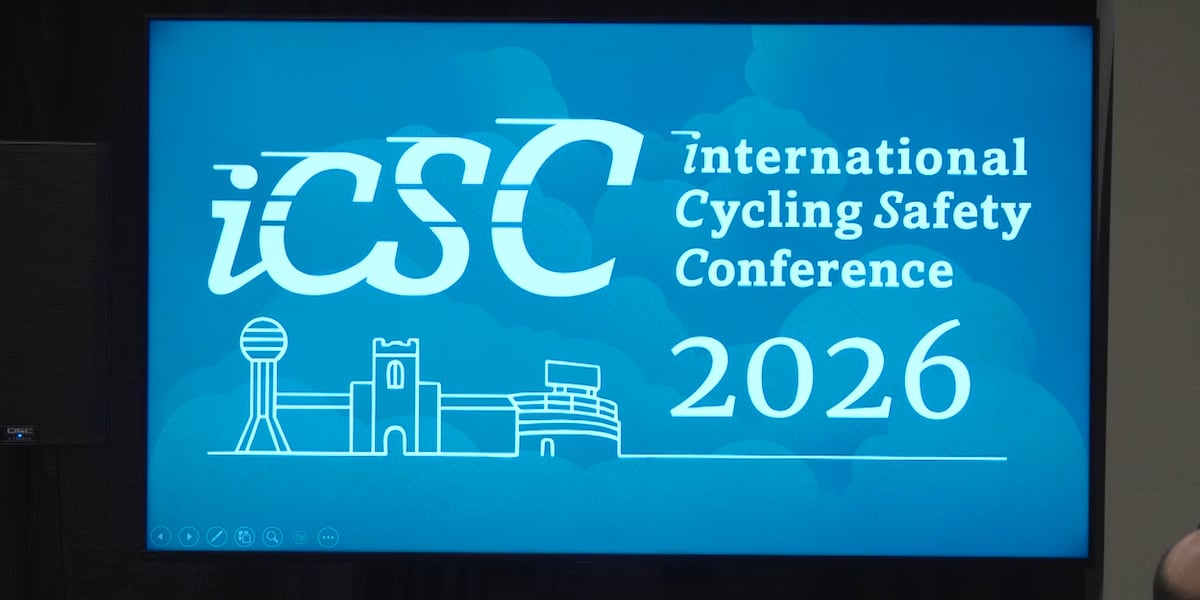
Knoxville is hosting the 14th International Cycling Safety Conference, welcoming global safety researchers, engineers and advocates to discuss bike safety and infrastructure.
Why It Matters
The conference is rarely hosted outside of Europe and highlights how grassroots recreation can drive safer streets for both athletes and daily bike commuters.
What Happens Next
Attendees will take research and real-world urban trail models back to their respective cities and organizations to improve street safety.
For Context
This marks only the second time the conference has been held in the U.S., highlighting local assets like the Urban Wilderness and Gay Street Bridge.
KNOXVILLE, Tenn. (WVLT) – Knoxville welcomed transportation engineers, safety researchers and cycling advocates from around the world this week for the 14th International Cycling Safety Conference.
The event, which travels globally to share research and advocate for safer streets, is traditionally held in European cycling hubs like Oslo and Rotterdam. This year marks only the second time the conference has been held in the United States, following a previous gathering in Davis, California.
This year’s central theme focuses on how recreational cycling can catalyze everyday, commuter-safe cycling infrastructure, a movement organizers said has defined Knoxville’s own growth.
Turning recreation into transportation
Conference organizer Aaron Fellhoelter said Knoxville offers an honest, relatable look at how mid-sized American cities make progress on bike infrastructure.
“Not every city can be Amsterdam,” Fellhoelter said. “We’re really proud to showcase a lot of what Knoxville has to show, both the good and the bad. I think we’re representative of a lot of the U.S., where we’re making great strides towards greater cycling safety, but still have work to do.”
Fellhoelter pointed to grassroots efforts that transformed South Knoxville, starting when community members and the Appalachian Mountain Bike Club rallied to halt highway construction through the James White Parkway corridor. That preserved green space grew into the Urban Wilderness, a 50-plus-mile trail network.

Connecting downtown and North Knoxville to those recreational trails pushed the city to build safer connecting corridors, including greenways and the newly pedestrian- and bike-dedicated Gay Street Bridge.
“Knoxville is a really interesting place when it comes to cycling, cycling safety and cycling infrastructure,” Fellhoelter said. “And we’re just proud to have people from all over the world here.”
Global research meets boots-on-the-ground reality
The conference blends academic safety research with practical experiences from practitioners in the field. Attendees included local city planners, advocates from Two Bikes, and regional leaders such as Knoxville Urban Wilderness Coordinator Wes Sowder, Sean Green of the Atlanta BeltLine, and Jessica Parsons of Arkansas Moves.
Passion for the event spanned continents: one researcher flew in from Berlin and biked from New Jersey to Knoxville to attend. Attendees also participated in a group ride through downtown Knoxville, crossing the Gay Street Bridge into South Knoxville.
Fellhoelter said he hopes attendees take away how community enthusiasm for recreation can protect vulnerable commuters.
“The lesson that you can take from Knoxville is just the power that recreational cycling has had for the city,” Fellhoelter said. “It can filter throughout the entire system and create cycling infrastructure so that it not only works for the mountain bikers heading out to the Urban Wilderness, but also for people who maybe can’t afford a car and are using that to get to work.”
Copyright 2026 WVLT. All rights reserved.