
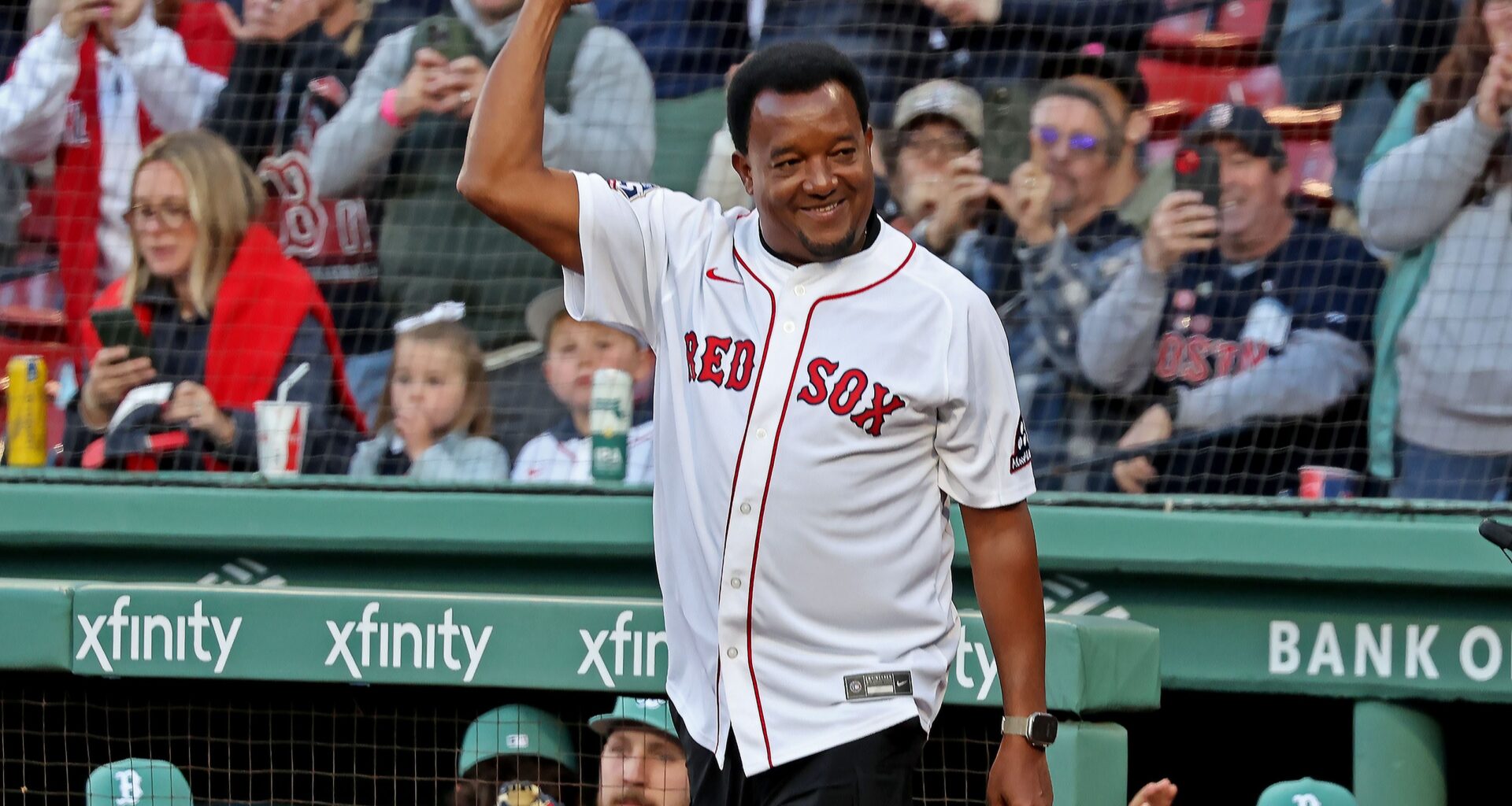
As he made the rounds at his foundation’s 10th annual gala on Saturday night, Pedro Martinez was all smiles. The Red Sox legend celebrated the Pedro Martinez Foundation’s work providing community programs focused on education, health and sports, as well as the foundation’s ongoing efforts to build a new school in the Dominican Republic.
But when asked for his thoughts about baseball’s looming lockout and the uncertainty facing the sport, Martinez’s expression grew serious.
“I’m pissed,” Martinez said. “Honestly speaking, I’m pissed.”
The Baseball Hall of Famer knows better than most how damaging a protracted work stoppage can be. The last time Major League Baseball missed games due to a labor dispute was during the 1994 player strike, which began when Martinez was in the midst of his second full season as a big leaguer. The strike wound up wiping out the remainder of the season, including the World Series, and left a lasting rift with fans that took years to repair.
Martinez said there’s no reason why that needs to happen again, and he implored the owners and players to do everything they can to work out a deal.
“I feel for the fans, and I know when it’s good, and it’s good, baseball is good right now,” Martinez said. “So stop the crap around and get something done and don’t lock out baseball for the fans.”
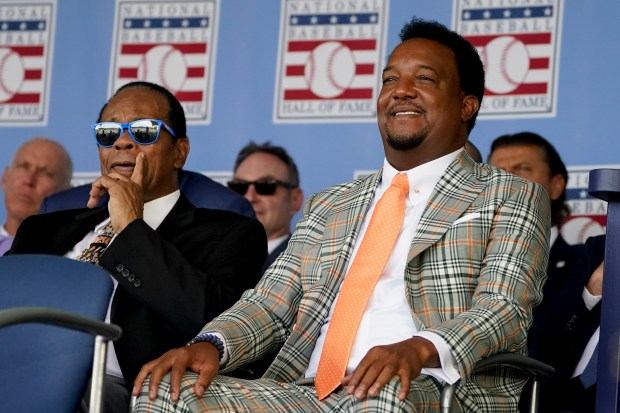 Hall of Fame pitcher Pedro Martinez watches as former Boston Red Sox teammate and inductee David Ortiz, speaks during the National Baseball Hall of Fame induction ceremony, Sunday, July 24, 2022, in Cooperstown, N.Y. (AP Photo/John Minchillo)
The ongoing dispute, like the 1994 one that preceded it, is largely centered on MLB’s desire to implement a salary cap. The owners claim a cap will help close the gap between the sport’s high-revenue and low-revenue clubs, while players are vehemently opposed because they believe a cap will suppress salaries and restrict what has traditionally been a free market.
Neither side is likely to budge until games and money are on the line, and to this point the players have remained steadfast in their opposition to a cap.
“I think they’re united,” said Corey Kluber, a two-time Cy Young Award winner and former Red Sox pitcher who was in attendance at the gala. “I think that’s obviously something that’s made our union unique from its beginning up to this point is the solidarity amongst players and fighting for what we believe in.”
Martinez’s personal experience with the 1994 was uniquely challenging. He said he missed out on salary arbitration by one day and wound up going three years without a raise early in his career.
“I hope the commissioner can see me and hear and the players association hears what I have to say. I might be insignificant, but I lived it before. I experienced that before,” Martinez said. “The commissioner wasn’t there when I lived the punishment that it took to play three years without one cent raised in my salary, and all I have to settle was for $20,000 that we could share out of the money that we had saved as the players association.
“I was one of the most punished players at that moment because I had talent, and I needed to wait until arbitration to make my money,” he continued. “So I hope they don’t mess it up and they don’t mistreat the fans.”
Difficult as the strike was, Martinez believes it was ultimately worth it.
“Back then there was a need for other things to change, and they changed for the better. This time there’s no excuse,” Martinez said. “On both sides, not the PA, not the owners, not baseball. The fans do not deserve to be mistreated.”
Martinez said he believes baseball has gotten a lot of things right recently. He’s a fan of the ABS challenge system and the efforts to speed up the game’s pace of play, and while there are other things he’d like to see improved, he feels as if the game is in a good place.
But all of that progress could be jeopardized if the sport is shut down, he said.
“Please, for the fans, both sides, figure it out, a good way to get it done, and do not lock out baseball,” Martinez said.