
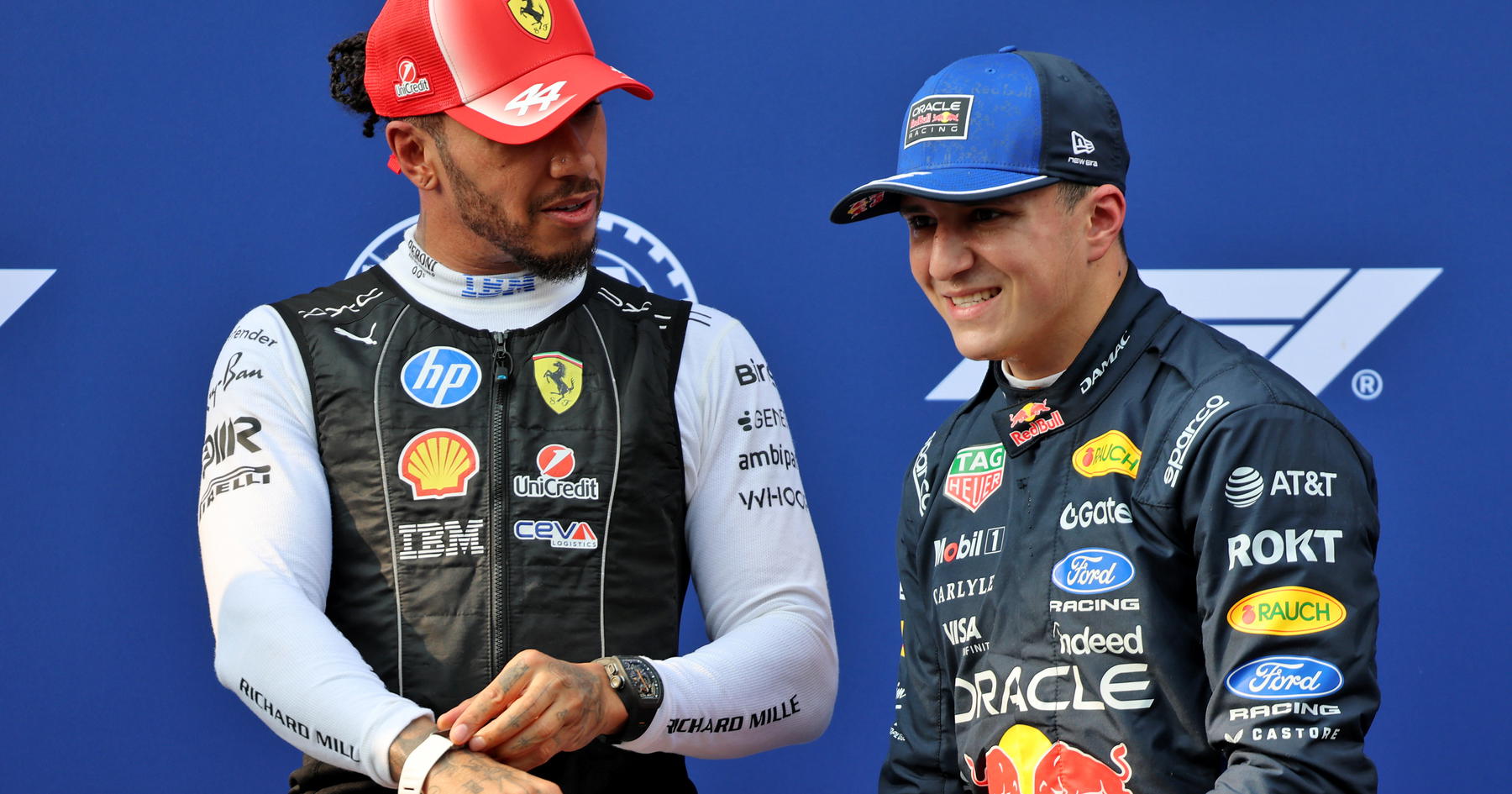
Isack Hadjar has pushed back against the idea that modern F1 machinery and simulator technology make it easier for rookies to adapt to the championship, arguing that raw talent has always shone through regardless of era.
The Red Bull driver, who completed his first full season in 2025, was asked about the theory that today’s generation of drivers benefits from tools unavailable to their predecessors.
Hadjar rejected the premise outright, pointing to Fernando Alonso and Lewis Hamilton as evidence that immediate adaptation has never been exclusive to the current crop.
Kimi Antonelli has been crowned F1 drivers’ champion in just his second F1 season, but that is a feat matched in the modern era by Hamilton, who won his maiden title with McLaren in 2008 after arriving the previous year.
Jacques Villeneuve pulled off the same trick even earlier, claiming the 1997 championship with Williams in only his second campaign.
Asked whether simulators and improved car characteristics have flattened the learning curve for newcomers, Hadjar was unequivocal.
“I believe that if you’re good, you’re good,” the Red Bull driver told media, including RacingNews365.
“You take Fernando [Alonso], Lewis [Hamilton]… Kimi [Antonelli] is a world champion, and you take the champions previously; they adapted quickly.”
[Article continues below]
Further evidence to support his claim
Hadjar leaned more heavily on Hamilton’s case, pointing to the Briton’s explosive rookie campaign at McLaren in 2007, when he fought team-mate Alonso and Ferrari’s Kimi Raikkonen for the title from his very first race.
“You saw what Lewis did in his rookie year,” Hadjar added. “I think if you have the ability, it doesn’t really matter the car.
“What we see compared to probably 20, 30 years ago is the number of drivers that adapt quickly.
“I think just the quality and the competitiveness you see in junior categories maybe is a bit higher, which is why the overall level maybe is a bit improved, but I believe back in the day if you were good, it showed straight away.”