
I was so busy writing this Morning File I forgot to mention our November subscription drive. If you subscribe, or encourage a friend to subscribe, that will help keep me busier. Please subscribe here. Thank you!
On Saturday, I was in downtown Halifax covering the Stop the AI Data Centre protest. I took a few videos and lots of photos, which I shared on the Facebook page for Nova Scotia Against Data Centres. The post is getting hundreds of likes, comments, and shares.
But not everyone was pleased with the protest or my posts. There were a few comments like this one: “Lmaoo the whole concept of protesting a data center while using one to complain about it makes all the sense in the world.”
Or this comment: “So incredibly DUMB, we need to grow with the world or be left behind and become even more vulnerable to our weak very weak economy.”
Rather than respond to those comments, I chose instead to write this Morning File to explain some of the technical details about AI data centres, such as how they differ from traditional data centres.
 Tech and health journalist Nick Tsergas.
But I needed help with that research, so I contacted Nick Tsergas, a Canadian researcher and public-interest technologist, who started Stop the Data Centre.
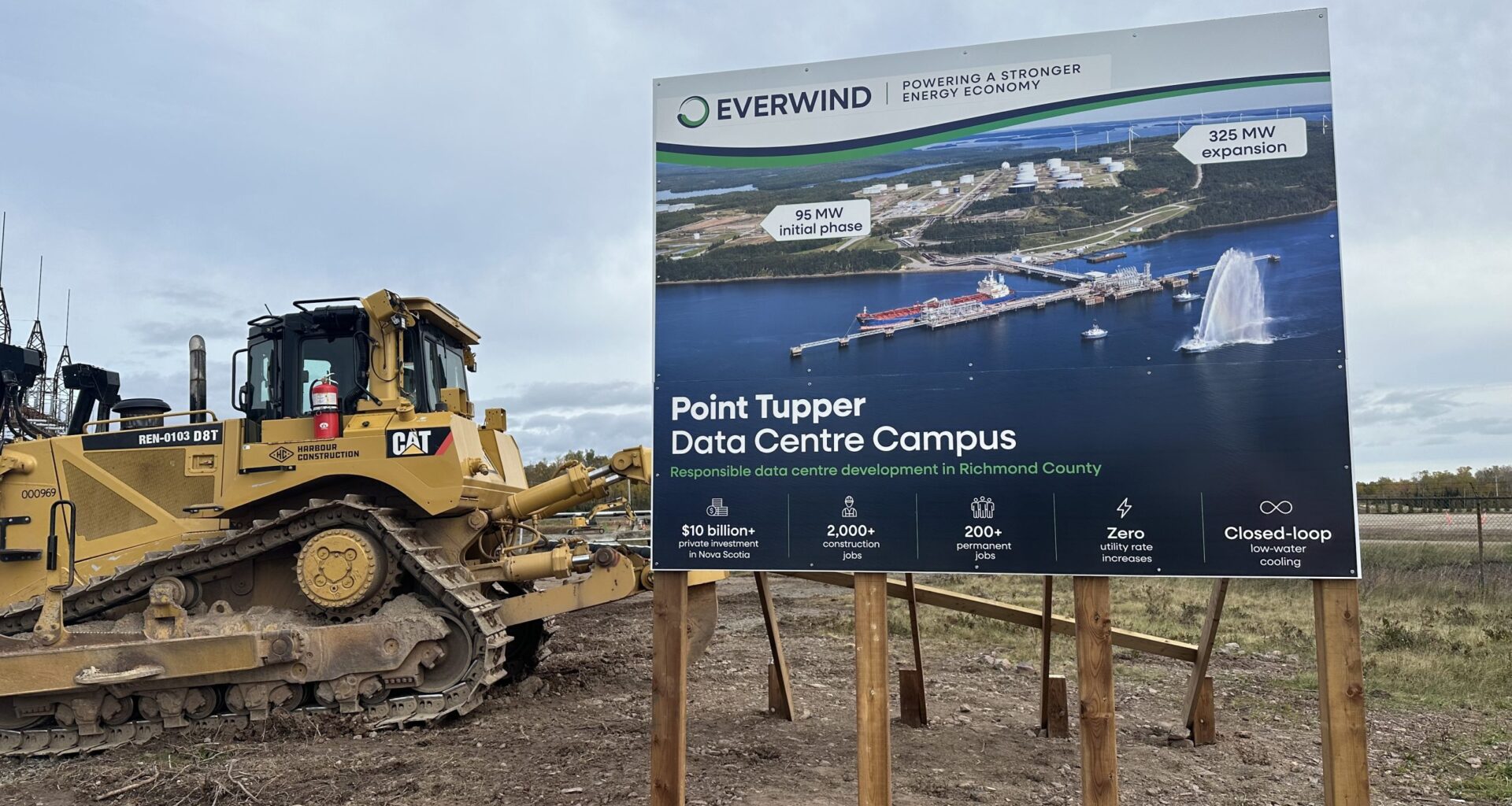
As the Stop the Data Centre website notes, there are campaigns in communities across Canada to stop AI data centres. One of those campaigns is in Port Hawkesbury, not far from Point Tupper where EverWind plans on building its AI data centre.
Tsergas was part of an online seminar I attended in July where speakers talked about the issue of AI data centres in Hamilton, Ont. I wrote about that seminar here.
Tsergas has spent the last year talking to citizens and city councillors about concerns about AI data centres. Tsergas, who works as a health and science journalist, started reading reports from around the world about AI data centres.
But for Tsergas, the AI data centre fight is closer to home. In fact, there’s an AI data centre just one kilometre from Tsergas’s home in Hamilton. He learned about that project through the work of investigative journalist Dan Shannon.
The company behind that AI data centre asked the City of Hamilton to double the size of its project from 200 megawatts to 400 megawatts.
“Nobody would have noticed if it weren’t for [Shannon] because he was keeping tabs on the IESO [Independent Electricity System Operator] request,” Tsergas said.
Tsergas said that’s when he realized that these AI data centre projects are flying under the radar and through huge regulatory gaps. He’d also learn there were two more AI data centres proposed for Hamilton.
In 2026, Tsergas, Shannon, and Bhavyatta (Bea) Bhardwaj co-founded the Canadian Civic Infrastructure Alliance (CCIA). As its website says here, the alliance is a non-profit that “works with residents, municipal officials, researchers, and policy experts to strengthen public capacity around major digital and energy infrastructure decisions.”
In July, Hamilton city council voted down a moratorium on AI data centres, however, Tsergas was getting calls from other cities on what they can do about AI data centres in their communities.
Tsergas has been researching the proposed AI data centre for Lorneville, N.B., which I reported on in November 2025. Tsergas said he sees many similarities between AI data centres in Hamilton and the one in Lorneville. That is, big AI data centre proposals for industrial cities that are being planned while the public finds out much later.
So, Tsergas knows about AI data centres. That’s why I wanted to talk with him.
Data centres vs. AI data centres
First, let’s talk about the difference between AI data centres and traditional data centres.
“As long as the internet has been a thing, we’ve been building data centres in Canada, and they haven’t caused much problems at all,” Tsergas said.
Anytime you make a Facebook post, do a Zoom call, send a video, or do your banking, all of that information goes through data centres.
“But these AI data centres are different, and they don’t do any of that stuff,” Tsergas said. “None of those critical, essential services that we have structured our lives around, none of those need an AI data centre.”
Traditional data centres run on CPUs or computer processing chips. Tsergas said CPUs take a fraction of the power needed to run a data centre. AI data centres run on GPUs or graphic processing units.
“[GPUs] take exponentially more power and therefore they produce exponentially more heat,” Tsergas said.
“You can have two data centres right next to each other, both of them in warehouse-sized buildings, and one is full of CPUs and the other is full of GPUs. The GPU one is going to take 10 or 100 times more power than the CPU one.”
Closed-loop cooling
Then there’s the water use. The more power a data centre is using, the more heat it’s creating, and the more cooling it needs.
That’s where we come to the closed-loop cooling systems. That’s the system that EverWind says it will use in its AI data centre. But what exactly are closed-loop systems?
“Closed-loop [cooling] is a bit of a scam, if I’m honest,” Tsergas said.
Some AI data centres use open-loop evaporative cooling systems. In a closed-loop system, the water is pushed through tubes, which are filled with a proprietary mix of refrigerants.
“Which the company will use to justify a NDA (non-disclosure agreement),” Tsergas said.
It takes a lot of energy and power to push that water through the closed-loop system. Tsergas gave an example of two AI data centres of the same size, but one has an open-loop evaporative system, while the other has a closed-loop system. The closed-loop system uses much more power.
“As we know, our local grids and our provincial grids do not have capacity for their hyperscale AI data centres,” Tsgeras said.
“Therefore it’s necessary, and incentivized, for the developers of AI data centre companies to build power plants on top of or attached to their data centres.”
Stop the Data Centres has a section on closed-loop cooling on its website here.
Tsergas told me about an AI data centre with a closed-loop system that’s been in operation in Cambridge, Ont. for a year now. That’s the Ascent TOR1 data centre co-owned by Related Digital. One of the main users of that AI data centre is Canadian AI company Cohere, which works with U.S. AI company Palantir.
In July, a coolant line broke at the Ascent TOR1 data centre, and leaked 5,000-litres of water and chemicals. Tsergas said people were asking about the source of the chemical spill, however, they weren’t getting any answers.
“We suspect it was probably because of the NDA around the chemicals used in the closed-loop system,” Tsergas said.
After doing some testing, Ontario’s minister of environment put out a statement saying there were no chemicals of concern in the spill.
Two weeks after that spill, Related Digital found what it called an “anaerobic bacterial bloom” in a retention pond on the AI data centre property. However, Related Digital said the bloom and the chemical spill two weeks prior were just “coincidental.”
Then on Wednesday, Joe McGinty at Waterloo Region Record reported this story about that chemical spill. And yes, the spill and that bloom are connected, and that the bloom travelled through the municipal storm drains and into local rivers.
Digital and data sovereignty
Now, let’s talk about digital sovereignty. That’s a term we’ve been hearing from Prime Minister Mark Carney a lot, including in his AI for All strategy.
Tsergas told me that building AI data centres does nothing to protect Canada against U.S.-driven shutdown of our essential digital services. He said the issue is not data centres, but the software.
“We could cover the Canadian landscape in data centres of all kinds and persuasions, but Trump could still say, ‘Hey, Google, shut the taps off. Don’t let Canada use any of your services,” Tsergas said.
“If Google complied, it would not matter that we had littered our landscape in data centres and given up so much as a result of that.”
Tsergas said for people who may not understand AI data centres and digital sovereignty, having the federal government say we need to build these AI data centres may offer some amount of comfort.
“When people are afraid, they tend not to think of things too critically,” Tsergas said. “I think governments have taken a lot of advantage of that with these digital sovereignty narratives.”
Then there’s the issue of data sovereignty, which is the control and ownership over our own valuable Canadian data.
“Right now, we do not have data sovereignty in Canada,” Tsergas said. “On the same token as the digital services side, building data centres, especially building AI data centres, all over Canada will do zilch to give us data sovereignty when we are living in a reality where the CLOUD Act exists.”
The U.S. CLOUD Act allows the U.S. to approach any company that has custodianship over data regardless of where in the world that data is stored and tell that company to hand over that data.
Tsergas sent me this briefing note for Minister of AI and Digital Innovation Evan Soloman that was prepared for Solomon’s meeting with Matt Millon, president of Microsoft Canada.
The briefing note basically says while our federal government knows about the U.S. CLOUD Act, Microsoft has assured the Canadian government it will fight any data requests under the CLOUD Act from the U.S.
So, why are municipalities buying into AI data centres? It all comes down to money. Municipalities don’t have money and AI data centres promise property tax revenue that municipalities desperately need. I am learning that in my interviews with mayors and wardens across Nova Scotia, including from Warden Lois Landry in Richmond County where EverWind’s AI data centre will be located.
I sent questions to Prime Minister Mark Carney’s office, as well as to Innovation, Science and Economic Development Canada (ISED) about AI data centres.
I didn’t get a response from the PMO, however, I got a statement attributed to Minister Soloman from Peter Wall, deputy chief of staff and director of communications with ISED. Here’s the statement:
Canada needs secure computing infrastructure at home, but how we build it matters. Our Responsible Data Centre Development Principles require projects to minimize water use and environmental impacts, protect electricity ratepayers, be transparent and deliver lasting benefits to host communities.
Digital sovereignty also means more than locating servers in Canada. It means ensuring Canadian laws apply and Canadians retain meaningful choice and control over sensitive data and critical infrastructure.
We recognize the concerns being raised by people in Nova Scotia about electricity costs, water use, environmental impacts and local benefits. These are understandable concerns, and it is important that communities have the information they need.
The Government of Canada has set clear expectations for responsible data centre development and will continue to use its programs and investments to advance environmental responsibility, transparency, Canadian sovereignty and lasting community benefits.
I have more from my conversation from Tsergas that I will share in another Morning File. In the meantime, visit Stop the Data Centre here for more debunking of the lies about AI data centres.
(To send or post this item, copy the website address at the top of this page.)
NOTICED
1. North End Complete Streets designs
 A woman rides her bike down Isleville Street in Halifax on Aug. 4, 2025. Two young children are in seats on the back of the bike but can’t be seen in this photo. Credit: Suzanne Rent
Halifax Regional Municipality (HRM) wants public feedback on the North End Complete Streets designs, which you can read about here.
The North End Complete Streets project is now in phase two. Here’s a bit about the project:
The North End Complete Streets Phase 2 is a project that will develop concept designs for approximately 4.8 kilometres of streets south of Bloomfield Street, including Maynard, Creighton, Northwood, Fuller, Charles, Nora Bernard, Cunard, and North streets.
Proposed designs explore ways to improve safety and accessibility for people of all ages and abilities, regardless of how they travel, while respecting the area’s history and identity.
Phase 1 of the project was completed in summer 2021 on Leaman, Drummond, and Isleville Streets, north of Duffus.
There are in-person public sessions in Halifax this weekend. Here are the details:
Nov. 14, noon – 2pm: Joseph Howe Elementary School: 2557 Maynard St.
Nov. 15, noon – 5pm: Agricola Street Holiday Market.
Rain date for Nov. 15: Nov. 22, noon – 5pm: Agricola Street Holiday Market.
There is also a survey at this link.
(Send this item: right click and copy this link)
2. Bird Country

On Thursday, I was speaking with Wesley Petite, who leads the bird tours at the Halifax Public Gardens from May to October each year. I went on one of Petite’s tours in July 2024, and wrote about what I learned in this Morning File.
Petite and I were, of course, talking about birds, and he mentioned a free screening of Bird Country will take place on Dec. 3 (read poster above). I have been looking forward to seeing this documentary, which was produced by Halifax-based Firefly Digital Media.
I was at The Guzzle, a popular birding spot on the Bay of Fundy, in the summer of 2025 when Firefly was filming for the documentary. So, I wanted to share this event with you all.
As well, Petite told me about HaliFlocks, a local group that gathers to encourage and support birders in Halifax.
I hope to see some of you out birding this winter. Also, the snow buntings are back!
(Send this item: right click and copy this link)
3. Canadians push back on cuts at Parks Canada
 A view of Halifax from George’s Island on Aug. 15, 2025. Credit: Suzanne Rent
The federal government’s plans to cut 500 jobs from Parks Canada is drawing quite a bit of criticism from Public Service Alliance of Canada’s (PSAC), as well as people from across the country.
As Maggie Kirk at CBC wrote in this story on Oct. 23, 3,000 Parks Canada staff were sent notices about “workforce adjustments.” From Kirk’s story:
The workforce restructuring comes after the federal government’s comprehensive expenditure review, which requires Parks Canada to absorb nearly $145 million in budget reductions over the next three years.
Some Parks Canada programs will be scaled back or discontinued, and the number of positions required to deliver certain programs and services will be reduced.
 Frozen Ocean Lake at Kejimkujik National Park, in October 2022. Credit: Philip Moscovitch
Meanwhile, on Nov. 4, the Canadian Parks and Wilderness Society (CPAWS) wrote this piece about how the cuts at Parks Canada don’t make sense. From the article:
Canada argues that we cannot afford to maintain our investments in the nature economy, even while we spend generously on nature harmful activities. For example, the Pacific Link Pipeline and the associated Roberts Bank Terminal upgrades are estimated to cost taxpayers in excess of $100 billion dollars, yet they exacerbate climate risks and threaten the survival of the Southern Resident Killer Whale population. The federal government says nature and the environment are important, but with each announcement it is becoming clearer that the loss of Canada’s natural value is a price it is willing to pay.
Now, there’s a petition circulating to stop the workforce adjustment at Parks Canada. That petition, which was started by Michael Pealow from Haines Junction, Yukon is here.
Pealow writes that Canada’s national parks and historic sites mean big bucks for the country and the communities where the parks and sites are located.
“From April 1, 2025 to March 31, 2026, visitors spent $6.5 billion in communities near national parks and historic sites with net contribution to Canada of $5.9 billion in GDP, $3.4 billion in labour income, $839 million in taxes for all levels of government, and 58,736 FTE jobs,” Pealow wrote in the petition.
But there’s more. Pealow writes:
Parks Canada’s “workforce adjustments” will severely curtail or terminate many services, reducing the quality of visitor experiences and risking the safety of visitors and wildlife;
Parks Canada’s “workforce adjustments” undermines Canada’s obligations to First Nations and Inuit under land claims and cooperative management agreements, and could result in legal challenges under Section 35 of the Constitution Act; and
The Government of Canada’s commitment to “protect biodiversity through the conservation of 30% of lands by 2030 and to contribute to this goal by establishing ten new national parks” will be undermined by Parks Canada’s “workforce adjustments”.
 A tour guide at Citadel Hill explaining the noon gun firing on Sept. 30, 2025. Credit: Suzanne Rent
Like many of you, I’ve taken advantage of the Canada Strong Pass, which offered free admission to Parks Canada sites. While that pass certainly brought in more visitors, without the staff, the experiences for visitors wouldn’t be the same, at all.
The workforce at Parks Canada keep the sites safe, clean, and protect the biodiversity, culture, and history in our parks. Plus, the interpreters do such amazing work in telling the stories of our national parks. No AI can accomplish anything close, ever.
(Send this item: right click and copy this link)
4. HRM Roundtable
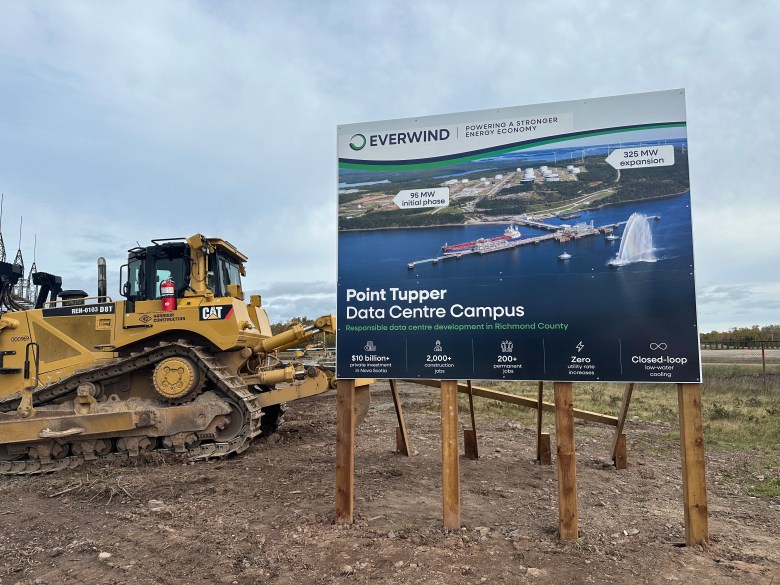 A sign at the Point Tupper data centre site on Oct. 16, 2026. Credit: Joan Baxter
On Nov. 6, Colin Chisholm with allNovaScotia, Chris Green with Atlantic News in Halifax, and I sat down for our HRM Roundtable to talk all about AI data centres. You you listen to that episode here.
(Send this item: right click and copy this link)
THE LATEST FROM THE HALIFAX EXAMINER:
1. Province House roundup: Energy, health care transfers, deer meat, still no answers about EverWind’s diesel generators
 Rebecca Tepper, Secretary of the Executive Office of Energy and Environmental Affairs for Massachusetts (left) and Nova Scotia Premier Tim Houston at the 34th annual U.S.-Canada Executive Energy conference in Boston, on Nov. 12, 2026. Credit: Facebook
Jennifer Henderson has a roundup from Province House, as well as Premier Tim Houston Premier Tim Houston attending the 34th annual U.S.-Canada Executive Energy conference in Boston. Henderson reports:
During yesterday ‘s conference, the Premier’s Office issued a news release to announce the province and State of Massachusetts are launching a joint Request for Information. The news release states:
The request for information invites input from offshore wind and transmission developers, utilities, Indigenous communities, fisheries representatives, labour organizations, researchers, supply chain companies and environmental groups. Feedback will help both governments better understand market interest, transmission options, workforce opportunities and the infrastructure needed to support future development.
Another MOU was signed between Nova Scotia and Vermont and Hydro-Québec has requested more information.
A key component of the $45-$60 billion offshore wind project is finding markets that will bolster the business case for building a transmission network to deliver offshore renewable energy to potential customers in Québec and New England.
Nova Scotia would consume only a fraction of the offshore output, leaving plenty for export if the resource gets developed. The joint request from Massachusetts and Nova Scotia is open until December 31.
Henderson also writes about health care worries, deer meat for food banks, and what Environment Minister Tim Halman said about regulations around EverWind’s AI data centres.
Click or tap here to read “Province House roundup: Energy, health care transfers, deer meat, still no answers about EverWind’s diesel generators.”
(Send this item: right click and copy this link)
2. Finance Minister François-Philippe Champagne says Canada can build energy for AI, as Canadians protest against data centres, Bill C-39
 Canada’s Minister of Finance and National Revenue François-Philippe Champagne at an event hosted by the Halifax Chamber of Commerce on Nov. 12, 2026. Credit: Suzanne Rent
Canada’s Minister of Finance and National Revenue Finance Minister François-Philippe Champagne was in Halifax on Thursday and was the guest at a Halifax Chamber of Commerce event.
Champagne sat down for a chat with Don Bureaux, president and CEO of the Halifax Chamber of Commerce. They spoke about the recent federal budget oddly titled “Masters of Our Destiny.”
Champagne spoke to reporters in a scrum after the event where most of the questions were related to AI and energy. In his conversation with Bureaux, Champagne said “AI is energy.”
Champagne said Canada’s role in AI, which he called “a general purpose technology that will transform a number of sectors,” is in producing the energy needed to fuel AI. That includes with conventional and renewable energy sources.
Thursday was also the Stop C-39 Day of Action, organized to protest against the Building Canada Strong Act, an omnibus bill the federal government introduced in September.
On Saturday, Nova Scotians in several communities organized Stop the AI Data Centre protests. Here’s what Champagne had to say about those protests:
“People can express their opinions and we listen, but at the same time, I think Canadians understand very well that you can have timelines and standards at the same time,” Champagne said.
The last question Bureaux asked Champagne was what he enjoys most about his job. Champagne said meeting people.
I’m sure a lot of elected officials say this, however, it’s funny how those elected officials meet with clearly supportive business groups rather than people organizing protests because they have legitimate concerns about not being the masters of their own destinies.
Click or tap here to read “Finance Minister François-Philippe Champagne says Canada can build energy for AI, as Canadians protest against data centres, Bill C-39.”
(Send this item: right click and copy this link)
3. Province extending Northern Zone health-related transportation pilot program until April
 From the change.org petition about the Northern Zone Transportation Pilot program. Credit: Change.org petition
Yvette d’Entremont reports:
A transportation pilot program offered in Northern Nova Scotia since 2023 and scheduled to end on Dec. 1 has been extended to April 1.
Last week, the province announced the service was coming to an end on Dec. 1. Nova Scotia Health said the Northern Zone Transportation Pilot program was offered through federal funding, with additional assistance from the province.
“Between exhausting federal funds, and the complexities of rural, non-medical transportation, the program quickly became unsustainable,” it said.
As of Thursday afternoon, more than 2,000 people have signed a petition titled “Don’t Leave Patients Stranded: Protect Transportation to Health Care!”
The petition calls on the province to: delay the end of the pilot until a replacement service is in place for every affected community; provide sustainable, long-term funding for patient transportation in rural Nova Scotia, not another short-term program; and work with local transportation providers on a clear transition plan so that patients are not left without a ride and trained local drivers and staff are not lost.
d’Entremont spoke with Nova Scotians who use the service, including Erin Roper who lives in Amherst but doesn’t have a car.
“When you’re already worried about an appointment or taking care of something, not having to worry about how you’re going to get there was such a big relief,” Roper said in an interview on Tuesday.
Click or tap here to read “Province extending Northern Zone health-related transportation pilot program until April.”
(Send this item: right click and copy this link)
4. Richmond County Warden Lois Landry says EverWind AI data centre ‘a responsible development’
 Municipality of the County of Richmond Warden Lois Landry at the Port Hawkesbury Civic Centre on Oct. 21, 2026. Credit: Suzanne Rent
Municipality of Richmond County council has its committee of the whole on Tuesday night. I watched the meeting via YouTube since EverWind’s AI data centre would be a topic of discussion.
Lisa Boudreau of West Arichat was one of three residents who spoke at the meeting. She asked Warden Lois Landry and the councillors in attendance — Deputy Mayor Angela Mombourquette was absent — if they were in favour of a pause on the AI data cente project. All said that they aren’t in favour of such a pause.
Here’s what Landry had to say about the divisive issue in Richmond County. From the story:
Landry said based on what she’s learned from EverWind, Nova Scotia Power, and county staff have said about water, she feels confident in the AI data centre project.
“I have spoken with more people who want to see this move forward as they become convinced themselves that this can be done responsibly and sustainably, than I have heard from people who are opposed,” Landry said.
Click or tap here to read “Richmond County Warden Lois Landry says EverWind AI data centre ‘a responsible development.’”
(Send this item: right click and copy this link)
5. Halifax council votes unanimously in favour of Andy Fillmore’s motion on audit accountability
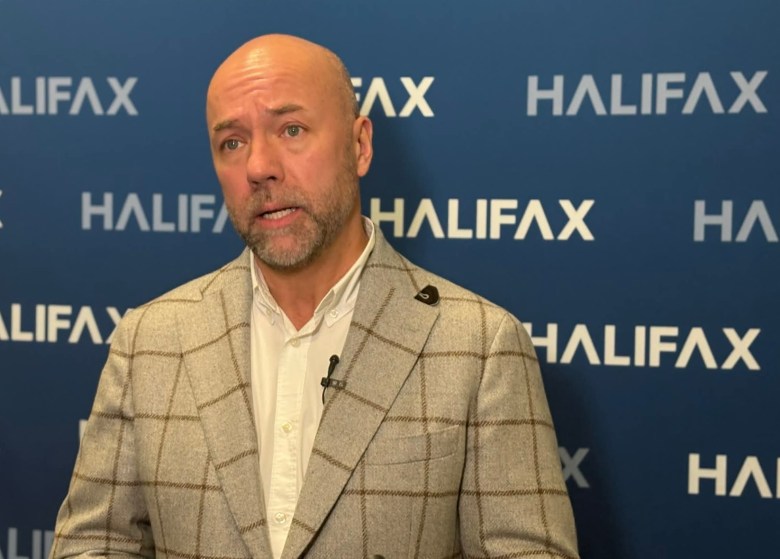 Mayor Andy Fillmore during a scrum with reporters on March 4, 2026. Credit: Suzanne Rent
Here’s a council story from Tuesday when Halifax regional council voted unanimously in favour of Mayor Andy Fillmore’s motion asking for more accountability in municipal audits. From the story:
Fillmore asked that any future action plans on municipal audits include milestones and completion dates for each recommendation by the auditor general, identification of the manager of the business unit responsible to respond to the audit, indicators of success, as well as a progress report that can be presented to the audit and finance standing committee.
Fillmore said he wants these specific actions to be standard requirements following municipal audits. Fillmore said the municipal auditor general Andrew Atherton supports the suggested changes.
“This gives residents greater confidence that identified problems will be resolved,” Fillmore said.
Click or tap here to read “Halifax council votes unanimously in favour of Andy Fillmore’s motion on audit accountability.”
(Send this item: right click and copy this link)
6. Council votes in favour of Janet Steele’s motions on long-term strategy, review of medical calls for Halifax Fire
 Coun. Janet Steele at Mayor Andy Fillmore’s budget public consultation at the St. Andrew’s Community Centre on Oct. 28, 2026. Credit: Suzanne Rent
This second story from council is about two motions introduced by Coun. Janet Steele that have to do with Halifax Regional Fire and Emergency (HRFE). From the story:
In her first motion, Steele requested that the CAO develop a long-term service and resource strategy for HRFE.
Steele’s motion is quite comprehensive, but says that strategy should include details on staffing, planning for building and renewal of fire stations, consideration of some platoons moving to 24-hour service by career firefighters, as well as how HRFE can manage future services based on growth in the municipality.
Steele said each year, HRFE requests more staffing and resources during each budget season.
“We were moving forward with these requests without a long-term strategy,” Steele said.
Steele’s second motion was about addressing the medical calls that HRFE answers.
Click or tap here to read “Council votes in favour of Janet Steele’s motions on long-term strategy, review of medical calls for Halifax Fire.”
(Send this item: right click and copy this link)
IN OTHER NEWS
AI-powered housing approvals
 A new housing development off Pockwock Road in Hammonds Plains on Aug. 10, 2026. Credit: Suzanne Rent
Ben Dornan at CBC reports on $100 million the federal government is spending to give municipalities AI-powered tools to speed up approvals of housing permits.
While it’s not yet clear how much of that $100 million will go to Halifax Regional Municipality (HRM), Mayor Andy Fillmore said such AI tools will be helpful. Dornan writes:
“What this will do is make employees, HRM’s valued employees, more productive and be able to do more work and churn out more approvals and more permits,” said Fillmore Tuesday.
He said the municipality doesn’t plan to replace its employees or cut back on the number of them.
According to Dornan’s story, the City of Edmonton already uses these AI tools, which have sped up approvals of housing permits from two weeks to one day.
(Send this item: right click and copy this link)
Government
City
Special Events Advisory Committee- Special Meeting (Friday, 9:30am, virtual)
Province
No meetings
On campus
Dalhousie
PhD Defence: Computer Science (Friday, 10am, virtual) — Jeffrey Attakorah Adjei will defend “NIMSAFE: Explainable and Adaptive IOT Device Fingerprinting and Intrusion Detection”
Policy Matters panel discussion (Friday, 1pm, hybrid) — “The Broken System”: Why does child and youth policy reform keep failing children at risk?; with panellists Paul Bennett, Elizabeth Lance, Sylvia Paris-Drummond, Jacqueline Gahagan
Literary Events
Book launch (Friday, 7pm, Halifax) — Michael Eddy: Koh-i-Noor
Book launch (Saturday, 11am, Hubbards) — Tracy Barron: Spencer Goes Sailing
In the harbour
Halifax
05:30: Emden, car carrier, arrives at Autoport from Emden, Germany
06:00: MSC Nederland III, container ship, arrives at Pier 41 from Le Havre, France
07:00: Nolhan Ava, ro-ro cargo, moves from Pier 30 to Pier 41
09:00: Algoma East Coast, oil tanker, moves from Irving Oil to Pier 9
10:00: Sedat Basak, oil tanker, arrives at Irving Oil from Albany, New York
15:30: Emden sails for sea
15:30: Atlantic Sky, ro-ro container ship, arrives at Fairview Cove from Norfolk
17:00: MSC Nederland III sails for sea
17:00: Ef Ava, container ship, arrives at Pier 41/42 from Portland
17:15: Nolhan Ava sails for Saint-Pierre
18:00: Oceanex Sanderling, ro-ro container, sails from Fairview Cove for St. John’s
22:30: Atlantic Sky sails for Liverpool, England
23:00: Ef Ava sails for Reykjavik, Iceland
Cape Breton
08:00: Evans Spirit, cargo ship, arrives at Little Narrows from Baie-Comeau
Footnotes
My 56th birthday is on Sunday, and I have adventures planned for the weekend. But subscribing to the Examiner would be a lovely gift.