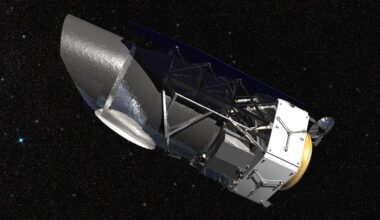
SScience Read More NASA’s $4 Billion Roman Space Telescope Heads To Florida For LaunchJune 2, 2026 WFIRST, shown here in an artist’s rendering, will carry a Wide Field Instrument to provide astronomers with Hubble-quality…
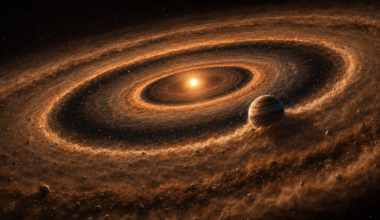
SScience Read More Astronomers can now measure newborn planet mass from dusty stellar ringsJune 1, 2026 A bright ring of dust circling a young star can look calm from far away. In reality, it…
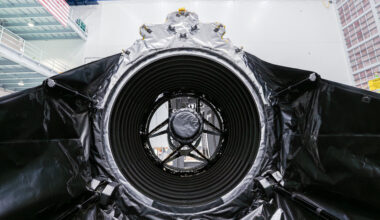
SSpace Read More NASA’s Roman Space Telescope Primary Mirror Gets Last LookMay 29, 2026 Engineers at NASA’s Goddard Space Flight Center in Greenbelt, Maryland, have completed their final inspection of a key…
SSpace Read More NASA’s Roman Mission Preps to Unveil New Populations of Faraway WorldsMay 28, 2026 NASA’s Nancy Grace Roman Space Telescope is poised to make a major leap in the hunt for worlds…
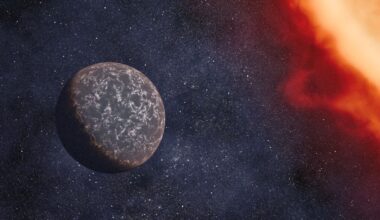
SSpace Read More Scientists get their best-ever look at distant planet’s surfaceMay 23, 2026 Share this Article You are free to share this article under the Attribution 4.0 International license. Using data…
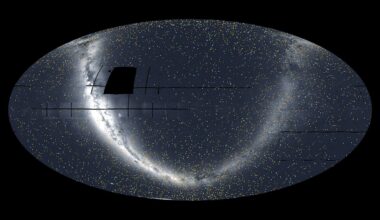
SSpace Read More NASA’s Exoplanet Hunter Reveals its Most Complete Look at the Night SkyMay 21, 2026 ‘This view of the whole sky was constructed from 96 TESS sectors. By the end of September 2025,…
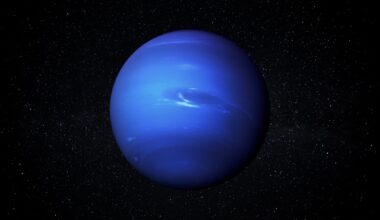
SScience Read More Scientists discover new state of matter inside Uranus and NeptuneMay 19, 2026 Far beneath the thick blue clouds of Uranus and Neptune, matter may behave in ways never before seen.…
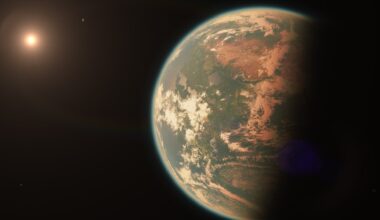
SScience Read More Rocky planets smaller than Earth may be too small to stay habitableMay 16, 2026 While a planet can orbit around a Sun-like star and sit comfortably within its habitable zone, it could…
SSpace Read More Helio and You: Seasons on Earth, Mars, and BeyondMay 16, 2026 Earth has four seasons – spring, summer, fall, and winter. Other planets (including Jupiter and the other giant…
SScience Read More Jupiter-like exoplanet helping scientists rethink how solar systems formMay 15, 2026 A planet so distant that its starlight began traveling toward Earth around the Middle Ages has given one…
SScience Read More Earth’s Longest Ice Age May Have Repeatedly Thawed and Refrozen for 56 Million YearsMay 13, 2026 Artistic representation of a Snowball Earth. Credit: Wikimedia Commons. The Sturtian glaciation was one of the most extreme…
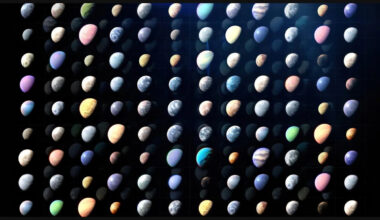
SScience Read More Scientists may have just found 10,000 planets beyond our solar systemMay 12, 2026 Lurking throughout the distant cosmos beyond the solar system, researchers recently found what they believe could be another…